


 In this page

TL;DR: Customer service training equips support teams with the skills, knowledge, and tools needed to deliver exceptional customer experiences. Through onboarding, ongoing coaching, hands-on practice, and continuous learning, organizations can improve communication, problem-solving, employee performance, customer satisfaction, and long-term customer loyalty.
Effective customer service depends on well-trained support teams that can provide clear answers, solve problems efficiently, and deliver consistent experiences.
As products, tools, and customer expectations change, ongoing training helps agents stay prepared.
When teams are well-trained, customers notice through clear answers, swift problem-solving, and genuine care.
This blog explores the different types of customer service training, their benefits, and best practices for building an effective training program.
What is customer service training?
Customer service training is a structured approach businesses use to enhance the skills and knowledge of their support teams and provide outstanding customer service experiences.
This training includes communication skills, problem-solving methods, knowledge of products or services, managing challenging situations, and using customer service software effectively.
Customer service training is a continuous process that adapts to new challenges, technological advancements, and evolving customer expectations.
Why customer service staff training matters
Customer service teams play a critical role in shaping customer experiences and influencing purchasing decisions.
According to Ipsos’ CX Global Insights 2025, 70% of customers choose brands based on the expectation of a good experience.
This highlights the importance of equipping support staff with the skills and knowledge needed to consistently meet customer expectations.
Customer service training programs are therefore essential because they help employees deliver exceptional support and create better customer experiences.
The following are some benefits of training your customer service staff:
- Empowers customer service reps to manage challenging circumstances: Training improves agents’ confidence and problem-solving abilities, helping them resolve issues more effectively under pressure.
- Boosts employee engagement and retention: Continuous learning helps employees develop new skills, stay motivated, reduce the risk of customer service burnout, and remain committed to their roles.
- Improves service quality and consistency: Customer support training gives agents the knowledge and tools needed to deliver accurate, reliable support across customer interactions.
- Promotes brand loyalty: According to PwC’s 2025 Customer Experience Survey, 29% of consumers stopped buying from a brand because of poor customer experience. Well-trained agents can strengthen customer relationships, build trust, and reduce customer churn.
Types of customer service training
Customer service training can take different forms depending on a company’s goals and circumstances.
Training types describe when or why training is delivered, such as during onboarding, ongoing development, or organizational change.
The following are some common types of customer service training.
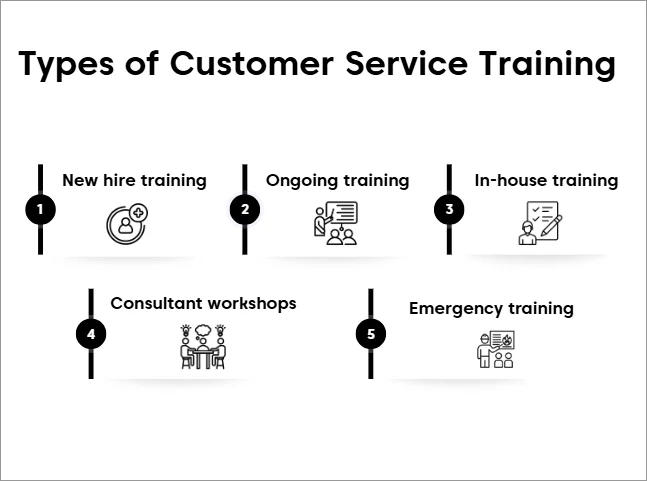
New hire customer service training
This training is designed for onboarding customer service representatives, ensuring they understand their responsibilities and become familiar with the company’s customer service culture.
By introducing clear expectations and best practices early, these programs help new agents integrate seamlessly into the team, clarify roles, and foster a positive, communicative, and productive work environment.
Ongoing customer support training
Periodic training for current employees, including customer service coaching sessions, helps maintain and improve customer service standards.
Common approaches include:
- Skills and competency check-ins to evaluate performance and identify coaching opportunities
- Best practices workshops
- Team-building activities
In-house employee training
In-house training is typically led by support managers or highly skilled representatives using company-specific materials.
This customer service training involves a tailored curriculum that addresses common challenges such as slow response times or lengthy interactions.
External workshops and expert-led training
Consultant-led workshops are typically multi-day sessions conducted by external customer service experts, offering intensive and highly interactive training experiences.
These sessions allow your customer support team to learn directly from seasoned professionals, making them engaging and inspiring.
Change and incident-response training
Emergency customer service training helps customer service representatives stay prepared to handle important and unexpected changes, such as product recalls or rebranding.
Additional training may also be needed whenever a product or service update is introduced.
It helps ensure customer service staff are prepared to handle any customer questions or concerns arising from these changes.
What should customer service training cover?
Effective customer service training should equip agents with the knowledge, skills, and mindset to handle customer interactions confidently and empathetically. Here’s what it should include:
- Product and service knowledge: A solid grasp of your product or service helps agents answer questions accurately and confidently.
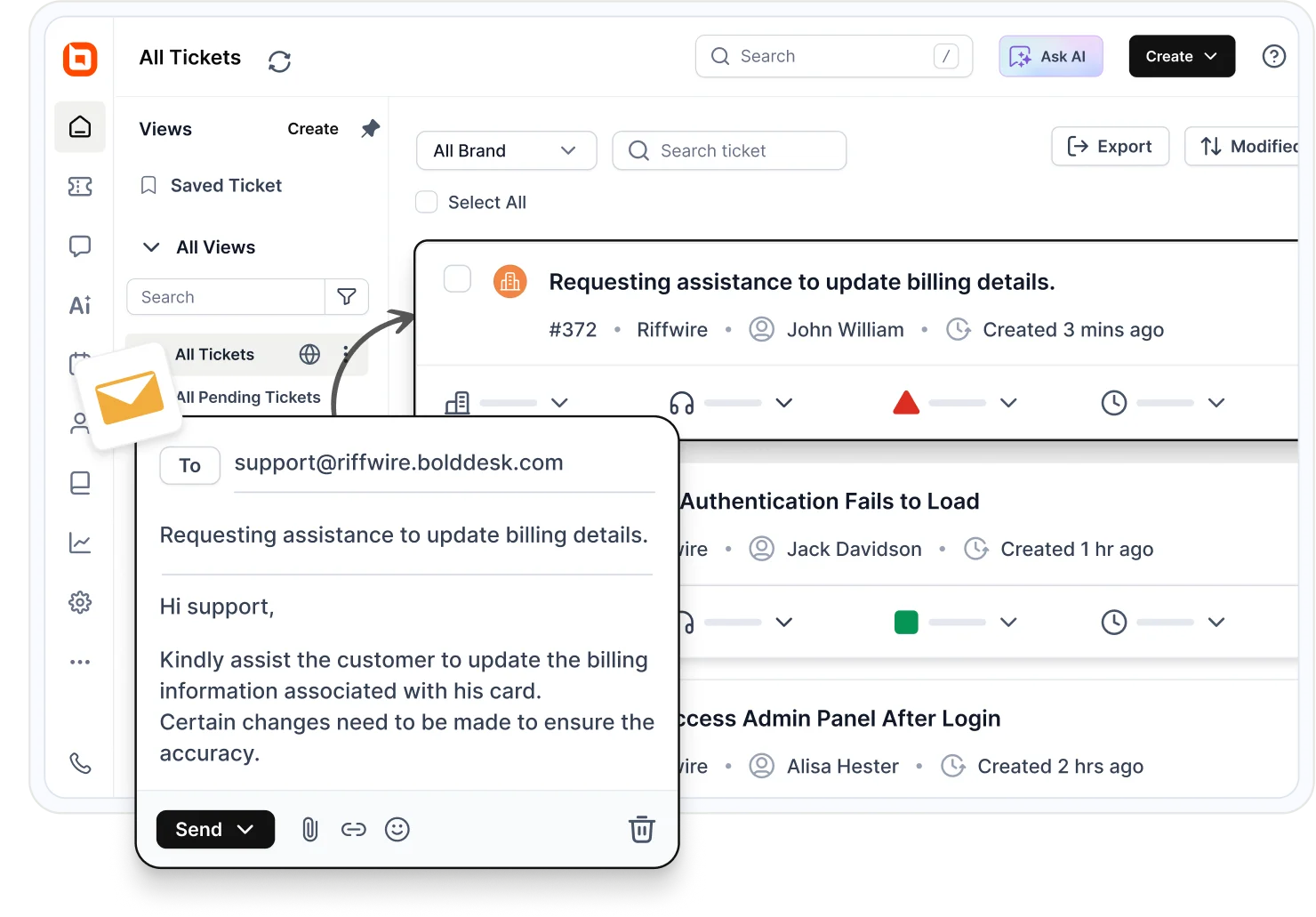
- Technical skills on customer support tools and AI: Help desk agent training should ensure support agents can confidently use customer service software such as ticketing systems and AI tools, including AI Agents and AI Copilot, to maximize their efficiency.
- Communication skills: Customer service soft skills training should emphasize a strong customer service mindset, active listening, and thoughtful responses that make customers feel heard and valued.
- Problem-solving and critical thinking: Agents should be trained to analyze problems, think critically, and offer the best path forward, even in unfamiliar situations.
- Emotional intelligence: Support agents should learn to show empathy and patience during high-stress situations while managing their own emotions in tough conversations.
- Conflict resolution: Teach agents to handle complaints calmly, offer sincere apologies, and resolve issues quickly. Teach strategies for turning negative experiences into positive outcomes that reinforce trust and customer loyalty.
How to build an effective customer service training program
A strong customer service training program ensures your team delivers consistent, high-quality experiences. Below are some practical steps on how to improve customer service training.
1. Define clear learning objectives
Setting clear customer service training objectives creates a focused and engaging training experience. Decide whether your course will emphasize skills like empathy and active listening, address specific customer pain points, or cover multiple topics in separate sections.
Clear goals ensure your customer service training plan stays relevant and aligned with desired outcomes.
2. Assess current skills and training gaps
Start by forming a small committee of stakeholders from different levels and departments. This approach ensures diverse perspectives and buy-in from the start.
Next, audit what you already have to establish a clear starting point and maximize efficiency. The audit can include:
- Technologies such as help desk software or CRM
- Standard operating procedures and best practices
- Metrics and KPIs
Finally, you can create a survey to understand your team’s current knowledge and gaps.
3. Use peer learning and employee feedback
Experiment with different mentoring formats since even experienced hires may need to unlearn old habits. In this way, collaboration benefits everyone.
Additionally, you need to leverage your team’s strengths by pairing agents with complementary skills for peer-to-peer learning.
Encourage co-teaching to boost teamwork, develop leadership skills, and strengthen emotional intelligence in customer service along the way.
4. Choose the right training formats and resources
Combine formats such as courses, videos, templates, role-playing exercises, and interactive activities based on the skills employees need to develop.
Using multiple formats helps accommodate different learning styles and gives agents opportunities to both learn and practice.
5. Update your training content regularly
As your company grows, policies and processes will change, and your customer service training should evolve too.
Review customer feedback, quality assurance scorecards, and support performance metrics regularly to identify skill gaps and prioritize future training topics.
Regularly update training materials to reflect current standards and best practices.
Use a knowledge management system that enables quick edits without rebuilding the entire knowledge stack, saving time, reducing costs, and ensuring your program stays relevant.
Effective customer service training methods
Customer service training is essential for building strong customer relationships and brand loyalty.
While training types determine when or why training takes place, training methods determine how employees learn and develop their skills.
Below are some effective customer service training methods you can use.
- Dedicated workshops: These are interactive sessions that offer practical learning experiences to improve communication skills, conflict resolution, and customer engagement strategies.
- Role-playing: Allows support agents to practice real customer service scenarios and build confidence when handling challenging customer issues.
- E-learning: Employees can learn at their own speed with the flexibility of online lessons. It covers many topics and often includes interactive elements and quizzes to improve understanding.
- On-the-job training: It helps customer service agents improve their knowledge and skills while performing their daily responsibilities. It offers prompt feedback and opportunities to use skills, making it an effective way to encourage training in a real-world setting.
- Mentorship programs: Involve pairing a less experienced employee with an experienced colleague who can provide guidance, feedback, and support, improving professional development.
Customer service training best practices
Successful training programs go beyond onboarding and one-time workshops.
Use these best practices to reinforce learning, improve performance, and drive better customer outcomes.
Train with real customer scenarios
Role-playing exercises and scenario-based training help agents apply their skills in realistic situations.
Focus on common customer questions, complaints, and escalations to improve confidence and decision-making.
Combine soft and hard skills
Strong customer service requires a balance of interpersonal and technical abilities.
In addition to product knowledge and technical expertise, agents should develop communication, empathy, problem-solving, and conflict resolution skills.
Here is a breakdown of the two categories of skills:
| Aspect | Soft skills | Hard skills |
| Definition | Interpersonal and communication customer service skills that help agents deliver positive experiences and build strong relationships with customers. | Technical abilities that can typically be taught and quantified. They enable agents to perform their customer service roles effectively. |
| Examples | Problem-solving, teamwork, communication, having a positive attitude, taking initiative, and having empathy in customer service. | Technical support, sales techniques, conducting research, and multitasking. |
Coach using actual performance data
Use customer feedback, quality assurance scorecards, and support metrics to identify coaching opportunities.
This helps training remain focused on the areas that have the greatest impact on performance.
Reinforce learning continuously
Customer service training should be an ongoing process rather than a one-time event.
Regular coaching, peer learning, refresher sessions, and knowledge sharing help agents stay engaged and continuously improve their skills.
Review outcomes against support KPIs
Track metrics such as customer satisfaction (CSAT), first response time, resolution time, and first contact resolution rate to measure the effectiveness of your training program and identify areas for improvement.
Celebrate achievements and learn from mistakes
Recognizing successes helps reinforce positive behaviors, while reviewing challenges encourages continuous improvement.
Use coaching sessions and team discussions to turn experiences into learning opportunities.
Make customer service training an ongoing practice
Effective customer service training isn’t a one-time onboarding activity.
Continuous coaching, practical exercises, and regular skills development help support teams adapt to changing products, tools, and customer expectations.
To support ongoing learning, organizations should equip agents with the right systems and resources to apply their training consistently in day-to-day customer interactions.
BoldDesk provides comprehensive tools that complement your customer support training efforts and help agents put what they learn into practice.
Contact our team or book a live demo to explore BoldDesk’s key features in action. You can also sign up for a free trial for immediate access.
We’d love to hear from you! What training strategies have worked best for your support team? Share your thoughts, tips, or questions in the comments below.
Related articles
- Customer Care: Why It’s Essential for Business Success
- Customer Value: Definition, Measurement, and Best Tips
- Managing a Remote Customer Service Team: Strategies for Success [2026]
FAQs about customer service training
At minimum, customer service training should include interpersonal skills, product knowledge, customer empathy, conflict resolution, and clear communication.
Every employee should go through customer service training, especially those who regularly interact with or impact customers.
Depending on their role, some employees may only need a basic level of training, while others will require an extensive program.
You can train customer service reps effectively by letting them practice real situations, clearly explaining company policies, running role-playing exercises, using training resources, giving regular feedback, and providing ongoing coaching and knowledge sharing.
Training equips agents to handle challenging situations, such as dealing with angry or frustrated customers.
Empathy plays a key role, helping you truly understand customers’ emotions and create a personalized support experience by staying aware of their needs and concerns.
Customer service agents should receive ongoing training throughout the year, including onboarding for new hires, regular coaching and refresher sessions, and additional training whenever products, policies, tools, or customer expectations change.
You can assess your skills after customer service training in two ways: through assessments from your manager and by gathering input from customers via feedback surveys.