







TL;DR: Customer service culture is the shared mindset, values, and behaviors that shape how support teams interact with customers. By fostering leadership support, encouraging collaboration, recognizing employee contributions, and continuously acting on customer feedback, businesses can create a customer-first culture that drives long-term success.
Exceptional customer service begins with a team aligned around shared values, expectations, and a customer-first mindset.
A strong customer service culture helps employees make consistent decisions, collaborate effectively, and deliver experiences that reflect your brand’s values.
It empowers teams to solve problems with confidence and respond to customer needs with empathy and accountability.
In this blog, you’ll explore what customer service culture means, why it matters, and practical ways to build one across your organization.
What is customer service culture?
Customer service culture is the collective values, beliefs, and behaviors that shape how your support teams engage with customers.
It determines how your support team shows up in every scenario, including answering customer onboarding questions, handling billing concerns, solving product issues, or dealing with moments of frustration and urgency.
When the customer service culture is clearly defined and embraced, every support team member, from frontline agents to leadership, contributes to experiences that feel genuine, connected, and built on trust.
Why customer service culture matters
Ever notice how some teams naturally deliver exceptional service while others struggle?
The difference often lies in the culture of customer service, the shared values and behaviors that guide every customer communication.
When this culture is strong, it shapes how your team works together and connects with customers, creating the foundation for real, lasting impact.
Improves customer loyalty and revenue
When a company has a strong customer service culture, every employee works to make customers feel valued, respected, and understood.
As a result, they’re more likely to return and recommend your brand to others, contributing to long-term business success.
Drives employee engagement and retention
In a company where a supportive culture is the norm, employees feel motivated and encouraged.
They take pride in their work, knowing it matters, leading to greater employee satisfaction and stronger commitment to the team.
Enhances brand reputation and trust
A good customer service culture means your business always treats customers and internal teams well, no matter what.
Over time, people notice the good customer experience and employee satisfaction, spreading positive word-of-mouth that builds more trust in your brand.
Increases customer satisfaction
When customer service is part of the company culture, support teams use their customer service skills to meet customer expectations more effectively.
As a result, these customers get the help they need faster, face fewer frustrations, and walk away genuinely impressed with the experience.
Fosters innovation and continuous improvement
A customer-facing team with an outstanding service culture actively listens to what customers say about their support offerings.
These customer insights help your business come up with better ways to serve users, stay up to date, and maintain customer happiness.
How to build an effective service culture for your support team
Creating an effective customer service culture means making great service a shared responsibility across the entire company, not just one team.
It’s a positive customer service mindset that sets strong businesses apart.
Below are practical strategies for building a strong customer service culture across your organization.
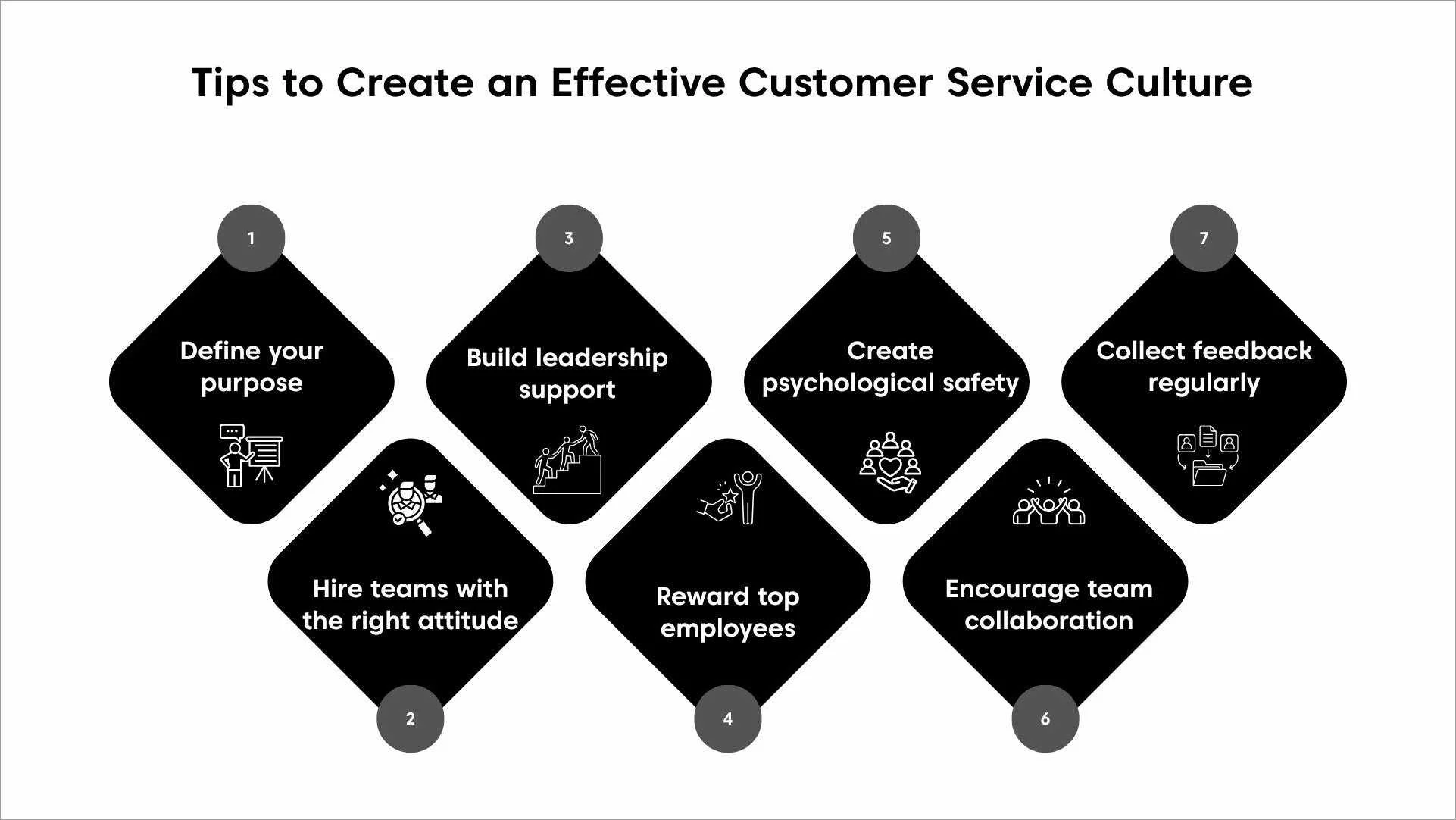
Define your customer service purpose and values
Great customer service starts with a clear and compelling vision. Define what excellence looks like for your team by crafting a mission statement that inspires and aligns everyone around a shared goal, putting the customer first.
Write down your customer service values, mission, and vision clearly. Make sure they’re shared with both your team and your customers.
A well-defined purpose and clear measures of success give your team a powerful guide for making service decisions and show users what you stand for, making it easier for them to connect with your brand and provide meaningful feedback.
Hire teams with the right attitude
While technical skills can be taught, genuine customer care comes from having the right customer service mindset.
To build a strong service culture, look for candidates who:
- Prioritize customers and take pride in helping others.
- Show empathy in customer service situations.
- Communicate clearly and patiently with customers.
Once you’ve hired the right people, invest in customer service culture training that mirrors real-life scenarios.
This prepares your team to handle challenges with confidence and consistency, reinforcing a culture where good customer service is the norm.
Build leadership support and accountability
A strong customer service culture starts at the top. How customer service leaders act influences how other customer-facing teams adopt the culture.
You can involve leaders in shaping and promoting the service values as follows:
- Start by choosing the right customer service leaders who will set a good example for the rest of the support team.
- Present compelling customer service performance data and customer stories to the leaders to show them how excellent service drives business success. This will motivate them to push their teams to embody customer service culture in their daily operations.
- Finally, encourage leaders to consistently model customer-first behavior by engaging directly with customers and celebrating service wins.
Leadership support sets a positive customer service tone for the entire organization, reinforcing customer-first behaviors and ongoing customer service training initiatives.
Recognize and reward top employees
Behind every exceptional customer experience is a team that feels valued, trusted, motivated, and capable of applying emotional intelligence in customer service.
According to Awardco’s 2026 State of Recognition report, employees who receive consistent recognition are 1.7 times more likely to want to stay with their organization, highlighting the role recognition plays in employee retention and engagement.
For organizations looking to improve employee retention, recognition can be a powerful motivator.
Recognizing outstanding support moments, whether through a simple thank-you note, a public shoutout, or a personal note, shows internal teams that their efforts matter.
Additionally, small, thoughtful rewards like a surprise gift or an extra break can go a long way in boosting morale and reinforcing a culture where top-notch service is celebrated and encouraged.
Create psychological safety for your team
Psychological safety is essential in a service culture and can help reduce customer service burnout. When employees feel safe to speak up, share ideas, or admit mistakes without fear, they’re more engaged and better equipped to handle customer needs with confidence and honesty.
Encourage open team meetings where team members can freely share customer service challenges and suggestions without judgment.
Encourage team collaboration
Customer service doesn’t live in one department; it’s a team effort. When teams across support, sales, product, and operations collaborate, including in remote customer service environments, they solve problems faster and deliver more seamless, consistent customer experiences.
Hold regular cross-functional workshops to foster collaboration and knowledge sharing across departments and include team-building activities to strengthen relationships and enhance teamwork.
Example:
Before launching a new feature, the product development team works with the support and marketing teams to prepare FAQs, training materials, and announcements. This ensures smooth rollout and informed customer interactions.
Collect and analyze feedback regularly
According to Medallia’s 2025 research, 73% of customers say their impression of a company improves when it follows up on their feedback and explains how it plans to act on it.
This reinforces why strong service cultures don’t just collect feedback; they listen, respond, and turn customer insights into meaningful improvements.
Here’s how to make it a core part of your operations:
- Let your customers guide you: Your customers know what they want, and they’re often happy to tell you. The key is to listen consistently and act on what they share. Whether it’s praise, complaints, or suggestions, customer feedback helps you stay in tune with their changing expectations and build a culture where customer input drives real decisions and lasting improvements.
- Empower agents to drive improvement: Your frontline support team interacts with customers daily. They see what works, what doesn’t, and where things could be better. Encourage them to share those insights and use their suggestions to fine-tune workflows, improve training, and strengthen your team culture. When agents feel heard and involved, continuous improvement becomes second nature, and customer-centricity stays at the heart of everything you do.
Challenges in building a strong customer service culture
Building a strong customer service culture takes more than just good intentions. It requires cross-team collaboration, clear communication, and consistent customer-focused behaviors across the organization.
However, organizations often face several challenges that make it difficult to build and sustain a strong service culture.
| Challenge | Impact on customer service culture | How to address it |
| Lack of leadership commitment | Employees are less likely to view customer service as a priority when leaders fail to demonstrate its importance. | Make customer experience a measurable business objective and regularly review service performance at the leadership level. |
| Poor internal communication | Customers may receive inconsistent information, delayed responses, or fragmented experiences. | Establish clear communication processes and accountability for sharing customer-related information across teams. |
| Misaligned incentives | Employees may prioritize speed, sales, or individual metrics over customer outcomes. | Align performance measurements and rewards with customer-focused goals and long-term service quality. |
| Inadequate technology | Outdated systems create inefficiencies that make it harder to deliver consistent support experiences. | Periodically evaluate support tools and workflows to identify operational gaps that affect service delivery. |
| Cultural misalignment | Different teams or regions may develop inconsistent service standards and expectations. | Create organization-wide service principles and ensure they are communicated consistently across teams. |
The good news is that most of these challenges can be overcome by implementing the right customer service culture strategies in your support operations.
Understanding the customer service problems in your culture can help you create a workplace where excellent support is part of everyday life.
Cultivating a customer service culture that shapes every interaction
At the core of every great customer experience is a company culture that truly puts customers first.
It’s not just about solving problems; it’s about making every interaction meaningful and memorable.
Customer service software can reinforce a strong service culture by giving teams shared customer context, consistent workflows, and better ways to collaborate.
BoldDesk supports this with ticketing, automation, and collaboration tools that help teams deliver more consistent customer service.
Contact us to learn how BoldDesk can help you build a sustainable and effective customer service culture.
We’d love to hear how your team puts customers at the center. Drop a comment below.
Related articles
- Customer Centricity: Definition, Strategies, and Real-World Examples
- What Is Customer Engagement? Benefits and Tips for Growth
- Customer Support Operations: Building Teams That Thrive
FAQs about customer service culture
A strong customer service culture is built on customer-centric values, leadership support, employee empowerment, accountability, collaboration, empathy, and continuous improvement.
These characteristics help teams consistently meet customer expectations.
Customer feedback provides valuable insights into customer expectations, satisfaction levels, and service gaps.
Regularly collecting and acting on feedback helps organizations improve processes, enhance service quality, and strengthen their customer-centric culture.
Customer service software supports customer service culture by helping teams collaborate, manage customer inquiries efficiently, automate routine tasks, and maintain consistent service standards.
It enables agents to focus more on delivering exceptional customer experiences.
Leadership plays a critical role in customer service culture by setting expectations, modeling customer-first behaviors, and reinforcing service standards.
When leaders prioritize customer experience, employees are more likely to adopt the same mindset.
A positive customer service culture helps employees feel valued, supported, and aligned with organizational goals.
This can improve job satisfaction, boost morale, reduce turnover, and encourage employees to deliver better customer experiences.