





TL;DR: A customer service mindset means consistently putting customers first. By focusing on empathy, professionalism, and problem-solving, support teams can improve customer satisfaction, build loyalty, and create positive customer experiences.
Everything starts in the mind as a little thought that manifests on the outside through our actions. For customer service, the action must involve treating customers with value and respect consistently, or else they’ll look for a better option.
This means that if your business is to be competitive, your support agents must have the right mindset.
A customer service mindset creates a huge difference, and customers can easily notice when your support agents have or lack this mindset.
This blog will focus on how support agents can embrace a customer service mindset, including tips and ways to develop it.
What is customer service mindset?
A customer service mindset is a customer-first approach that focuses on understanding customer needs, solving problems effectively, and creating positive customer experiences.
It involves the beliefs, attitudes, and behaviors that enable support teams to deliver helpful, empathetic, and consistent service.
Key qualities include professionalism, ethics, transparency, emotional intelligence in customer service, and patience, helping support agents make better decisions when handling different types of customers.
Benefits of adopting a customer mindset
As customer expectations and demands continue to shift, what remains constant is the value of customer service.
Unlock the key to efficient customer service with a customer service mindset. Here are the benefits of having a customer service mindset:
Empowering your support team with a customer service mindset has lasting benefits beyond everyday interactions. It improves experiences for both customers and the business.
Ways to build the right customer service mindset
Cultivating a customer service mindset among support agents requires intentional effort and a strong foundation. Some foundational aspects, such as culture, people, tools, and policies, must be in place.
When you consider these key aspects, you can effortlessly adopt the right customer service mindset. Let’s look at how this can be achieved:
- Culture: Clearly define your core values, vision, and mission, ensuring that they promote customer centricity. This enables support agents to learn and know how to effectively handle customers.
- Policy: Every business must have policies that guide performance and decision-making. These policies should be developed using feedback from key stakeholders, including customers, executives, and employees.
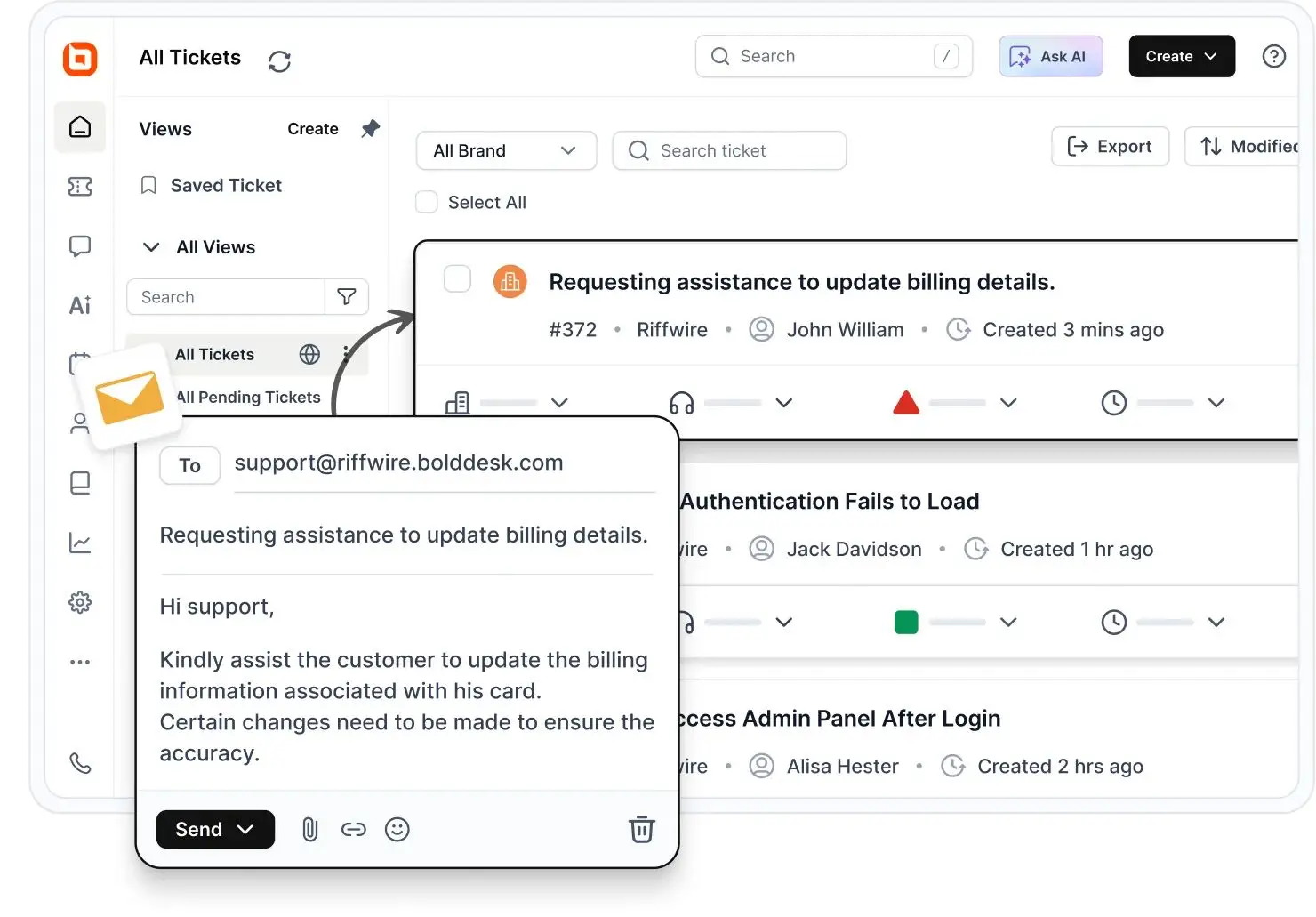
- Tools: Provide your employees with the necessary tools essential for exceptional customer service. Modern customer service software can automate routine tasks, like answering queries and resolving issues, freeing up employees to focus on empathy, communication, and customer connection.
- People: Recruit your support team based on their ability to meet your business’s core values with the right attitude and proper judgment.
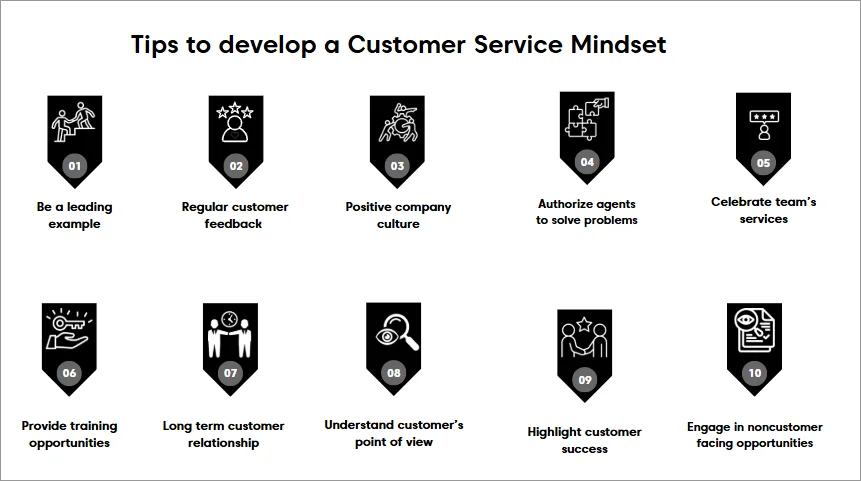
10 Tips to develop a customer service mindset
Developing a customer service mindset takes continuous effort, learning, and practice.
The following tips can help support teams strengthen a customer-first approach and deliver better customer experiences.
Be a leading example
Leaders play a key role in shaping a customer service mindset. As a support team lead, always be the point of reference and show the support agents what it means to have a customer service mindset.
Demonstrate customer-focused behaviors through your actions, set clear expectations, and show your team how to prioritize customer needs in every interaction.
This foundation ensures that every team member prioritizes the customer’s needs to deliver personalized customer service and customer satisfaction.
Seek customer feedback regularly
A great way to know if the support team has a customer service mindset is through customer feedback.
These insights help teams identify strengths, uncover improvement areas, and continuously improve the customer experience.
Feedback can be regularly collected using various methods, such as:
- Customer satisfaction surveys (CSAT)
- Customer reviews
- Social media comments
- Customer contact forms
Adopt a positive company culture
It is always said that charity begins at home. For the support team to be able to provide positive and quality service, they must learn from the company itself.
A strong customer service culture encourages respect, transparency, accountability, and continuous improvement.
To build a positive culture, it is important to:
- Set clear company goals and expectations
- Establish reward and recognition programs
- Hire skilled professionals who align with company values
Authorize agents to solve problems
A lot of time, resources, and energy are wasted when customers’ concerns can’t be resolved promptly, pending approval from higher authorities.
Empower agents to resolve common customer issues without waiting for approvals.
Giving employees greater ownership enables faster resolutions, improves productivity, and enhances customer satisfaction.
Celebrate the team’s excellent service
Recognizing outstanding performance motivates employees and reinforces customer-first behaviors while helping reduce customer service burnout.
To reward the team for their excellent performance, consider:
- Incentives
- Promotions
- Performance-based bonuses
- Sharing success stories
Provide customer service mindset training
Ongoing customer service training helps agents develop the skills, confidence, and knowledge needed to meet evolving customer expectations.
By learning the principles behind a customer service mindset, agents can strengthen their customer service skills and improve their performance.
The stakes are currently very high. According to Thrive Global, 86% of customers stop interacting with brands after a single bad customer service experience.
Regular training helps support teams deliver consistent, high-quality service and avoid costly customer losses.
Establish a long-term customer relationship
Building strong customer relationships increases trust and customer loyalty. Encourage agents to:
- Provide proactive customer service
- Demonstrate empathy in customer service and communication skills
- Use friendly, personalized communication
- Gather customer feedback
- Conduct customer follow-ups consistently
Understand the customer’s point of view
A customer service mindset starts with understanding customer needs, expectations, and challenges.
Up to 66% of customers expect companies to understand their needs and expectations before providing support.
Teams can better understand customers by:
- Listening actively
- Identifying customer pain points
- Communicating clearly
- Viewing situations from the customer’s perspective
Highlight customer success
Celebrating customer success demonstrates your commitment to customers and recognizes their achievements.
These success stories can be shared on both internal and external platforms. Doing so creates a positive, customer-focused environment within the support team.
This leads to a stronger customer commitment to ensure long-term customer satisfaction.
Engage support teams in non-customer-facing activities
Provide your support team with other activities that are not customer-facing for them to embrace a customer mindset.
A change in common or repetitive tasks gives support teams new perspectives on solving customer problems.
They gain skills and technical knowledge that help them deliver better support across different channels, including remote customer service.
Activities may include:
- Documentation projects
- Collaboration with other teams
- Cross-training opportunities
- Internal improvement initiatives
Examples of a customer-first service mindset
As companies strive to provide the best possible experiences to their customers, there are some with a perfect customer service strategy.
Their success stems from embracing a customer service mindset that prioritizes customer needs, trust, and long-term relationships.
Ritz-Carlton’s commitment to continuous training
Ritz-Carlton has a good reputation when it comes to its approach to customer service. Most businesses currently feel the pressure to provide their customers with positive experiences at all times.
Through training, support agents learn how to deliver consistent, high-quality service.
At Ritz-Carlton, their employees are provided with 250 hours of training per year through classroom meetings, workshops, seminars, online forums, and a one-on-one coaching session. This empowers agents to grow and stay competitive.
Key takeaway: Investing in continuous customer service training equips employees to provide consistent, high-quality support and reinforces a customer-first mindset.
Zappos’ dedication to exceeding customer expectations
Zappos is an online retailer specializing in clothing and shoes. Businesses around the world can learn why having a customer service mindset is important and how it is the game-changer that drives success.
Zappos proves its customer-first mindset with a 365-day return policy and free shipping, far beyond the typical 30-day window. This commitment builds trust and ensures customers feel valued.
By prioritizing customer satisfaction over short-term gains, Zappos has built strong customer loyalty and a reputation for exceptional service.
Key takeaway: Going beyond customer expectations helps build trust, strengthen loyalty, and create memorable customer experiences.
Both Ritz-Carlton and Zappos demonstrate that a customer service mindset is more than a philosophy. It is reflected in the actions, decisions, and experiences they create for customers.
Transform support with a holistic customer service mindset
They say, “Change starts from within.” For support teams, that change begins with adopting a mindset that puts empathy, responsiveness, and quality at the heart of every interaction.
A strong customer service mindset helps teams better understand customer needs, solve problems effectively, and build lasting relationships.
By fostering a customer-first culture and investing in continuous learning, organizations can create positive experiences that drive customer satisfaction and loyalty.
Tools such as BoldDesk can support these efforts by helping teams stay organized, collaborate effectively, and deliver consistent customer experiences at scale.
Ready to elevate your support strategy? Start your 15-day free trial with instant access or schedule a live demo at your convenience. Have any questions? Our support team is here to help!
We’d love to hear from you! Share your thoughts or experiences with customer-first support in the comments below.
Related articles
- BoldDesk Wins 2024 Award for Customer Service Excellence
- Online Customer Service: Definition, Best Practices, and Tools
- Top Customer Service Statistics to Pay Attention to in 2026
Frequently Asked Questions
AI agents can enable your business to deliver faster, smarter, and 24/7 customer support.
By leveraging customer data, they personalize interactions, boost satisfaction, and turn routine service into meaningful engagement.
A customer service mindset centers on empathy, satisfaction, and resolving issues.
By contrast, a sales-driven mindset aims to boost revenue, while a task-focused approach emphasizes speed and efficiency in completing duties.
The three essential qualities of a customer service mindset include empathy, responsiveness, and an unwavering dedication to customer needs.
A customer service mindset builds lasting relationships by putting satisfaction and trust at the forefront.
Through consistent, empathetic support and a deep understanding of customer needs, businesses foster loyalty that not only keeps customers coming back but also turns them into passionate advocates.