



TL;DR: Personalized customer service uses customer data, context, preferences, and interaction history to deliver more relevant and seamless support. It helps customers get faster resolutions, avoid repeating information, and enjoy a more consistent experience across every channel.
Support teams deal with the same frustrations every day: customers repeating the same issues, conversations scattered across disconnected channels, and responses that feel scripted.
However, as customer expectations continue to grow, delivering fast, relevant service becomes harder, not easier.
Personalized customer service ensures that every interaction reflects the customer’s context, history, and needs, so support feels consistent, human, and relevant.
When customers receive this level of care, they are more likely to stay loyal, recommend your business to others, and keep coming back.
This blog explores the art of personalized customer service, examining why it matters and how modern organizations can deliver effective personalization using the right strategies and tools.
What is personalized customer service?
Personalized customer service is a support approach that uses customer context, such as profile details, preferences, purchase history, and past customer interactions, to tailor every conversation.
By applying this context, support teams deliver consistent, context‑aware customer service across channels without requiring customers to repeat information.
Why is customer service personalization important?
Customers increasingly prefer brands that recognize their needs, respect their context, and deliver experiences that feel relevant and consistent over time.
Customer experience personalization is important because it helps businesses:

- Improve customer experience and satisfaction: When service is tailored to individual needs, the overall customer service experience feels smoother, more relevant, and more satisfying for customers.
- Strengthen customer loyalty and trust: Using customer context consistently across interactions helps customers feel recognized and valued. This encourages repeat engagement and reduces customer churn.
- Gain insights into customer needs: Personalization creates an environment where customers are more comfortable sharing feedback, preferences, and concerns, helping businesses better understand customer expectations and refine the customer experience strategy.
- Differentiate from competition: Personalizing customer service allows brands to offer experiences that align with individual customer needs and preferences, differentiating themselves from businesses that still rely on generic service models.
- Drive revenue and long‑term growth: Personalized customer service makes customers feel valued, which increases their likelihood of spending more, by up to 38% on average, according to Twilio Segment.
Practical ways to make every support interaction feel personal
Delivering personalized customer service requires a combination of customer data, technology, and consistent execution across every interaction.
Below are some excellent tips to personalize your customer service.
Start every interaction with a personal touch
Personalizing support should begin the moment a client reaches out. Focus on communication and rapport, not customer history.
You can:
- Address customers by name.
- Adapt your tone to match the customer’s situation.
- Avoid scripted customer service phrases and use conversational language.
- Acknowledge the customer’s specific issue or goal.
Outcome: Customers feel valued and understood from the first interaction.
Make support accessible on customers’ terms
Customers expect timely assistance across time zones. This requires you to:
- Offer 24/7 customer service across multiple channels.
- Provide self-service resources such as FAQs and a knowledge base.
- Ensure help is available when customers need it.
- Keep support content updated and easy to find.
Outcome: Customers can get help through their preferred channel and at their preferred time.
Anticipate customer needs proactively
Personalization goes beyond responding to requests; it includes anticipating needs and offering relevant, timely experiences before issues escalate.
Research by Salesforce suggests that 73% of customers expect a personalized customer experience, making proactive personalization a critical part of modern customer support.
You can always go the extra mile by:
- Sending proactive updates, reminders, or guidance.
- Sharing helpful recommendations based on customer behavior.
- Identifying common issues before they become support requests.
- Triggering automated follow-ups at relevant milestones.
Outcome: Customers receive help before problems escalate.
Train agents to deliver empathetic support
It is essential to treat customers with respect and clarity in every interaction, not just rely on individual communication styles.
Empower your team to create positive interactions through the following:
- Train agents in active listening and intent recognition for more accurate, consistent responses.
- Encourage empathy and problem ownership.
- Help agents adapt responses to different situations.
- Provide guidelines for handling difficult conversations.
Outcome: Support feels human, thoughtful, and relationship-driven.
Keep conversations connected across every channel
Personalized service depends on maintaining continuity throughout interactions.
Customers often move between channels, such as phone calls, video chats, email, live chat, and social media, when seeking help.
Maintaining context across channels creates a seamless experience and eliminates the frustration of customers having to explain the same issue multiple times.
To do this effectively, you need to:
- Implement omnichannel customer service that unifies conversations across platforms.
- Ensure agents can access a complete view of interaction history regardless of channel.
- Route conversations intelligently to avoid repeated handoffs.
- Give customers flexibility to switch channels without disruption.
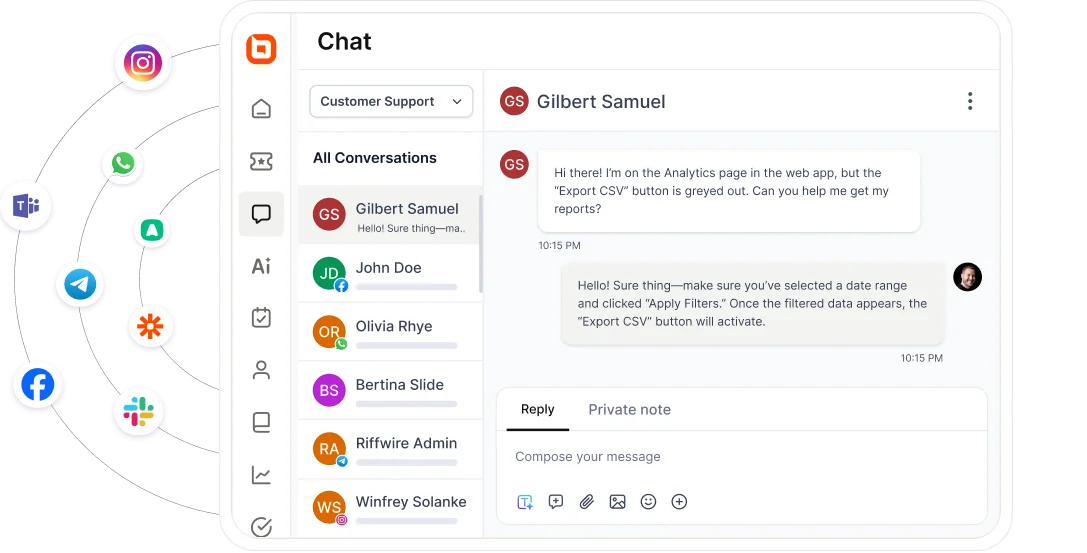
Example: If a customer starts a conversation on live chat and follows up via email, the agent can review the previous interaction and continue support more efficiently.
This ensures support flows seamlessly across channels, so customers don’t have to restart the conversation each time.
Leverage technology to scale personalization
As support volume grows, it becomes difficult to manually tailor every interaction.
Customer service technology helps teams deliver consistent personalization without slowing down operations.
You can:
- Use a help desk ticketing system to automate ticket categorization, assignment, and prioritization.
- Use AI to identify intent and prioritize requests.
- Surface relevant information for agents automatically.
- Use customer self-service portals to provide personalized support.
Outcome: Teams deliver personalized experiences efficiently, even at scale.
Segment customers to deliver more relevant support
Not all customers require the same type of support.
Customer segmentation allows teams to tailor assistance by grouping customers with similar needs, avoiding one-size-fits-all responses.
You can:
- Group customers by lifecycle stage, product usage, or plan type.
- Adjust support workflows based on customer needs.
- Offer tailored onboarding or advanced assistance.
- Personalize communication styles for different segments.
Outcome: Customers receive support that aligns with their specific needs and circumstances.
Example: A new customer contacting support during onboarding can receive guided setup assistance, while an experienced user receives faster, outcome‑focused help.
Continuously improve through customer feedback
Personalization improves when support teams learn from customer feedback and adjust their approach over time.
Understanding what customers feel about your products and services requires you to:
- Collect feedback after support interactions.
- Identify recurring pain points.
- Refine workflows and support resources.
- Use customer insights to improve future interactions.
Outcome: Personalization becomes more effective over time.
Personalized customer service examples across industries
Below are real‑world examples of how personalized customer service is applied across different industries during customer support interactions.
Atlassian: Personalized SaaS onboarding
Atlassian personalizes customer service by giving agents access to important onboarding information, including account details, subscription plans, product usage, and previous interactions.
This helps support teams understand each customer’s onboarding journey and provide guidance that matches their specific needs.
Key takeaway: Personalized onboarding becomes more effective when support teams understand each customer’s stage in the journey and tailor their guidance accordingly.
Shopify: Context-aware e‑commerce order support
Shopify helps merchants deliver personalized support by centralizing customer information such as order history, payment status, shipment tracking details, and previous conversations.
When a customer contacts support about a delayed shipment, return request, or refund, agents can immediately access the relevant information and provide accurate assistance without asking the customer to repeat details.
Key takeaway: Giving agents access to complete customer and order information helps resolve issues faster and reduces customer effort.
PayPal: Personalized support for financial issues
PayPal uses transaction history, account activity, and previous support interactions to provide more informed assistance during sensitive situations such as payment disputes, failed transactions, or account restrictions.
By understanding the customer’s history before responding, support teams can provide quicker resolutions, reduce unnecessary back-and-forth communication, and help customers feel confident that their concerns are being handled appropriately.
Key takeaway: Access to relevant account and transaction data enables faster, more accurate support in high-stakes customer interactions.
Booking.com: Customer support tailored to travel plans
Booking.com delivers personalized customer service by using reservation details, travel dates, accommodation information, and previous interactions to guide customer conversations.
If a traveler needs to modify a booking, cancel a reservation, or manage a travel disruption, support agents can immediately see the context of the request and provide assistance that is specific to that itinerary.
Key takeaway: Personalized support is especially valuable when customers need timely assistance, as it helps agents provide solutions that are tailored to the customer’s specific circumstances.
How customer service software powers context-driven support at scale
Delivering personalized customer service at scale depends on having the right customer service software to capture customer context and guide agents with relevant information.
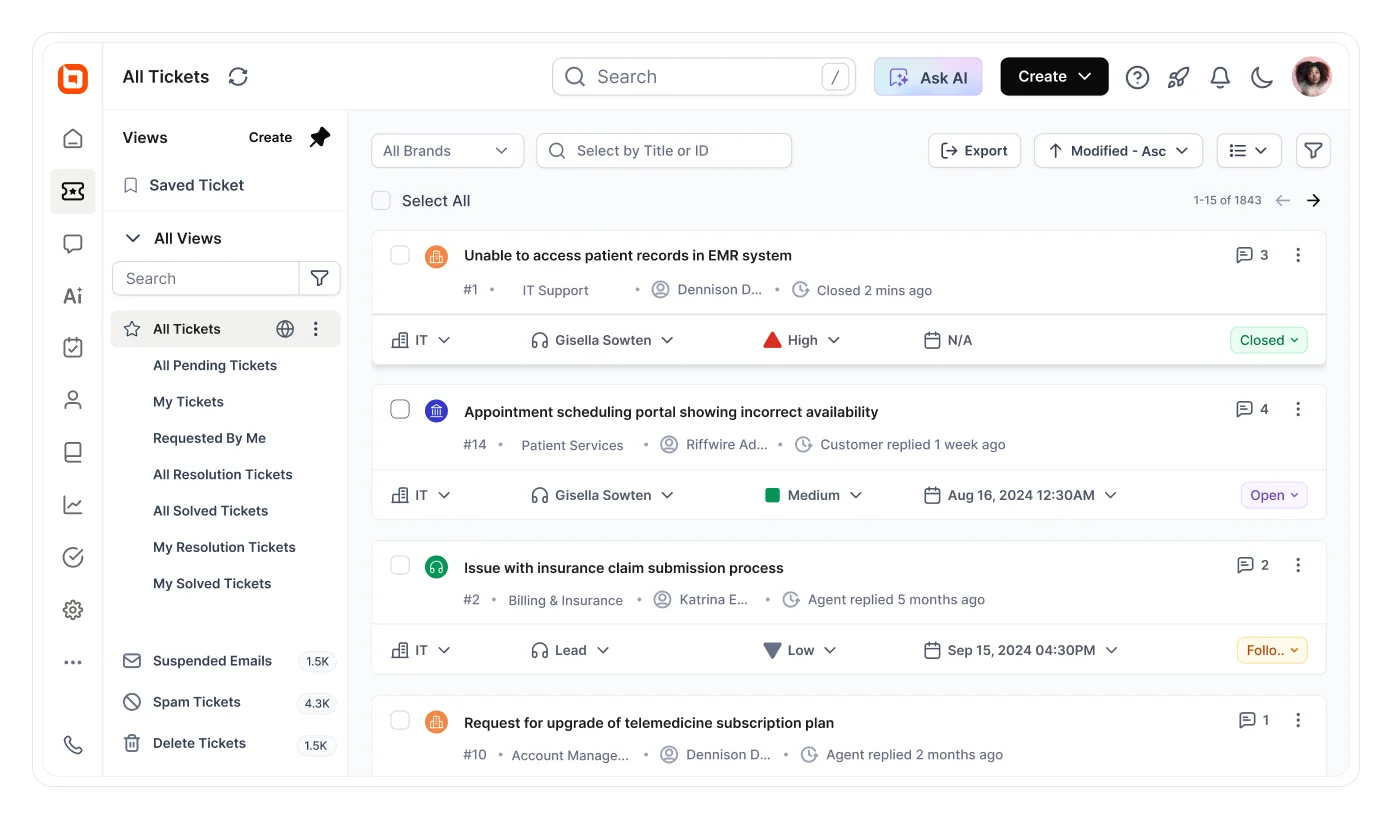
The platform enables personalized customer service in the following ways:
- Centralizes customer information: Giving agents access to customer history, preferences, and previous interactions helps them provide more informed and efficient support.
- Uses AI to support agents: AI can help identify customer intent, prioritize urgent requests, surface relevant information, and assist with response recommendations.
- Provides self-service options: Knowledge bases, FAQs, and customer portals enable customers to find answers independently while still receiving relevant guidance.
- Automates repetitive tasks: Workflow automation can streamline automated ticket routing, assignment, and prioritization, allowing agents to focus on more complex customer needs.
- Maintains unified customer profiles: A complete view of customer interactions helps teams deliver more consistent and personalized experiences across channels.
- Supports mobile and remote teams: Mobile-friendly support tools help agents access customer information and manage tickets from anywhere.
Customer success story: How Apexa iQ improved support using customer context
Apexa iQ, a software and technology company, needed a scalable way to manage growing customer support volumes while maintaining personalized service.
By using BoldDesk to centralize customer conversations and provide agents with instant access to customer information, the team was able to respond more efficiently and reduce the friction caused by disconnected support interactions.
“Almost overnight, a problem that I’ve been fighting with every other day went away.”- Mike Omiccioli, Apexa iQ.
Building customer loyalty with personalized customer service
Personalized customer service is one of the most effective ways to deliver good customer service, helping customers feel understood, valued, and supported throughout their journey.
The key is to focus on making every interaction relevant, convenient, and helpful, whether through better processes, employee training, or the right technology.
BoldDesk enables teams to personalize customer service at scale, without increasing complexity.
Schedule a live demo or start a free trial to see how we can help your team provide faster, more relevant, and more consistent support.
Let us know if you have any additional ideas in the comments section below. We’d love to hear from you.
Related articles
- Customer Service Email Templates for Consistent Responses in 2026
- How Empathy in Customer Service Transforms Every Interaction
- Customer Appreciation Ideas & Phrases to Thank Customers (+Examples)
FAQs on personalized customer service
An example of personalized customer service is when an agent reviews a customer’s previous interactions before responding so the customer doesn’t need to repeat information.
Traditional customer service relies on standardized responses and a one-size-fits-all approach.
Personalized customer service uses customer data to tailor interactions, anticipate needs based on past behavior, and deliver more relevant, customized communication.
AI supports personalized customer service by analyzing customer data in real time to predict needs, automate routine inquiries, and assist agents with relevant context.
This enables faster responses and more consistent, personalized support experiences across customer service channels.
Businesses can collect customer data through onboarding processes, purchase history, customer journey mapping, surveys, and feedback forms.
Analyzing conversations across channels such as email, chat, calls, and social platforms helps build a comprehensive understanding of customer preferences.
Small businesses can personalize support by keeping customer records updated, using customer names appropriately, tracking previous conversations, and acting on customer feedback.