


 In this page

Customer reviews play an important role in today’s digital marketplaces, serving as a critical component in the decision-making process for potential buyers.
They provide first-hand insights into a product or service, describing real user experiences and satisfaction levels.
Unlike traditional marketing, which is controlled by the business, customer reviews are user-generated content that offers an unbiased perspective.
Whether you’re a seasoned shopper looking for the next best product, a curious consumer seeking real opinions, or a business owner eager to understand your clientele, reviews are your friend.
In this blog, we will explore what customer reviews are, their importance, and examples.
What is a customer review?
A customer review is feedback provided by a customer about a product or service they have used. These reviews can be posted on various platforms, including:
- Company websites
- Social media
- Review sites
- E-commerce platforms
Customer reviews typically include the customer’s opinions and experiences, highlighting aspects they liked or disliked, the quality of the product or service, and whether it met their expectations.
Reviews can be written paragraphs, star ratings, or even videos, and they heavily influence potential customers’ purchasing decisions.
Businesses often use these reviews to improve their products, services, and overall customer experience.
Importance of customer reviews
Customer reviews are like gold for businesses. A BrightLocal survey found that half of consumers place the same level of trust in reviews as they do in personal recommendations from friends and family.
These customer reviews offer a wealth of benefits for both companies and consumers, making them integral to any business strategy.

Following are reasons why customer reviews are important.
Build trust and credibility
Customer reviews provide genuine feedback from other users, which builds customer trust and product credibility. Potential customers are far more trusting of consumer reviews than marketing messages from the company itself.
Help improve products and services
Customer reviews offer businesses valuable insights into what customers like and dislike about their products or services. This customer feedback helps businesses identify areas for improvement and innovate based on actual user experiences.
Enhance search engine optimization (SEO)
User-generated content like customer reviews can improve a company’s SEO. Search engines like Google prioritize fresh, original, and relevant content, and customer reviews deliver just that.
Moreover, customer reviews naturally incorporate keywords that potential customers are likely to use when searching for products or services.
This organic use of language helps businesses rank higher for specific search terms, enhancing their visibility in search engine results.
Improve customer engagement and loyalty
Responding to reviews shows customers that their opinions are valued, fostering a sense of community and loyalty. Engaging with both positive and negative feedback can turn dissatisfied customer into one likely to return.
Provide a competitive advantage
A large number of positive reviews can set a business apart from its competitors. They can be a deciding factor when consumers are choosing between similar products or services.
Customer reviews indicate that many individuals have had positive experiences with the company’s products or services.
These favorable reviews enhance a business’s online presence and improve its ranking in search engine results, facilitating easier discovery for potential customers.
Increase transparency and authenticity
Reviews add a layer of transparency and authenticity to a business. Honest feedback from real customers makes the business appear more trustworthy and reliable.
Shape marketing strategies
Positive reviews act as social proof, a powerful marketing tool that can attract new customers. They serve as testimonials that can be highlighted in marketing campaigns to showcase the brand’s value.
How to ask customers for reviews
Asking customers for reviews can be a delicate process, but when done correctly, it can significantly enhance your business’s online reputation.

Following are some strategies to request reviews effectively.
Timing is key
Reach out to customers for reviews shortly after they have had a positive interaction with your product or service.
This could be immediately following a purchase, a support interaction, or a successful project completion.
The experience will still be fresh in their minds, making them more likely to provide detailed feedback.
Personalize your request
When requesting a review, tailor the message to suit the customer.
Address the customer by their name and reference specific details about their purchase or experience.This shows that you value their individual experience and are not just sending out a generic request.
Personal touches can make the customer feel special and more inclined to take the time to leave a review.
Make it easy
Ensure that it is as simple as possible for customers to leave a review. Consider the following practices:
- Provide direct links to your review page and clear instructions on how to write a review. The easier you make the process, the more likely customers are to follow through.
- Use tools and platforms that allow customers to leave a review with just a few clicks.
- Offer customers with various ways to leave reviews. This could include email, SMS, website pop-ups after an action, or social media posts.
Incentivize without compromising integrity
Offering incentives can be effective, but it must be approached carefully to avoid the impression that you are purchasing positive reviews.
You can establish an employee recognition program that acknowledges and rewards staff for receiving positive customer feedback. By implementing this program, you create an environment that values both customer experiences and employee contributions.
Just be sure that the incentive does not lead to harassment of customers. This encourages staff to actively engage with customers and seek feedback.
However, it is important not to incentivize customers by offering discounts or other rewards in exchange for reviews.
Such practices violate Google’s guidelines and those of other review platforms. They can also compromise the integrity of your reviews, leading to distrust among customers.
Be honest and sincere
Asking customers for reviews can be a delicate matter, but being honest and sincere is key to encouraging them to share their experiences.
Customers appreciate transparency and are more likely to respond positively if they understand that their review will contribute to better customer experiences for everyone.
- Clearly explain why you are asking for a review and how their feedback helps you improve your products or services.
- You can also clearly state that writing a review typically takes a few minutes.
For example:
Follow up
If a customer hasn’t left a review after your initial request, a gentle reminder can be helpful. However, it’s important to strike the right balance and avoid coming across as pushy.
A polite customer follow-up message thanking them again for their business and gently reminding them about the review can be effective.
Best practices for getting positive customer reviews
While obtaining positive customer reviews is a customer service goal for every business, consistently securing them can be challenging. Following are some best practices to increase your chances of getting positive customer reviews.
Provide quality products and services
The foundation of positive reviews lies in offering high-quality products or services that meet or exceed customer expectations.
Ensure your products function well and your services are delivered professionally.
Exceed customer expectations
Put in the extra effort for your customers. This could involve offering unexpected upgrades, personalized touches, or prompt and efficient problem-solving.
Prioritize customer satisfaction
Make customer satisfaction a core principle of your business. Equip your team with training to ensure they are professional, helpful, and responsive to customers.
Use reviews to improve
Analyze both positive and negative reviews to identify areas for improvement in your products, services, and customer interactions.
Respond to all reviews promptly and professionally
Customer reviews can be both positive and negative, and businesses should learn how to handle both effectively:
- Thank positive reviews: Acknowledge and appreciate positive feedback. This shows you value client satisfaction and encourages further customer engagement.
- Address negative reviews promptly: Respond to negative reviews within 24–48 hours. Apologize for the inconvenience, take responsibility for the issue, and explain how you’re addressing it. Offer solutions and potentially move the conversation offline to resolve the matter privately.
Turning customer reviews into business insights
Turning customer reviews into actionable business insights involves several measures that can help organizations understand customer sentiment, identify areas for improvement, and enhance their overall offerings.
Analyze customer feedback to identify areas for improvement
Carefully read and analyze a review to understand the customer’s experience. Identify any specific issues or areas for improvement mentioned.
Respond promptly
Craft a polite and professional response. Thank the customer for their feedback, either ask them to contact you through a specific channel or address concerns they raised, and explain any steps you are taking to resolve the issue in a general way.
Implement changes
If the review highlights a valid problem, take steps to rectify it. This might involve improving a product, enhancing customer service, or refining internal processes.
Share positive reviews
Highlight positive reviews on your website, social media platforms, and marketing materials. This not only builds credibility but also attracts potential customers.
Employee training
Use the feedback for staff training purposes. Share both positive and negative reviews to illustrate the impact of their actions on customer satisfaction.
Incorporate into marketing
Use compelling quotes from the review in your promotional content. Authentic customer testimonials can be powerful marketing tools.
Monitor trends
Keep track of common themes or recurring issues mentioned in reviews. This data can help you identify long-term trends and make strategic decisions.
Enhance SEO
Encourage satisfied users to leave customer reviews on platforms like Google, Yelp, or industry-specific sites. Positive reviews can improve your search engine rankings.
How to handle negative reviews from customers
A Local Consumer Review Survey by BrightLocal reveals that 88% of consumers are likely to choose a business that responds to all of its reviews, while only 47% would consider a business that does not reply to reviews at all.
Negative customer reviews can feel like a blow, but they are actually a valuable opportunity to improve your business.
Here’s how to handle negative reviews from customers in a way that shows professionalism and a commitment to customer satisfaction:
- Respond promptly: Don’t leave a negative review hanging. Aim to respond within 24–48 hours to show the customer you take their feedback seriously.
- Acknowledge and apologize: Start your response by acknowledging the customer’s feelings and say sorry for the inconvenience they experienced. Avoid making excuses or placing blame.
- Take ownership: Even if the situation wasn’t entirely your fault, take responsibility for the customer’s experience. This shows you care and are committed to resolving the issue.
- Offer a solution: Don’t just apologize—if possible, explain how you’re addressing the problem and what steps you’re taking to prevent it from happening again. If applicable, offer the customer some form of compensation, like a discount, refund, or free service, to show your goodwill.
- Make the conversation private: For complex issues or particularly frustrated or unhappy customers, you should take conversations that begin in public channels to private ones. This lets you protect customer privacy and allows for a more detailed discussion. You can offer to connect via email or phone.
- Maintain a professional tone: Throughout your response, use a professional and courteous tone. Avoid getting defensive or argumentative, even if the customer’s review is harsh.
- Learn from the feedback: Don’t just respond publicly—analyze the negative review to identify what went wrong. Use this as an opportunity to improve your product, service, or customer interaction processes.
Customer review examples
Customer reviews can appear in diverse formats on multiple platforms.
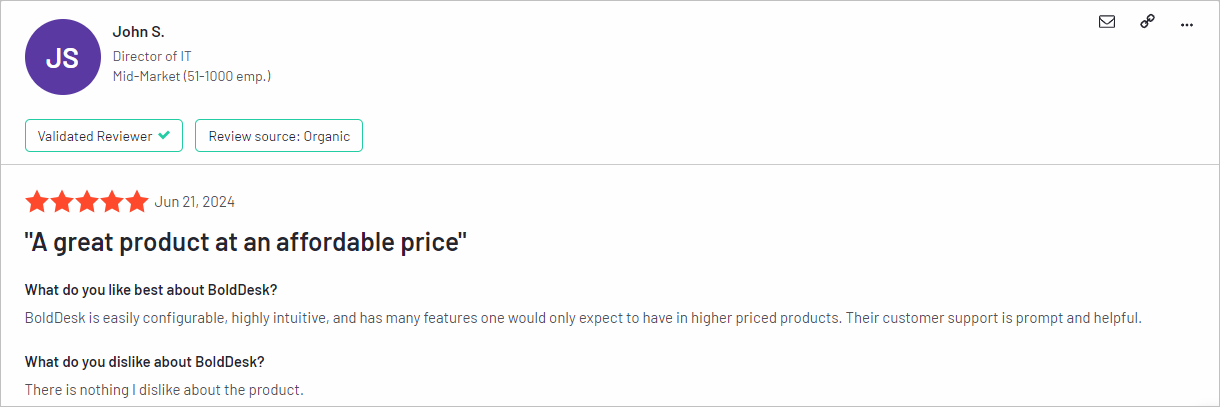
Positive customer reviews
Positive customer reviews help showcase a company’s commitment to excellence and customer satisfaction, highlighting product quality, exceptional service, and memorable interactions. They build trust among existing customers and attract potential clients.
Example of positive customer review
Negative customer reviews
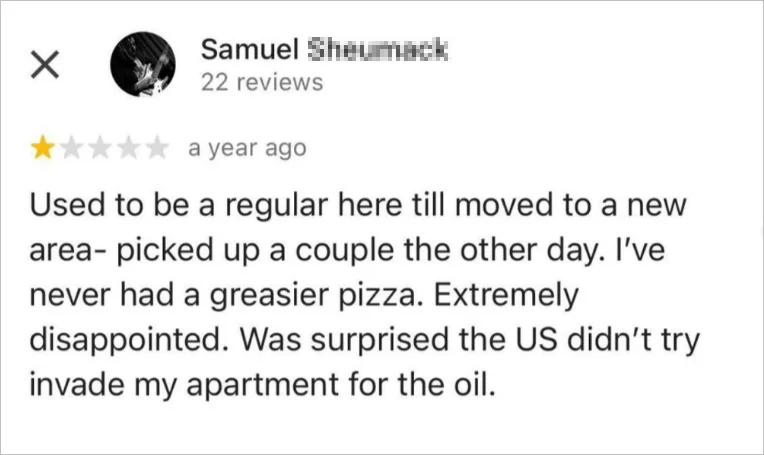
Negative customer reviews often reveal dissatisfaction, highlighting issues like bad customer service, unmet expectations, delivery delays, and lack of responsiveness. Such feedback can harm a business’s reputation and impact potential customers, making it essential to address these concerns promptly.
Example of negative customer review
10 Popular customer review sites
According to BrightLocal’s Local Consumer Review Survey, 36% of consumers consult two review sites before choosing local businesses, whereas 41% rely on three or more sites.
Here are some common customer review sites where businesses and services can be reviewed by customers:
- Google My Business: Used by customers to leave reviews directly on Google search results and Maps.
- Yelp: A popular site for reviews of local businesses including restaurants, shops, and services.
- Trustpilot: A global review platform for various types of businesses.
- TripAdvisor: A leading travel review platform for hotels, restaurants, attractions, and vacation rentals.
- Avvo: Specializes in reviews for legal professionals.
- Capterra: A well-known B2B software review platform, Capterra helps businesses compare and choose software solutions based on user reviews.
- G2: Focuses on user reviews for software and SaaS (Software as a Service) tools.
- Amazon Customer Reviews: Reviews for products sold on Amazon, including detailed feedback and ratings.
- Facebook Reviews: Allows users to review businesses and services through their Facebook business pages.
- Glassdoor: Provides reviews of companies from employees, focusing on workplace culture, salary, and management.
Turn customer reviews into business advantages
Customer reviews are a valuable tool for both businesses and consumers. They offer a window into real customer experiences, shaping customer perception of brands and guiding purchasing decisions.
Understanding the power of customer reviews allows businesses to improve their offerings and build stronger customer relationships, while empowering consumers to make informed choices.
Improve your customer reviews with BoldDesk leading your customer support strategy. Begin your free trial today and see how BoldDesk can help you in your customer review process.
If you have any questions, don’t hesitate to contact the BoldDesk support team. For a personalized demonstration of how BoldDesk can meet your company’s specific needs, reach out to us to arrange a live demo at your convenience.
I hope you found this article useful. Do you have any suggestions or feedback? Please share your thoughts in the comments section.
Related blogs