





TL;DR: Customer trust in customer service is earned through consistent response times, clear communication, reliable issue resolution, and respectful treatment. For businesses and support teams, trust directly affects retention, loyalty, and long-term growth. Learn how trust forms, why it matters, and how to build and measure it across every support interaction.
Customer trust is shaped in moments of friction, when a question goes unanswered, or expectations are unclear. In customer service, trust is not built by branding or promises. It is built by how consistently and transparently support teams respond when customers need help.
Research by PwC indicates that 32% of customers would stop doing business with a brand after one bad experience.
For organizations that rely on customer-facing teams, whether in technology, finance, healthcare, retail, or professional services, trust directly impacts retention, loyalty, and long‑term growth.
Customers who trust your support are more patient during issues, more likely to return, and more willing to recommend your business to others.
This blog explains what customer trust means and outlines practical actions support teams and service leaders can take to build, measure, and sustain trust at scale.
What is customer trust?
Customer trust in customer service refers to the confidence customers have that a business will consistently act in their best interest, delivering reliable products, transparent communication, ethical behavior, and dependable support over time.
It’s a critical element in fostering long-term relationships, encouraging customer loyalty, and supporting a brand’s reputation.
Why building trust with customers is important for businesses
Customer trust is a critical driver of long‑term business performance. When customers trust a company, they are more likely to stay, spend more, and advocate for the brand.
Below are the key business benefits of building strong customer trust.
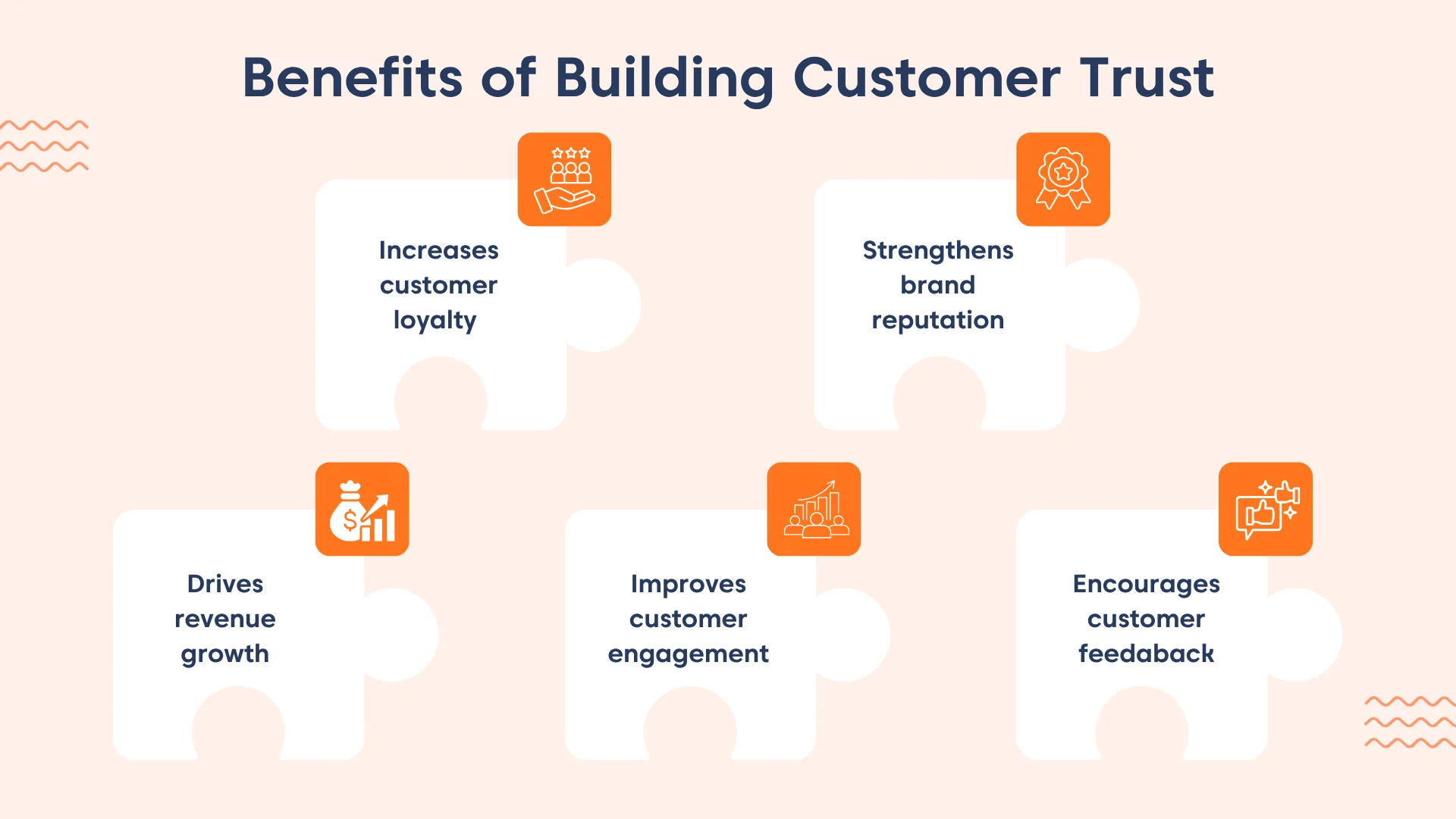
Increases customer loyalty and advocacy
Trust makes customers more likely to stay, renew, and choose your business again, especially when issues arise. Over time, trust transforms one‑time interactions into stable, long‑term customer relationships and reduces churn driven by poor support experiences.
According to a study conducted by Mercuri International, 99% of business leaders believe that trust is essential to establishing enduring relationships with customers.
When trust is present, one‑time interactions turn into enduring partnerships, reducing churn driven by poor or inconsistent support experiences.
Strengthens brand reputation
Trusted brands earn stronger reputations. Consistent, transparent support leads to positive reviews, referrals, and recommendations that reinforce your reputation as reliable and customer‑focused.
Drives revenue growth
Customers who trust your support teams are more willing to continue doing business, upgrade, and maintain long‑term contracts. Higher trust increases customer lifetime value and creates more stable, predictable revenue.
Example: A customer considering a renewal encounters a support issue close to contract expiration. A fast, clear, and accountable resolution reinforces confidence in the partnership, making renewal more likely despite the initial friction.
Improves customer engagement
When customers trust support teams, they provide better context, ask clearer questions, and engage more openly during interactions. This results in faster resolutions and gives teams clearer insight into product gaps, service issues, and workflow inefficiencies.
Encourages valuable customer feedback
Trusted customers are more willing to share honest feedback because they believe it will lead to action. This feedback becomes a powerful input for improving support processes, product usability, and overall customer experience rather than just a collection of survey responses.
What are the 5 pillars of customer trust?
Customer trust is built through consistent support experiences that reduce uncertainty and reinforce confidence. These five pillars define how customers evaluate whether a company and its support team can be trusted.
- Transparency: Transparency means communicating clearly and proactively throughout the support process. Honest explanations, visible ticket progress, and realistic timelines help customers understand what is happening and what to expect next, especially when issues take time to resolve.
- Reliability: This is the ability to consistently meet expectations and follow through on commitments. Missed SLAs, dropped tickets, or conflicting responses across channels quickly erode trust, even if intentions are good.
- Competence: Trust increases when support agents demonstrate product knowledge and problem‑solving expertise. Clear, correct answers and effective resolutions without unnecessary escalations signal that the customer is in capable hands.
- Security and data protection: Customers trust companies that safeguard their information. Secure systems, controlled access, and compliance‑ready processes reassure customers that their data is protected throughout every support interaction.
- Empathy and respect: Trust is reinforced by how support teams handle difficult conversations. A calm tone, acknowledgment of frustration, and respectful escalation handling help customers feel heard and supported, even when issues are complex or unresolved.
Most businesses think trust is built through branding. In reality, it’s built in support interactions, even automated customer support must preserve a human tone that acknowledges frustration and prioritizes resolution.
How to measure customer trust
Customer trust can feel abstract, but it can be measured using a combination of perception‑based metrics and behavior‑based indicators.
For businesses, the goal is not a single “trust score,” but a set of signals that show whether customers feel confident, secure, and supported over time.
Customer trust and confidence surveys
Direct feedback remains the clearest indicator of trust. Surveys that ask customers whether they feel confident in your company, and believe promises are kept. Trust support interactions help quantify trust at a perception level, especially after key support experiences.
Net promoter score (NPS)
NPS reflects trust through loyalty and advocacy. Customers who are willing to recommend your product or service typically trust both the solution and the support behind it, making NPS a strong proxy metric for trust health.
Customer satisfaction (CSAT) surveys
CSAT scores tied specifically to support tickets reveal trust immediately when it matters most. Consistently high CSAT indicates customers believe issues are handled competently, transparently, and fairly.
Customer effort score (CES)
Trust grows when customers feel interactions are easy and friction‑free. CES measures how simple it is for customers to get help and resolve issues, with lower effort strongly correlated with higher trust and long‑term retention.
Behavioral trust signals
Customer actions often reveal trust more clearly than survey data. Renewal rates, churn, repeat interactions, and reduced escalations all indicate whether customers trust your support team to solve problems reliably.
How to build trust with customers
Building customer trust requires consistent actions, not one‑time efforts. The strategies below focus on delivering reliable experiences, maintaining transparency, and prioritizing customer needs to strengthen long‑term trust and loyalty.
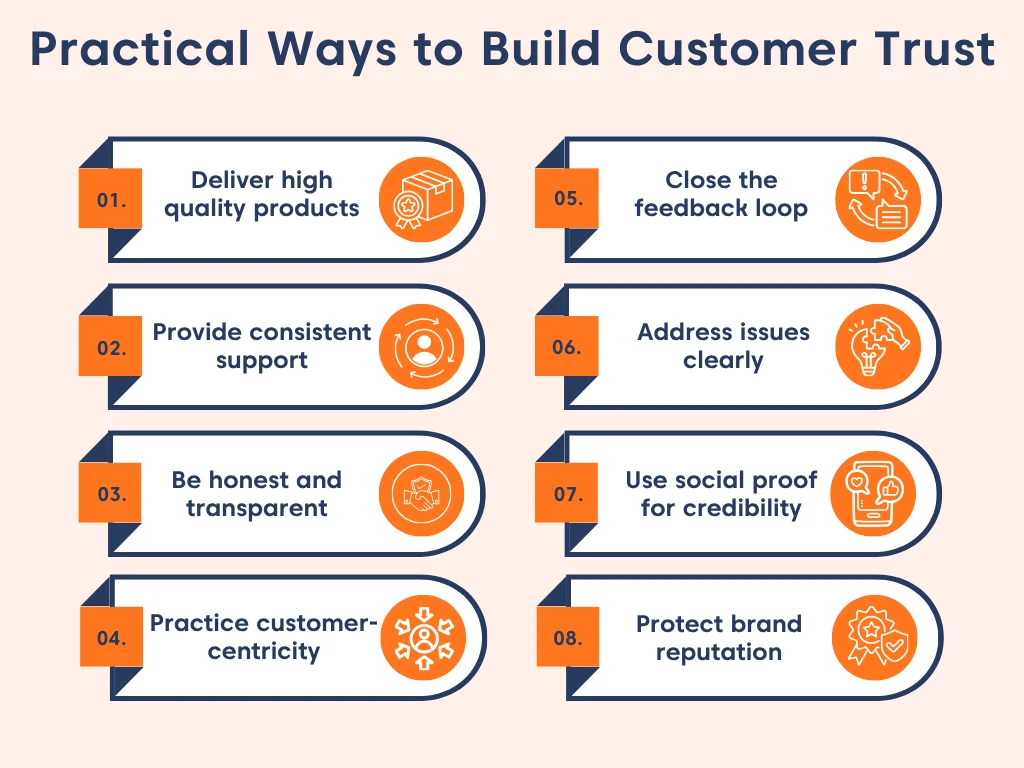
Deliver a high-quality product that customers can rely on
Trust starts with a product that consistently meets customer needs. When products are reliable, easy to use, and aligned with customer expectations, customers feel confident continuing their relationship with your business.
A dependable product reduces friction and sets the foundation for trust before customers ever contact support.
Provide consistent, human-centered support
Exceptional customer service is central to trust‑building. Customers trust businesses that respond consistently, communicate clearly, and treat every interaction as a real human need, not just a ticket number.
Reliable support processes and well‑supported agents ensure issues are handled accurately, empathetically, and without unnecessary friction.
Be honest and transparent
Transparency strengthens trust, particularly during service disruptions or mistakes. Clear explanations, upfront pricing, and honest acknowledgment of problems reassure customers that your business is accountable.
According to a Sprout Social study, 89% of people believe that a business can restore trust if it acknowledges its mistakes and is transparent about how it plans to rectify the situation.
Trust grows when customers understand what went wrong and how it is being resolved.
Example scenario: A customer reports a billing issue that requires internal review. Instead of staying silent, the support team shares clear updates, explains the reason for the delay, and provides a realistic resolution timeline, preventing frustration and building confidence even before the issue is resolved.
Put customers at the center of every decision
Customer‑centric organizations consistently earn higher trust. This requires empathy, active listening, and a shared responsibility across teams to improve customer experiences—not just resolve issues.
Meeting customers where they are and adapting to their needs reinforces credibility.
Actively close the feedback loop
Customer feedback is a direct signal of trust. When customers see that their input led to meaningful improvements, they are more willing to share honest insights and remain engaged.
Effective trust‑building means closing the loop, not just collecting feedback, but acting on it and communicating outcomes.
Address issues and conflicts clearly
Trust is reinforced when businesses take responsibility for mistakes and resolve them directly. Clear communication, timely responses, and ownership help customers feel heard, especially during sensitive situations.
Avoiding or minimizing issues quickly undermines confidence.
Use social proof to reinforce credibility
According to a BrightLocal study, 97% of customers regularly check internet reviews when selecting a local business to patronize.
Customer reviews, testimonials, and real examples of improvement validate trust for new and existing customers. Social proof reassures buyers that others have received consistent, reliable support.
Showing how customer feedback, positive or negative, directly led to improvements strengthens both authenticity and credibility.
Protect and reinforce your reputation through consistency
A strong reputation is built through repeated, dependable experiences. Every customer interaction, especially through support, either reinforces or weakens trust.
Meeting expectations consistently matters more than occasional standout moments.
Building customer trust is an ongoing commitment
Customer trust and loyalty are the foundation of strong, lasting customer relationships. Trust is not created after a purchase; it begins with the very first interaction and is reinforced through consistent communication, reliable support, and accountable service over time.
Businesses that invest early in transparency and customer‑focused service create stronger relationships, higher retention, and greater customer lifetime value. Every support interaction either strengthens that trust or puts it at risk.
The right customer service and support software can make this process more consistent and scalable. BoldDesk helps you operationalize trust through SLAs, automation, and consistent support workflows, so every interaction reinforces reliability, not risk.
Schedule a live demo to see how BoldDesk supports trust‑driven customer service at every stage of the customer journey.
If you have any questions about the product and its capabilities, feel free to contact the BoldDesk support team.
Related articles
- 8 Benefits of AI in Customer Service
- 10 Key Customer Satisfaction Metrics to Measure in 2026
- Brand Perception: What It Is and How to Measure It