





TL;DR: Customer satisfaction metrics turn customer feedback into actionable insights that drive loyalty and retention. By tracking the right indicators at key touchpoints, teams can identify experience gaps, optimize support performance, reduce churn, and build long‑term customer relationships through data‑driven decisions.
In today’s competitive business environment, customer satisfaction is a critical driver of growth and retention. Customers interact with brands across multiple touchpoints, and each interaction shapes how they perceive your product, service, and support experience.
According to PwC, 73% of consumers say customer experience is an important factor in their purchasing decisions.
Customer satisfaction metrics turn these perceptions into measurable, actionable insights, helping you understand what customers value, uncover friction in the customer journey, and evaluate whether your support meets expectations.
By consistently tracking the right metrics, support teams can prioritize improvements that strengthen loyalty and reduce churn.
This blog covers the customer satisfaction (CSAT) metrics worth measuring to get clearer insights and improve your support offerings.
What are customer satisfaction metrics?
Customer satisfaction metrics are quantifiable indicators used by businesses to measure how satisfied customers are with a product, service, or overall brand experience.
These metrics provide clear, data‑driven insights into customer perceptions, expectations, and emotional responses at different touchpoints.
By tracking CSAT metrics, companies can identify experience gaps, improve service quality, increase customer loyalty, and reduce churn. They are essential for making informed decisions that enhance customer experience (CX) and drive long‑term business growth.
10 Types of customer satisfaction metrics to measure and track
Customer satisfaction metrics use multiple tools and methodologies to capture customer feedback.
By identifying trends, views, and areas of improvement, these metrics allow businesses to respond and engage with customers effectively.
Here are the key customer satisfaction metric examples businesses can utilize in different areas.
| Metric | What it measures | When to use |
| Net promoter score (NPS) | Customer loyalty and advocacy | Measuring long-term loyalty |
| Customer satisfaction core (CSAT) | Satisfaction after an interaction | Post-support or purchase |
| Customer effort score (CES) | Ease of customer interaction | After issue resolution |
| Customer churn rate | Customer attrition | Retention analysis |
| Customer lifetime value (CLV) | Long-term revenue value | Revenue forecasting |
| Customer retention rate | Ability to retain customers | Loyalty tracking |
| Social media sentiment | Public customer perception | Brand monitoring |
| Customer health score (CHS) | Overall customer engagement | Risk and expansion tracking |
| Customer service satisfaction (CSS) | Support experience quality | Post-support evaluation |
| First response time (FRT) | Support responsiveness | Operational efficiency |
1. Net promoter score (NPS)
The net promoter score is one of the key customer loyalty metrics that assesses the possibility of customers recommending a company’s products or services to others.

By posing a straightforward query, organizations can easily classify customers as promoters, passives, or detractors, which aids in measuring customer satisfaction levels.
For example, “On a scale of 0 to 10, how probable are you to recommend our company’s products or services to a friend or family.”
A positive score (>0) indicates more loyal customers than dissatisfied ones.
Additionally, it offers a clear indication of customer loyalty and support to help improve business revenue and profit, and reduce churn rates.
While calculating Net Promoter Scores manually is possible, using tools like BoldDesk NPS calculator ensures greater accuracy and efficiency.
2. Customer satisfaction score (CSAT)
The customer satisfaction score (CSAT) measures how satisfied customers are with a specific interaction, product, or service. It is typically collected through surveys, star ratings, or feedback forms immediately after an experience.
Customers rate satisfaction on a defined scale (such as 1–5), and responses are used to calculate the CSAT score.

To simplify this process, customer service teams can save time and improve accuracy by using tools like BoldDesk’s Free CSAT Score Calculator instead of calculating scores manually.
The importance of tracking CSAT scores includes:
- Identify service gaps quickly.
- Improve agent performance.
- Increase repeat purchases.
3. Customer effort score (CES)
Customer effort score is a CSAT metric that evaluates how easy it is for customers to complete an action or resolve an issue. It is typically measured through post-interaction surveys or interaction analysis.
Businesses can identify customer pain points and areas of improvement by evaluating the effort customers need to put in to achieve a desired outcome.
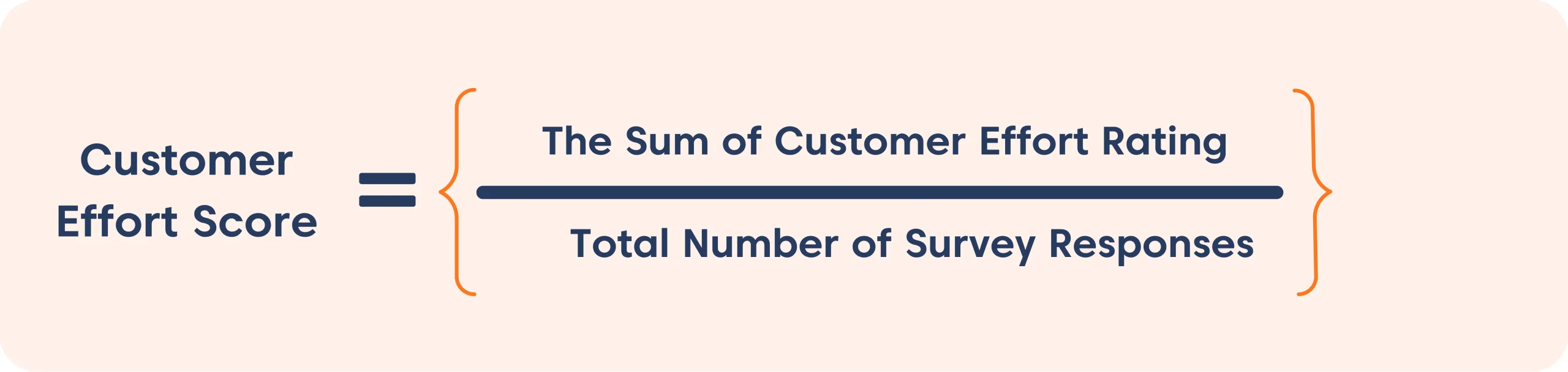
A higher CES score means customers found it easier to complete their task, which correlates with higher satisfaction.
4. Customer attrition rate
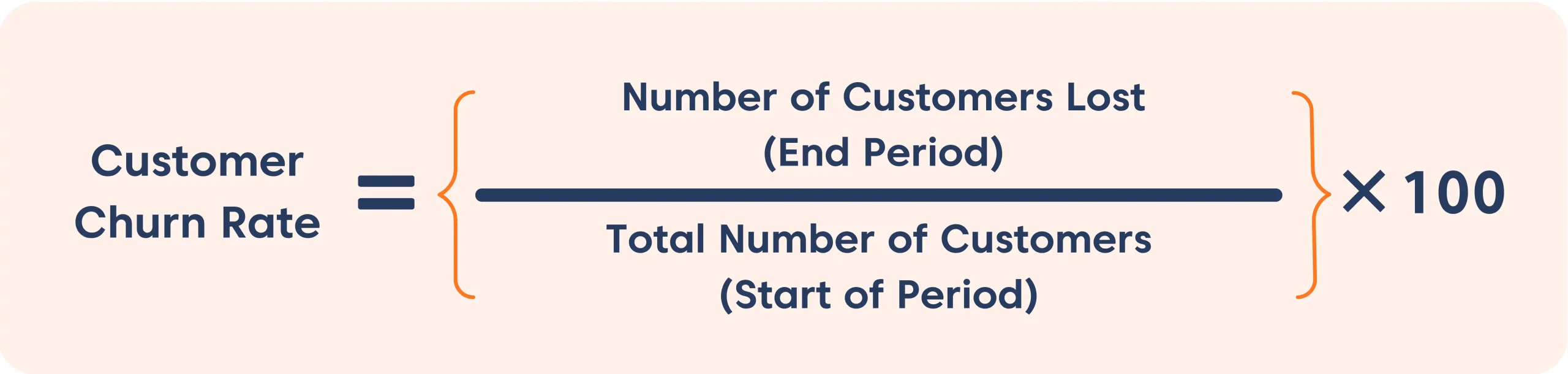
Customer churn rate (CCR), also known as attrition rate, represents the percentage of customers who stop using a product or service within a specific period.
Tracking customer churn helps organizations understand why customers leave and implement retention strategies. A lower churn rate reflects stronger loyalty and satisfaction.
Reducing churn helps businesses:
- Retain high-value customers.
- Improve overall satisfaction.
- Unlock sustainable growth.
5. Customer lifetime value (CLV)
Customer lifetime value estimates the total revenue a customer is expected to generate over their entire relationship with a business.
By analyzing CLV across customer segments, organizations can prioritize high-value customers and invest in personalized experiences that strengthen long-term relationships.

6. Customer retention rate
Customer retention rate calculates the proportion of customers that a company successfully retains over a given period.

Research from Zippia shows that increasing customer retention by just 5% can boost profits by 25%–95%.
Higher retention rates signal strong satisfaction, trust, and loyalty.
7. Social media sentiment analysis
Social media sentiment analysis evaluates customer opinions expressed across platforms such as X, LinkedIn, and Facebook.
By monitoring positive, neutral, and negative sentiment, businesses gain real-time insights into customer satisfaction, brand perception, and emerging issues.
Tools like sentiment analysis or social listening platforms categorize feedback as positive, neutral, or negative.
8. Customer health score (CHS)
The customer health score is a composite metric that evaluates customer satisfaction, engagement, and product usage.
By combining feedback, usage data, and support activity, businesses can proactively identify at-risk customers and improve retention outcomes.
9. Customer service satisfaction (CSS)
Customer service satisfaction (CSS) measures how satisfied customers are with post-sales support interactions.
Collected through post-ticket surveys, CSS highlights service quality and directly reflects the effectiveness of support teams.
10. First response time (FRT)
First response time measures how quickly support teams respond to customer inquiries.

According to McKinsey, 79% of customers expect a response within 24 hours, and 40% expect one within an hour.
Faster response time, signal reliability, build trust, and improve overall satisfaction.
How to measure customer satisfaction metrics
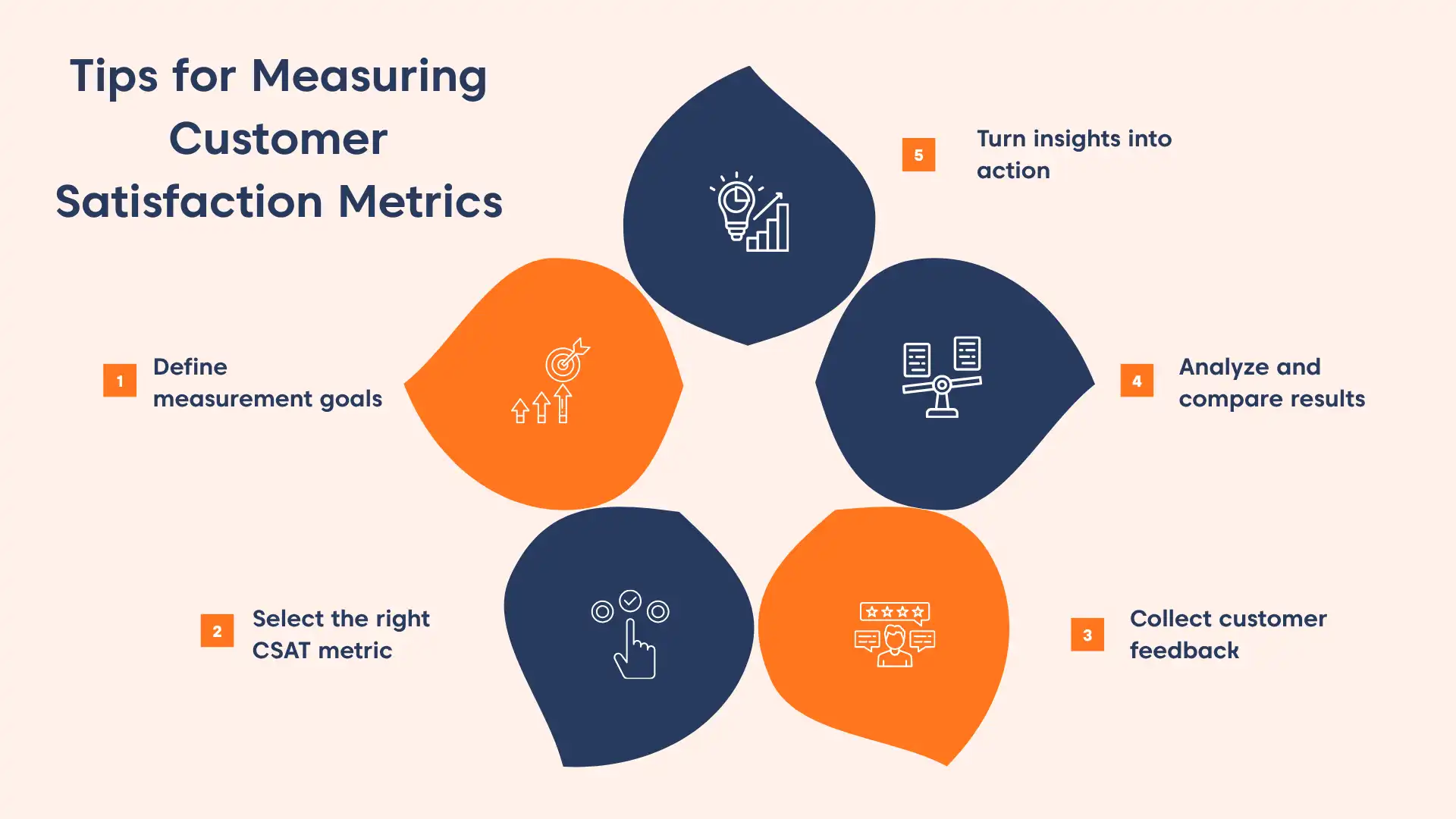
Measuring customer satisfaction metrics requires a structured approach that combines clear objectives, the right tools, and consistent analysis.
Instead of tracking metrics in isolation, businesses should measure them across key customer touchpoints to gain a complete view of the customer experience.
1. Define your measurement goals
Start by identifying what you want to achieve with customer feedback. For example:
- Evaluate support team performance
- Measure customer loyalty and advocacy
- Reduce customer churn
Clear goals guide metric selection, for instance, CSAT for short‑term satisfaction after interactions, or NPS for long‑term loyalty and brand sentiment.
2. Select the right customer satisfaction metrics
Select CSAT metrics based on your business goals and where customers are in their journey. Different stages require different types of feedback, such as post‑interaction input, long‑term loyalty signals, or retention insights.
Focus on a small set of high‑impact measurements rather than tracking everything at once. A streamlined approach delivers clearer insights, faster analysis, and more effective action.
3. Collect feedback at the right touchpoints
Gather feedback when customer experiences are fresh and meaningful, such as:
- After a support ticket is resolved
- Following onboarding or major product updates
- At key milestones in the customer lifecycle
Using automated surveys, in‑app feedback, and post‑interaction prompts increases response rates and data accuracy.
4. Analyze and compare results over time
Track metrics consistently to identify patterns and measure improvement over time. Compare results across:
- Different time periods
- Support teams or communication channels
- Customer segments
This analysis helps uncover recurring issues, performance gaps, and opportunities for optimization.
5. Turn insights into action
Customer satisfaction metrics only deliver value when insights lead to change. Use findings to:
- Improve support workflows and response processes
- Train and coach support agents
- Optimize self‑service resources such as FAQs and knowledge bases
- Enhance product or service quality
Closing the feedback loop by informing customers about improvements strengthens trust, increases loyalty, and encourages continued engagement.
Ways to improve your CSAT metrics
Boosting clients’ happiness requires a comprehensive approach involving various business operations. Measuring customer service metrics to understand their satisfaction can lead to a more positive and fulfilling experience for customers.
Offering high-quality products and services
Consistently delivering high-quality products and services is foundational to improving CSAT. Continuous improvement and innovation ensure products align with customer expectations and changing market demands.
Regular customer feedback and market research help uncover improvement opportunities and guide meaningful product enhancements.
Ensure effective and efficient communication
Clear, timely communication across channels such as phone, email, live chat, and social media builds trust and sets accurate expectations. Effective communication includes:
- Actively listening to customer needs
- Collecting and acting on feedback
- Resolving issues quickly and transparently
These practices demonstrate responsiveness and reinforce customer confidence.
Train and empower employees
Well-trained and empowered employees play a critical role in customer satisfaction. Ongoing training focused on empathy, problem-solving, and product knowledge enables support teams to deliver consistent, high-quality experiences that build loyalty.
Provide proactive customer support
Proactive customer service helps prevent issues before customers report them. By analyzing customer behavior, usage patterns, and historical data, teams can anticipate problems, send timely alerts, and offer solutions early, reducing frustration and improving satisfaction.
Optimize self-service experiences
Customers increasingly prefer resolving issues on their own. Optimizing self-service options such as knowledge bases, FAQs, and AI-powered chatbots enables faster resolutions, reduces support effort, and improves CSAT by giving customers immediate access to answers.
Reduce response and resolution times
Fast responses strongly influence customer satisfaction. Automating ticket routing, prioritizing urgent requests, and using intelligent workflows help reduce first response time and resolution time, key drivers of positive support experiences.
Utilize a customer relationship management system
Technology plays a vital role in improving CSAT. CRM systems centralize customer data, personalize interactions, and improve support efficiency. Automation further streamlines workflows, reduces wait times, and enhances the overall experience.
Build strong, long-term customer relationships
Customer loyalty programs, rewards, and exclusive benefits encourage repeat engagement and satisfaction.
Personalizing experiences using customer data such as purchase history and behavior, adds value through tailored recommendations, relevant promotions, and meaningful interactions.
Turn customer satisfaction metrics into better support experiences
Meeting customer expectations and maintaining satisfaction are essential to sustainable business growth.
By using customer satisfaction metrics to accurately measure how customers feel at every interaction, teams can reduce churn, strengthen retention, and deliver consistently better support experiences.
BoldDesk makes measuring and improving customer satisfaction simple. With built‑in feedback tools and actionable insights, you can track performance, uncover gaps, and optimize support workflows with ease.
Start a free trial or book a live demo to see how BoldDesk can help you customize experiences and improve your CSAT score faster and smarter.
Have questions or ideas about customer satisfaction metrics? Reach out to the BoldDesk support team or share your thoughts in the comments, we’d love to hear from you.
Related articles
- Customer Satisfaction: Definition, Examples & Importance
- Top 7 Benefits of Using BoldDesk CSAT Surveys
- Customer Satisfaction Survey Best Practices – 10 tips
- 40+ Popular Customer Satisfaction Survey Questions
- What is Customer Satisfaction Score (CSAT)?