





TL;DR: Customers get frustrated when support teams respond quickly but take too long to resolve the issue. This resolution gap experience creates repeat follow-ups and increases operational pressure. A structured ticket triage framework, with clear ownership, intelligent routing, and consistent updates, helps teams resolve issues faster and deliver a reliable customer experience.
Every time a customer gets a quick reply but waits hours or days for the issue to be resolved, frustration grows.
This fast replies and slow fixes pattern undermines trust, drives repeated follow-ups, and creates unnecessary workload across customer support operations.
According to a Forrester report, 73% of consumers say valuing their time is the most important thing a company can do to provide good service, which is why faster resolutions matter more than fast acknowledgments alone.
A structured ticket triage process, with clear ownership, automated ticket routing, and consistent updates, helps teams turn quick replies into real solutions.
This guide explains why fast replies and slow fixes happen, and how support teams can turn quick responses into real problem-solving.
What are “fast replies and slow fixes” in customer support?
“Fast replies and slow fixes” refer to a situation where support teams respond quickly to a customer’s request but take too long to actually solve the problem.
Customers receive a prompt acknowledgment, but see little meaningful progress toward resolution, leading to frustration, repeated follow-ups, and escalations.
What is the difference between first response time and time to resolution?
First response time and time to resolution are often confused, but they measure two very different aspects of support performance.
- FRT measures how quickly a customer receives an initial reply. It reflects responsiveness at the beginning of the ticket lifecycle.
- TTR measures how long it takes to fully resolve and close the issue. It reflects end-to-end efficiency from open to close.
In simple terms, FRT shows how fast you respond. TTR shows how fast you solve.
Understanding both helps separate quick acknowledgment from real progress. The table below highlights the differences.
| Metric | What it measures | Customer perception | Operational risk |
| First response time | Time to initial acknowledgment | “They saw my issue” | Work may not have started yet |
| Time to resolution | Time to fully solve and close the issue | “They fixed my issue” | Cross‑team delays slow progress |
Key takeaways:
- FRT measures responsiveness.
- TTR measures effectiveness.
- Optimizing only for FRT can still create slow fixes.
- Improving TTR reduces follow-ups, increases customer satisfaction, and builds long-term trust.
FRT and TTR provide the foundation, but other metrics expose friction in your support workflow.
Key indicators to monitor include:
- First contact resolution (FCR): The percentage of issues resolved in the first interaction. Low FCR often signals intake gaps or routing errors.
- Ticket reassignment rate: How frequently tickets move between agents or teams. High reassignment slows momentum and increases resolution time.
- Backlog volume: The number of open, unresolved tickets at a given time. A growing backlog usually leads to longer resolution cycles.
Why fast replies and slow fixes make customers angry
Quick replies without meaningful progress create a disconnect between customer expectations and actual outcomes. While a fast response may provide initial reassurance, that confidence quickly fades if the issue remains unresolved.
Peak Support’s KPI analysis suggests that a strong benchmark for full resolution time is under 24 hours, reflecting how quickly customers expect a complete fix, not just an acknowledgment.
When resolution is delayed, customers begin to lose trust in the support team and the brand.
Here’s why this gap frustrates customers:
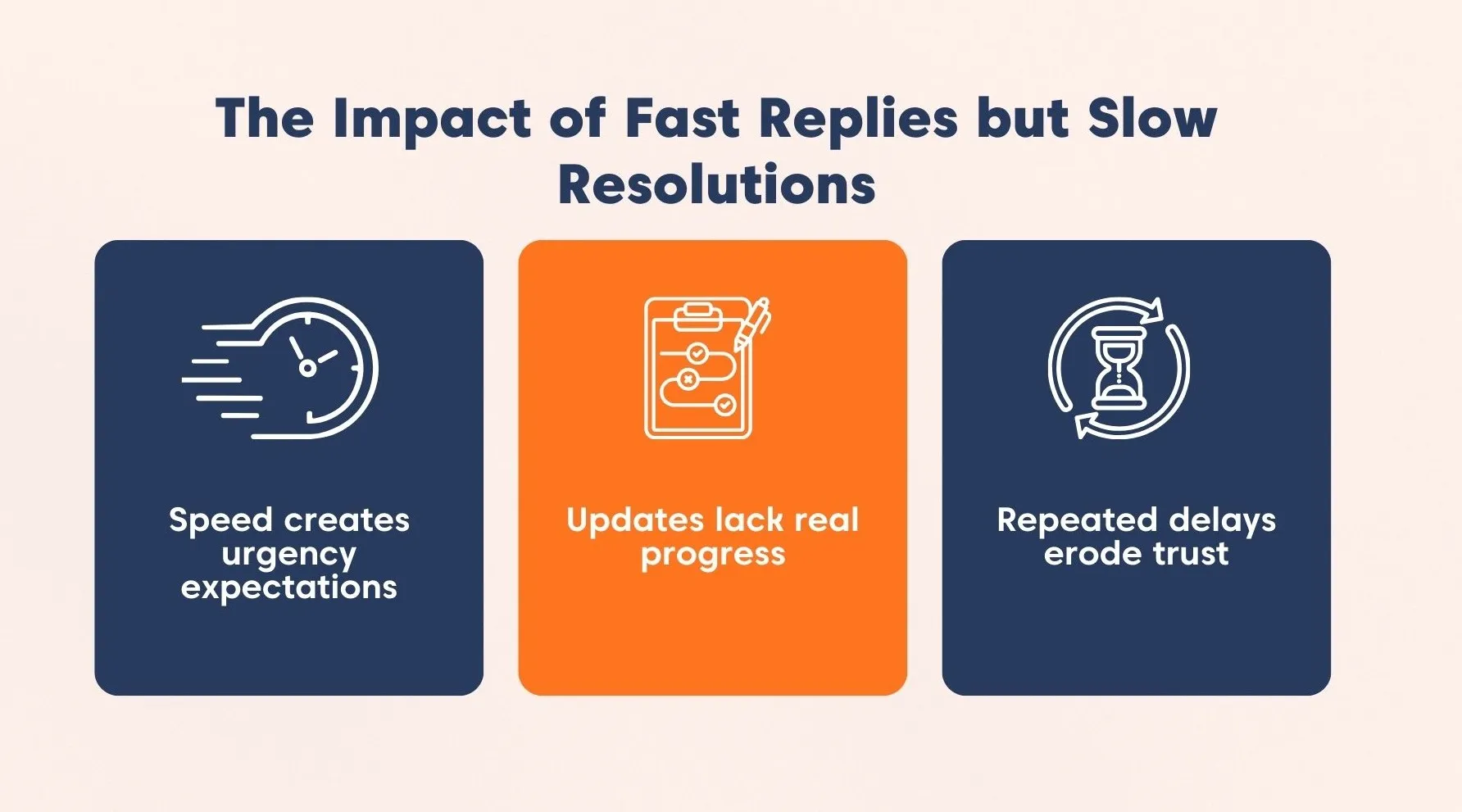
Fast replies raise expectations that aren’t met
When customers receive a quick reply, they assume their issue is already being handled and will be resolved soon. That expectation is natural because speed signals urgency and attention.
But when resolution takes longer than expected, customers often experience:
- Repeated “Any updates?” follow-ups
- Increased anxiety about the issue
- Reduced confidence in the support team
The faster the reply, the higher the expectation for a fast fix.
Acknowledgment without visible action feels empty
Customers can’t see internal workflows, escalations, or investigations. They rely entirely on updates to understand whether progress is being made.
Generic responses like “We’re looking into it” acknowledge the issue but don’t explain what’s happening next. Without clear updates, customers may assume little or no progress is being made.
When replies don’t show real movement, fast responses start to feel superficial instead of helpful.
Repeated delays weaken long-term trust
When customers frequently experience slow results, they begin to expect poor service. This perception can permanently damage the relationship.
Common consequences include:
- Negative reviews and reduced brand perception
- Increased escalations and customer complaints
- Higher customer churn risk
- Growing operational pressure
Over time, slow fixes undermine customer loyalty, even when replies are fast.
What causes fast replies but slow fixes in support teams?
Quick responses don’t always lead to quick resolutions. In many support teams, while the initial response may be prompt, the overall time to resolve issues can remain high due to inefficiencies in the workflow.
Slow fixes are rarely caused by a lack of effort. More often, they result from structural gaps that prevent tickets from moving forward efficiently.
Common causes include:
- Incomplete ticket information at intake: When key details such as error logs, account information, or reproduction steps are missing, agents must go back and forth with customers before they can begin resolving the issue. This delays progress, even if the first reply was immediate.
- Incorrect routing and misclassification: Tickets that land in the wrong queue or team must be reassigned, creating delays, resetting context, and slowing progress toward a fix.
- Unclear ownership and fragmented accountability: When no single person is responsible end-to-end, tickets stall between teams, internal notes accumulate, and progress becomes inconsistent.
- Cross-team dependencies and escalation bottlenecks: Issues that require engineering, billing, or security input are constrained by those teams’ capacity and priorities, increasing resolution time despite fast initial responses.
- Poor prioritization during high volume: When urgency and business impact are not clearly defined, high-priority issues compete with lower-impact requests. Backlogs grow, and critical tickets wait longer than they should.
Common support scenarios where fast replies and slow fixes occur
The fast replies and slow fixes problem can affect any customer service team, but it is more common in SaaS, ecommerce, and technical support environments.
These scenarios often require coordination among teams, which increases resolution time when support triage and assignment are unclear.
Account access and login issues
Login and access problems usually receive fast acknowledgment because they are easy to identify.
However, resolving them often requires verification, permission changes, or coordination with security or engineering teams.
Without proper ticket triage and accountability, these requests may remain unresolved longer than expected.
Billing and subscription concerns
Billing and subscription requests require careful review of payment records, invoices, or account settings.
While agents may respond quickly, resolution can be delayed if tickets are not routed to the correct team.
Each handoff adds context loss and investigation time, directly extending resolution duration.
Technical bugs and product issues
Bug reports often receive immediate acknowledgment but require engineering review before they can be fixed.
Without clear prioritization and communication, customers may feel ignored while teams investigate internally.
Want a repeatable way to route tickets by urgency and impact?
Use our ticket triage framework to standardize intake, prioritization, and ownership.
Best practices for turning quick responses into fast solutions
Fast responses reassure customers, but true customer service excellence comes from resolving issues efficiently and consistently.
Support teams achieve faster outcomes by implementing structured processes, defining priorities, and using the best customer support software to eliminate delays.
The following best practices help teams align fast replies with reliable resolutions while improving customer satisfaction.
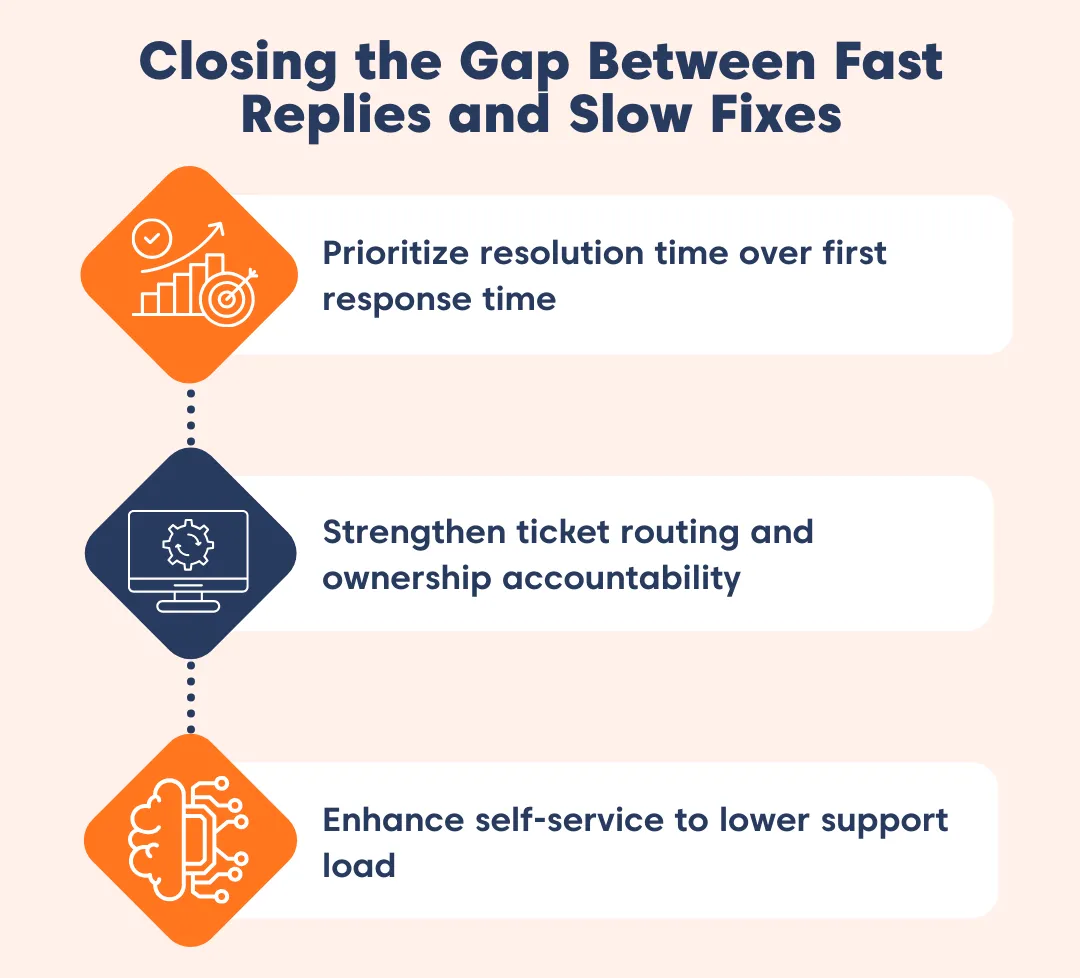
Prioritize resolution time over first response time
While customers appreciate quick replies, what truly matters is how quickly issues are fully resolved.
Focusing on time to resolution rather than only first response time helps teams identify workflow bottlenecks, optimize resource allocation, and improve overall support efficiency.
How to implement:
- Track TTR alongside first response time (FRT) for a complete performance view
- Analyze tickets with long resolution cycles to uncover root causes
- Set internal SLAs that prioritize resolution speed based on urgency and impact
- Use reporting tools to monitor trends and continuously improve workflows
Prioritizing TTR ensures issues are resolved faster, improving customer satisfaction and operational efficiency.
Strengthen ticket routing and ownership accountability
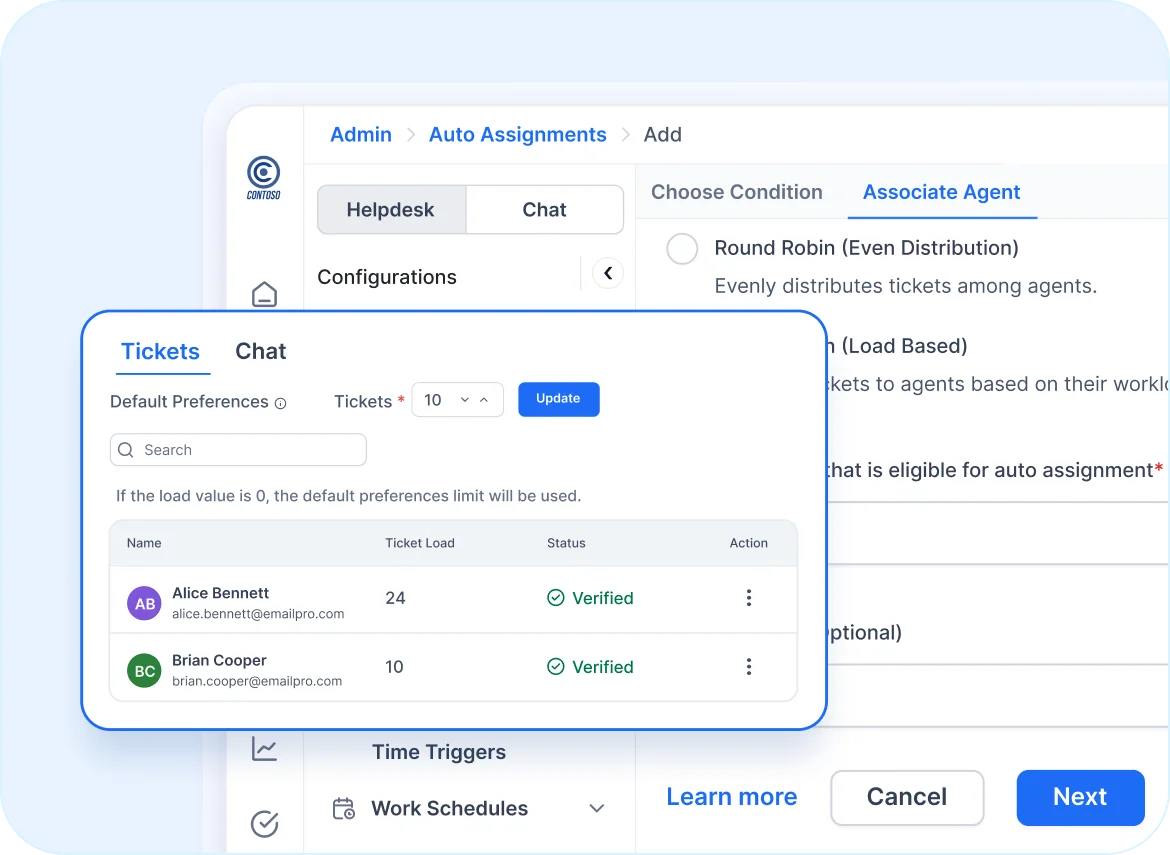
Manual ticket routing slows support teams down, especially during high ticket volumes.
Automation streamlines assignment, escalation, and updates so tickets reach the right owner faster, and customers see consistent progress.
How to implement:
- Automatically assign tickets based on category, priority, or agent expertise
- Define escalation rules for unresolved or high-impact issues
- Send automated status updates for progress or reassignment
- Automate workflows to coordinate team actions efficiently
Improve self-service to lower support load
Not every support request requires agent intervention. Many customers prefer resolving simple issues independently when provided with the right resources.
A Higher Logic study revealed that 84% of customers prefer solving issues on their own before contacting support, indicating that self-service can meaningfully reduce support demand when done well.
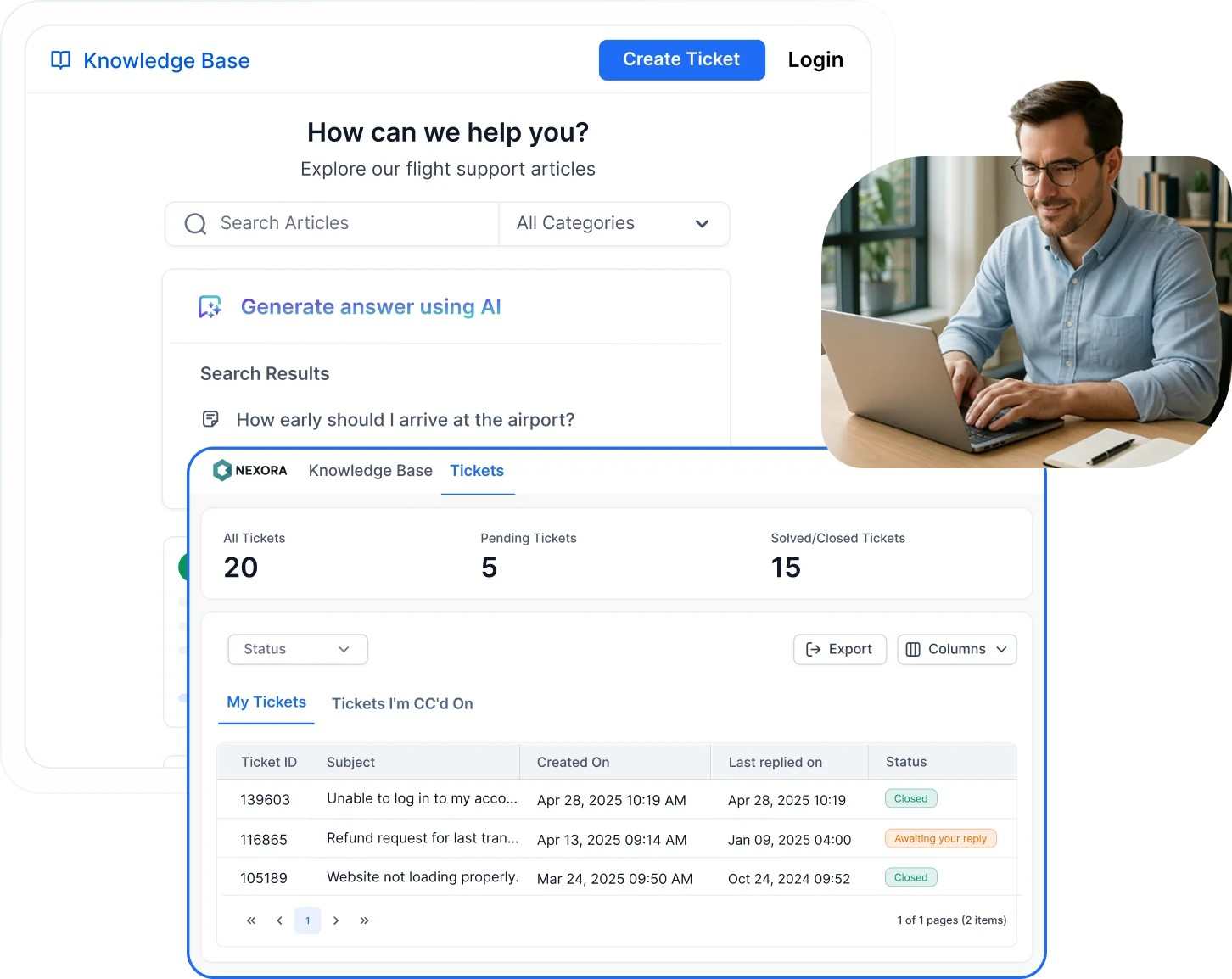
A strong self-service ecosystem, including a well-structured knowledge base, an intuitive help center, and AI-powered assistance, helps customers resolve common questions instantly while reducing ticket volume.
How to implement:
- Keep your knowledge base current with clear steps for common fixes
- Enable AI agent assistants for quick guidance
- Add self-service links to your website and customer portal
When customers can help themselves quickly, agents are free to focus on complex issues, leading to faster resolutions, higher satisfaction, and more efficient support operations.
Turn fast replies and slow fixes into a competitive advantage
The fast replies and slow fixes problem is not an agent problem; it is a workflow issue. When teams prioritize quick acknowledgments over structured triage, customers receive fast responses but slow progress, which gradually erodes customer trust.
The advantage comes from fixing the system behind the response. With clear prioritization, routing, and ownership, tickets move consistently toward resolution and customers see real momentum.
BoldDesk helps you put that structure in place. With intelligent routing, workflow automation, SLA management, and shared visibility, your team can reduce delays and turn responsiveness into measurable resolution performance.
Sign up for a free 15-day trial and close the resolution gap today.
Was this article helpful? Share your thoughts in the comments below.
Related articles
- Empower Support Teams with AI Ticketing Systems in 2026
- The Best Automated Ticketing System for Businesses (2026)
- High-Volume Email Management: 10 Tips to Scale Support and Meet SLAs
Frequently Asked Questions
Track time to resolution and CSAT first. Add FCR, reassignment rate, and backlog volume to diagnose why fixes slow down.
FRT is how quickly you send the first reply after the ticket is created. Time to resolution is how long it takes to fully solve the issue and close the ticket.
Ticket triage improves resolution speed by sending each issue to the right team or agent immediately, preventing misrouting and delays.
It also ensures high-priority problems are handled first, reducing backlog and speeding up overall resolution.
Ticket management with SLA controls, support ticket routing, AI triage or assistance, and a customer self-service portal. These features reduce handoffs, rework, and investigation time.
Support teams can reduce time to resolution by improving triage, assigning clear ownership, automating workflows, and ensuring accurate routing.
Strengthening knowledge bases, enforcing SLAs, and expanding self-service options also speed up resolutions by reducing ticket volume and minimizing delays.
Yes. Automation speeds up resolution by routing tickets to the right teams, applying correct priorities, triggering escalations, and sending status updates without manual work.