


 In this page

TL;DR: Digital customer service uses channels like live chat, email, social media, self-service portals, and AI-driven tools to deliver fast, personalized, and scalable support. Businesses can improve customer satisfaction by adopting omnichannel strategies, automation, unified customer data, and self-service options while maintaining a human touch for complex interactions.
Gone are the days when customers patiently held the line, waiting for a support agent to address their issues. Think about the last time you needed help from a brand. Did you prefer a quick chat online or a long phone queue?
Today’s customers are more tech-savvy, hyper-connected, and less willing to wait. With digitalization as the new norm, can businesses afford to rely on outdated, slow support methods? Not if they want to stay relevant and competitive.
Imagine being able to resolve an issue through a quick chat, self-service portal, or social media message in a way that is fast, effective, and convenient.
This is the promise of digital customer service, often powered by the best customer service software that helps businesses manage conversations across multiple channels.
In this blog, we’ll explore how digital customer service is reshaping the support landscape, the key benefits it offers, and practical strategies businesses can use to deliver outstanding, memorable experiences.
What is digital customer service?
Digital customer service is the support and assistance offered to customers across online channels and digital platforms such as email, live chat, messaging apps, and social media.
It surpasses the use of traditional one-on-one interactions or phone calls and uses various advanced communication channels to manage customer issues and provide prompt support.
Anytime a customer reaches out to your brand without calling or going physically for support, they practice digital customer service either by texting, browsing your website, or checking your posts on social media platforms.
Digital customer support encompasses all online customer interactions with your business across messaging, online voice, video, and social media.
Digital customer service vs. online customer service
While digital customer service and online customer service are often used interchangeably, they differ in scope, technology, and overall business impact.
The table below highlights the key differences between digital customer service and online customer service:
| Aspect | Digital customer service | Online customer service |
| Definition | A broad approach that uses digital technologies to deliver customer support and experiences | Customer support delivered through internet-based channels |
| Scope | Includes online support, automation, AI, analytics, mobile apps, and omnichannel experiences | Focuses mainly on channels such as email, live chat, social media, and customer portals |
| Technology | Relies heavily on AI, chatbots, workflow automation, and customer data platforms | Primarily uses communication channels to interact with customers |
| Goal | Deliver personalized, scalable, and seamless customer experiences | Provide support through online communication channels |
| Approach | Business-wide digital strategy | Channel-based support strategy |
Key takeaway: Online customer service is a part of digital customer service. While online customer service focuses on internet-based support channels, digital customer service takes a broader approach by combining technology, automation, and data-driven experiences to improve customer interactions across every touchpoint.
Importance of digital customer support
During the COVID-19 pandemic, many businesses shifted to operating online, increasing the demand for digital customer service and enabling support teams to assist customers from anywhere.
According to a report from eGain, 69% of customers perceived that digital customer service has improved since the pandemic began.
It’s now a necessity for most businesses, especially those with global customers and employees. By combining different types of customer service channels, businesses can meet customers where they are and deliver faster, more convenient support.
Here are the key benefits:
Boosts agent productivity
Tools like live chat let agents handle multiple conversations at once, instead of one phone call at a time. Self-service portals and FAQs let customers resolve simpler issues on their own, freeing agents to focus on complex work, directly improving team productivity.
Enables quick response times
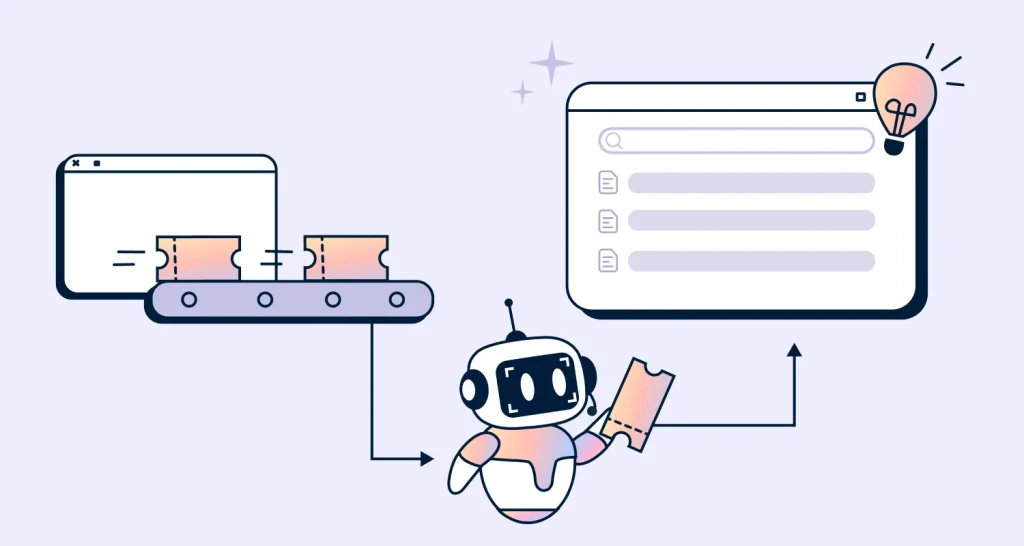
Digital channels like social media and live chat let agents respond in real time. Ticketing systems can automatically categorize and prioritize support tickets, routing urgent requests to the right agent immediately, while knowledge base articles let customers resolve simple issues independently.
Provides personalized experiences
A Salesforce study found 73% of customers expect businesses to recognize their unique needs.
Digital channels, combined with CRM tools tracking past interactions and purchase history, make that possible at scale.
Allows global reach and scalability
Social media and messaging apps like WhatsApp let businesses support customers anywhere in the world without opening a local office in every market. As demand grows, customer self-service portals and a unified omnichannel inbox let businesses handle rising interaction volume without proportionally scaling headcount or budget.
What are the commonly used digital channels in customer service?
As technology continues to evolve, customer service evolves alongside it. Both customers and businesses use digital channels for communication.
A study by Statista shows that almost 70% of the population worldwide uses smartphones.
This revolution in customer service enables businesses to support customers efficiently and effectively on digital customer service channels. These online platforms streamline online customer support and foster loyalty. Let’s find out.
Live chat
Live chat is a real-time messaging tool that enables customers to communicate directly with a business on a website or a dedicated app, providing prompt support and assistance. Businesses can use live chat software to give clients quick and personalized replies.
Salesgroup study shows that 79% of customers prefer live chat for its quick response.
Businesses can connect with customers directly, build trust, and increase satisfaction by implementing live chat on their website or any dedicated online communication app.
Self-service portals
Self-service options such as knowledge base software enable customers to handle simple issues independently, allowing agents to focus on complex tasks that require expertise.
Social media platforms
Today, many customers use social media platforms such as Facebook and Twitter to connect with brands and raise their concerns.
According to Khoros, users from Twitter (75%), Facebook (59%), and Instagram (34%) reach out to brands using these platforms.
These platforms have multiple users, making it a typical channel for businesses to:
- Post about a new product and reach many customers
- Monitor public sentiments
- Gather feedback and insights from customers
By implementing effective social media customer service practices, businesses can deliver timely support, strengthen customer relationships, manage their online reputation, and address customer concerns across digital channels.
Email is an essential part of digital customer service, providing a direct and reliable way to communicate with customers. It allows businesses to respond to inquiries at their own pace while keeping a clear record of past conversations.
Support teams can use these records to offer more personalized and consistent service. Automation helps by sending confirmation emails, status updates, and feedback requests, making the process smoother.
Email also integrates with CRM and help desk tools, helping businesses manage customer data in one place.
Features to consider when selecting a digital customer service tool
Selecting the best digital customer service platform is the first step to delivering a positive digital customer service experience.
An ideal tool for offering support online should have the following characteristics:
- AI assist tools and automation: The tool you select should incorporate AI agent and automation tools to complement agents and streamline repetitive processes like ticket sorting and sending notifications.
- Scalability: As your customer base expands, the platform should be flexible enough to meet growing customer needs without compromising on efficiency.
- Integration options: Digital customer service tools must sync with other digital apps to improve efficiency in service delivery and ensure streamlined customer interactions.
- Multilingual support: To allow you to assist many customers online, the tool should include an option to translate text or voice across multiple languages in real time.
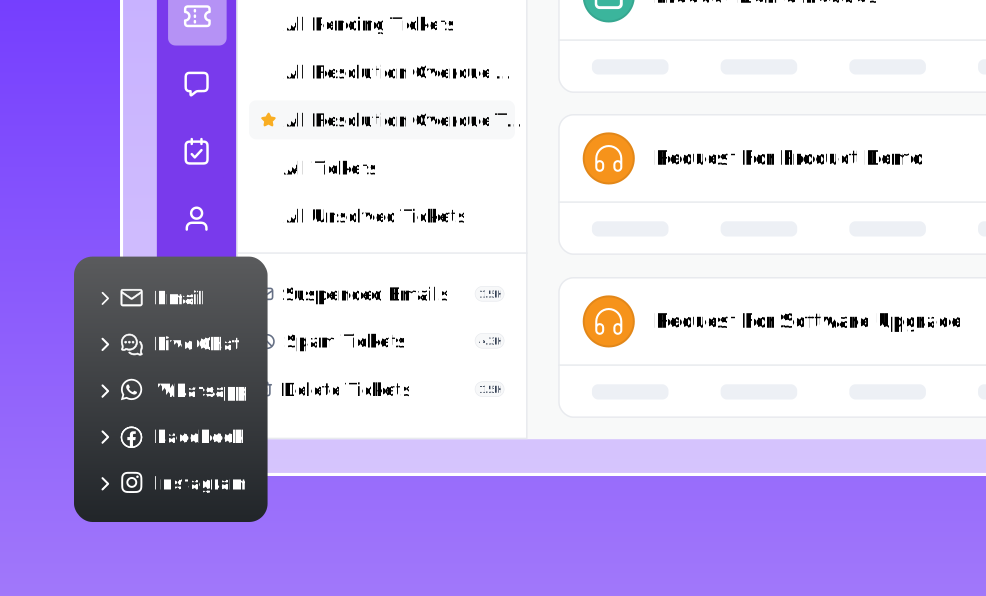
- Omnichannel support: A unified inbox to consolidate and manage all customer inquiries from live chat, email, SMS customer service, and social media on a single platform.
- Reporting and analytics: The tool should track key performance indicators (KPIs) to help you determine areas for improvement in your digital strategy.
- Data privacy and security: It’s crucial for the platform to comply with business regulations and secure customer data from breaches.
Best practices for delivering excellent digital customer support
What makes a digital support experience feel truly exceptional? Is it quick responses, personalized solutions, or seamless communication across channels? Delivering excellent digital customer support is about combining these elements to create meaningful interactions.
Ready to explore the best practices that can help your support team shine? Let’s dive in!
Reach customers on their preferred channels and deliver reliable support
Businesses are rapidly embracing this strategy because today’s customers expect seamless support no matter where they reach out.
This shift highlights that omnichannel isn’t just a trend, it’s the future of customer service. To stay competitive, you must be present where your customers are, be it via email, Facebook, WhatsApp, or live chat, to offer consistent, high-quality support.
Providing a variety of support channels ensures you cater to various types of customers, deliver faster resolutions, and build stronger relationships.
Provide agents with a unified view of customer issues through an omnichannel inbox
Ever felt the frustration of switching between apps just to get a simple answer? Now, imagine your customer service team juggling emails, live chats, and social media messages to track conversations.
Messages get lost, response times slow down, and customers grow tired of repeating themselves.
An omnichannel inbox eliminates these issues by bringing all inquiries into one unified space, giving agents a complete view of every conversation, no matter where it started.
Want to make the most of an omnichannel inbox? Focus on these key steps:
- Integrate all key communication channels: Ensure the commonly used channels like email, live chat, and social media feed into one unified inbox.
- Keep a complete conversation history: Store past interactions from every channel in one place, so agents always have the full context of customer issues
- Leverage smart ticket routing: Direct complex inquiries to the right agents to ensure they are resolved comprehensively
- Enable seamless collaboration: Make it easy for teams to share insights privately and escalate issues quickly when needed.
When interactions flow seamlessly, customers get faster, more effortless service that makes them feel valued and heard.
A unified omnichannel approach enables teams to manage conversations more efficiently across channels.
Following help desk do’s and don’ts helps ensure agents use these systems to effectively maintain consistent support interactions.
Incorporate AI and automation tools in digital channels
A report from BusinessDasher stated that slow response times cause 52% of customers to cease purchasing from a brand.
In today’s fast-paced digital world, speed and efficiency are non-negotiable. AI and automation tools can transform your digital support by delivering fast, personalized responses across channels.
Here’s how you can put them to work:
- Automate routine tasks: Use workflows to handle FAQs, send reminders, and keep customers informed without human intervention.
- Implement an AI Assist tool: Assist agents with real-time suggestions and generate context-aware responses to improve efficiency.
- Carry out sentiment analysis: Detect customer emotions in real time to prioritize urgent issues, personalize responses, and improve service quality.
- Set up SLA automation: Based on predefined rules, set SLA triggers for follow-up messages, status updates, or ticket escalations to ensure timely responses, reduce unresolved issues, and minimize repetitive manual communication.
- Leverage AI-driven insights: Analyze customer interactions across all digital channels to identify patterns, predict common customer needs, and proactively refine your service strategy.
Integrating AI and automation into your digital channels can help you provide faster, smarter, and more engaging customer experiences.
Complement your customer support with self-service options
Customers expect quick answers, and self-service options give them the flexibility to find solutions without waiting for an agent.
Well-structured customer self-service tools like knowledge base, FAQs, and community forums can efficiently help customers resolve common questions independently, reducing support volume.
At the same time, agents can quickly access and reference these resources, ensuring they provide accurate, well-informed solutions without delays while handling multiple customers through digital channels.
To make self-service effective, the resources should be easy to navigate, regularly updated, and accessible across devices.
You can also utilize AI-powered knowledge bases to:
- Help customers find answers quickly
- Summarize lengthy articles
- Translate content across different languages in real-time
When customers can’t find what they need, provide a seamless way to connect with a human agent for fast resolution of complex issues.
For example, BoldDesk customer service software empowers its users to reach out to support whenever they need clarification or have problems finding a solution in the knowledge base.
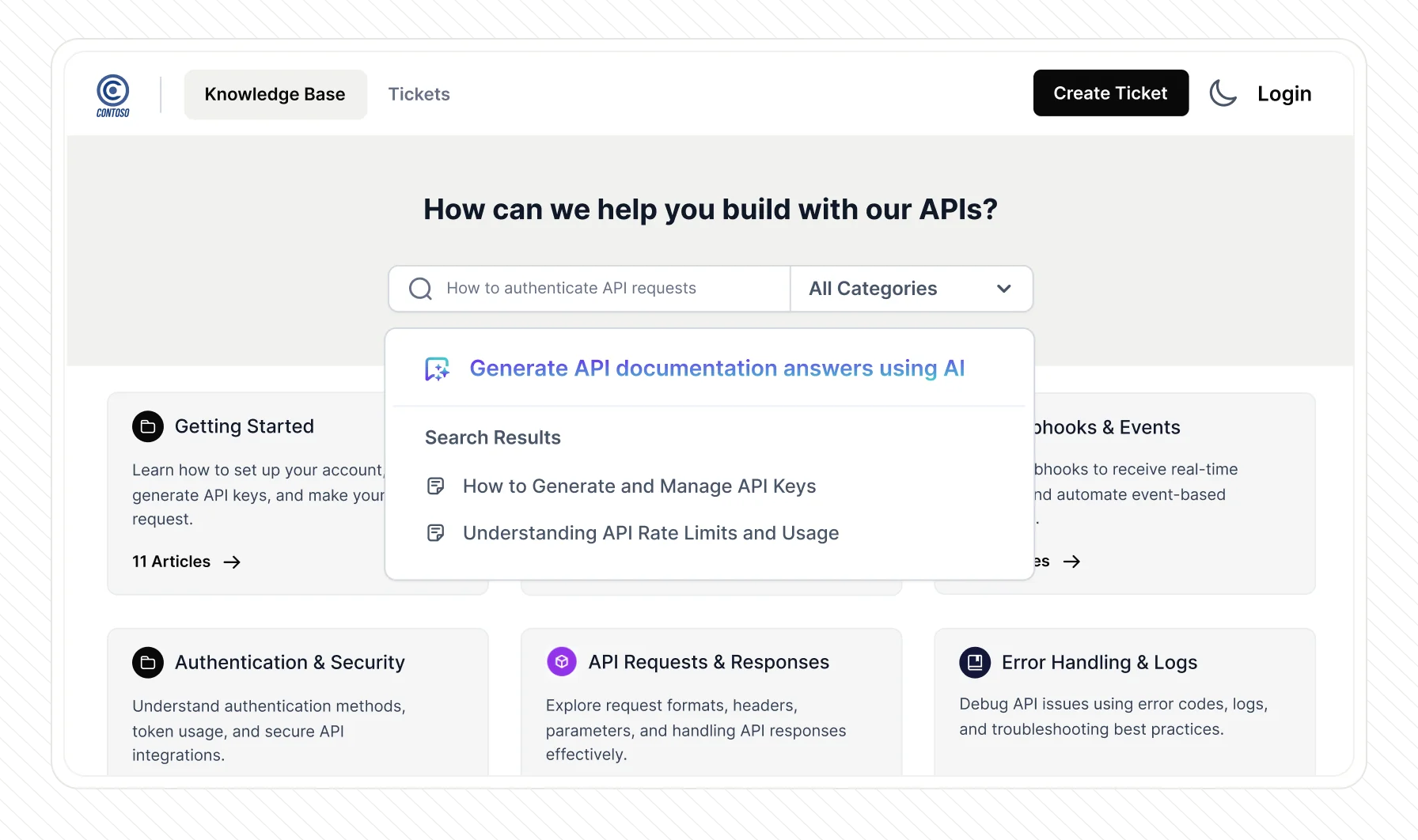
A smooth transition from self-service to live support prevents frustration and ensures a frictionless customer experience.
Equip your team with essential digital skills
Empower your support agents with the right knowledge and skills to use new emerging digital customer service tools and technologies when interacting with customers.
Here are some tips for digitalizing your support team:
- Educate the team on digital media etiquette
- Teach them how to collaborate through digital platforms
- Train agents to troubleshoot and integrate tools
Your support team should also be qualified with problem-solving skills to handle issues with empathy, even on digital customer service platforms.
Blend digital tools with a human touch
While automation enhances efficiency, over-reliance on digital tools can make customer interactions feel impersonal.
AI-powered assistants and automated responses are great for handling routine queries, but complex issues often require human empathy and critical thinking. Striking the right balance ensures that automation enhances, rather than replacing, the human touch in customer service.
When customers need more than a scripted response, blending technology with human expertise ensures a seamless, efficient service experience.
To achieve this, be strategic about what to automate. Use AI and self-service tools to manage repetitive queries, such as order tracking, while reserving human agents for high-value interactions that require empathy, problem-solving, or personalized support.
Unify customer data to deliver faster and more personalized support
Connect your digital customer service tools to bring scattered customer data and feedback from social media, live chat, emails, and other channels into one place, giving agents instant access to key customer details.
Use AI agents and automation to update this data in real-time, ensuring agents always have the latest context, including insights from feedback. This allows them to deliver seamless, personalized customer service across channels, where customers never have to repeat themselves.
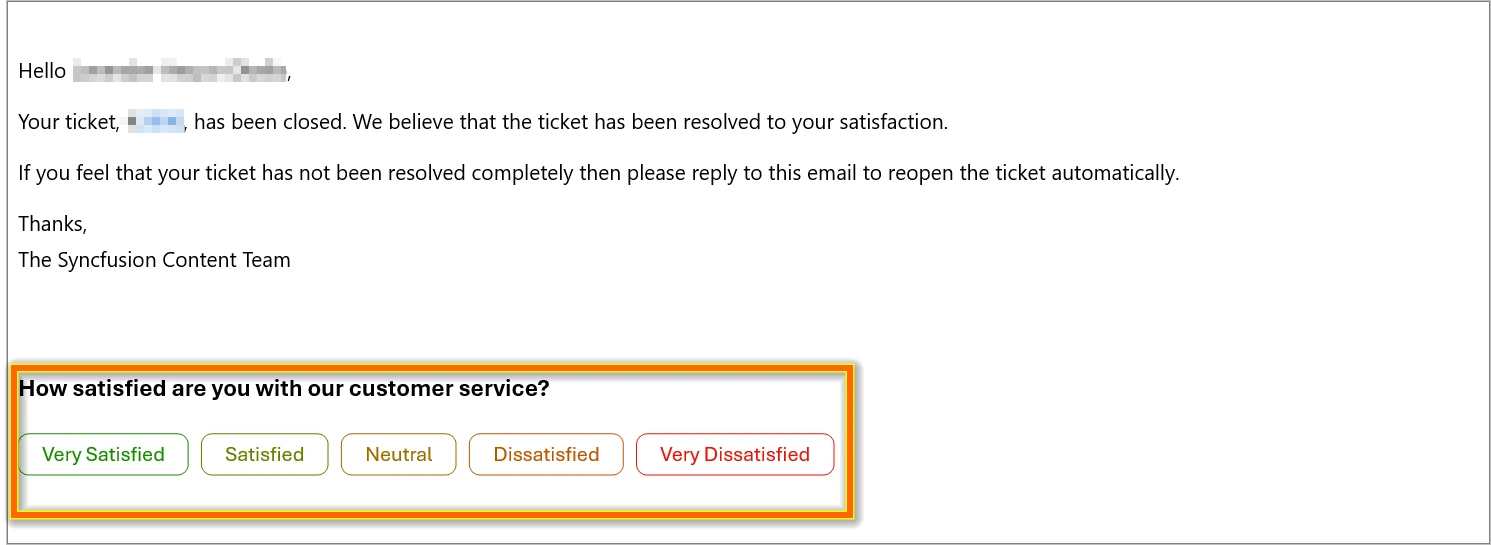
Here’s how Syncfusion, a software company, utilizes BoldDesk customer service software to collect customer feedback after every support ticket is closed.
Examples of digital customer service from real brands
Have you ever had a frustrating experience when interacting with a brand online? If so, you’re not alone. Digital customer service, when mismanaged, can lead to confusion, delays, and dissatisfaction.
On the flip side, many brands have mastered the art of digital support, delivering seamless, efficient, and customer-centric experiences that set them apart.
Here are some top companies that excel in digital customer service and what you can learn from them.
Amazon
Amazon revolutionized digital customer service by leveraging automation and self-service. One key example is its “Where’s My Stuff?” feature, which allows customers to track orders in real time through the website or app.
If a package is delayed, customers can instantly request refunds or replacements without needing to speak to an agent. Additionally, Amazon’s AI-driven chatbots handle common queries like order status or refund requests, significantly reducing the need for human intervention.
This streamlined process enhances convenience for customers while helping Amazon manage millions of daily inquiries efficiently.
Delta Air Lines
Delta Air Lines transformed its customer experience by introducing the Fly Delta app, which empowers passengers to manage their travel plans digitally.
The app provides real-time flight status updates, allows customers to rebook flights during disruptions, and even offers baggage tracking. During peak travel seasons or unexpected flight cancellations, Delta reduces call center traffic by giving passengers the ability to handle these issues directly through the app.
This not only improves customer satisfaction but also helps the airline maintain smoother operations during high-demand periods.
Reinforce your digital customer service with right software
Effective digital customer service is crucial to building strong customer relationships and enhancing business growth.
Identify the right customer service software with omnichannel support to provide consistent assistance and support across multiple digital channels.
BoldDesk® is a customer service tool with first-class features that help businesses streamline processes and manage interactions. It integrates seamlessly with well-known digital customer service productivity tools, empowering agents to deliver top-notch support.
Sign up for a 15-days free trial today and experience how BoldDesk can strengthen your support.
We hope this article gave you a clear understanding of digital customer service and its importance in today’s business world. Feel free to share your thoughts in the comment section below. We would love to hear from you.
Related articles
- How to Effectively Utilize Microsoft Teams for Customer Service
- 12 Best WhatsApp Chatbots for Customer Service
- Using Slack for Customer Service: Features and Benefits
FAQs
Digital customer service boosts satisfaction by offering faster responses, 24/7 support, and personalized solutions through multiple channels. It also enables proactive communication and feedback collection, ensuring a smoother and more engaging customer experience.
Traditional customer service involves phone calls, one-on-one interactions, and physical mail. Digital customer service provides support via online platforms such as social media, live chat, email, and automated chatbot.
Improving digital customer service requires effective communication, active listening, technical proficiency, problem-solving, and adaptability. These skills help support teams understand customer needs, resolve issues quickly, and deliver seamless customer experiences across multiple channels.
Future trends in digital customer service include AI-powered support, predictive customer service, conversational messaging, and hyper-personalization.
Businesses are increasingly using AI to automate support, analytics to resolve issues proactively, messaging apps for faster communication, and unified customer data to deliver more personalized customer experiences.
Common challenges in digital customer service include managing multiple channels, personalizing customer interactions, balancing AI and human support, protecting customer data, and tracking performance across digital touchpoints.