

 In this page

TL;DR: Conversational AI for customer service is AI technology that uses chatbots, AI agents, and voice assistants to understand customer intent, respond in natural language, and automate support across chat, email, voice, and messaging channels. It can answer questions, complete routine tasks, and escalate complex issues to human agents when needed.
What if every customer interaction felt natural, intelligent, and highly helpful, no matter the time or channel?
Conversational AI for customer service enables businesses to automate customer interactions using technologies like AI agents in customer service that understand intent, context, and natural language across chat, email, voice, and messaging channels.
By understanding intent, remembering context, and delivering intelligent, personalized responses, conversational AI is transforming how brands communicate with their customers.
Top companies are now leveraging this innovation to provide seamless, 24/7 customer service that responds in real time and learns from each interaction to improve future engagements.
But what makes conversational AI for customer service so transformative, and why are leading brands accelerating their investment in it?
In this blog, we’ll discuss conversational AI for customer service and why it matters in today’s customer-first business landscape.
What is conversational AI for customer service?
Conversational AI for customer service is the use of artificial intelligence to enable businesses to interact with customers through natural, human-like conversations across channels such as chat, email, social messaging, and voice systems.
Unlike traditional scripted chatbots, conversational AI can interpret meaning, remember prior interactions, and adapt its responses based on customer behavior and history, making interactions feel more intuitive and helpful.
As conversational AI adoption accelerates, Gartner found that 85% of customer service leaders plan to explore or pilot customer-facing conversational GenAI solutions, reflecting the growing importance of AI-powered customer support.
It powers tools such as AI chatbots, AI agents, and AI messaging systems that can automatically answer questions, guide customers, and resolve common support issues.
How does conversational AI work?
Conversational AI uses natural language processing (NLP) and machine learning (ML) to understand customer messages, determine intent, and generate relevant responses in real time.
These systems process conversations through several steps that interpret input, analyze meaning, generate responses, and continuously improve with data.
Conversational AI typically processes customer interactions through the following steps:
- Input: A customer sends a message or voice request through channels such as chat, email, social media, or phone systems.
- Understanding: NLP analyzes the language to identify intent, context, sentiment, and key entities within the message.
- Response: The system generates a natural reply using dialogue management and connected data sources such as CRM systems or knowledge bases.
- Learning: Machine learning models improve future responses by analyzing interaction outcomes, user feedback, and historical conversation data.
Why businesses use conversational AI for customer service
Conversational AI for customer service has revolutionized how businesses interact with their customers in different ways. Below are the key benefits of conversational AI.
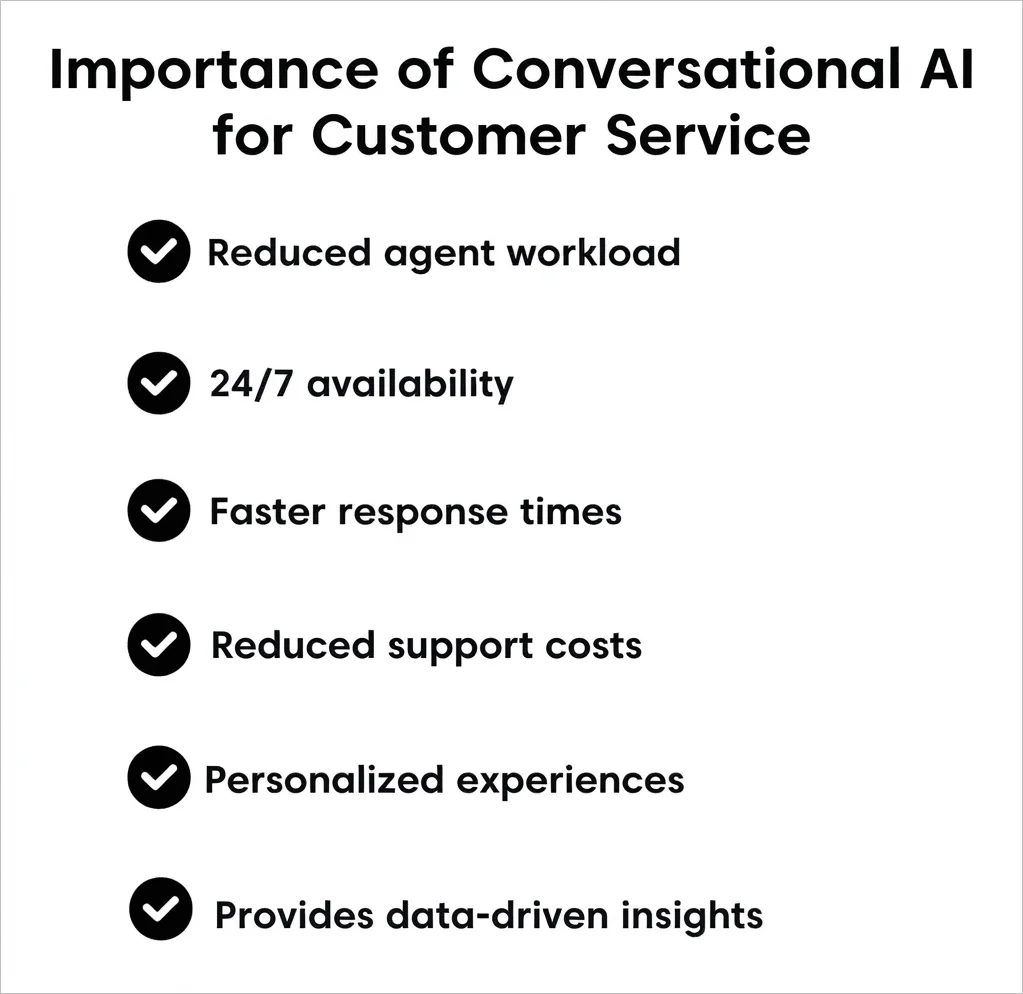
Reduced agent workload
Conversational AI handles repetitive tasks like answering FAQs or checking order status. This frees up human agents to focus on complex or emotional issues where empathy matters most.
Instead of answering customer questions such as “What’s your return policy?” dozens of times each day, agents can help an angry customer resolve a delayed shipment.
24/7 availability
Conversational AI for customer service operates continuously, providing round-the-clock support so customers can receive assistance regardless of business hours, time zones, weekends, or holidays.
Faster response times
Conversational AI platforms can instantly answer customer questions and resolve common requests without waiting in queues. This significantly reduces response times and improves customer satisfaction.
Reduced support costs
By automating routine queries and tasks, businesses can reduce ticket volumes and limit the need for large customer support teams. This lowers operational costs while maintaining high customer service levels.
Delivers personalized experiences
Conversational AI uses data from CRM systems, purchase history, and past customer interactions to deliver more personalized customer service. It maintains context across sessions and offers tailored recommendations, making it a key technology powering modern AI for customer engagement strategies.
Provides data-driven insights
Conversational AI for customer service analyzes support interactions to spot trends, common issues, and customer pain points. These insights help businesses improve products, refine support workflows, and optimize service strategies.
For instance, if many customers ask about a confusing feature, the company can update the product or improve the user manual.
Looking to automate customer conversations without losing the human touch?
Types of conversational AI in customer service
As digital transformation continues to reshape industries, businesses are rethinking how they engage with customers.
Gartner predicts that by 2028, at least 70% of customers will start their customer service journey through a conversational AI interface.
But what are these tools? Here’s a breakdown of the main types:
- AI agents
- AI Copilot
- Voice-based AI interfaces
- Chatbots
AI agents
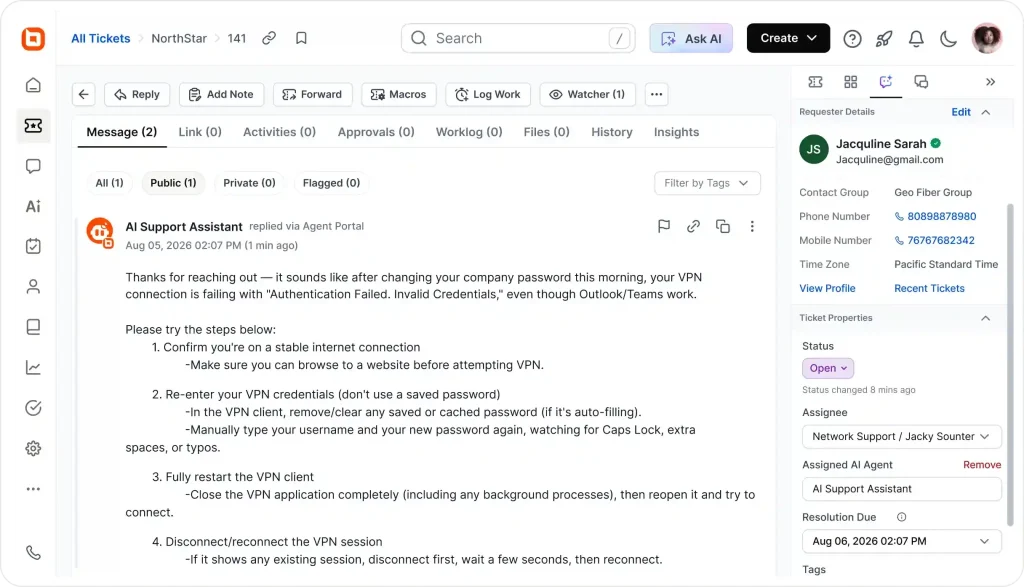
Also referred to as virtual assistants, AI agents are advanced conversational AI tools designed to independently manage entire customer interactions from initial contact to resolution without human intervention.
Key functions of AI agents include:
- Dynamic, context‑aware conversations that feel human.
- Analyze context and reason through requests and take appropriate actions.
- Operate across multiple channels such as email, AI messaging platforms, and support tickets simultaneously.
- Maintain context across sessions and integrate with business systems like CRMs.
- Improve by learning from past interactions with users.
For a deeper look at how autonomous agents compare to traditional bots, see our guide on AI agent vs chatbot.
AI Copilot
An AI Copilot is a real-time conversational assistant that supports human agents by enhancing productivity and decision-making during live interactions.
It integrates with existing tools such as knowledge bases or ticketing systems to provide intelligent, context-sensitive support.
Key functions of the AI Copilot include:
- Suggest smart and relevant responses based on the conversation and knowledge base content.
- Summarize, rephrase, and translate messages during conversations.
- Auto-fill ticket fields based on conversation content.
Voice-based AI interfaces
These are voice-driven conversational AI systems that enable users to interact with technology using spoken language.
They include:
- Voice assistants: Use speech recognition, NLP, and text-to-speech to carry out tasks, answer questions, and control devices via voice, e.g., Amazon Alexa.
- Interactive Voice Response (IVR) systems: Automate phone-based interactions using voice or keypad inputs to route calls or provide information.
Chatbots
AI chatbots are conversational AI tools designed to simulate human-like interactions, often used in customer service to provide instant support.
They rely on machine learning, natural language processing (NLP), and contextual data to interpret user inputs and respond.
As such, they are often task-specific and designed for narrow use cases such as:
- Answering frequently asked questions.
- Guiding users through a website.
- Automating customer service interactions.
Chatbots represent just one category of conversational AI. If you’re evaluating chatbot software, explore the best AI chatbots for customer service for a detailed platform comparison.
Common use cases of conversational AI in customer service
Conversational AI for customer service can support a wide range of tasks, from answering common questions to managing complex workflows.
Below are some of the most common use cases where businesses apply conversational AI in customer support.
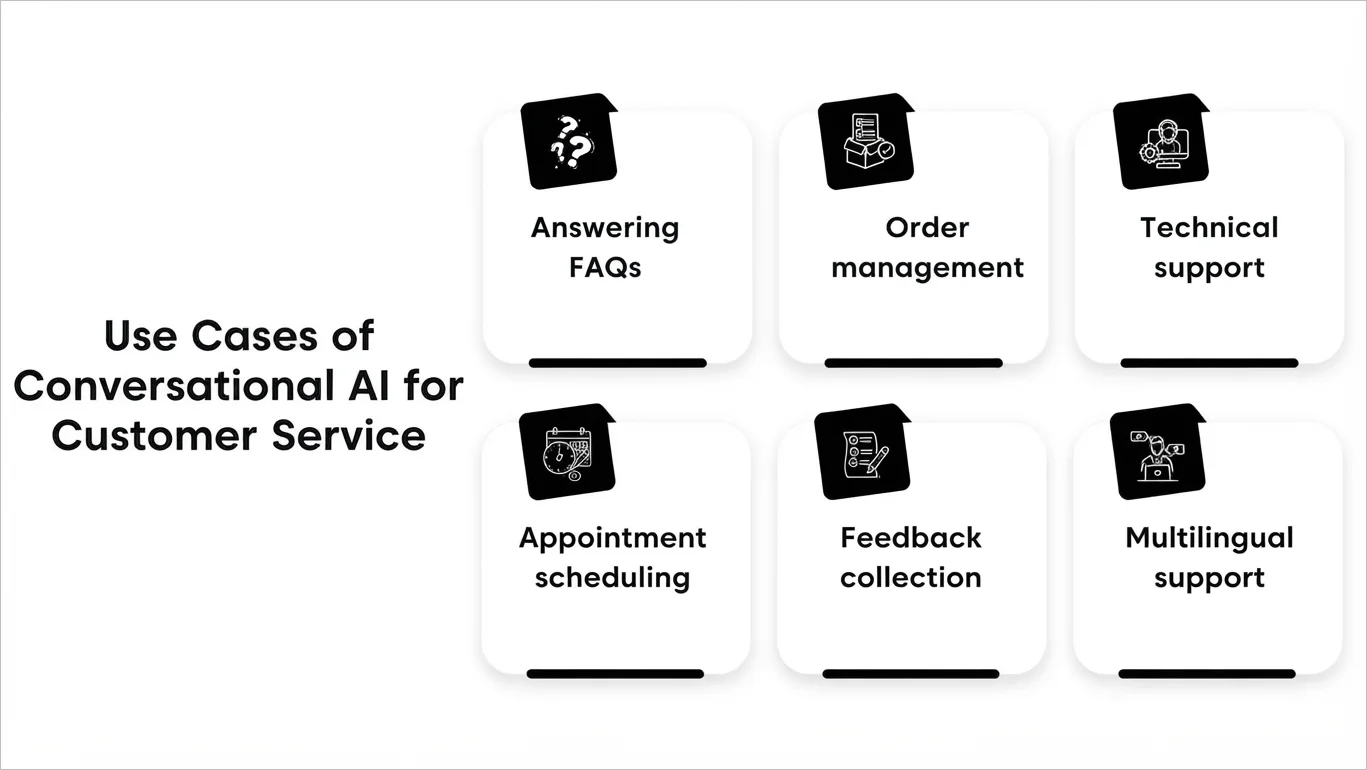
Handling frequently asked questions (FAQs)
Conversational AI can obtain relevant company information from its AI knowledge base and past customer interactions to recognize and respond to common questions.
This can be done using predefined or dynamically generated answers.
Example
Warby Parker, an eyewear company, uses conversational AI to answer frequent eyewear questions by pulling information from its knowledge base. This enables the company to deliver accurate, personalized responses through its website or mobile app.
Order management
Conversational AI for customer support can be used to retrieve and update order information by integrating it with a business’s inventory and logistics systems.
This allows customers to check order status, update delivery details, or cancel orders directly through conversational AI interactions.
Example
DoorDash uses conversational AI integrated with its logistics and inventory systems to manage customer orders.
It provides real-time delivery updates, allows changes or cancellations, and uses sentiment analysis to flag issues for human review, ensuring smooth order resolution.
Technical support and troubleshooting
Conversational AI for service uses intent recognition to guide customers through diagnostic steps, asking clarifying questions, and providing instructions based on known issue-resolution workflows.
Example
BoldDesk’s AI Agent handles queries from multiple channels, offering step-by-step guidance and automating tasks like password resets.
Integrated with ticketing and knowledge base systems, it resolves issues without human intervention.
The AI agent also quickly summarizes ticket histories and can be customized for tone and style, ensuring efficient, brand‑consistent support.
Appointment scheduling
By connecting to calendar and booking systems, conversational AI manages appointment slots, confirms availability, and processes scheduling, rescheduling, or cancellation requests through conversational prompts.
Example
Delta Airlines, through its conversational AI-powered Delta Concierge, helps customers by checking itineraries and real-time flight data, suggesting itinerary changes or confirming schedule updates, and offering proactive alerts such as visa or gate information.
This enhances travel planning with minimal human help.
Feedback collection
The conversational AI can initiate structured or open-ended feedback sessions after transactions or interactions with customers, capturing user input through conversational forms and storing responses for analysis.
Example
Airbnb, an online marketplace for house rentals, uses conversational AI software to gather post-stay feedback through its messaging platform, using natural language processing to ask guests about their experience.
It analyzes and categorizes responses for hosts and Airbnb’s quality team, linking feedback to specific stays to support improvements and enhance future guest experiences.
Multilingual support
Conversational AI for customer service detects and processes multiple languages using multilingual NLP models, enabling the system to understand and respond appropriately in the customer’s preferred language.
Businesses supporting global audiences can also benefit from multilingual customer support strategies that improve service consistency across regions.
Example
TransferGo, an authorised electronic money institution, uses a multilingual virtual agent to handle real-time customer requests. Integrated with account systems, it performs tasks like updating user details or checking transfers in the customer’s language, ensuring culturally accurate responses.
This reduces reliance on human agents while maintaining high-quality global service.
Best practices for adopting conversational AI for customer service
Successfully implementing conversational AI for customer service requires more than simply deploying new tools. It involves thoughtful planning, transparency, and ongoing optimization to ensure the technology improves both efficiency and customer experience.
Here are some best practices that organizations should follow to ensure their conversational AI for customer service strategies deliver real value while maintaining trust and efficiency.
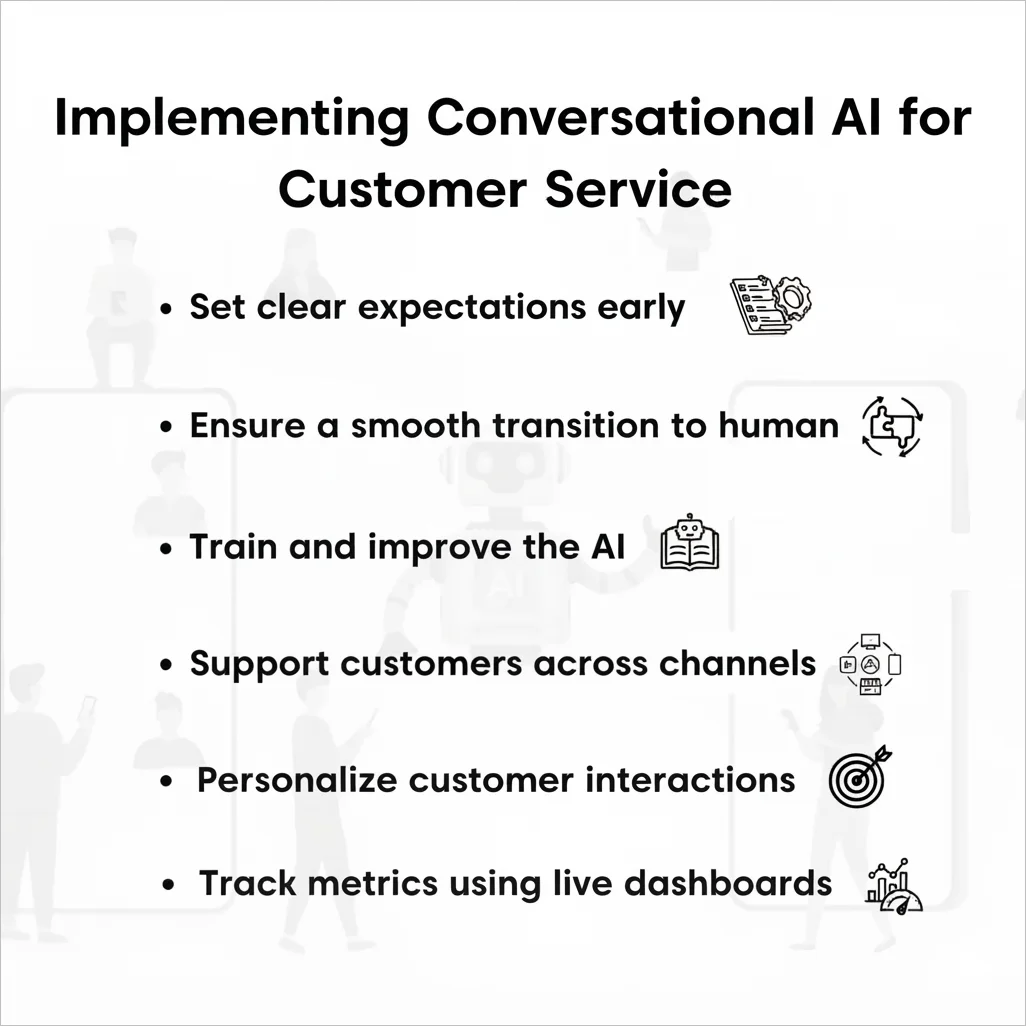
Set clear expectations early
Customers don’t like surprises, especially when they’re trying to solve a problem. Let them know up front that they’re talking to AI and clearly define what it can and can’t do.
You can do this with a user-friendly opening message that matches your brand style.
For example:
“Welcome, [Name]! I’m your AI virtual assistant for today. I can check your order status or answer product questions. What’s up?”
This builds trust and avoids frustration when the conversational AI hits its limits and needs to hand over to a human.
When customers understand what the AI can and cannot do, they are more forgiving when it reaches its limits and more appreciative when it performs well.
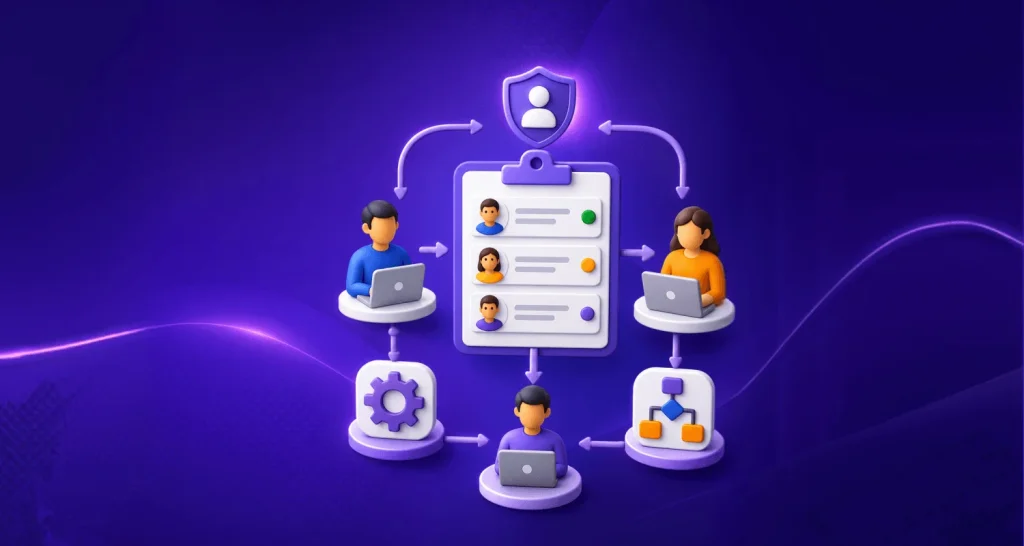
Ensure a seamless handoff to human agents
Complex problems like a billing mix-up or emotional moments, such as when a customer is upset about a delayed order, need a human touch. Even the smartest AI can’t handle everything.
A seamless transition from the conversational AI for customer service platform to a human agent ensures customers feel heard, not shuffled around.
Moreover, the conversational AI should pass along all relevant context and history from the interaction so the agent can continue the conversation without delays or repetition.
Train and continuously improve the AI
Conversational AI is not a set‑and‑forget solution. To remain accurate and effective, it must be trained continuously using real customer interactions, updated knowledge base content, and performance feedback.
Regularly reviewing conversations helps identify gaps, misunderstood intents, and outdated responses.
By retraining models, refining workflows, and updating content as products or policies change, businesses ensure their conversational AI stays relevant, improves resolution accuracy, and delivers consistently high‑quality, brand‑aligned customer experiences over time.
Support customers across their preferred channels
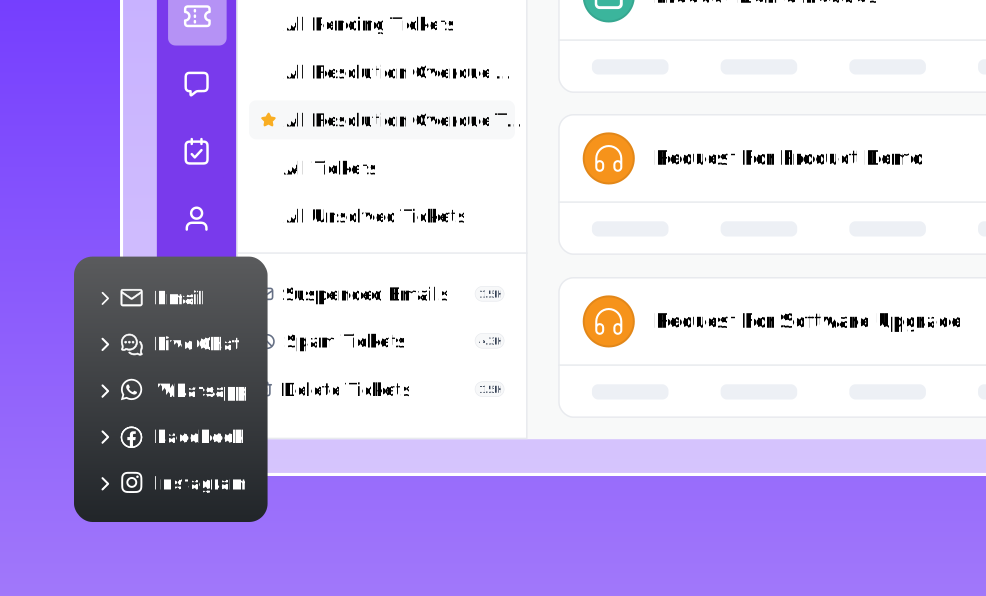
Customers interact across multiple channels, including WhatsApp, Instagram, email, and live chat.
Consequently, your conversational AI needs to be there too, delivering a consistent omnichannel customer experience across all channels.
To implement the conversational AI for customer service effectively, consider the following pro tips:
- Start by identifying where your customers are already engaging with you the most.
- Map out these preferred communication channels to understand where your audience feels most comfortable and where they’re most likely to interact.
- Prioritize those high-traffic channels when introducing your conversational AI.
By focusing on the platforms your customers already use, you’ll not only meet them where they are but also maximize the impact and effectiveness of your conversational AI from the beginning.
Personalize interactions and match brand tone
Salesforce research found that 73% of customers expect better personalization as technology advances, while 65% expect companies to adapt to their changing needs and preferences.
Your conversational AI should be able to understand user intent, recall past interactions, and tailor responses accordingly.
Whether your brand is formal, friendly, or playful, consistency in communication helps reinforce brand identity and makes interactions more authentic.
Monitor AI performance
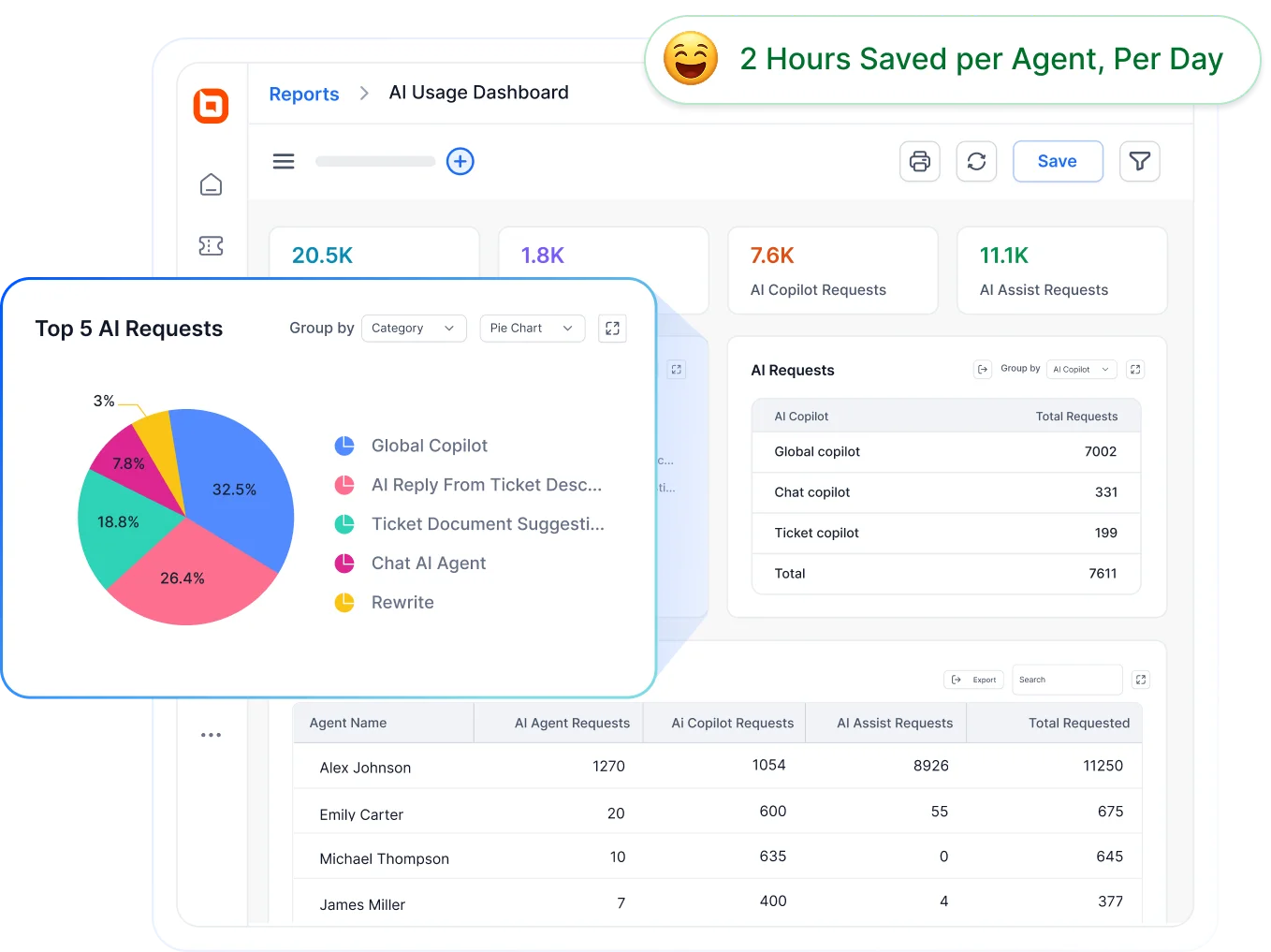
To ensure conversational AI continues delivering value, businesses should monitor key performance metrics such as resolution rates, containment rates, escalation frequency, and customer satisfaction.
Live dashboards, such as AI conversation reports, allow businesses to:
- Visualize customer interactions and agent handoffs to identify where the AI is succeeding or needs improvement.
- Customize dashboards with drag-and-drop widgets to focus on the metrics that matter most.
- Share dashboards across cross-functional teams to align goals and ensure everyone has access to up-to-date insights.
Live dashboards provide real-time visibility into how your conversational AI for customer service is performing, allowing teams to quickly identify issues, optimize workflows, and adapt to customer needs.
Pairing these live dashboards with automated alerts and trend analysis ensures your conversational AI for customer service evolves with your business and customer expectations.
Scale human-like support with conversational AI for customer service
The success of conversational AI depends less on the technology itself and more on how well it fits your support workflows, knowledge sources, and customer expectations.
Organizations that see the best results start with high-volume requests, establish clear escalation paths, and continuously improve their AI using real customer interactions.
If you’re exploring conversational AI for customer service, BoldDesk provides AI Agent and AI Copilot capabilities designed to work alongside your existing support processes.
From knowledge-driven responses to workflow automation and agent assistance, it gives teams the flexibility to introduce AI where it delivers the most value.
Start a free trial and discover how BoldDesk fits into your support workflow. We’d also love to hear your thoughts in the comments below.
Related articles
- Autonomous AI Agents: A Smart Way to Deliver Excellent Support
- 12 Best AI Agents for Scalable Customer Support
- 7 Easy Steps to Build AI Agents Successfully
Frequently asked questions
No. Chatbots are often rule-based tools designed for simple interactions, while conversational AI uses technologies such as natural language processing and machine learning to understand intent, maintain context, and support more advanced conversations.
Generative AI focuses on creating new content such as text, images, or summaries, while conversational AI is designed to manage two‑way interactions.
Conversational AI often uses generative AI models but applies them within structured workflows to ensure accuracy, context awareness, and reliable customer support outcomes.
Conversational AI is trained using large datasets that include language models, historical conversations, and domain-specific knowledge.
It is fine-tuned with customer service data such as support tickets, FAQs, and feedback, and continuously improves through real interactions, performance monitoring, and supervised learning.