




TL;DR: AI for customer engagement is the use of artificial intelligence to automate support, personalize interactions, and improve customer experiences across digital channels. Common use cases include AI agents, workflow automation, multilingual support, predictive analytics, and sentiment analysis, helping businesses scale engagement, improve efficiency, and reduce response times.
Customer engagement is often won or lost between interactions. A customer who finds relevant information, receives timely guidance, or discovers value at the right moment is far more likely to remain engaged than one who encounters friction, generic experiences, or disconnected touchpoints.
As businesses manage customer relationships across an increasing number of channels, AI is helping brands create more timely, relevant, and connected experiences.
As a result, organizations are turning to AI for customer engagement, often supported by technologies ranging from predictive analytics and automation to AI agents in customer service.
According to PwC, 70% of executives say customer expectations are evolving faster than their organizations can adapt.
Rather than reacting only when customers need support, businesses can use AI to strengthen engagement throughout the lifecycle, turning more interactions into opportunities to build trust, loyalty, and long-term relationships.
In this article, you’ll learn what AI for customer engagement really means and how to implement it using practical, results-driven strategies.
What is AI for customer engagement?
AI for customer engagement refers to the use of artificial intelligence technologies to create more intelligent, responsive customer interactions between businesses and customers across digital channels.
It combines AI systems, such as AI agents, automation, analytics, and machine learning, with customer data to understand intent, maintain context, and support conversations in real time.
Unlike traditional systems, AI-powered engagement tools can:
- Understand customer intent
- Learn from past interactions
- Deliver context-aware responses
- Automate workflows intelligently
When applied thoughtfully, AI reshapes customer engagement across the entire support experience, helping businesses respond faster, scale smarter, and maintain meaningful human connections where they matter most.
What is an AI customer engagement platform?
An AI customer engagement platform is a software system that uses artificial intelligence, customer data, and automation to personalize, optimize, and coordinate customer interactions throughout the customer lifecycle.
Unlike traditional engagement tools that rely on predefined rules or isolated workflows, AI-powered platforms continuously analyze customer behavior and interaction signals to determine the most relevant actions, messages, or experiences in real time.
This enables businesses to deliver more timely, context-aware engagement while scaling customer relationships more efficiently.
AI for customer engagement vs traditional automation
AI customer engagement is more flexible and intelligent than traditional automation, which relies on fixed rules.
Traditional systems follow predefined paths, while AI interprets intent, adapts responses, and takes actions across systems.
Here is a concise comparison table that outlines the differences.
| Capability | Traditional automation | AI for customer engagement |
| Understanding requests | Keyword or rule-based | Intent-aware, conversational |
| Personalization | Generic responses | Uses CRM, history, and context |
| Escalation | Manual or basic | Smart handoff with summarized context |
| Learning ability | Static | Improves with usage, data, and feedback |
| Task execution | Simple routing or canned replies | Can retrieve data, trigger workflows, and complete actions |
In short, traditional automation helps teams move faster, while AI actions move customer requests closer to resolution by enabling AI systems to perform tasks, update records, and trigger workflows.
What are AI agents for customer engagement?
AI agents for customer engagement are autonomous AI systems that use customer intent, context, and interaction history to determine the most appropriate response or action during an interaction.
As a practical application of agentic AI in customer experience, they can execute tasks across connected business systems, such as resolving requests with minimal human intervention.
By combining decision-making with execution, AI agents enable businesses to move from managing conversations to helping customers achieve outcomes.
Why is AI-powered customer engagement important?
Attracting customers is only the first step; keeping them engaged is the real challenge. Customers expect fast, contextual, and consistent support across every channel.
Relying only on human teams makes it difficult to meet these expectations. Here’s why more businesses are making it a priority.
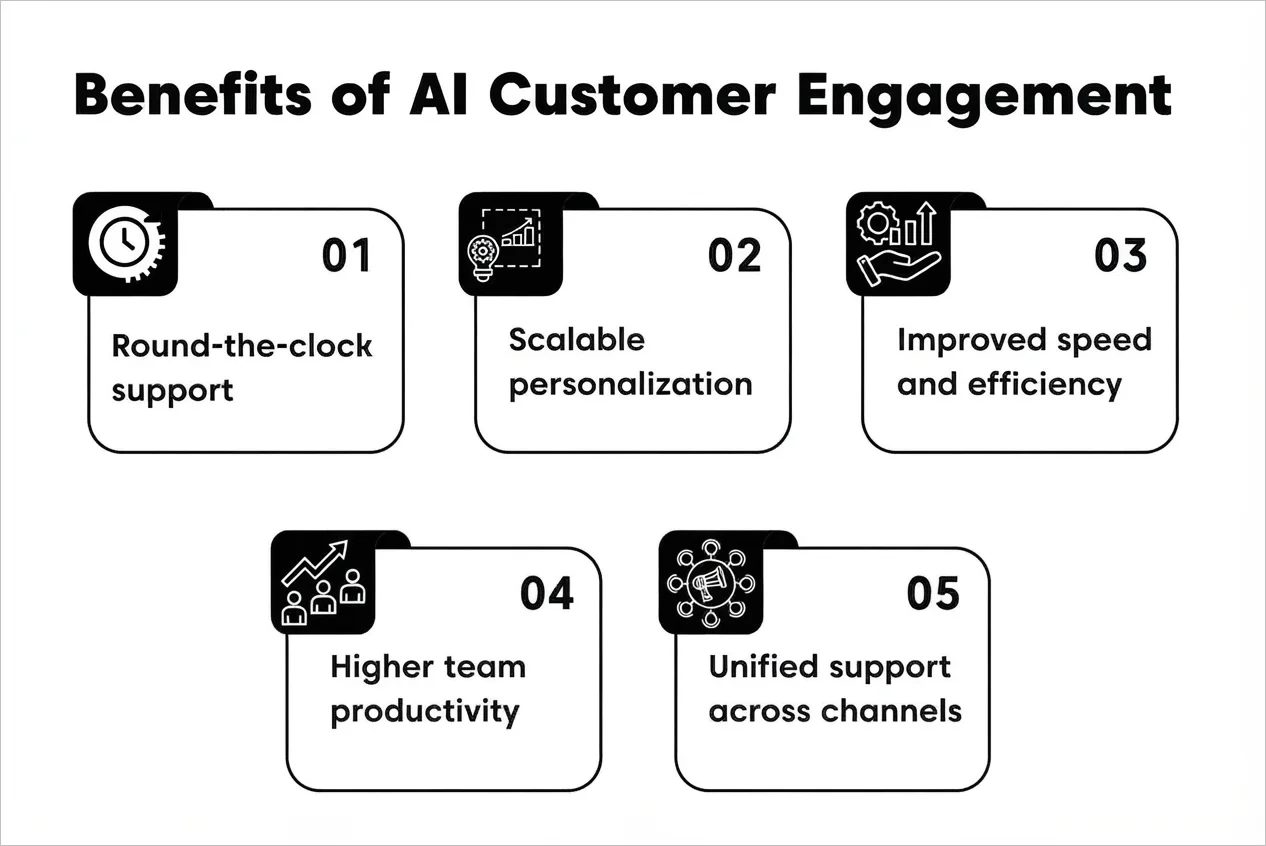
- Provides always-on support: Customers receive instant responses at any time, eliminating delays and reducing dependency on business hours.
- Enables relevant interactions: By using customer data and behavior to tailor responses, AI makes every interaction more relevant and engaging.
- Improves response speed and efficiency: AI processes and handles multiple inquiries simultaneously, which helps in reducing response times and speeding up issue resolutions.
- Boosts team productivity: By automating routine support tasks, AI in customer engagement allows agents to focus on complex issues and high-value customer interactions. Rather than replacing agents, it supports an AI vs human customer service model where both work together to improve outcomes.
- Ensures consistent omnichannel support: AI maintains accurate, on‑brand, and context‑aware conversations across chat, email, and messaging channels, even as interaction volume scales.
7 Key ways to use AI to boost customer engagement in support
AI is transforming customer service from reactive support into proactive, personalized engagement.
By automating responses and using customer context, businesses can deliver faster, more meaningful interactions.
Here are the most impactful ways to use AI in customer engagement effectively:
1. Keep customer conversations active 24/7
Customer engagement doesn’t follow business hours. Customers research products, compare options, and explore solutions whenever it’s convenient for them. When they can’t continue the conversation, interest often fades and engagement opportunities are lost.
AI agents help brands offer 24/7 customer service with real-time conversations that keep customers engaged across channels, regardless of when they choose to interact.
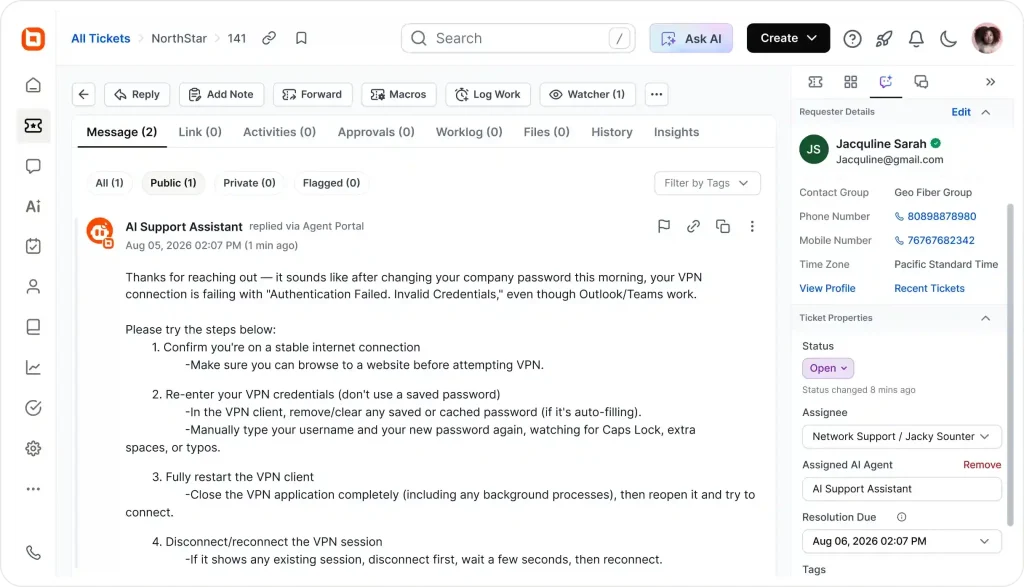
Key capabilities include:
- Captures engagement opportunities outside business hours
- Supports continuous customer interactions
- Keeps conversations moving across channels
- Maintains context when conversations transition to agents
2. Implement AI to personalize customer engagement
Customers are more likely to engage with brands that understand their needs and expectations.
According to McKinsey, more than 75% of consumers lose interest when experiences are not relevant, highlighting the growing importance of personalized customer engagement.
AI helps businesses move beyond one-size-fits-all engagement by analyzing customer behavior, past interactions, and intent signals to deliver more personalized customer service throughout the customer relationship.
Key capabilities include:
- Identifies behavioral patterns that shape engagement
- Adapts interactions based on real-time intent signals
- Connects customers with content, products, or resources aligned to their needs
- Tailors engagement across channels and touchpoints
3. Engage customers in their preferred language
Language barriers can limit customer engagement, making interactions feel less natural and increasing the likelihood of customers leaving before taking the next step. AI helps businesses connect with customers in the languages they are most comfortable using, creating more accessible experiences across global audiences.
Key capabilities include:
- Recognizes customer language preferences automatically
- Enables natural conversations across multiple languages
- Maintains a consistent brand voice across regions
- Removes language barriers throughout the customer lifecycle
In practice: A customer can browse content, explore products, and interact with your business in the language they are most comfortable using. This makes it easier to engage with your brand, build familiarity, and continue the engagement process through multilingual customer support.
4. Reduce friction in customer interactions
The more effort customers expend to find information, complete actions, or continue their journey, the more likely they are to disengage. AI helps minimize friction by automating routine interactions such as appointment scheduling, order updates, account changes, and follow-up communications, allowing customers to complete common tasks faster and with less effort.
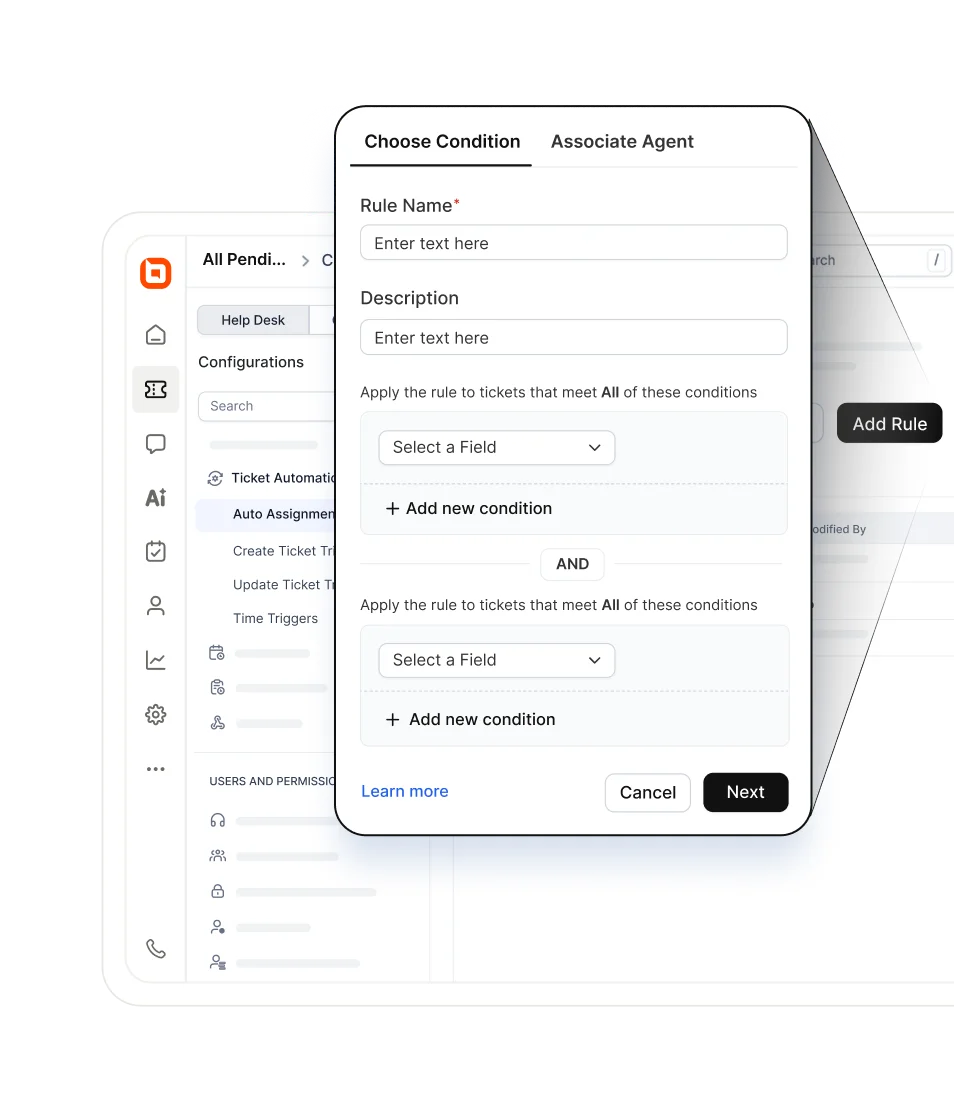
Key capabilities include:
- Automates routine customer requests and actions
- Delivers updates and information without manual intervention
- Triggers timely follow-ups and reminders
- Keeps customer support experiences moving with minimal effort
In practice: Brands often spend significant time handling repetitive interactions that add little value to the overall customer experience. AI can automate these moments, enabling customers to complete routine actions instantly while keeping their journey moving without unnecessary delays.
Real-world example: AdmissionPros used BoldDesk to build a self-service knowledge base that gives users on-demand access to support resources whenever they need them. Combined with AI-assisted responses, it helps customers find information faster and stay engaged without waiting for direct assistance.
5. Lower customer effort with AI-powered support
Customers stay engaged when interactions feel effortless. Having to switch channels, restart conversations, or lose progress along the way creates friction that can discourage future engagement.
AI reduces customer effort through omnichannel customer engagement by preserving context across interactions, ensuring customers can continue where they left off without repeating steps or re-establishing information. As a result, customers spend less time navigating processes and more time achieving their goals.
Key capabilities include:
- Maintains context across conversations and channels
- Preserves interaction history throughout the customer journey
- Reduces handoff friction between touchpoints
- Enables seamless continuation of conversations
In practice: Someone who starts an interaction through chat and later continues through email or another channel does not need to restart the conversation or re-establish context. AI carries forward previous interactions, creating a more connected experience that builds trust and encourages continued engagement with the brand.
6. Use predictive analytics for proactive customer engagement
Strong customer relationships rarely break without warning. Shifts in customer behavior often signal declining interest long before a customer leaves.
AI-powered predictive analytics in customer service helps businesses identify these signals early and support proactive customer engagement, helping reconnect with at-risk customers before disengagement turns into churn.
Key capabilities include:
- Identifies behavioral signals linked to declining engagement
- Forecasts potential disengagement before it occurs
- Prioritizes customers for proactive outreach
- Supports targeted retention and re-engagement initiatives
In practice: Declining email engagement, product usage, or website visits can signal fading interest. AI-powered predictive analytics enables timely outreach that helps rebuild engagement while customers are still receptive to interaction.
7. Leverage sentiment analysis for empathetic customer service
Customer engagement is shaped not only by what customers do, but also by how they feel. AI-powered sentiment analysis uses natural language processing (NLP) to analyze customer conversations, reviews, survey responses, and feedback for emotional indicators such as satisfaction, frustration, uncertainty, or enthusiasm.
By identifying customer sentiment patterns across interactions, businesses can better understand how customers perceive their brand and continuously improve engagement experiences.
Key capabilities include:
- Analyzes sentiment across customer conversations and feedback
- Detects changes in customer perception over time
- Uncovers recurring sources of satisfaction or frustration
- Helps improve engagement strategies using sentiment insights
In practice: An increase in negative feedback after a product update can reveal changing customer sentiment, helping businesses improve experiences and maintain stronger customer relationships.
Metrics to measure the impact of AI in customer engagement
Understanding how to use AI is only part of the equation. Measuring its real impact is what turns adoption into long‑term value.
Below are key customer service metrics that help quantify the value of AI in customer engagement:
- Customer satisfaction score: Evaluate changes in satisfaction scores to understand how AI‑enabled interactions influence customer perceptions of support quality.
- Net Promoter Score (NPS): Measure shifts in customer loyalty and advocacy following AI‑assisted engagement experiences.
- Conversion rate: Monitor increases in completed purchases or actions driven by AI‑assisted recommendations and personalized interactions.
- Average response time: Assess how automation and AI‑assisted workflows reduce time to first response and resolution.
- Customer churn: Track improvements in retention as predictive insights and proactive engagement help address issues earlier.
How to implement an AI-powered customer engagement strategy
Implementing AI in customer engagement goes beyond adding automation. It requires rethinking how value is delivered at every customer touchpoint.
With clear goals, quality data, and integrated workflows, AI shifts support from reactive to proactive, enabling consistent experiences without increasing overhead.
Here are the practical approaches to implementing this strategy effectively.
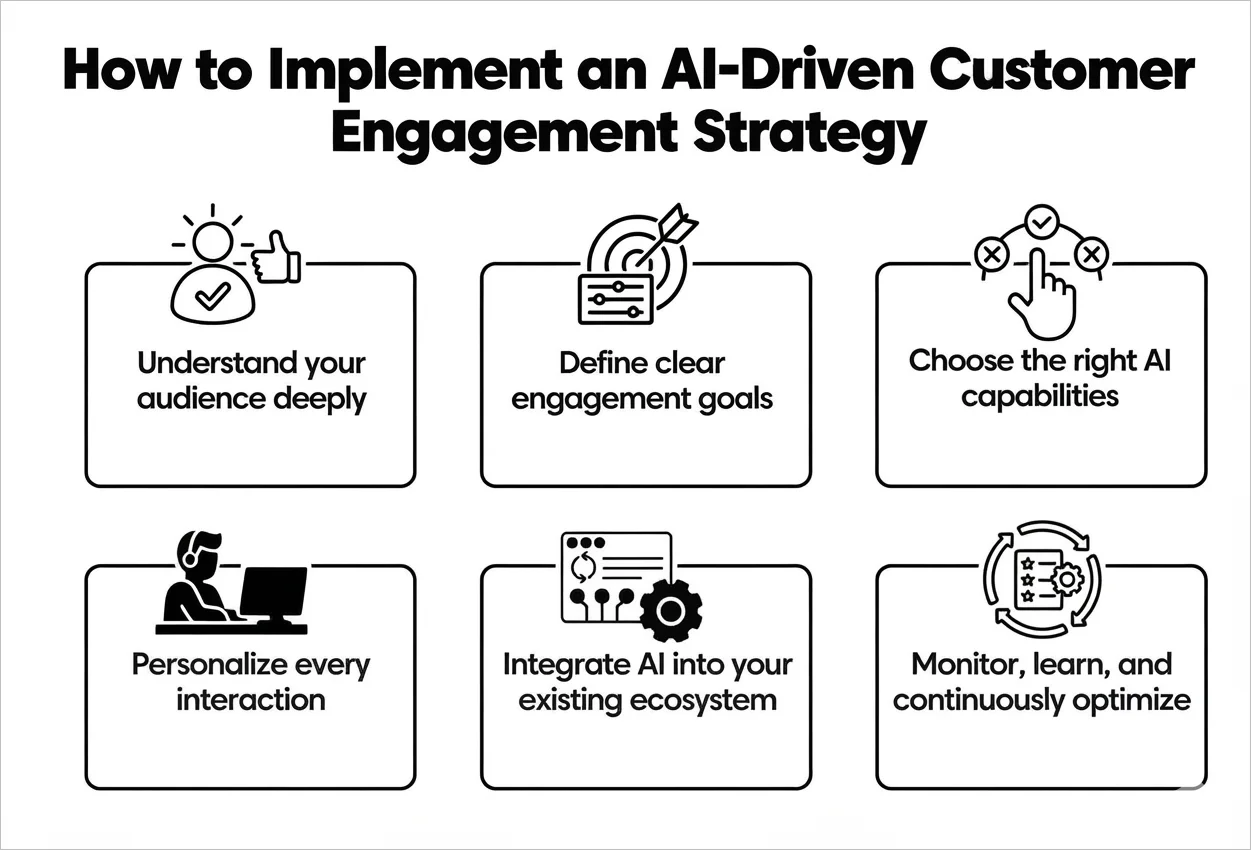
1. Understand your audience deeply
Effective AI begins with a clear understanding of customer behavior and intent. It’s crucial to ask: Who are your customers? How do they prefer to interact? What problems are they trying to solve?
AI models rely heavily on data, so the quality of your insights directly impacts the quality of your outcomes.
It’s important to go beyond surface-level demographics and focus on behavioral signals, such as:
- Customer interaction patterns across different channels
- Support tickets and recurring issues
- Chat and conversation histories
- Customer feedback and sentiment
These insights will help you identify trends, intent, and pain points. The goal is to design AI experiences that feel intuitive and helpful, rather than generic or robotic.
2. Define clear engagement goals
Before implementing any AI capabilities, it’s essential to determine what success looks like for your business.
Establishing clear goals ensures that AI initiatives deliver measurable business impact rather than merely automating isolated tasks.
Consider whether you aim to:
- Reduce response and resolution times
- Improve customer satisfaction (CSAT)
- Increase customer retention and loyalty
- Enhance support without increasing headcount
Without defined objectives, even the most advanced AI tools may become underutilized or misaligned with your business goals.
3. Choose the right AI capabilities
The effectiveness of AI depends on selecting the right capabilities for your specific use cases. The key is to match capabilities with specific customer needs and business outcomes.
For example:
- Conversational AI for customer service can handle repetitive queries and provide instant responses
- AI knowledge bases enable large-scale self-service options
- Predictive analytics in customer service anticipates problems and recommends next-best actions
- Sentiment analysis helps detect urgency and prioritize critical issues
Instead of adopting AI for the sake of innovation, focus on capabilities that remove friction, reduce effort, and enhance the customer experience in meaningful ways.
4. Personalize every interaction
Fast responses are no longer enough; interactions must feel informed, relevant, and customized.
AI agents in customer service make this possible by using signals like past conversations and behavioral data to deliver tailored support automatically, even as volumes grow.
This enables teams to:
- Deliver context‑aware responses without repeated questions
- Recommend relevant solutions or products in the moment
- Maintain continuity across conversations and channels
The result is a more human‑like experience, even when automation is involved. Thoughtful personalization not only improves satisfaction but also builds stronger, long‑term relationships.
5. Integrate AI into your ecosystem
AI delivers the most value when it is integrated with the tools teams already use, including the help desk, CRM, and communication channels. This creates a unified, real‑time view of customer interactions.
The AI integration ensures:
- Consistent data across all touchpoints
- More accurate responses
- Better collaboration between teams
When integrated correctly, AI supports agents with the right context and insights, strengthening decision‑making rather than replacing human involvement.
6. Monitor and optimize continuously
AI is not a “set it and forget it” solution. Continuous monitoring and refinement help improve performance and effectiveness over time, ensuring the system stays accurate and relevant.
This ongoing optimization allows teams to adapt AI behavior based on new data, changing customer expectations, and evolving support needs.
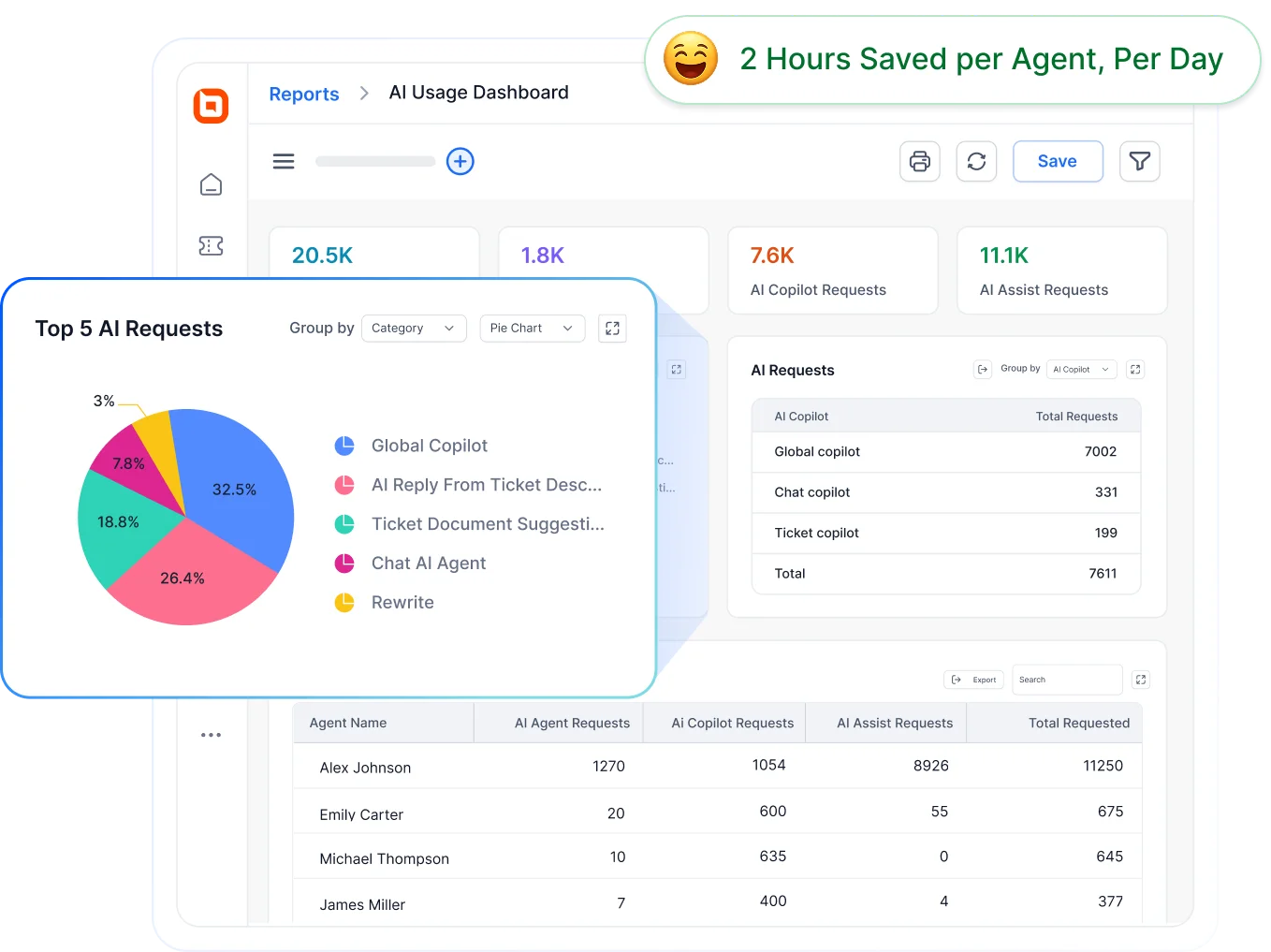
Track key performance metrics such as:
- Response and resolution times
- First-contact resolution rate
- Customer satisfaction (CSAT)
Use these insights to identify gaps, retrain models, and refine workflows. The more you iterate, the more intelligent and impactful your AI becomes.
How BoldDesk modernizes customer engagement through AI‑powered support
Customer engagement depends on delivering timely, personalized, and consistent support across channels. As an AI customer service software, BoldDesk includes capabilities that support these goals.
Key capabilities include:
- Smarter ticket routing: AI-assisted categorization and prioritization help direct requests to the right teams faster, reducing manual effort and improving response efficiency.
- More consistent support: AI-assisted workflows help teams provide accurate, consistent responses across agents, locations, and support channels.
- Scalable self-service: AI-powered knowledge resources help customers find answers independently, reducing repetitive inquiries and accelerating resolution.
- Reduced customer effort: Streamlined workflows, smoother handoffs, and better context sharing help eliminate unnecessary back-and-forth during support interactions.
- Multilingual support: Support teams can deliver consistent customer experiences across languages while maintaining service quality.
- Actionable insights: Reporting and analytics help teams identify trends, uncover workflow bottlenecks, and continuously improve customer engagement strategies.
AI customer engagement use cases by industry
AI-powered customer engagement is reshaping how brands communicate with users, enabling more relevant interactions and consistent experiences across channels.
Below are examples of how this impact shows up across key industries.
E-commerce: Real-time assistance throughout the buying journey
AI engagement solutions support customers before, during, and after purchase, answering questions instantly and removing friction from the path to conversion.
Business outcomes:
- Quicker responses to order and delivery inquiries
- Fewer abandoned carts
- Increased sales and repeat customers
Fintech: Secure and efficient customer interactions
In fintech, AI engagement helps organizations manage high volumes of customer interactions while delivering fast, accurate, and compliant responses.
Business outcomes:
- Faster handling of routine financial questions
- Lower dependency on call centers
- Stronger customer trust and confidence
Entertainment: Engaging, real-time audience experiences
AI engagement enhances how entertainment platforms communicate with users, from content discovery to subscription support.
Business outcomes:
- Faster issue resolution for subscriptions and access
- Improved content discovery
- Higher user engagement and retention
Elevate customer experience with AI for customer engagement
Customer engagement is ultimately measured by how quickly, consistently, and effectively businesses can help their customers succeed.
AI makes that possible at a scale that would be difficult to achieve through manual processes alone. When applied thoughtfully, it enables support teams to spend less time managing interactions and more time improving them.
For organizations looking to translate these capabilities into day-to-day support operations, choosing the right platform is an important part of the process.
Start a 15‑day free trial of BoldDesk and see AI-powered customer engagement in action.
We hope this article has provided valuable insights. Do you have any suggestions or feedback? Please share your thoughts in the comments section below.
Related articles
- 10+ Essential Customer Engagement Metrics to Track
- Omnichannel Customer Experience: Examples and Benefits
- 9 Ways to Improve Agent Productivity with AI
FAQs
Yes. Traditional automation is rule-based and limited; AI agents are adaptive, context-aware, and capable of learning, delivering more natural and effective experiences.
Common challenges include poor data quality, disconnected systems, inaccurate AI responses, low user adoption, and insufficient monitoring. Clear goals, quality training data, and ongoing optimization help reduce these risks.
Yes. Many AI tools now offer affordable automation, self-service, and customer support capabilities, allowing small businesses to improve customer engagement without significantly increasing operational costs.
Sign up for a free trial at BoldDesk.com and enable AI agents in minutes, no coding required. Our team also offers guided onboarding for seamless implementation.
AI improves customer engagement by delivering engaging experiences and automating routine tasks, enabling support teams to focus on valuable, human-centric conversations.