TL;DR: Customer service in insurance involves assisting policyholders throughout their journey; from onboarding to claims resolution. The most effective insurers use omnichannel support, AI and automation, personalization, and streamlined claims processes to enhance trust and client success.
Customer service in insurance isn’t just a support function; it’s the foundation of policyholder trust.
When someone files a claim, they are often stressed, uncertain, and looking for guidance. If the service they receive falls short, the impact is immediate and often permanent.
J.D. Power’s research underscores this reality: 80% of U.S. auto insurance customers who experience poor claims support have already left or plan to switch carriers.
That level of churn is not just a customer service issue; it is a strategic risk that directly affects retention, reputation, and long-term profitability.
In this blog, we’ll share practical strategies to help you deliver insurance customer support that’s efficient, empathetic, and tailored to your clients’ needs.
What is customer service in insurance?
Customer service in insurance refers to the support insurers provide throughout the policyholder journey, including onboarding, billing support, policy inquiries, claims handling, renewals, and coverage clarification.
This insurance support involves answering inquiries, clarifying coverage, resolving problems, and offering reassurance during stressful moments.
Because many interactions happen during emergencies, insurance customer service requires a combination of empathy, accuracy, and timely assistance.
Why is insurance customer support important?
Insurance is fundamentally a promise that policyholders hope they never have to test. But when they do, the quality of your customer service becomes the clearest reflection of your brand.
Here’s why getting the policyholder service experience right directly impacts your bottom line:
- Builds loyalty and retention: Policyholders who feel supported during claims or inquiries are far more likely to renew policies and stick with your brand long term.
- Reduces churn and saves costs: Poor service is one of the top reasons insurance customers switch to a new insurer. According to PwC’s CX research, up to 32% of consumers globally and 17% in the U.S. would leave a brand after one bad experience. Great support reduces cancellations and acquisition costs.
- Boosts brand reputation: In an industry built on trust, your reputation is everything. Positive insurance customer experiences lead to glowing reviews on social media and word-of-mouth referrals.
- Drives operational efficiency: Strong insurance customer service processes reduce repetitive inquiries, streamline claims handling, and free up resources for higher-value tasks.
- Enhances compliance and trust: Clear communication and accurate guidance help clients understand policies and avoid disputes, reinforcing trust and regulatory compliance.
Strategies to improve insurance customer service
Insurance customer support centers on building trust and providing reassurance during some of life’s most critical moments.
As policyholder expectations rise and digital transformation accelerates, insurers must adapt their strategies to stay competitive and deliver reliable, empathetic, and efficient insurance support.
Below are the insurance support best practices:

1. Deliver seamless omnichannel insurance support
Modern policyholders expect flexibility in their interactions with insurers. Offering multiple communication channels such as phone, email, social media, and mobile apps ensures convenience and accessibility.
According to Capgemini’s insurance research, over 50% of policyholders prefer three or more channels to research and purchase coverage.
An integrated omnichannel customer service approach enables clients to seamlessly switch between their preferred channels, eliminating the need to repeat information or lose context, and ultimately creating a smoother, more personalized insurance customer experience.
2. Reduce wait times using AI and automation
AI for customer experience is transforming insurance customer service. Insurance companies can use AI agents to manage routine inquiries, check claims status, and deliver fast, accurate, 24/7 assistance with far more context and intelligence.
AI‑powered knowledge bases support real‑time multilingual answers via smart search, translation, and recommendations; ideal for global policyholders.
By automating repetitive tasks, insurers significantly reduce wait times and improve overall operational efficiency, while agents focus on complex, high-sensitivity interactions that require expertise and empathy.
3. Increased satisfaction with personalized policyholder interactions
Insurers can utilize data analytics to understand customer behavior, preferences, life stages, and risk profiles, allowing them to tailor communication and support to each policyholder.
Life events and coverage changes, such as renewals, adding a new driver, purchasing property, or experiencing a health milestone, should trigger proactive outreach, policy reviews, and personalized recommendations.
This shifts insurance customer service from reactive to proactive, supporting policyholders before they need to ask.
4. Build trust with simplified claims experience
The claims process is often the most stressful part of insurance. Streamline it through digital platforms, e-signatures, and real-time status updates to keep policyholders informed at every stage of the claim.
Offer intuitive customer self-service portals where policyholders can:
- Upload documents and photos
- Check claim progress
- Communicate with respective claims handlers
Use clear language in documents and minimize paperwork to ensure clarity and efficiency. A simplified process reduces frustration and improves policyholder satisfaction.
5. Enhance insurance customer support through agent training
Your agents are the face of your brand. Empowered teams are more confident and deliver a higher-quality and more trustworthy insurance customer experience.
Equip insurance support teams with:
- Product knowledge and policy clarity
- Customer empathy skills
- Claims-handling best practices
- Compliance and regulatory training
Well-trained agents resolve issues more efficiently and foster trust during sensitive interactions.
6. Gather and act on policyholder feedback
Regularly collect feedback through post-claim surveys, reviews, and social listening tools to uncover service gaps and identify customer pain points.
Acting on these insights demonstrates a commitment to continuous improvement and strengthening relationships with policyholders.
7. Strengthen trust with secure, compliant data practices
Policyholders trust insurers with sensitive information. Implement robust cybersecurity measures such as:
- End-to-end encryption
- Multi-factor authentication
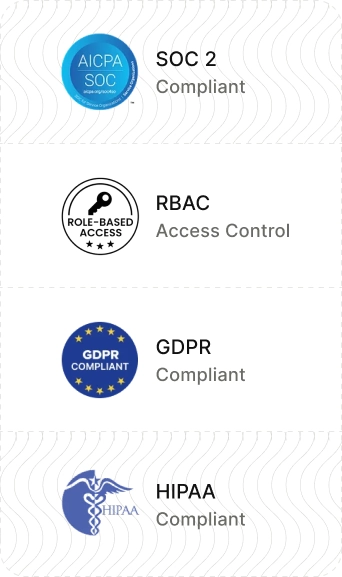
- Role-based access controls
- Comply with regulations like GDPR, GLBA, or HIPAA for health data to maintain trust and avoid reputational damage
Additionally, consider investing in advanced fraud detection systems and real-time fraud detection to prevent identity theft and fraudulent claims.
Note: Specific regulatory requirements vary by region and line of insurance; you should consult legal and compliance teams to align customer service processes and tools with applicable standards.
How BoldDesk elevates insurance customer experience
Delivering fast, accurate, and empathetic service can make the difference between retaining a loyal policyholder and losing one.
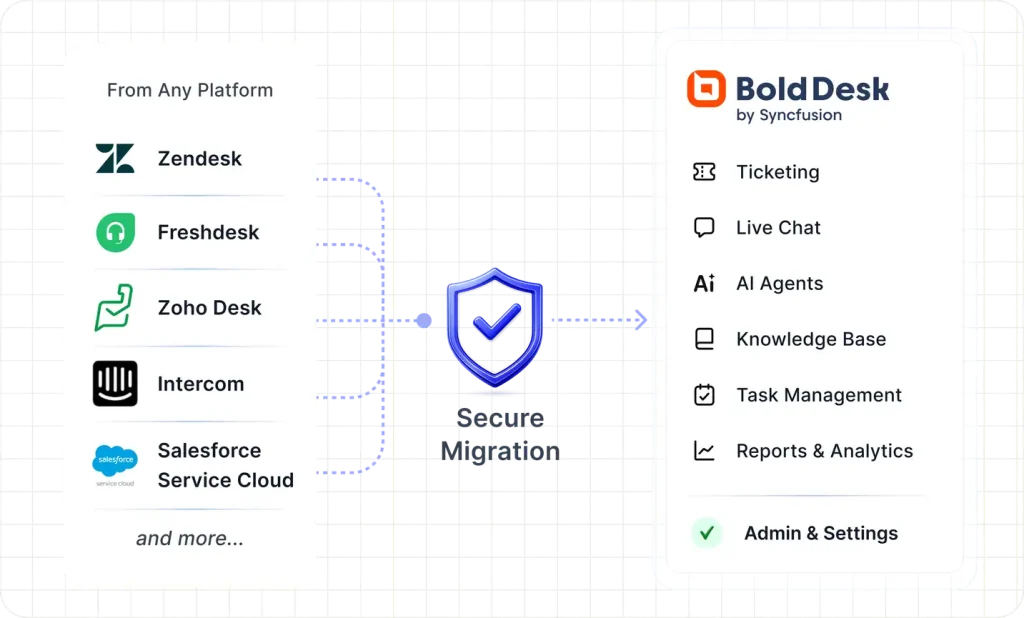
BoldDesk’s help desk software for insurance equips support teams with the tools they need to streamline operations, speed up responses, and deliver a consistent, high-quality insurance CX across every channel.
Unified and seamless support across all customer touchpoints
Policyholders use multiple channels, such as email, phone, social media, and live chat, to get assistance from insurers.
BoldDesk consolidates these interactions into one inbox, ensuring no query is missed, and agents maintain full context for smooth, consistent insurance CX.

Intelligent ticket routing for faster claims and inquiry resolution
Claims and policy inquiries often involve multi-stage processes from initial registration to review and approval.
BoldDesk’s ticketing system automatically organizes, prioritizes, and routes claims to the right adjuster or claims specialist, ensuring faster and more accurate resolution.
Features like collision detection prevent duplicate responses. Private notes and @mentions enable real-time cross-team collaboration for handling complex cases efficiently.

AI-powered assistance for smarter insurance support
BoldDesk’s AI tools streamline insurance workflows for support agents, providing quick assistance to policyholders.
These tools help insurers by delivering:
- Automated responses to common questions: BoldDesk’s AI agent handles policy-related queries, suggests helpful self-service resources, and helps with checking claims status. This ensures clients get instant, context-aware answers.
- Claim summaries and sentiment analysis: AI Copilot gives agents instant context by summarizing conversations and highlighting policyholder tone.
- Real-time multilingual engagement: AI translation tools detect policyholder language automatically and deliver accurate, localized responses across regions.
- AI Actions for complex workflows: AI Actions can integrate with external systems such as claims databases or policy administration tools, depending on your organization’s setup and API availability.
This automation frees agents to focus on high-value interactions, improving efficiency and claimant satisfaction.
Self-service tools that empower policyholders with instant answers
Policyholders often seek quick answers about coverage, premium payments, or claim status.
BoldDesk’s 24/7 assistance hub and intuitive knowledge base empower them to find solutions independently, anytime, reducing support volume and enhancing convenience.
AI can generate relevant knowledge base articles automatically and optimize search for faster results.

Advanced reporting and analytics for precise insurance service tracking
BoldDesk provides actionable insights through real-time dashboards and reports to monitor CSAT, SLA compliance, and agent productivity.
These tools enable insurers to monitor key metrics such as average response time, claim resolution speed, and net promoter scores to identify trends and policyholder experience improvement.
By analyzing these insights, teams can identify bottlenecks in claims processing, optimize workflows, and allocate resources more effectively.
Real-world examples of excellent customer service in insurance
Leading insurers use proactive communication, digital tools, and personalized support to strengthen trust and create better policyholder experiences.
Below are real-world examples of great insurance customer service in action.
Amica Mutual – Personalized policyholder support
Amica is known for fast claims handling and personalized policyholder care. The company offers dividend-paying policies and maintains high transparency in communication.

Why this works: Personalized communication and proactive updates reduce uncertainty and build confidence during high-stress situations.
Liberty Mutual – Continuous and seamless online support
Liberty Mutual emphasizes transparency and a human-centered approach. Its 24/7 digital claims platform and guided online filing allow policyholders to upload documents, track progress, and receive updates through the app.

Why this works: Offering a seamless blend of self-service tools and human assistance meets modern expectations for speed, clarity, and convenience.
Erie Insurance – High claims satisfaction
Erie Insurance consistently ranks among the top carriers in J.D. Power’s Auto Insurance Shopping Study and claims satisfaction survey.
The company focuses on quick response times, clear communication about coverage, and fair settlement practices.

Why this works: Prioritizing transparency and responsiveness drives higher satisfaction and strengthens long-term loyalty.
Building trust through exceptional customer service in insurance
Customer service in insurance is fundamentally about instilling confidence during life’s most uncertain moments. When policyholders reach out, especially during claims, they need clear communication, empathy, and efficient support.
To deliver exceptional claims support workflows, insurers should prioritize seamless omnichannel customer experiences and faster, more accurate claims handling.
They should also consider the strategic use of AI and automation to reduce delays, improve response times, and enhance overall insurance service efficiency.
BoldDesk provides insurers with a modern insurtech customer service solution designed to strengthen policyholder interactions by centralizing communication, automating claims routing, and using AI to manage routine tasks so teams can provide timely, empathetic assistance.
Ready to enhance your claims experience? Start a 15-day free trial, book a live demo, or take a product tour to explore how BoldDesk supports insurers in building stronger, more trusted policyholder relationships.
Related articles
- What Is Customer Service Experience? Key Tips and Insights
- Understanding Customer Service Standards in Modern Workflows
- Future of Customer Service: Top Trends for Businesses in 2025
FAQs on insurance customer service
Insurance customer service is challenging because policies are complex, customers expect fast answers, and communication is often spread across multiple channels.
Claims require sensitive, empathetic handling, and regulatory rules increase operational pressure. Seasonal spikes in inquiries further strain teams and create delays when systems aren’t integrated.
AI in claims processing can significantly enhance customer service in the insurance industry by:
- Providing 24/7 support through chatbots and virtual assistants.
- Personalizing recommendations based on policyholder data.
- Enhance speed using claims processing automation and fraud detection.
- Analyzing sentiment to enhance policyholder satisfaction.
- Offering proactive risk management through predictive analytics.
Insurers can implement encryption and multi-factor authentication, comply with regulations like GDPR or HIPAA, and invest in fraud detection systems and real-time monitoring to protect policyholder data and maintain trust.
Insurers can streamline claims by automating intake, digitizing documentation, using AI for initial assessment, and enabling real-time status tracking for policyholders.


Email Ticketing System
Shared Inbox Software
Multi Brand Help Desk
Internal Help Desk Software
Trouble Ticketing Software
Mobile Help Desk