




TL;DR: Customer acquisition cost (CAC) measures the monetary amount spent to acquire a new customer. It is calculated by dividing total marketing and sales expenses by the number of new customers. Reducing CAC is critical for profitability; track it regularly, optimize marketing channels, and act on feedback to boost ROI.
Every dollar you spend to acquire a customer reflects more than a marketing expense; it reveals the financial health, scalability, and long-term direction of your business.
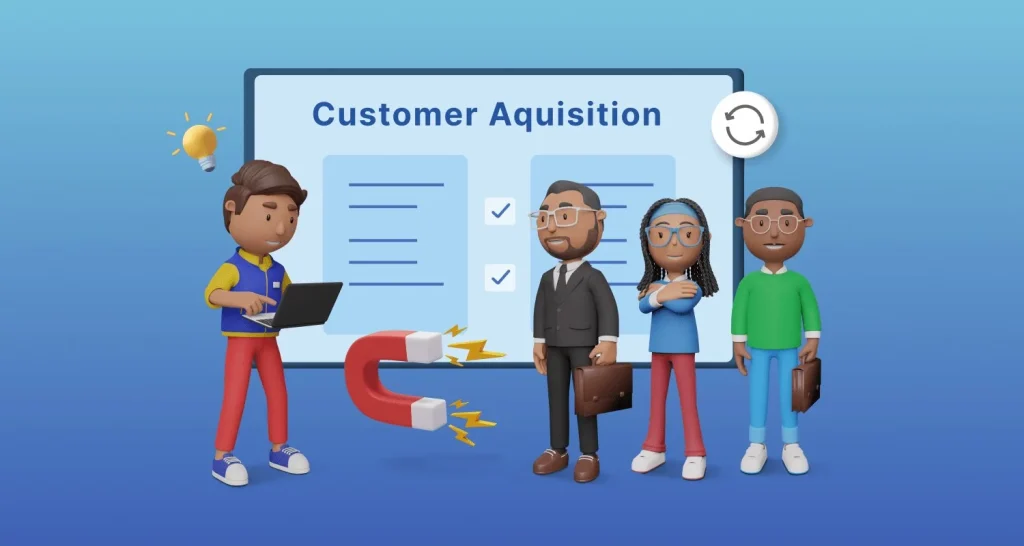
Customer acquisition cost (CAC) is the average amount of money your business spends to acquire one new paying customer, including all marketing and sales efforts.
For support teams working within budget constraints, marketers seeking to improve ROI, and business leaders planning sustainable growth, understanding CAC is crucial.
In this blog, you’ll learn what CAC is, why it matters, how to calculate it correctly, and practical strategies to reduce CAC while maintaining exceptional customer service standards.
What is customer acquisition cost?
Customer acquisition cost (CAC) is the total cost required to acquire one new customer, including marketing, sales, and operational expenses involved in converting a prospect into a buyer.
CAC is one of the most important growth metrics for evaluating marketing efficiency, profitability, and budgeting accuracy.
Understanding CAC helps businesses allocate budgets effectively, forecast costs, measure ROI, and build profitable, scalable growth strategies.
Why is customer acquisition cost important to businesses?
Customer acquisition cost is more than a financial metric; it’s a strategic indicator that shapes profitable, sustainable growth.
Here’s why managing CAC is crucial for success:
- Optimizes marketing strategies: CAC reveals which marketing channels deliver the highest ROI, helping you reallocate budget toward high-performing channels such as SEO, referrals, and organic content.
- Evaluates return on investment (ROI): Customer acquisition cost shows how much you spend to acquire each customer. When paired with customer lifetime value (CLV), it provides a reliable benchmark for profitability.
- Enables smart budgeting: Tracking CAC helps teams predict acquisition costs, set realistic ROI targets, and invest in the activities most likely to produce sustainable growth.
How to calculate customer acquisition cost
Calculating CAC is the first step toward managing acquisition efficiency and building a scalable, profitable growth engine.
Using a customer acquisition cost calculator helps ensure accuracy and facilitates easier comparison of acquisition costs across different periods and channels.
Here’s a simple, step-by-step guide:
1. Define the time period
Choose a consistent timeframe, monthly, quarterly, or annually, so CAC aligns with your reporting and budget planning.
2. Track marketing and sales expenses
Add up all costs for the chosen period, including:
- Paid ads (Pay-per-click campaigns like Google ads or social media ads)
- Content creation and email campaigns
- Sales team salaries and commissions
- Promotional discounts
3. Divide the sum by the new customers acquired
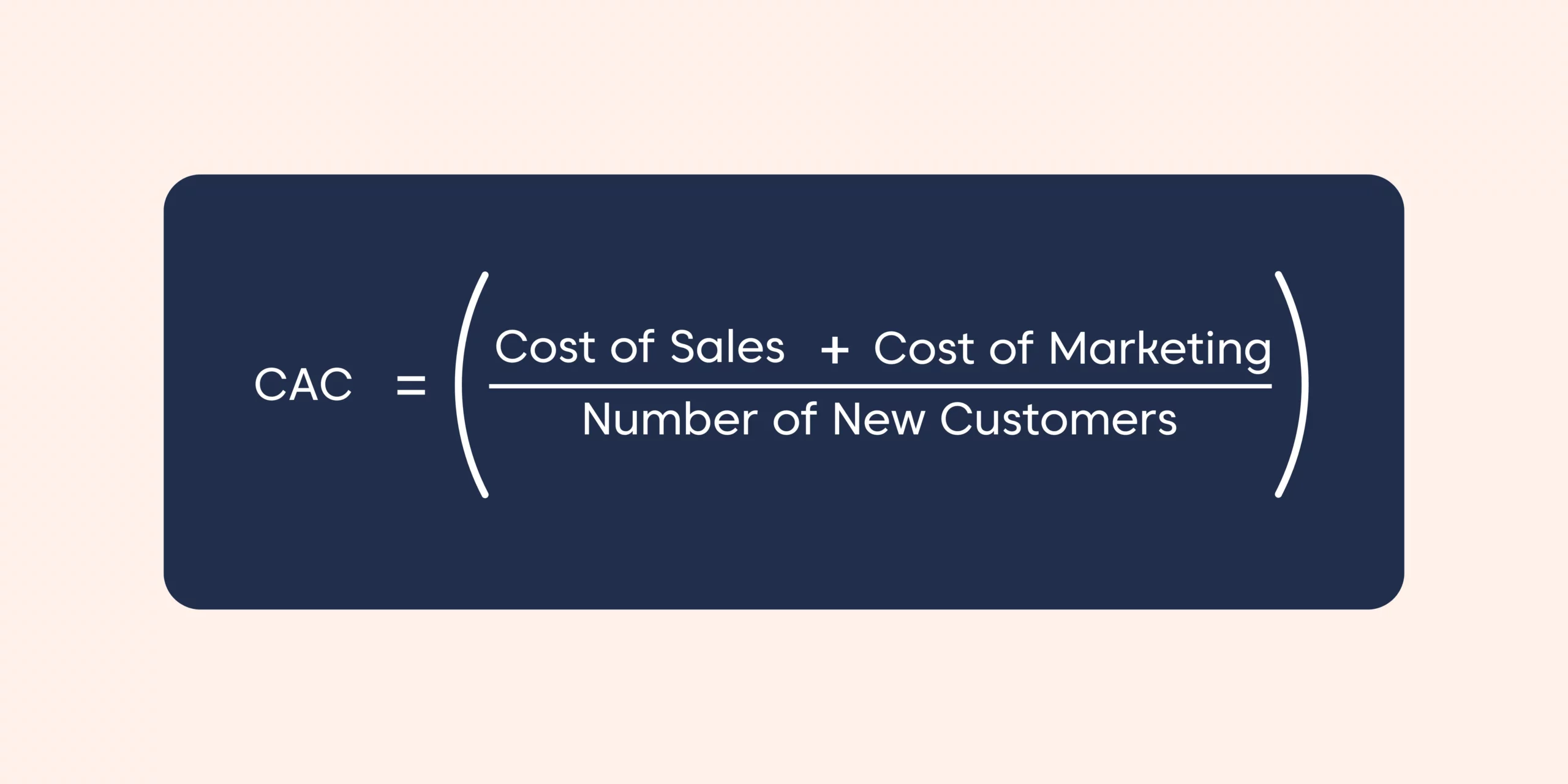
Divide total marketing and sales spend by the number of new customers acquired during that period using the customer acquisition cost formula:
CAC = (Cost of sales + Cost of marketing) / Number of new customers
Example:
If a growing SaaS company spends $10,000 on sales and marketing in one month and acquires 100 new customers, then the CAC = $10,000 ÷ 100 = $100 per customer.
What is a good customer acquisition cost?
A good customer acquisition cost varies by industry, business model, price point, and revenue per customer.
A low CAC means your marketing is efficient, while a high CAC signals it’s time to optimize campaigns or explore cost-effective channels like customer referrals or content marketing.
Instead of focusing solely on CAC, a better way to assess performance is the CLV: CAC ratio, which indicates whether acquisition costs are sustainable.
Customer lifetime value (CLV) represents the total revenue an average customer generates throughout their relationship with your business. Comparing CLV to CAC gives you a clear picture of revenue.
You can find the ratio of CLV to CAC by dividing the CLV by the CAC. The ratio shows whether your acquisition costs are sustainable.
If your CAC is higher than CLV, it means you’re spending more to acquire customers than the revenue they bring in.
So, what’s the ideal CLV: CAC?
Most analysts, like Startup Guru Lab, recommend maintaining a CLV: CAC ratio of at least 3:1.
If your ratio is lower, it’s time to optimize your marketing and sales strategies.
What factors influence customer acquisition cost?
Understanding these drivers that impact CAC helps you control costs. They include:
- Age and maturity of your business: Early-stage companies typically have higher CAC because they invest heavily in brand awareness, experimentation, and scaling. Established businesses with strong reputations typically enjoy lower CAC.
- Customer lifetime value (CLV): If your CLV is high, you can afford a higher CAC, as long as the CLV: CAC ratio remains balanced. A strong ratio means sustainable growth; a weak ratio signals overspending. Therefore, tracking CLV alongside CAC is essential.
- Industry and market competition: Highly competitive industries such as SaaS or ecommerce tend to have higher CAC due to aggressive bidding environments and channel saturation.
What are the tips to reduce customer acquisition costs?
Reducing customer acquisition costs isn’t just about cutting expenses; it’s about making smarter investments that drive sustainable growth.
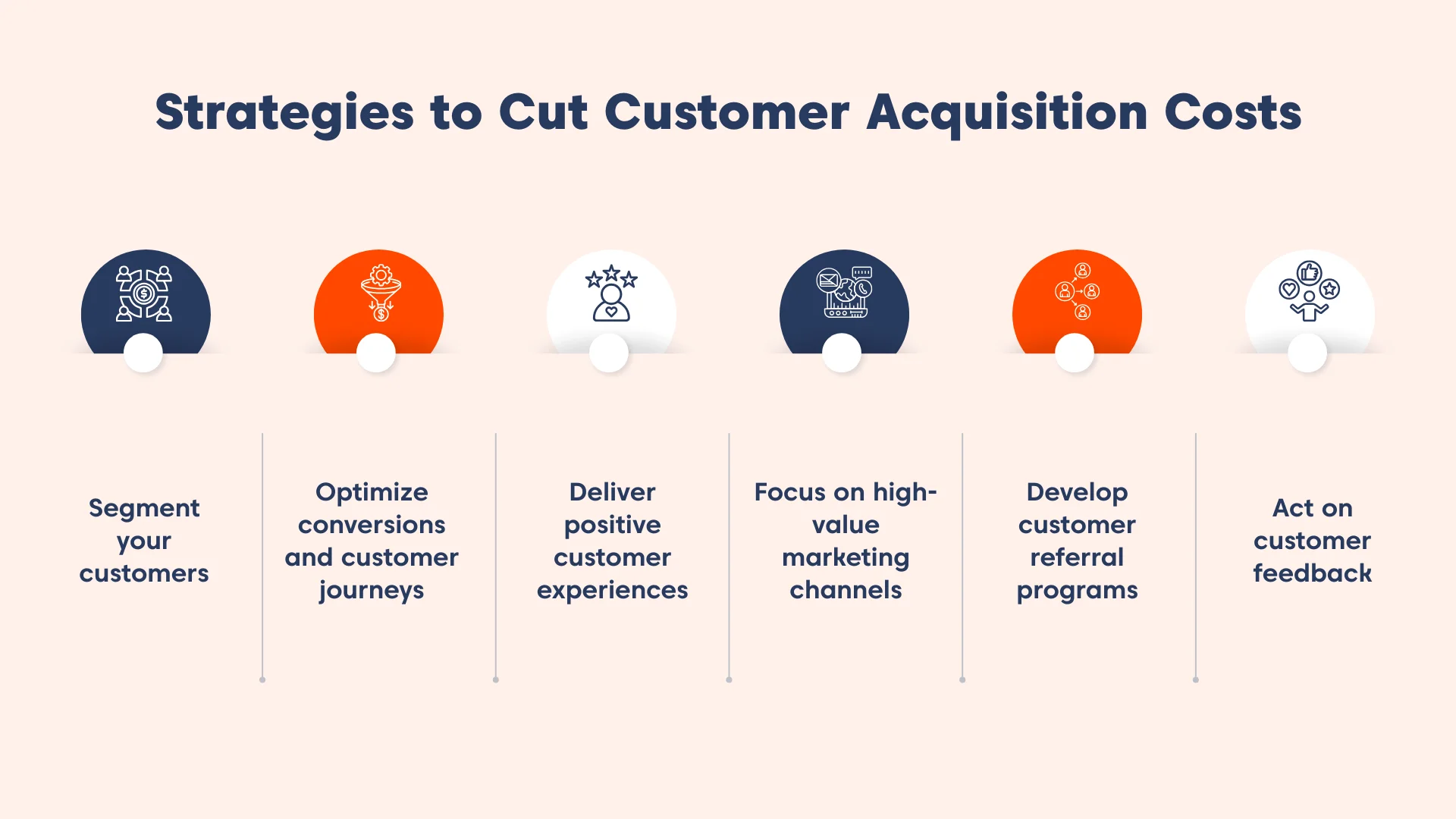
The following are some of the customer acquisition strategies that lower CAC effectively:
Segment your customers
Not all customers are the same, and treating them as such can waste marketing resources.
Customer segmentation allows you to target the right audience with the right message. Personalized marketing reduces wasted spend and increases ROI through conversion rate optimization.
This can be achieved by grouping customers based on demographics, customer behavior, or purchase history to deliver personalized marketing that increases relevance and reduces wasted spend.
Optimize conversions and customer journeys
Every click counts. A complicated buying process increases CAC and weakens your sales funnel.
To ensure smooth journeys, fewer drop-offs, and lower acquisition costs, you can:
- Simplify the buying journey by enhancing navigation, minimizing friction, and eliminating unnecessary steps.
- Utilize A/B testing to refine landing pages and enhance conversions.
- Implement retargeting ads for visitors who didn’t convert.
- Utilize the customer journey map to identify pain points and make changes to improve navigation experiences.
Deliver positive customer experiences
Customer experience isn’t just retention; it’s acquisition. A great first impression converts prospects faster.
Keeping your customers happy makes them convert faster and stay longer, improving CLV. You need to:
- Provide fast, helpful in-app customer support.
- Offer clear return policies and transparent pricing.
- Personalize interactions to make customers feel valued.
Focus on high-performing channels
Not all channels deliver equal results. High-value channels deliver measurable results and attract customers with strong purchase intent.
Prioritize those that attract high-quality customers and generate strong ROI by:
- Analyzing past performance to identify channels that drive the most conversions.
- Allocate more budget to search engine marketing (SEM), social media ads, and SEO-driven content creation.
- Adopt an omnichannel customer service approach to ensure consistent support to reduce friction and improve conversion rates.
Develop customer referral programs
Tapping into the power of word-of-mouth marketing can improve your brand perception, and satisfied customers can be your most effective marketers.
According to Invesp, customers referred by other customers have a 37% higher retention rate and are 4 times more likely to refer more customers to your brand.
This can turn customer loyalty into growth opportunities by:
- Rewarding customers with discounts, credits, or exclusive perks for referrals.
- Utilizing referral tracking tools to automate the process.
Act on customer feedback
Listening to customers is essential for growth. Acting on their input builds trust, reduces churn, and makes CAC more sustainable.
To uncover what’s working and what’s not:
- Collect customer feedback through surveys, reviews, and social listening to identify friction points.
- Apply the insights to refine products, services, and marketing strategies.
Types of expenses included in customer acquisition cost
Customer acquisition cost (CAC) varies across industries and business models. Thus, there are several ways different companies gain new customers.
Here are various examples of expenses that contribute to CAC:
Marketing costs
These are costs businesses allocate for online and offline advertisements to capture the attention of potential customers:
- Social media ads
- Pay-per-click
- SEO optimization expenses
- Content creation
- Events
- Paid ads
- Research
Sales and employee costs
These are costs for the personnel who plan and execute the previously listed marketing activities and conduct one-on-one meetings with the potential customers drawn in by it:
- Salaries
- Recruitment
- Training expenses
- Commissions and bonuses
Promotional costs
These are expenses used by companies to attract prospects to make their purchases:
- Discounts
- Coupons
- Free trials
- Referral incentives
Reduce customer acquisition costs and boost profitability today!
Lowering your customer acquisition cost (CAC) is essential for sustainable growth and higher profits. Every penny saved on acquiring customers strengthens your bottom line and frees resources for innovation.
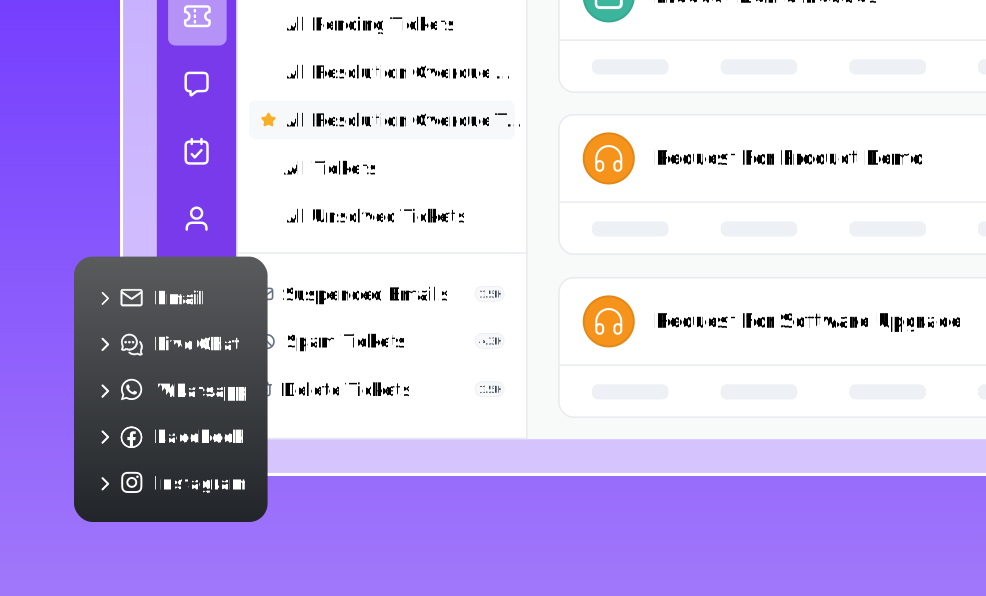
BoldDesk helps reduce CAC by enhancing customer experience through a unified inbox that integrates email, chat, WhatsApp, SMS, and social channels.
It enables faster, more consistent support, improves conversion rates, and leverages ticket automation, self-service knowledge bases, and AI-powered workflows, helping businesses cut CAC and other operational costs.
Ready to reduce CAC? Book a live demo to try BoldDesk for free, or explore our product tour and documentation to see how BoldDesk’s automation, omnichannel support, and AI-powered workflows help boost profitability.
Contact our support team today to discover how we can transform your customer service strategy.
Have tips or questions on lowering CAC? Share your thoughts in the comments section below.
Related blogs
- Customer Retention: Metrics, Strategies, and Examples
- What are Customer Loyalty Programs? 5 Best Examples
- After-Sales Service: Proven Tips to Keep Customers Happy
Frequently Asked Questions
You calculate CAC across channels by dividing each channel’s total acquisition cost by the number of new customers it produced. This helps identify which channels deliver the best ROI.
Yes. The best customer service software reduces CAC by improving satisfaction, lowering churn, increasing referrals, and automating support workflows.
Customer acquisition cost is broader and includes all marketing and sales expenses involved in converting a customer, while CPA focuses on individual actions like signups or downloads.
Calculate CAC monthly or quarterly to track trends, identify inefficiencies, and adjust acquisition strategies based on real-time performance.