





TL;DR: Reducing agent effort in customer service requires a combination of knowledge management, employee training, customer self-service, workflow automation, unified tools, and SLA tracking. By eliminating repetitive work and improving access to information, organizations can increase agent productivity, reduce response times, lower costs, and improve customer satisfaction.
Every customer wants a quick resolution. But that’s difficult when agents spend more time searching for answers, switching between tools, and handling repetitive tasks than helping customers.
That’s why reducing agent effort has become a top priority for modern support teams. When agents can access information quickly, work from a unified workspace, and automate routine tasks, they can resolve issues faster and deliver a better customer experience.
In this guide, we’ll explore practical strategies for reducing agent effort while improving productivity, service quality, and operational efficiency.
What does reducing agent effort in customer service really mean?
Agent effort is the amount of work a customer service agent must put in to please a client in accordance with your company’s requirements.
This encompasses being prompt in your responses to customers, resolving customer issues quickly and efficiently, and providing helpful and friendly customer service. It also involves staying up to date on company procedures and policy.
Why is reducing agent effort necessary?
Reducing agent effort in customer service is essential for businesses to remain competitive and improve customer satisfaction.
Customer service agents often find themselves spread thin, with 69% of agents reporting difficulty in providing quality service promptly due to increasing workloads. (Salesforce)
Reducing agent effort can:
- Increase efficiency.
- Reduce costs by eliminating the need for additional staff.
- Build better relationships with customers by allowing agents to focus on more meaningful interactions.
- Produce a better company culture.
- Improve morale of employees.
Techniques to lower agent effort in customer service
Your agents are an integral part of the company, so making their jobs simpler will benefit everyone. Try the following actions to let your agents know that you value their efforts and are paying attention to them.
1. Ensure easy access to information and resources
Customers want timely, precise responses to their inquiries. For support representatives, this isn’t always simple.
When information is hard to find, agents waste a lot of time looking for the answers, consulting their neighbors, or holding out for a supervisor to aid them.
This slow response will lower your customer satisfaction ratings and result in an increased average handle time (AHT) and longer wait times. To improve how agents access information:
- Remove document duplication.
- Have a robust search engine.
- Reduce large amounts of text to chunks that are simple and straightforward.
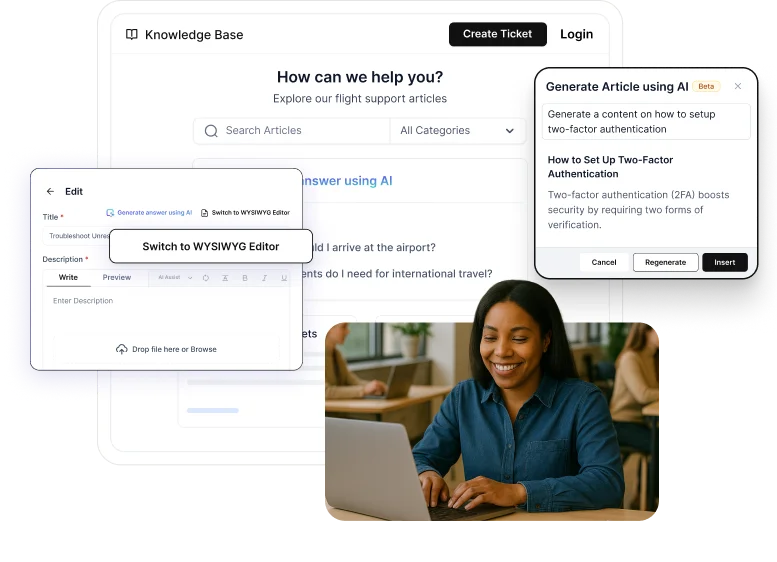
- Create an internal knowledge base as a central repository for all company information and product troubleshooting.
2. Prioritize communication with agents
No matter the company or business, change is the one constant in our fast-paced world. Therefore, agents must be made aware of any significant product modifications, price adjustments, or new business rules.
This makes sure that if your company evolves, your support agents will transition smoothly, and clients will continue to enjoy the same high standard of customer care.
3. Provide effective training to enhance agent efficiency
Agents need to have a clear grasp of their role and the services they offer to clients. When agents start working, they will make a lot of mistakes if they discover they are uncertain about a wide range of topics and situations even after training.
Your training should provide agents with the know-how and abilities to do their duties, including where to find crucial information and who to ask about specific subjects.
By doing this, agents won’t feel lost when they begin their jobs and will be sure to know where to turn for help if they do.
4. Empower your agents to boost productivity
One of the ways to improve team productivity is by creating a friendly workplace where everyone is respected and acknowledged.
This will strengthen their loyalty to your business and provide them the motivation they need to work at the top of their game.
Teamwork is another crucial component of the system. Agents’ distinct abilities start to converge when they collaborate and engage in open dialogue, creating a high-performing team.
5. Offer comprehensive self-help tools to customers
Support agents in most organizations are extremely busy. The work can occasionally get to them if the workload is heavy.
A comprehensive knowledge base as a self-service option can facilitate customer empowerment, helping clients find the information they need to solve their own problems independently without requiring agent assistance.
Research by NICE shows that 81% of customers admit that they prefer self-service options in the businesses they interact with.
By offering a knowledge base that is easy to find and use, the number of tickets created decreases, thus reducing the workload of agents, allowing them to focus more on critical tasks.
6. Have clear policies and procedures
Agent effort is significantly impacted by business restrictions on their ability to provide transparent client experiences.
Processes can be challenging for agents to follow due to complexity, abbreviations, industry jargon, and structure.
By dividing lengthy procedures into manageable parts and organizing them logically and visually, you may make your processes simpler to follow. Use plain language for your policies and provide example scenarios for applying them.
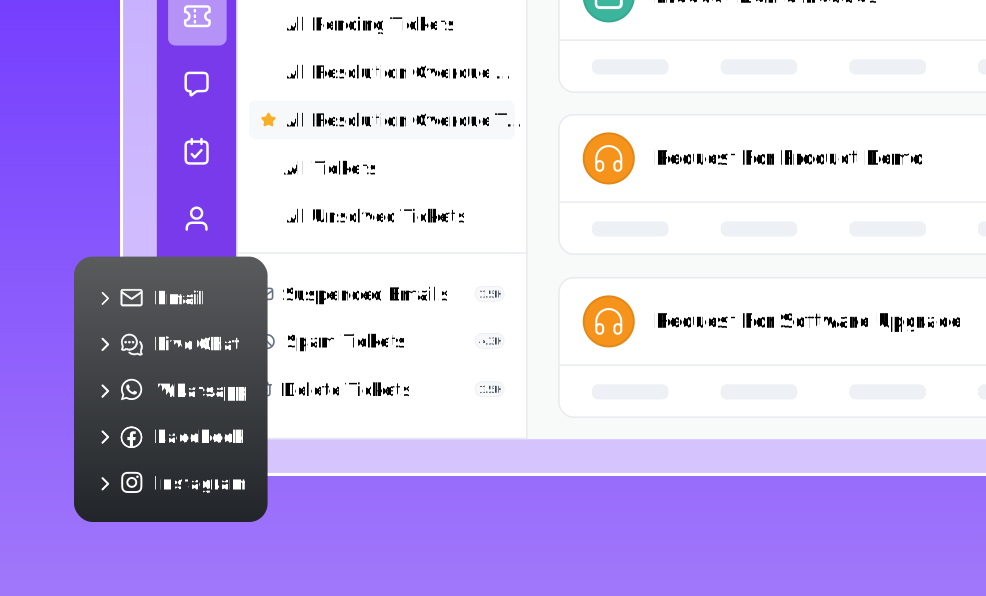
7. Encourage a unified interface
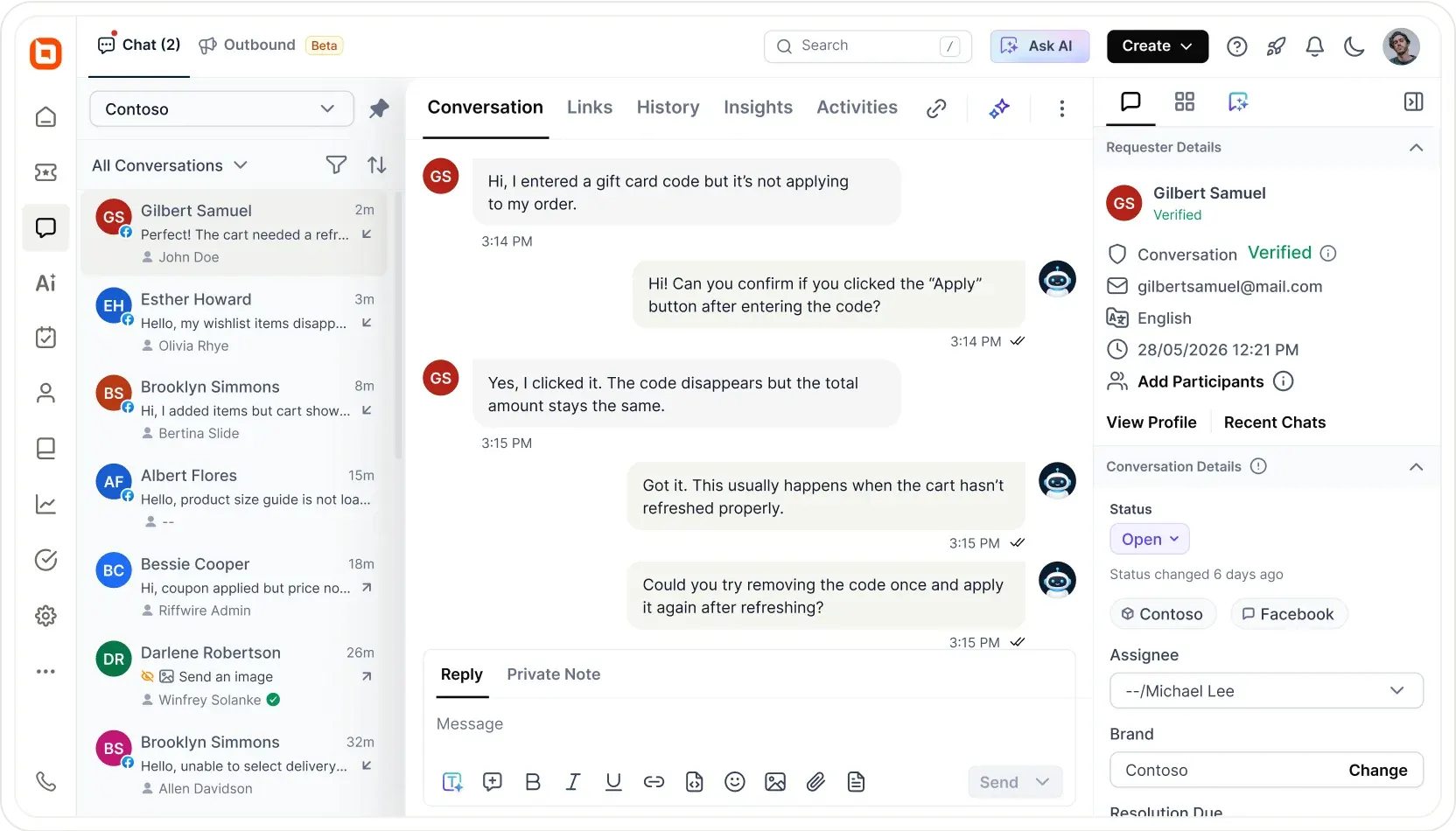
This means that all customer service agents should be using the same interface for all customer service activities.
Agents having to switch among several different apps in order to answer one customer inquiry is a pain. Productivity will undoubtedly suffer, and eventually, so will customer satisfaction.
Having a unified interface helps to reduce the amount of time spent learning new systems and navigating different interfaces.
Additionally, a unified interface helps to ensure that customer service agents are able to access the same information quickly and easily to provide fast, accurate customer service.
This reduces the amount of time spent searching for information, which in turn reduces the amount of effort required from customer support agents.
8. Automate reminders, alerts, and notifications
To complete repetitive, manual operations, create customized workflows with automation to decrease manual labor and boost agent efficiency.
Clients can receive automatic notifications when their issues have been received and when the status of their tickets changes. This keeps agents from having to personally notify clients of progress.
Before the resolution deadline, assigned agents can get an alert as a reminder. This way, agents don’t have to worry about forgetting tasks, reducing their stress.
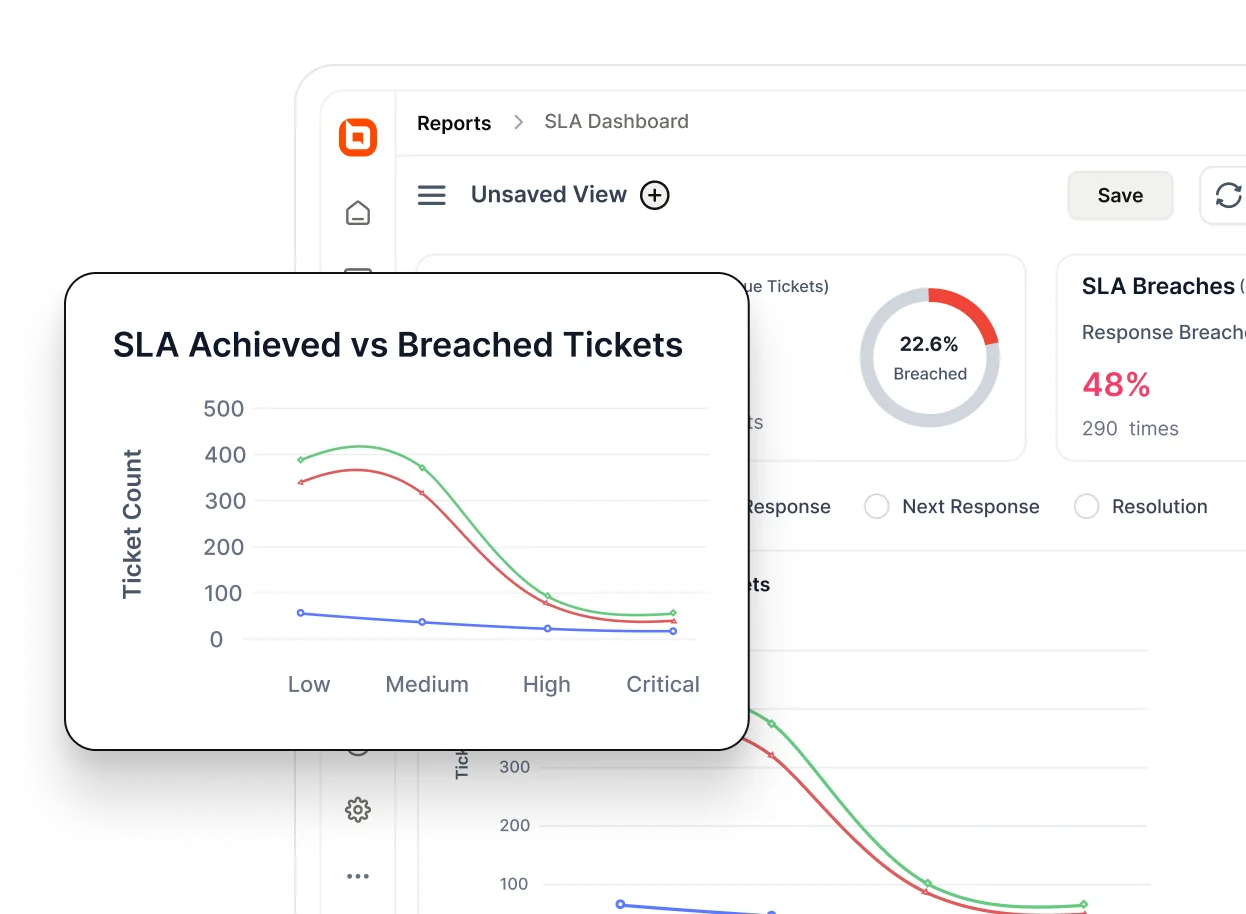
9. Use SLA escalations to improve agent productivity
Automatically set response and resolution deadlines using service-level agreements (SLAs). An SLA defines how quickly your support team should respond to and resolve a problem.
If a ticket is not resolved on time, use support software to escalate it automatically to a team lead. Both the agent assigned and the team lead get alerts.
The team lead can then notify the customer of a delay and find out why the ticket is still open. If the original agent is unable to solve the issue, the team lead can reassign it to an agent with better expertise or a lighter workload to ensure customer satisfaction.
10. Measure and monitor agent effort
What you don’t measure, you won’t be able to impact. Leverage modern data technologies to get more precise insight into agents’ performance and where they can improve.
The best customer service software can offer data tracking and measurement mechanisms such as worklog reports, agent performance reports, and customer satisfaction reports.
You can also regularly check in with your agents to see if they’re having issues not evidenced by data. Demonstrating your concern will go a long way toward enhancing morale and, consequently, performance.
11. Recognize and reward good performance
A little gratitude goes a long way. An employee will go above and beyond to assist the company if they feel valued and recognized. A worker will begin to hate their job and eventually lose motivation if they are continually given extra work without any recognition.
Reward your support agents for attaining their immediate objectives. With these short-term rewards, agents believe their goals are attainable, which boosts their motivation to work for the longer-term objectives of the company.
Lower agent effort for improved productivity
Reducing agent effort is about removing the friction that slows support teams down, from repetitive tasks and disconnected tools to difficult-to-access information.
When agents spend less time navigating obstacles, they can focus on resolving issues faster, delivering consistent support, and creating better customer experiences.
The strategies in this guide provide a foundation for building a more efficient and scalable customer support operations. But processes alone can only take you so far.
With the right customer service software, you can turn these best practices into daily workflows that help agents work faster, smarter, and with less effort.
Start a free trial of BoldDesk to see how a streamlined support experience can help your agents accomplish more with less effort.
We hope this blog post was insightful. Do you have any additional suggestions? Please leave them in the comments section below!
Related articles
- 7 Best Ways to Reduce Customer Service Response Time
- 12 Proven Ways to Improve Agent Productivity
- Customer Service Management: Process, Benefits and Tips