

TL;DR: A service level agreement (SLA) defines the services delivered, the performance standards expected, and how success is measured. It establishes clear response and resolution targets, strengthens accountability, and helps support teams offer consistent, reliable customer service.
Even great service teams face a common challenge: expectations aren’t always written down, and a service level agreement is designed to fix the gap.
A customer may think “fast support” means minutes, while your team assumes “by end-of-day,” turning routine tickets into avoidable escalations.
In fact, Zippia reports that 31% of customers who reach out for support via social media expect a response the same day.
When customer expectations aren’t defined, prioritizing work, measuring performance, and maintaining healthy relationships becomes harder, especially as your support volume grows.
A service commitment creates clear, measurable service standards for response times, resolution targets, support hours, and how exceptions are handled.
It gives both sides a measurable standard that defines what a good SLA in customer service looks like.
In this guide, you’ll learn what an SLA is, the main types, key components, and the value they bring to modern support teams.
What is a service level agreement?
A service level agreement is a documented contract between a service provider and a customer that defines the services to be delivered and the expected level of performance, such as response and ticket resolution times.
It outlines service scope, measurement criteria, and consequences for unmet commitments, ensuring clarity and accountability for both parties.
For example, a SaaS company may commit to a 1-hour first response time for priority 1 tickets and a 24-hour resolution window. If those targets are missed, the customer may receive service credits.
How do SLAs work?
SLAs work by pairing a clear agreement with a system that can track performance objectively.
The contracted service level sets expectations on paper, like response and resolution targets, but meeting those commitments day to day depends on visibility and automation.
It timestamps key stages in a ticket’s lifecycle: when it’s created, acknowledged, updated, escalated, and resolved.
Those timestamps are then measured against your agreed performance targets to confirm whether the team is on track or at risk of a breach.
In practice, a functioning SLA setup typically includes:
- Automatic timers that track each ticket against response and resolution deadlines.
- Proactive alerts that warn agents and lead before a breach occurs.
- Real-time dashboards that highlight priority levels, breach risk, or status.
- Performance reports that show agreed service level compliance trends across teams, queues, and priorities.
What are the types of SLAs?
Service level agreements can take different forms depending on who the agreement covers and how the service is delivered.
The three most common types are:
1. Customer-based agreements
A customer-specific agreement tailored to an individual client or customer segment that covers the services they use and the targets they expect.
Example
A company has a customer-specific service obligation with its IT provider that defines response and resolution targets for its users.
2. Service-based SLA
A single service agreement that applies the same standards to everyone using a specific service.
Example
An internet provider sets the same uptime and performance targets for all subscribers on a given plan.
3. Multilevel SLA
An SLA structured in layers of commitments within one agreement, typically organization-wide terms plus customer- or tier-specific targets.
Example
A telecom provider defines baseline support targets for all customers, with faster targets for premium tiers.
What are the core components of SLAs?
Support agreements include a few key components that explain what service is being delivered and how performance will be measured.
These parts keep expectations clear for both the provider and the customer. They include:
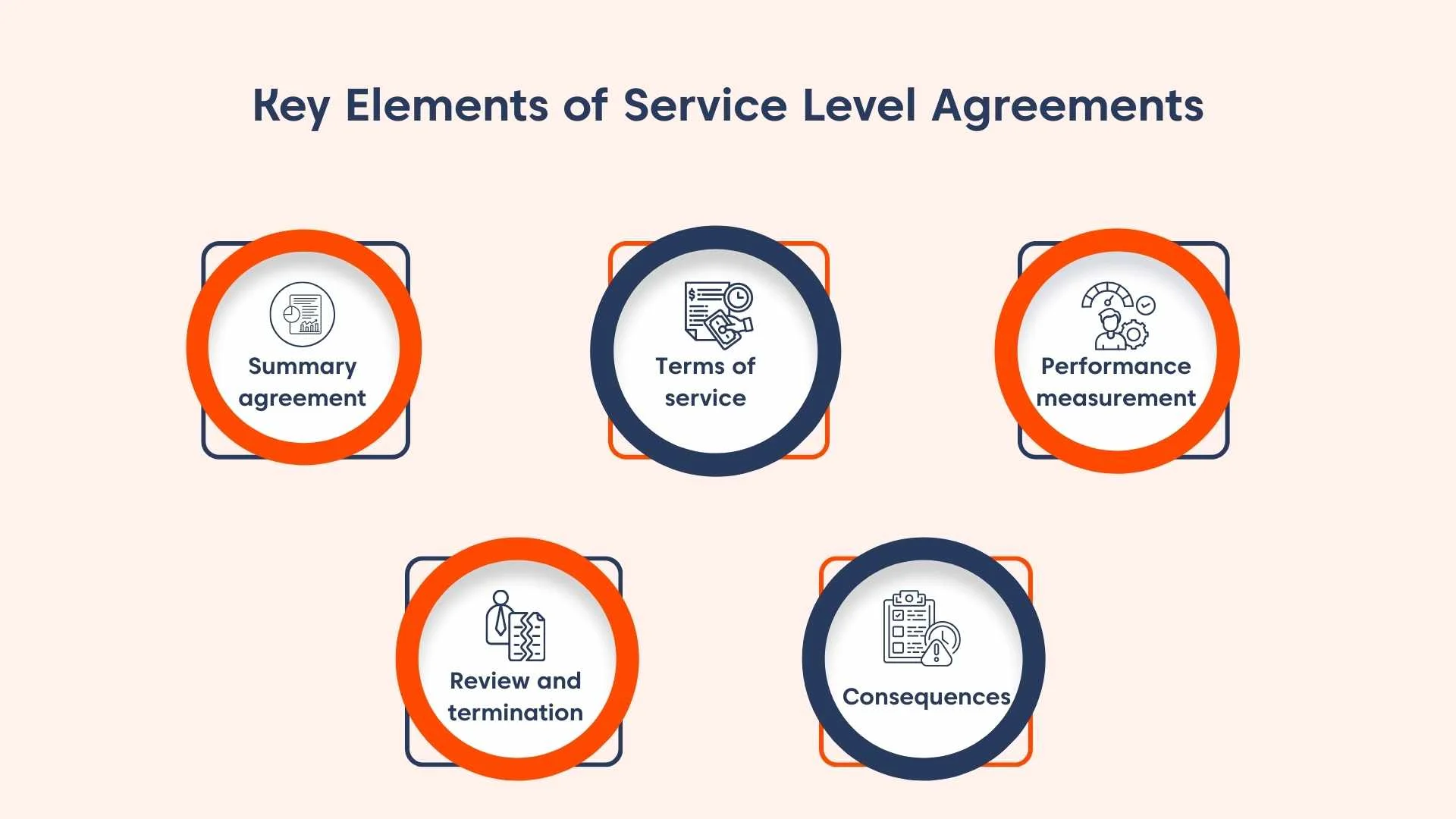
- Summary of the agreement: A brief overview that identifies the parties involved, the service covered, key dates, and the approvals needed to make the defined performance targets official.
- Terms of service: Defines what services are included, who receives them, how they will be delivered, and any exclusions or conditions both sides must follow.
- Performance measurement: Explains how service quality will be tracked, including metrics like response time, resolution time, and availability, plus how often reports will be shared.
- Consequences: States what happens if commitments aren’t met, including allowed exceptions and potential remedies (for example, service credits) or corrective actions.
- Review and termination: Outlines how often the agreement will be reviewed, how updates are approved, and the conditions for ending the agreement.
What are the key SLA metrics in customer service?
Operational performance metrics help teams measure whether they’re meeting the commitments defined in the support agreement.
The most common metrics include:
- First response time (FRT): The time from when a customer submits a ticket to when an agent sends the first human reply. This confirms the request is acknowledged quickly and is one of the most common help desk SLA targets.
- Next response time: The time between a customer’s follow-up message and the support team’s next reply. This helps ensure customers continue receiving timely updates throughout the ticket lifecycle.
- Resolution time: The total time required to fully resolve or close a ticket. This is often the most business-critical metric because it measures end-to-end turnaround.
- Uptime or availability: The percentage of time a service is available to users (for example, 99.9% availability). This metric is typically used in IT, SaaS, telecom, and healthcare industries, where interruptions directly affect operations and trust.
- Mean time to resolve (MTTR): The average time to resolve issues over a defined period. MTTR is usually a reporting metric (trend/efficiency indicator) rather than a per-ticket SLA promise, and it’s useful for spotting recurring bottlenecks.
- Escalation time: How long it takes to route a ticket to a higher-tier agent or team when it’s at risk of missing a contracted service level. Escalation rules help prevent breaches by triggering timely intervention.
- SLA compliance rate: The percentage of tickets that meet their service commitment, such as first response, next response, and resolution time, among others.
- Error or defect rate: Tracks how often something goes wrong, such as incident frequency, failed changes, defects, or ticket reopens. This is especially useful when speed alone doesn’t reflect service quality, for example, when quick resolutions lead to repeat issues.
- Security metrics: Measures whether security-related commitments are being met. Common examples include time to acknowledge and remediate security incidents, patching timelines, and vulnerability remediation based on severity.
What are the advantages of service level agreements?
Contractual service agreements play a crucial role in creating clarity between service providers and customers.
The following are some of the benefits you can enjoy from leveraging service agreements.
- Improves accountability: Agreed service levels clarify the responsibilities of both the provider and the user, making it easier to understand who owns each step. This shared accountability reduces disputes and creates a more predictable customer service experience.
- Sets measurable quality standards: Defining SLA in customer service metrics such as uptime, first response time, and resolution time ensures both sides understand the minimum acceptable service level. These standards help maintain consistent quality.
- Establishes clear expectations: Service commitment defines what “good service” looks like, what’s included, when support is available, and how quickly different requests should be handled. This reduces ambiguity and prevents avoidable misunderstandings.
- Guides team performance: By setting response and resolution targets, an agreed performance level helps teams prioritize work and stay focused on service goals. They also create transparency for coaching and performance reviews.
- Provides a structured response to issues: Service delivery agreements typically describe escalation procedures and what happens if targets are missed (for example, reviews, corrective actions, or agreed remedies). This structure helps maintain customer trust during service disruptions.
- Strengthens customer relationships: With clear commitments and transparent reporting and analytics, service obligations build confidence and reduce miscommunication, supporting a healthier long-term partnership.
Service level agreement examples and templates
Service level agreements can range from simple, one-page agreements or detailed, multi-section documents, depending on the complexity of the service provided.
Many industries, including IT, SaaS, telecom, and healthcare, use performance agreements to define service quality and enforce commitments.
Below are practical examples and templates that show how different organizations structure their support performance agreements.
BoldDesk’s SLA templates
If you’re managing performance levels inside a help desk software, you typically configure targets and rules directly in the system.
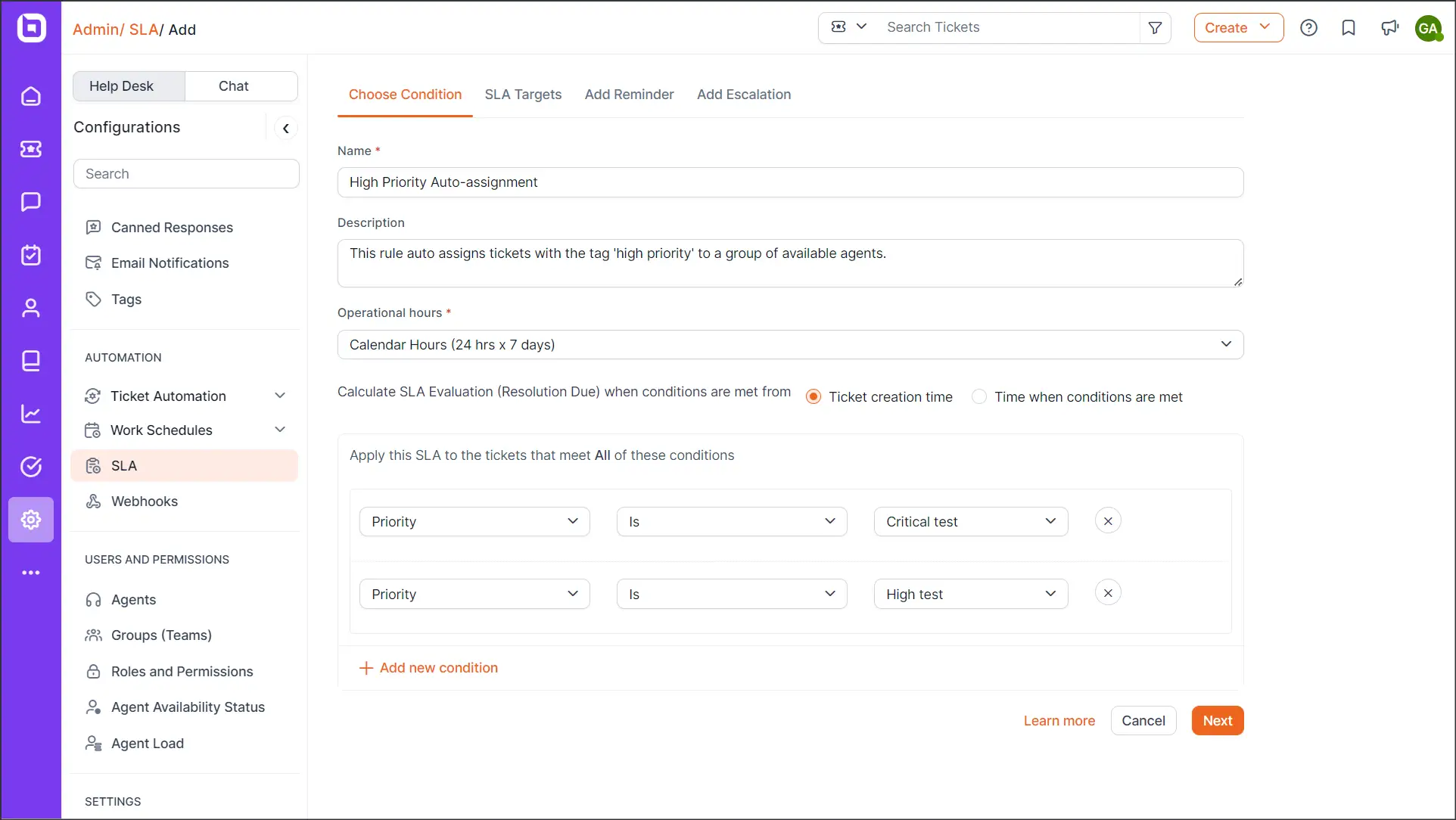
With BoldDesk, you can configure service delivery expectation policies in minutes, automate escalation workflows, and track compliance in real time, without manual spreadsheets or custom coding.
You can define operating hours, apply conditions, set targets for first response time, next response, and resolution, and enable reminders or escalations to keep tickets on track.
These templates help teams measure performance metrics consistently and maintain service transparency, ensuring you meet your specific customer service goals.
AT&T’s small business SLA
AT&T’s service-level agreement outlines the services provided, expected performance levels, and the process for requesting service credits if targets are missed.
The agreement uses clear bullet‑point formatting to list metrics and terms, making it easy for customers to understand.

PandaDoc’s SLA template
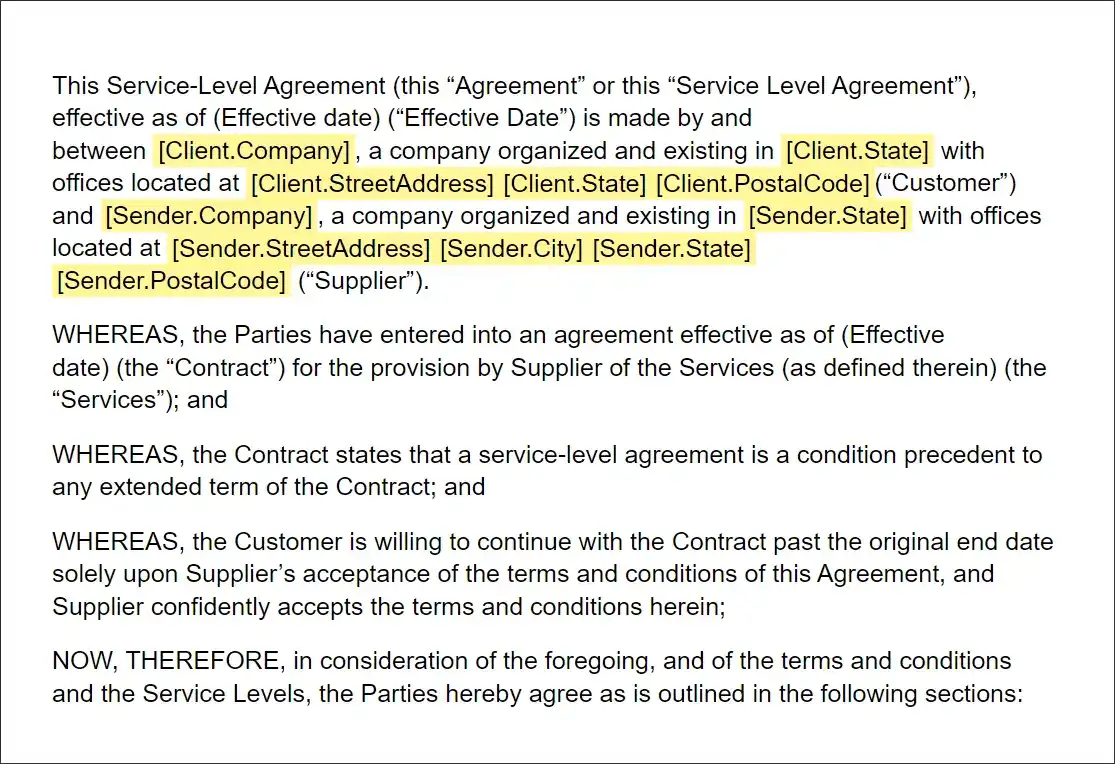
PandaDoc offers customizable agreement templates written in standard contract language.
These templates define service expectations, quality metrics, and remedies or penalties if service levels are not met.
Businesses can edit and tailor these documents to match their support model.
How to implement service level agreements for customer support
Implementing service commitments requires clear steps that establish expectations, set measurable targets, and ensure that support performance can be tracked consistently.
The following guide outlines how to put an effective response and resolution commitment in place for your support team.
- Define scope and SLA rules: Decide which channels, teams, or customers the contractual agreement applies to, set support hours, define priority levels, and document when the support agreement clock starts or stops.
- Set realistic SLA terms: Review your current performance, available resources, and business goals. Use this information to set your customer service SLA targets, so your team can reliably achieve.
- Draft the agreement: Create a draft agreement and refine it with input from team leads or stakeholders. Remove unnecessary requirements and make sure the scope and expectations are clearly defined.
- Outline the terms clearly: Write the agreement in plain, easy‑to‑understand language. Clarify what the customer can expect, what your team is responsible for, and any conditions, exclusions, or service limitations. Consult legal counsel to review the terms, exceptions, and enforcement provisions before finalizing the agreement.
- Set up reminders: Use the best help desk software to send alerts when tickets approach their established deadlines. Reminders help agents stay on track and ensure first response, customer follow‑up, and resolution time targets are met.
- Add escalation rules: Define what happens when a ticket is at risk of breach. Automated escalation notifies supervisors or reassigns the ticket, ensuring urgent issues are handled promptly, and customers stay informed.
- Monitor and review regularly: Track performance using dashboards and reports, then review the agreement at set intervals. Update targets if demand, capacity, or processes change. Regular reviews help maintain alignment between customer expectations and team capability.
Scaling Support? Stay Ahead—At No Cost!
Use smart ticketing to track customer requests, avoid missed deadlines, and keep your startup support running smoothly.
Achieve customer service excellence with a well-defined service level agreement
Clear, structured agreements help support teams set expectations, prioritize work effectively, and measure performance with confidence.
The key is to keep targets realistic, define terms and exceptions in plain language, automate reminders and escalations, and review performance regularly as your needs evolve.
BoldDesk provides built‑in tools for configuring service delivery policies, setting response and resolution targets, applying business or calendar hours, and automating reminders and escalations to prevent missed commitments.
Ready to implement customer service standards in your support workflow? You can start a free trial to explore how to set up the policies. Book a live demo to see how the configuration can work for your use case.
When you’re comparing options, contact our support team to evaluate what fits your support volume and requirements.
We’d love to hear about the SLA metrics you’re using. Please share your feedback in the comments.
Related articles
- Top 7 SLA Best Practices to Improve Customer Service
- 6 Reasons You Need an SLA for Customer Service
- What is an SLA? How does an SLA improve productivity?
Frequently Asked Questions
It is typically calculated as:
SLA compliance (%) = (Number of tickets that met the SLA ÷ Total SLA-bound tickets) × 100
You can calculate it separately for each target (first response, next response, resolution) and filter by priority, team, customer type, or period to get a more accurate view.
Yes, organizations often manage multiple SLAs simultaneously for different customers, services, priorities, or support tiers.
This is common in SaaS, IT customer service, and managed service environments.
External SLAs focus on customer commitments and contractual obligations, while internal SLAs define expectations between internal teams or departments.
Internal SLAs are typically less formal but still measurable.
This depends on the SLA configuration. Some operate during business hours only, while others run on a 24/7 basis. Operational hours should be clearly defined in the agreement.
An SLA is a formal contract that sets service commitments and the consequences if they aren’t met.
A KPI (Key Performance Indicator) is an internal metric used to measure performance.
An SLO (Service Level Objective) is an internal performance target that supports an SLA but isn’t legally binding.