


 In this page
  In this page

TL;DR: AI helps support teams work faster by reducing repetitive tasks, improving ticket routing, surfacing the right information, and speeding up resolutions. This article explains the biggest agent productivity challenges, the most effective AI strategies to address them, and why AI is becoming essential for modern customer support.
In businesses, support teams are expected to handle increasing ticket volumes without increasing workload or reducing service quality. However, repetitive queries, slow manual processes, and growing demand leave agents stretched thin, making it harder to deliver fast, consistent, and meaningful customer support.
How can agents improve productivity without taking on more work or sacrificing service quality?
AI support automation tools help change that. With automated routing, AI summaries, and AI-assisted replies, agents can work faster and focus on complex customer issues.
The impact is already visible. Deloitte Digital’s 2026 survey found that 64% of service leaders reported higher agent productivity, while 39% reported lower cost per contact as a result of AI.
In this guide, we’ll explore practical ways to improve agent productivity with AI, the key challenges support teams face, and how BoldDesk helps support teams deliver faster, more consistent customer service.
Key challenges that reduce agent productivity in customer support
Several operational bottlenecks can reduce agent productivity in customer support, including repetitive tasks, poor ticket routing, language barriers, missed urgent tickets, and limited analytics visibility.
To improve agent productivity with AI, support leaders need to identify where these issues occur across agent workflows.
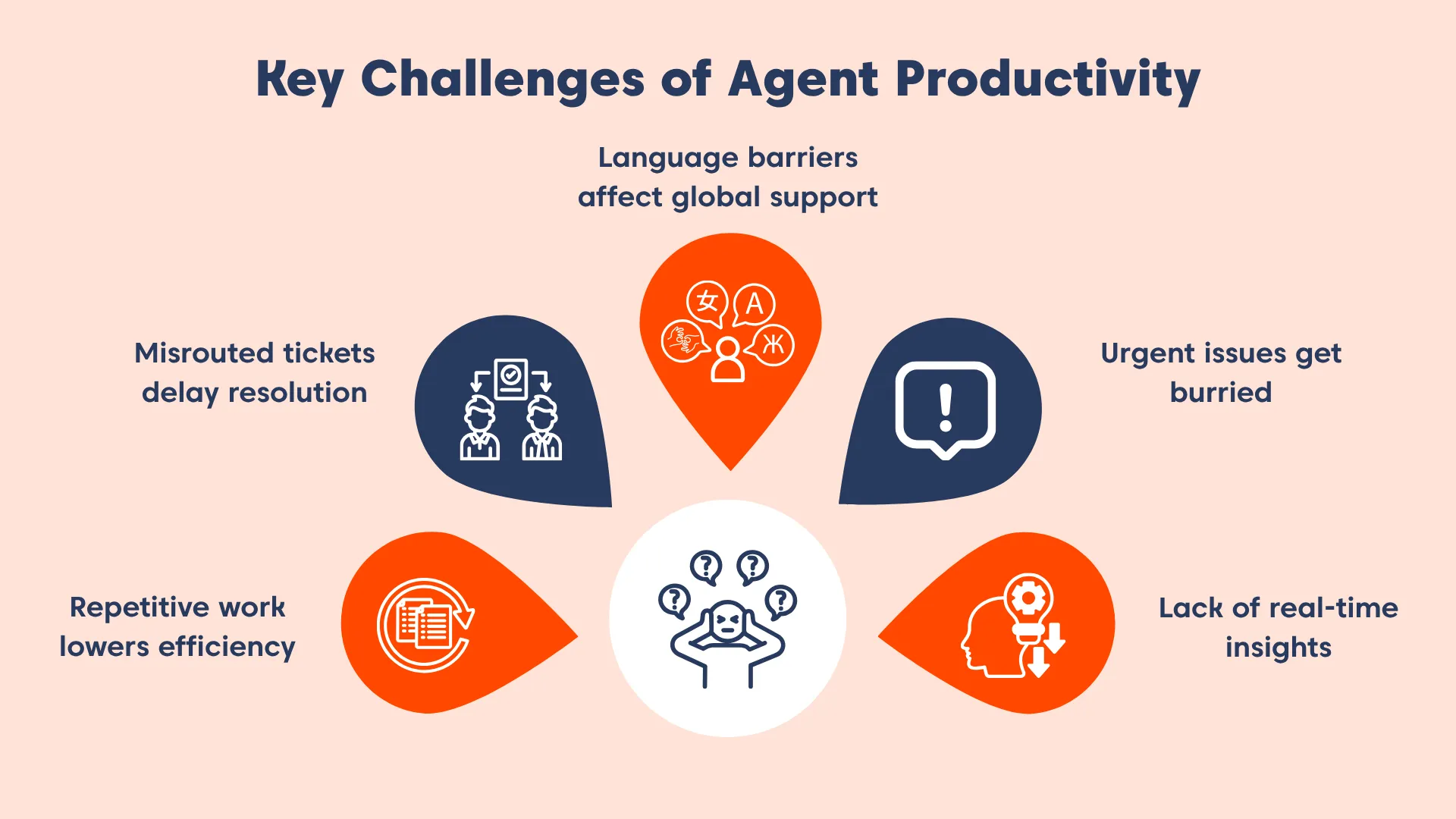
These challenges often stem from manual processes, disconnected systems, and limited visibility, making AI support automation tools valuable for streamlining support operations.
- Repetitive work reduces agent efficiency: Agents lose valuable time updating tickets, assigning conversations, tagging requests, and writing similar customer replies. This limits the time available for high-value support interactions and faster issue resolution.
- Poor ticket routing creates resolution delays: Misrouted tickets lead to unnecessary handoffs, unassigned conversations, repeated triage, and longer customer wait times. When tickets do not reach the right agent or team from the start, support operations become less efficient.
- Language barriers affect global customer support: Communication gaps across languages can significantly delay global customer support by causing misunderstandings and repeated interactions. They make it harder to deliver fast, accurate, and empathetic service across diverse customer bases.
- Urgent tickets can be overlooked: Critical customer issues may be missed when incoming tickets are not clearly prioritized by urgency or sentiment. This increases the risk of delayed responses, SLA breaches, and lower customer satisfaction.
- Lack of real-time insights affects support performance: Without real-time visibility into ticket volume, SLA status, agent workload, and response trends, support managers may struggle to identify bottlenecks, workload imbalances, and service-quality gaps across support operations.
Manual support workflow vs. AI-powered support workflow
By reducing repetitive work and improving operational efficiency, AI helps support teams scale customer service while maintaining high-quality customer experiences.
The table below highlights the difference between traditional support operations and AI-enhanced support workflows.
| Support process | Manual support workflow | AI-powered support workflow |
|---|---|---|
| Ticket routing | Agents manually assign tickets based on category or priority. | AI automatically classifies, prioritizes, and routes tickets to the right agent or team. |
| Reply drafting | Agents write responses from scratch or search for templates manually. | AI Copilot generates contextual replies instantly based on ticket history and knowledge base content. |
| Ticket summaries | Agents read long conversations to understand the issue. | It creates concise ticket summaries and conversation recaps automatically. |
| Multilingual support | Teams depend on bilingual agents or external translation tools. | AI translates customer messages and responses in real time. |
| Repetitive questions | Agents repeatedly answer common customer queries. | AI Agents automatically resolve routine questions before they reach human agents. |
| Sentiment analysis | Frustrated customers may go unnoticed until escalation occurs. | It detects urgency, frustration, and negative sentiment early. |
| Workflow execution | Agents switch between tools to complete tasks manually. | AI Actions automate repetitive workflows and trigger predefined actions instantly. |
| Reporting & insights | Managers spend time manually analyzing support trends. | AI-powered analytics identify bottlenecks, SLA risks, and productivity trends automatically. |
| Agent productivity | Agents spend significant time on repetitive administrative work. | Agents focus more on complex, high-value customer interactions. |
| Customer experience | Response times may vary depending on workload and staffing. | Faster, more personalized, and more consistent support experiences. |
9 Effective strategies to improve agent productivity with AI
Agent productivity with AI refers to using artificial intelligence to reduce manual effort, accelerate response handling, improve consistency, and help support teams resolve more issues with lower operational overhead.
AI agents are already delivering measurable business value, with productivity emerging as one of the earliest reported benefits. According to PwC’s May 2025 AI Agent Survey, 66% of organizations that have adopted AI agents report measurable productivity gains.
The following strategies show how teams can streamline workflows with AI, respond faster, and focus more time on high-value customer interactions.
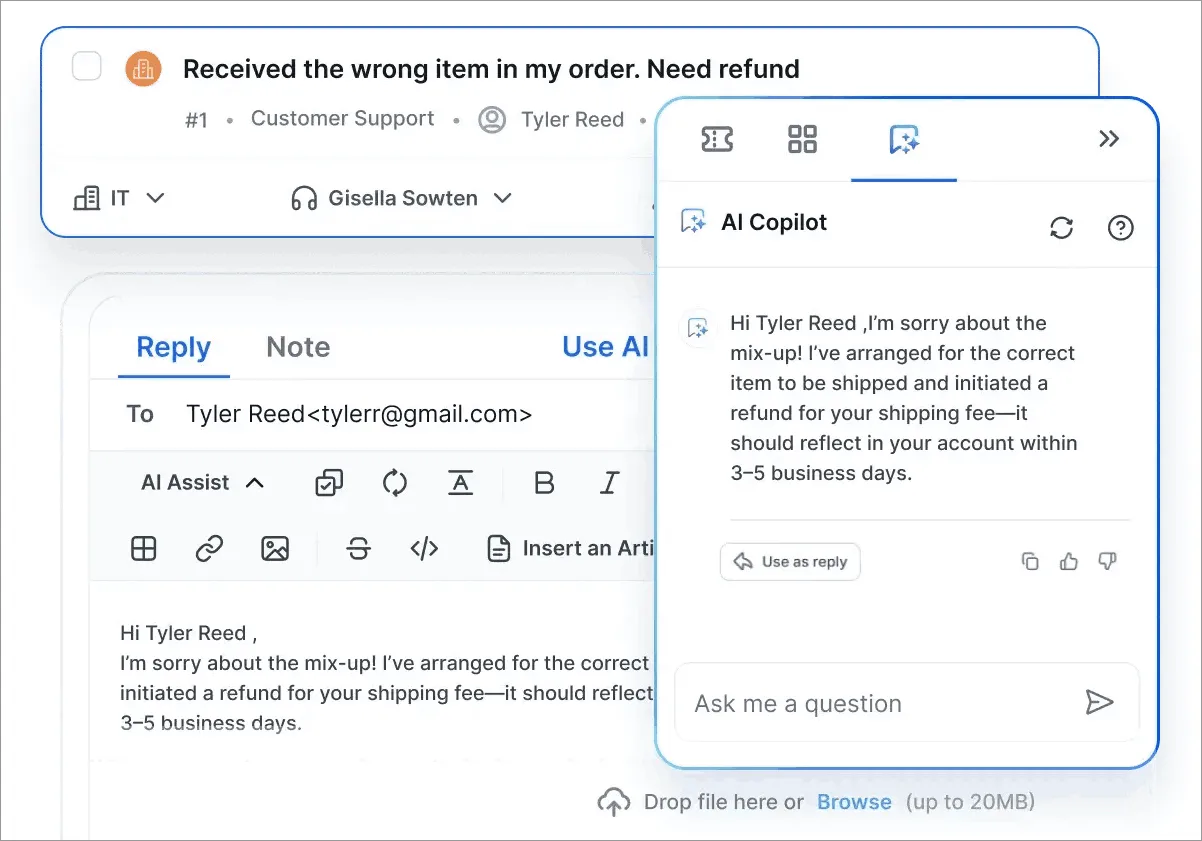
1. Generate and refine context-aware replies with AI Copilot
AI Copilot helps agents respond faster by generating reply suggestions based on the customer’s message, conversation history, and support resources such as knowledge base articles, FAQs, and websites.
Agents can refine these suggestions with AI Assist options like rephrase, shorten, elaborate, and correct grammar before sending.
This reduces the time spent drafting and editing responses, improves consistency across customer conversations, and helps agents deliver accurate, professional replies with less manual effort.
2. Prioritize support with AI-powered sentiment detection
Customer requests can signal frustration, dissatisfaction, urgency, or a risk of escalation during support interactions.
AI-powered sentiment analysis evaluates customer inquiries and classifies conversation sentiment as positive, neutral, or negative, giving agents clearer context before they respond.
This helps agents prioritize sensitive conversations, adjust their tone, and handle high-risk tickets with the right level of urgency.
3. Summarize conversations to improve continuity and efficiency
Lengthy ticket threads, live chats, and social conversations can delay handoffs, follow-ups, and escalations.
An AI summary condenses the full conversation into a concise overview, helping agents quickly understand the issue, previous actions, customer sentiment, and recommended next steps without reviewing every message.
This helps agents pick up conversations instantly without digging through long threads.
Real-world scenario: Use AI summaries to shorten ticket resolution timelines
Challenge: Signature Peace of Mind Advisors, a managed security services provider, needed a practical ticketing system that could simplify its support workflow without adding unnecessary cost or complexity. The team wanted to consolidate its tech stack, reduce technical debt, and manage client requests more efficiently.
BoldDesk solution: BoldDesk provided a customizable help desk solution with features such as role-based access, AI summaries, and automated ticket responses. AI-powered summaries helped the internal team quickly understand ticket context and shorten ticket resolution timelines.
Impact: Agents could spend less time reviewing long ticket conversations and more time taking the next best action. This improved continuity during follow-ups, supported faster resolution, and showed how support teams can improve agent productivity with AI by reducing manual review and helping agents focus on issues that require expertise and judgment.
4. Provide 24/7 support coverage with an AI agent
Support requests can arrive outside business hours, causing delays when agents are unavailable.
AI agent provides always-on support by answering customer questions across supported channels using approved resources such as help articles, FAQs, and websites. When human intervention or judgment is needed, the AI Agent escalates the conversation to a support agent with full context.
This improves first-response availability, reduces after-hours backlog, and helps customers receive timely support even when the team is offline.
5. Enable multilingual customer support with AI translate
Language barriers can slow support when customers and agents communicate in different languages.
AI translate and AI Copilot help agents understand incoming messages, draft responses, and reply in the customer’s preferred language. This removes the need to switch between external translation tools.
This strengthens multilingual support by keeping communication accurate, consistent, and suitable for real-time support.
6. Streamline actions and ticket management with AI
Some support requests require more than a reply; they need a complete resolution, which may involve classifying tickets, updating fields, routing conversations, or completing actions in connected systems.
AI can help automate these steps by predicting ticket fields such as category, type, priority, and supported custom dropdowns based on ticket content. AI actions can also enable AI Copilot and AI agent to execute configured tasks through secure API calls directly from tickets and chats.
This shows how AI support automation tools reduce manual updates, improve ticket accuracy, keep workflows organized, and help support teams complete repetitive actions faster.
7. Resolve repetitive questions automatically with AI agent
Support teams spend valuable time answering repeated questions about order status, password resets, policies, and basic troubleshooting.
AI agents automatically handle repetitive customer queries by using information from trusted support resources.
By deflecting repetitive questions before they become agent-handled tickets, AI agent improves efficiency without reducing service quality.
8. Collect feedback and track sentiment with CSAT surveys
Support teams may miss opportunities for improvement when customer feedback is delayed or reviewed manually.
Customer satisfaction surveys can be sent automatically after replies, status changes, or live chat sessions, while AI-powered sentiment detection classifies customer feedback as positive, neutral, or negative.
CSAT reports help teams review satisfaction scores, response rates, sentiment distribution, and customer comments to identify service gaps and improve agent performance.
9. Use AI reports and analytics to improve agent performance
AI-powered reports and analytics help support teams track agent performance through metrics such as response time, resolution rate, customer satisfaction, and workload distribution.
AI also provides visibility into AI Agent activity, tickets resolved by AI, escalations to human agents, and AI Copilot usage.
These insights help managers identify performance trends, improve productivity, optimize support workflows, and deliver better customer experiences using real-time data.
How BoldDesk helps improve agent productivity with AI
BoldDesk enables support teams to work smarter with AI by minimizing manual effort, helping agents respond faster, and ensuring consistent customer experiences across every interaction.
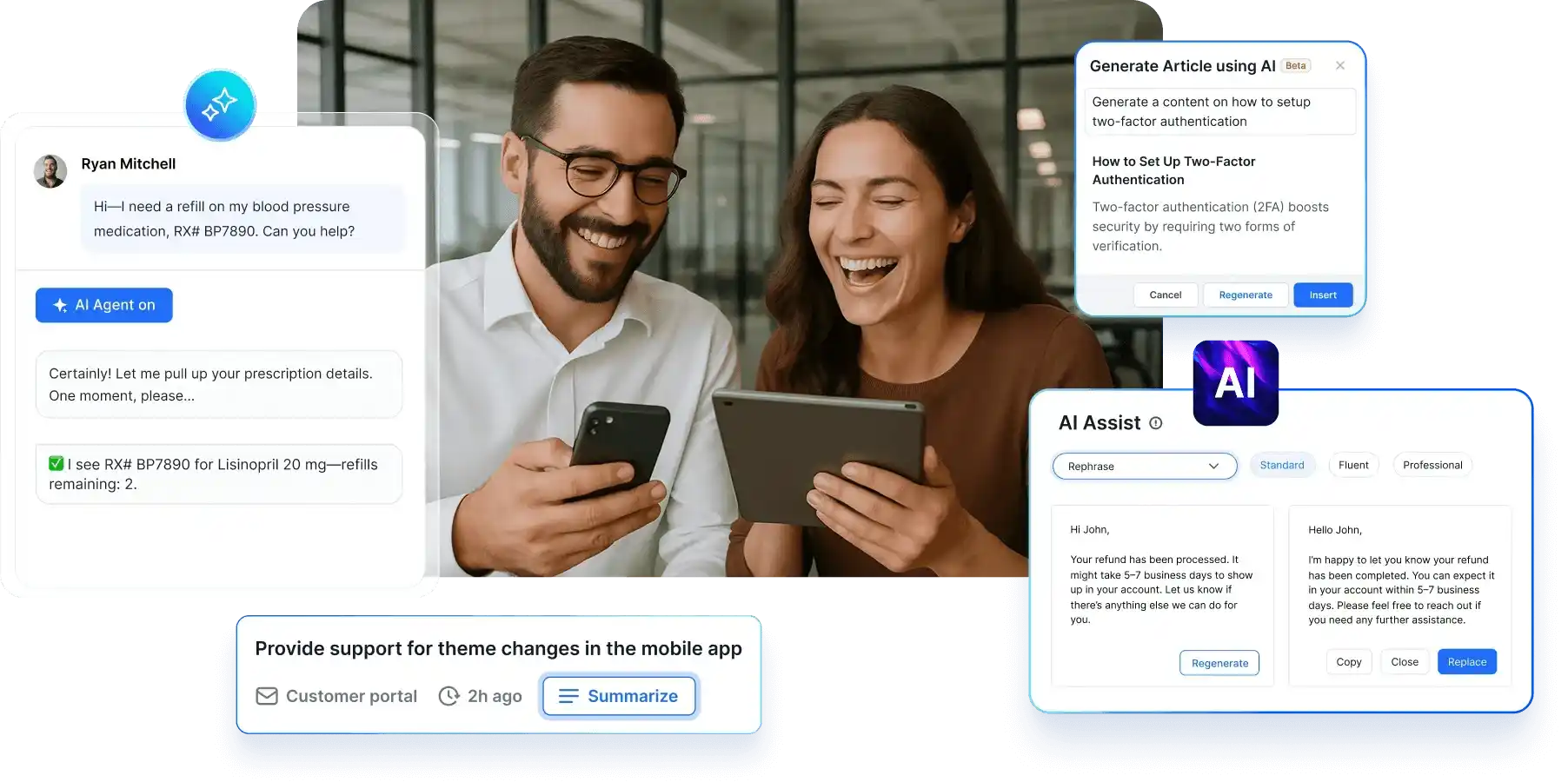
With AI built directly into the support workflow, agents can manage tickets and customer conversations more efficiently while staying focused on meaningful customer support.
Reply faster with consistent, on-brand answers
AI helps agents draft clear, customer-ready responses using ticket details and conversation history.
With AI-assisted reply suggestions, agents can create, rephrase, shorten, expand, and refine replies while working on customer tickets.
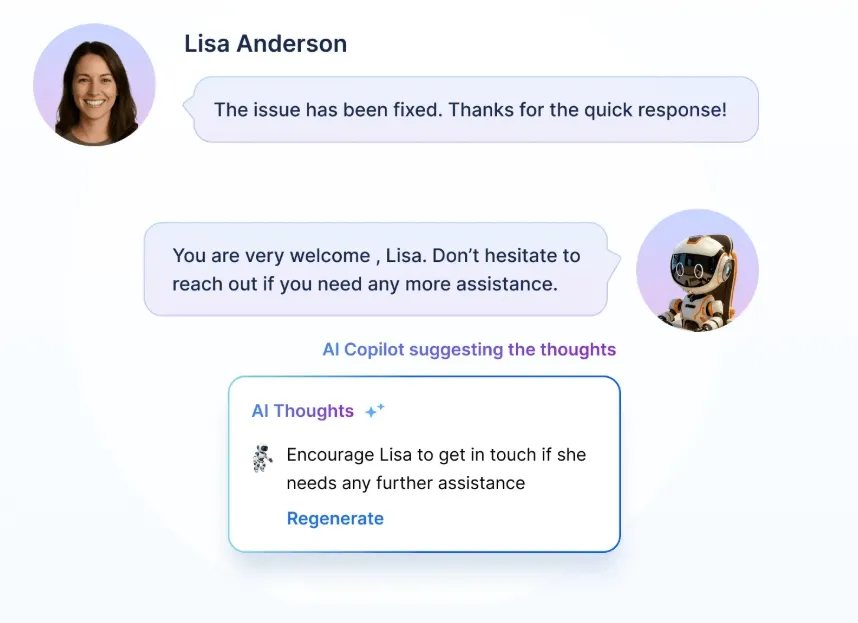
This helps agents communicate faster while maintaining clear, accurate, and consistent responses.
Productivity impact: Faster replies, less manual writing, and more consistent customer communication.
Standardize workflows so new agents ramp faster
AI helps new agents follow consistent support practices with relevant ticket context, suggested replies, and knowledge base content.
Organized ticket categories and help articles provide a clear workflow from day one.
This makes it easier to handle tickets accurately, avoid outdated responses, and deliver consistent support.
Productivity impact: Faster onboarding, fewer errors, and more predictable support quality.
Reduce ticket handling time with better context at a glance
AI summaries give agents a quick overview of ticket threads, chat histories, internal notes, previous responses, and suggested next steps.
By highlighting the most relevant details, AI helps agents understand customer issues faster and continue conversations with the right context.
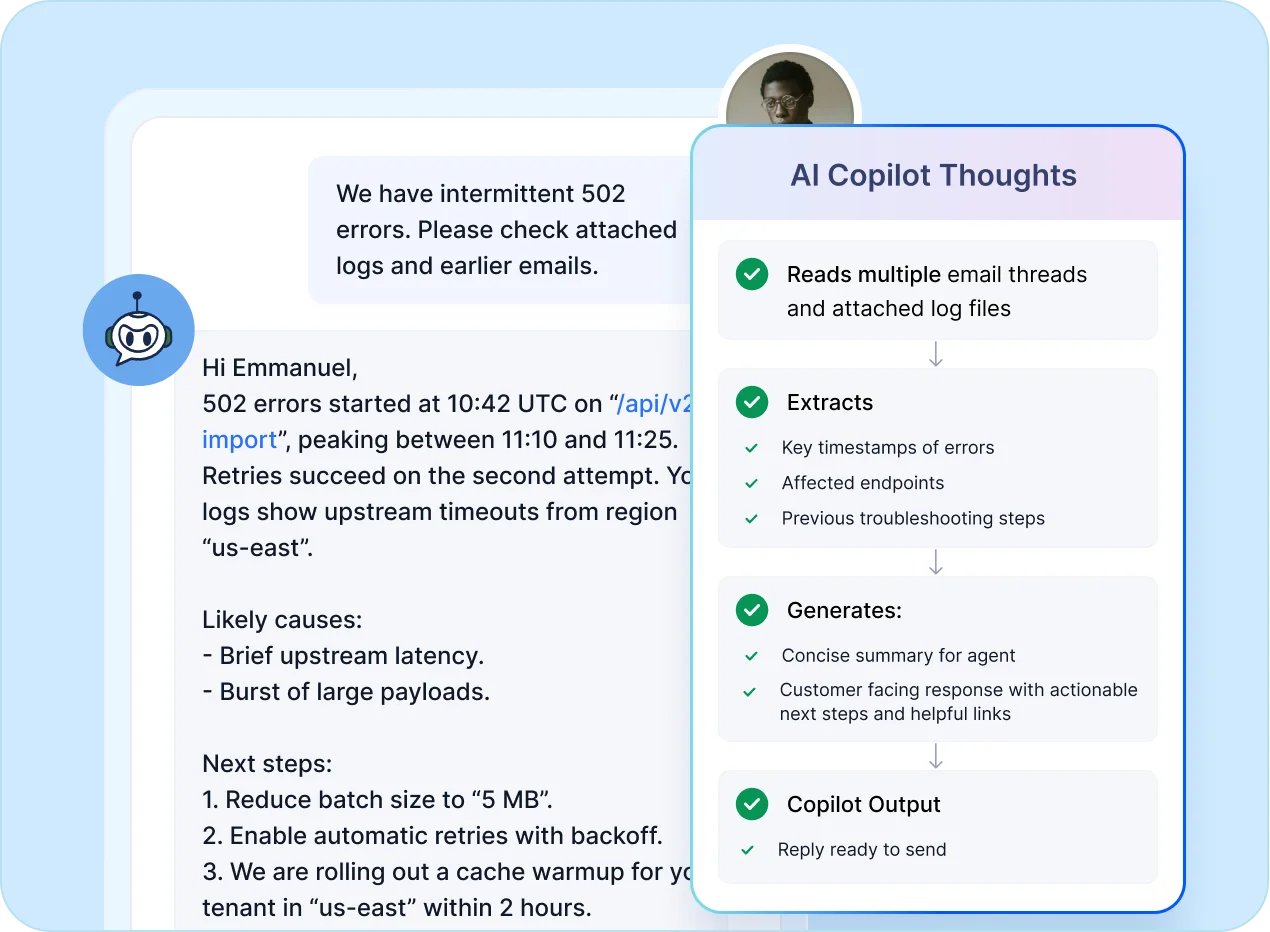
This supports smoother handoffs, faster follow-ups, and more efficient ticket resolution.
Productivity impact: Less reading time, faster handoffs, and shorter resolution times.
Turn repeat questions into self-service solutions
AI helps turn common customer questions into faster self-service opportunities by connecting customers and agents with relevant knowledge base articles.
When customers ask repetitive questions such as password resets, billing updates, or “how do I…” requests, AI can surface helpful articles and FAQs that match the request.
Recurring questions also help teams identify knowledge gaps and strengthen self-service content over time.
This helps customers find answers faster while reducing repetitive work for agents.
Productivity impact: Fewer repetitive tickets, less manual effort, and more capacity for high-value support work.
Prioritize urgent tickets with sentiment insights
AI sentiment detection analyzes customer inquiries and identifies whether the conversation tone is positive, neutral, or negative.
These insights help agents recognize sensitive conversations early, adjust their tone, and follow up with the right level of urgency.
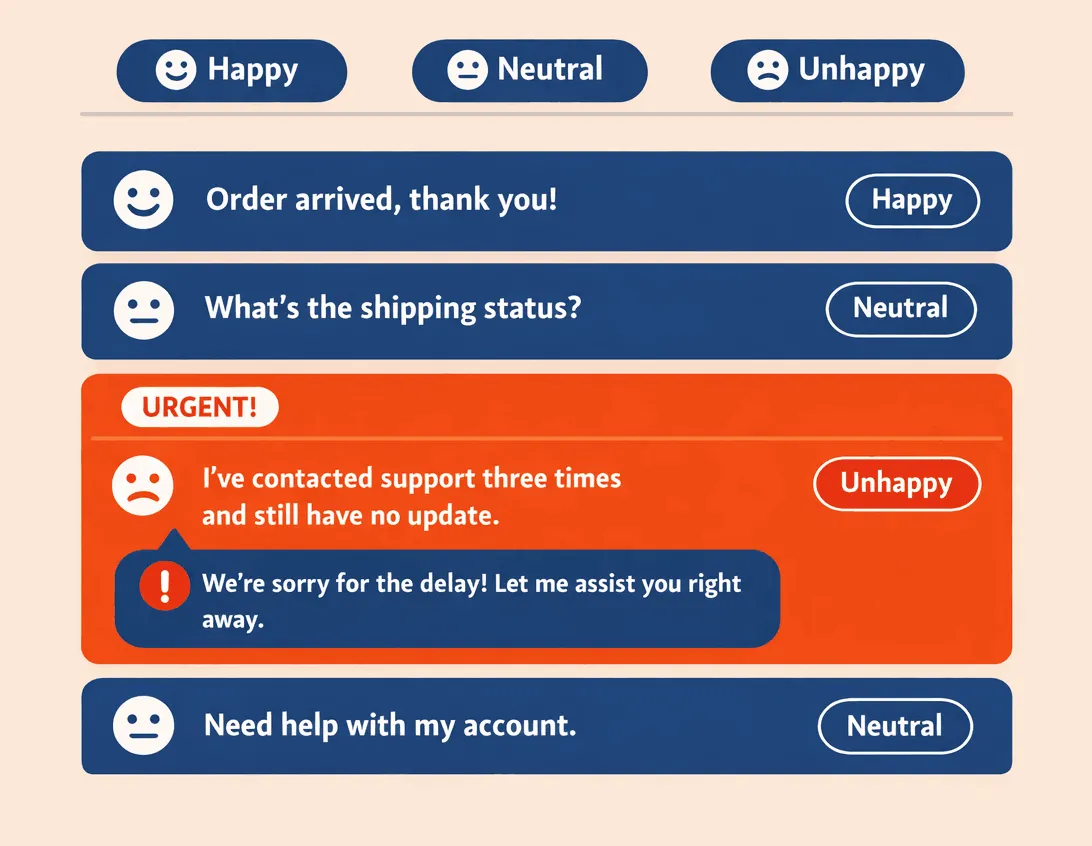
This supports better prioritization and more thoughtful customer engagement.
Productivity impact: Better prioritization, faster handling of high-risk tickets, and stronger customer trust.
BoldDesk transforms support productivity with built-in AI that helps agents resolve tickets faster, reduce manual effort, and deliver high-quality customer support with greater speed and consistency.
Start improving agent productivity with AI today
Improving support operations with AI requires more than faster response times. It means reducing repetitive work, giving agents the right context during customer interactions, and helping teams deliver consistent service as support queues grow.
BoldDesk brings these capabilities directly into the support workflow, helping agents work more efficiently across every interaction.
AI Copilot suggests context-aware replies and knowledge resources, while AI Agent handles routine questions so agents can focus on complex issues.
Ready to help your agents work more efficiently? Book a live demo or start your free trial to see how your team can reduce manual effort, resolve issues faster, and deliver consistent support at scale.
Related articles
- AI Agents in Customer Service: Smarter Support with Virtual Assistants
- Autonomous AI Agents: A Smart Way to Deliver Excellent Support
- 10 Effective Ways to Improve Team Productivity
FAQs
Agent productivity in customer support measures how effectively agents manage customer conversations while maintaining service quality.
It depends on response speed, resolution time, consistency, access to accurate information, and the amount of manual work required to complete each interaction.
Improving agent productivity with AI means using AI to reduce repetitive work, speed up ticket handling, and help agents resolve customer issues more accurately.
BoldDesk uses AI to automate repetitive tasks such as ticket categorization, prioritization, and routing.
It also supports agents with AI-powered reply suggestions, conversation summaries, and knowledge recommendations, helping teams respond faster and deliver more consistent customer support.
Businesses should look for AI support automation tools that provide accurate, context-aware responses and automate tasks such as ticket routing, prioritization, and summarization.
They should also evaluate seamless integrations, strong analytics, and easy human handoff to maintain service quality, control, and accountability.
Multilingual translation strengthens AI in customer support by helping agents understand and respond to customers in different languages without relying on external translation tools.
This reduces context switching and helps global support teams respond faster.
BoldDesk AI reports give support managers clear visibility into automation usage, agent handoffs, resolved tickets, and Copilot activity across the support workflow.
These insights help teams identify bottlenecks, improve response and resolution times, and boost overall agent productivity.