


 In this page

TL;DR: A customer service specialist is responsible for supporting customers, resolving issues, and building long-term relationships that drive loyalty. Success in this role requires strong communication, empathy, product knowledge, and problem-solving skills. With the right training, tools, and continuous learning, specialists can improve customer satisfaction, retention, and overall business growth.
Every memorable customer experience has someone behind it who knows how to listen, solve problems, and build trust. In most organizations, that person is a customer service specialist.
Exemplary service does not happen by chance. It depends on specialists who can
know how to interact with customers, solve problems, and build relationships.
With ever-rising customer expectations, support agents need to improve their skills and thrive in the field of customer service.
In this blog post, we’ll explore everything you need to know about customer service specialists and share actionable tips to help you be a top performer.
Who is a customer service specialist?
A customer service specialist is a support professional who interacts with clients on behalf of a company to answer questions, resolve problems, and guide customers.
They are responsible for addressing customer complaints, handling issues, and maintaining the reputation of a business.
Through effective communication, problem-solving, and a deep understanding of customer needs, they foster trust and long-term loyalty.
Roles and responsibilities of a customer service specialist
Whether you have worked in customer service for years or are aspiring to become a specialist, getting a grasp of the roles and responsibilities of customer support specialist is key to succeeding in this field.
Let’s explore some of the duties of a customer service specialist.
Interacting with customers
Customer service specialists often serve as a first point of contact, responding to clients first before providing the required services or support and ensuring each touchpoint is effective and complete.
These specialists connect with customers both proactively and reactively via various communication channels.
Providing information on products and services
Customers and potential clients rely on customer support specialists for guidance on how to use a product or service, its features, and pricing plans.
They utilize their product knowledge to clear up any doubt customers may have and suggest complementary or related products or services.
Conducting customer onboarding
Customer support specialists help new clients set up accounts or learn about a service or product. They provide guidance and the resources needed to achieve customer success.
A smooth customer onboarding experience helps nurture new customers and builds a strong customer foundation.
Resolving customer issues and complaints
A client support specialist also involves responding to customer inquiries and complaints that arise across all customer service channels.
They diagnose problems, propose solutions, follow up to ensure customer inquiries are solved completely, and put actionable measures in place to ensure the issue doesn’t recur.
Responding to customer feedback and reviews
Customer service specialists handle product, service, or company reviews in a way that represents the core values of the company and reassures the customer that their input is valued.
They acknowledge and respond to both positive and negative customer reviews and forward practical ideas for implementation.
Contribute towards product development
As a client service specialist, you actively advocate for customer needs and enhance their experience by recommending product modifications to the development team.
They identify patterns in customer issues and suggest areas for improvement in product and service delivery.
Updating customer information
These client support specialists maintain detailed records of customer information. They create customer profiles in customer relationship management systems and update these records with each interaction.
This data provides a 360-degree view of the customer, allows them to provide personalized customer service, and is crucial for tracking the resolution process.
Processing transactions
Depending on the organization, specialists may process orders, payments, refunds, deliveries, or subscription changes.
Client service specialists ensure that customer orders, payments, and refunds are processed efficiently, accurately, and securely.
Essential skills for every customer service specialist
As a Salesforce study clearly puts it, 92% of consumers who have a positive customer service experience are more likely to return to a business.
So how can support representatives create these memorable experiences?
Customer support specialists require both soft and technical skills to handle customer inquiries more effectively.

- Problem-solving: Customer support specialists regularly investigate issues, identify root causes, and determine the best course of action. Beyond resolving individual inquiries, they can uncover recurring customer pain points and share insights that drive service and product improvements.
- Product and service expertise: A customer service specialist needs an in-depth understanding of the company’s products, services, policies, and processes. Strong product knowledge helps reduce escalations, improve first-contact resolution rates, and provide customers with accurate guidance.
- Technical proficiency: Modern support teams rely on customer service software, AI-assisted tools, and reporting platforms. Specialists should be comfortable using these technologies to manage customer interactions, document resolutions, and improve efficiency.
- Time management: Customer service specialists often juggle multiple conversations, tickets, and follow-ups at the same time. The ability to prioritize work, manage workloads effectively, and meet SLA commitments helps maintain service quality even during peak periods.
- Customer advocacy: Customer service specialists often act as the voice of the customer. By identifying patterns in customer feedback, complaints, and requests, they help organizations understand customer needs and prioritize improvements that enhance the customer experience.
- Teamwork and collaboration: Resolving customer issues frequently requires coordination with departments such as engineering, product, billing, and sales. Strong collaboration skills enable specialists to communicate customer concerns effectively and ensure issues are resolved efficiently through cross-team collaboration.
- Accountability: Customers value ownership. Successful specialists take responsibility for guiding issues through to resolution, keeping customers informed, and following through on commitments. This builds trust and strengthens customer relationships.
- Adaptability: Customer expectations, support technologies, and service processes continue to evolve. Customer service specialists must be willing to learn new tools, adapt to changing workflows, and stay current with emerging customer service trends.
How to become a customer support specialist
Have you ever thought about what it takes to become the person who turns an angry customer into a happy one? Great customer service isn’t about answering questions.
It’s about putting yourself in the shoes of the customer, solving their problems, building trust, and developing long-lasting relationships with them.
Let’s walk you through what it takes to be a master in fostering customer happiness.
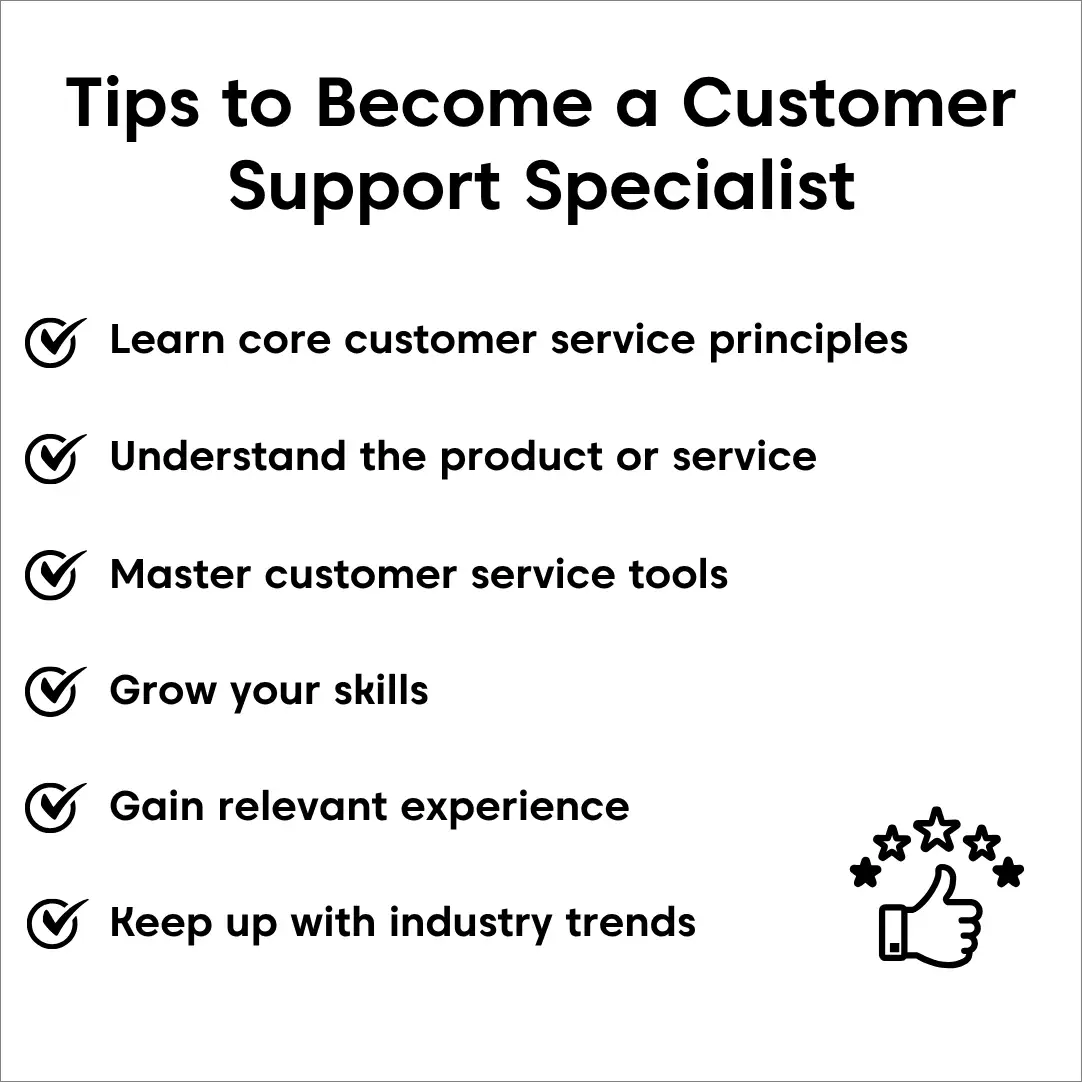
Learn customer service principles
To become a specialist, you need to start with the basics. Learning customer service policies gives you a strong foundation in the fundamentals such as:
- How to communicate with customers
- Ways to resolve issues
- Strategies to report to top managers or team leads
It is also important to refine your understanding of company policies and procedures to help you provide excellent service.
Understand the product or service
A customer service specialist understands the product or service they are selling, including the features, functionality, updates, and limitations.
This knowledge helps you to:
- Provide accurate and helpful information for new customers
- Efficiently guide customers in troubleshooting issues
- Anticipate common concerns
- Resolve issues within the first contact
- Upsell and cross-sell effectively
Go through the documentation and product updates to get a strong grasp of your offerings.
Acquire knowledge of customer service tools
A customer support specialist must be good at managing support requests, tracking inquiries, and interacting with clients using a variety of tools and platforms.
You should be conversant with the productivity tools used by your business, such as ticketing software, and understand how to use and troubleshoot them.
Develop your skills through continuous learning
You need to have a combination of essential skills in customer service to be successful in any customer-facing role.
Engage in professional development programs, attend workshops, consult with specialists, and learn from customer interactions to refine your ability to handle diverse situations.
Regular training, certifications, and mentorship programs will improve your communication, problem-solving, and emotional intelligence skills, which are key attributes for delivering exceptional service.
Gain relevant work experience
Hands-on experience in handling customer inquiries, resolving complaints, and navigating different support channels helps aspiring specialists build confidence and adaptability.
Seek internships, volunteer, apply for customer service positions across different industries, and focus on cross-team collaboration.
Exposure to different types of customers and real-world scenarios will also enhance your ability to manage difficult situations, work under pressure, and provide personalized solutions.
Keep up with industry trends
The customer service industry is a highly dynamic field. New technologies are coming up every day.
A great client support specialist needs to keep up with the most recent developments in customer service, including customer service technology and changing customer needs.
Follow reputable customer service publications, training resources, and product documentation.
Examples of top customer experience experts to learn from
Sometimes, the best way to advance in any field is to learn from the industry gurus who have mastered the art.
Here are several well-known customer experience professionals whose insights can help improve your customer service skills.
Shep Hyken
The first specialist on the list is the Chief Amazement Officer (CAO) of Shepard Presentations, Shep Hyken. He is a customer service and CX specialist and a keynote speaker.
Shep Hyken works with companies that want to enhance customer loyalty and foster long-lasting relationships with customers.
He has published top best-selling books such as ‘The Cult of the Customer’ and ‘The Amazement Revolution.’
These books help businesses create an amazing customer-focused culture that can lead to improvements in customer service.
“If we consistently exceed the expectations of employees, they will consistently exceed the expectations of our customers.” – Shep Hyken.
Blake Morgan
Meta called Blake Morgan, ‘The Queen of CX.’ She is a customer service specialist and author of three books on customer experience, including ‘The 8 Laws of Customer-Focused Leadership’ and ‘More is More.’
She is interested in the intersection of technology, communication, relationships, and people. She investigates how technology can help you enhance your customer experience.
“The only way to differentiate a business today is to compete on experience.” – Blake Morgan.
Jeanne Bliss
Jeanne Bliss is a customer experience advisor and a keynote speaker who inspires companies to earn growth and admiration through elevated business practices.
Her five-competency framework is used by over 20,000 leaders to achieve customer-driven growth. She is the inaugural Chief Customer Officer at Land’s End, Coldwell Banker, Allstate, and Microsoft corporations.
Jeanne is the author of ‘Chief Customer Officer‘ and ‘Would You Do That to Your Mother‘.
Tools and technologies client service specialists use
Customer service representatives use a range of tools that support different aspects of their role, and each tool plays a pivotal role in streamlining workflows and enabling collaboration within teams.
These sets of tools and technologies ensure that the customer service specialist role is performed effectively and efficiently.
- A help desk ticketing system enables customer service representatives to prioritize, organize, and track support tickets, ensuring no customer inquiry goes unresolved.
- Contact management software empowers client service specialists to manage customer data and interactions. This tool provides a wider view of the customer for personalized customer service.
- Live chat software facilitates real-time communication between client support specialists and customers anywhere, anytime for quick support and assistance.
- Omnichannel customer service enables client service specialists to handle customer inquiries from various sources in a single inbox, ensuring consistent customer support.
- A knowledge management system acts as a central repository for creating, organizing, and storing information that client support specialists need to assist customers effectively.
- Integration capabilities with third-party systems and applications make it easy for customer support specialists to effectively collaborate with other teams. Integration reduces the need to switch between applications.
- Reporting and analytics tools help collect and analyze insightful real-time data on customer opinions to make valid decisions on service improvements.
Key takeaways to excel as a customer service specialist
A customer service specialist plays a critical role in shaping how customers perceive a business. Beyond answering questions and resolving issues, they build trust, advocate for customer needs, and serve as a bridge between customers and the organization.
Remember, becoming the best customer service specialist is about connecting with customers and creating long-lasting relationships with them, one interaction at a time. You can only excel in this role when you use the right tools to complement your efforts.
BoldDesk customer service software helps customer service teams manage requests more efficiently and increase their productivity.
To learn more about how this tool can help you be a great customer service specialist, sign up for a free trial to experience its features.
Are there any skills that you’re planning to add to your expertise to delight customers? Kindly share them in the comments section below.
Related articles
- 20 Great Customer Service Skills and How to Improve Them
- Customer-Facing: Key Roles, Skills, and Technology
- 10 Effective Customer Service Techniques to Delight Your Customers
FAQs on customer service specialist
There are six different types of customer service specialists. This includes:
- Technical support specialists
- Frontline customer service representatives
- Customer success manager
- Customer service escalation specialist
- Live chat and social media support agent
- Billing and accounts specialist