Is your customer support overwhelmed with customer requests? Long response times, missed tickets, and agent burnout can quickly turn customer service into a frustrating experience for both your team and customers.
What if your ticketing system could think, categorize issues, prioritize, and even suggest responses in real time? That is the power of AI.
AI ticketing systems bring smart automation, agent assist tools, and in-depth reporting into one streamlined platform. They don’t just make your work easier, they also help you deliver faster, more personalized support.
In this blog, we’ll explore what AI ticketing systems are, how they work, the key benefits they offer, and essential factors to consider when choosing one.
An AI ticketing system is an advanced customer support solution that leverages artificial intelligence, natural language processing (NLP), and machine learning (ML) to automate and streamline the handling of customer inquiries.
It can intelligently analyze, prioritize, and route incoming tickets, while also providing agents with smart response suggestions based on customer’s context and past interactions.
This leads to reduced manual efforts, quicker resolutions, and more personalized, accurate support.
An AI ticketing system simplifies and speeds up customer support by automating key steps in the process. When a request is submitted, AI immediately interprets the message, and routes it to the appropriate team or agent—eliminating delays caused by manual triage.
Urgent tickets are automatically marked as high priority to ensure faster handling.
AI also enhances performance by suggesting accurate responses and linking relevant knowledge base articles. Instead of going through long message threads, agents receive concise AI-generated summaries that help them understand the context and respond more efficiently.
This intelligent automation leads to reduced workload for support teams, quicker resolutions, and more streamlined support experiences.
Traditional ticketing systems often struggle to meet customer expectations for fast, personalized support. That’s why businesses are adopting AI-powered ticketing solutions that streamline workflows and redefine support efficiency.
Let’s explore the key advantages of AI-powered ticketing systems compared to their traditional counterparts.
AI automates repetitive tasks such as categorizing, routing, and labelling tickets, eliminating the need for agents to perform them manually time and again.
As opposed to traditional systems which often overwhelm agents with repetitive tasks, AI ticketing systems allow your agents to:
Unlike traditional systems that rely on manual analysis, AI ticketing systems provide:
These insights enable teams to quickly identify service gaps, refine support strategies, and continuously improve the customer experience.
Customer support is no longer just a function; it’s a key brand differentiator.
In fact, 76% of customers want quick responses when contacting a brand, as reported by Khoros.
AI-powered ticketing systems deliver real-time suggestions, helping agents respond faster and more accurately.
Advanced AI tools enhance communication further by:
AI ticketing systems provide a scalable way to manage high volumes of customer inquiries saving time, labor, and overall operational costs through:
Customer service quality can vary depending on an agent’s experience, expertise, or communication style. AI ticketing systems help standardize responses by:
This creates a more reliable, professional experience for customers across every interaction, regardless of who handles the ticket.
Traditional support systems often fall short when it comes to personalization. AI ticketing systems solve this by:
Now that we’ve seen how AI can streamline support workflows, the next step is choosing the right AI ticketing solution.
It’s important to take a thoughtful approach when selecting an AI ticketing system so you can find the solution that best aligns with your business goals. Here are the key factors to consider:
While AI ticketing systems enhance efficiency and boost productivity, understanding their limitations early allows for smarter planning and more effective implementation.
Custom integrations with existing tools like databases and communication channels involve development time, specialized IT expertise, and potential third-party vendor fees, all of which can be costly.
In some cases, AI solutions may demand advanced computing power and cloud storage to process and analyze large volumes of tickets across channels.
Tips to overcome this challenge
An AI ticketing system collects, stores, and processes large volumes of customer data. Therefore, the ticketing software can be a potential target for cyberattacks and data breaches.
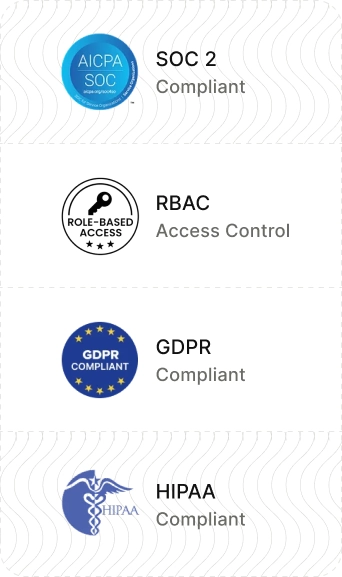
Improper handling of sensitive customer information can lead to compliance violations, which could result in legal repercussions and damage to your brand’s reputation.
Tips to overcome this challenge
AI ticketing systems learn from historical data. If that data is outdated, incomplete, or biased, it can seriously impact performance. You may experience incorrect ticket categorization, irrelevant response suggestions, and broken automation workflows.
These errors not only slow down your support process but also negatively affect customer experience.
Tips to overcome this challenge
Various industries are embracing AI ticketing systems to boost efficiency, speed up response times, and deliver more satisfying customer experiences.
Let’s take a look at how different sectors are putting AI-powered ticketing to work:
The travel industry can implement AI to handle high-volume, time-sensitive requests across multiple time zones.
For example: International airlines can use an AI ticketing system to manage customer inquiries related to bookings, cancellations, and flight delays, reducing the burden on human agents. The system automatically:
Customer service in healthcare needs to be efficient with strict privacy requirements and high-stakes support scenarios to enhance patient interactions.
Example: Hospitals can deploy AI ticketing to streamline patient inquiries while maintaining quality patient care.
The system:
IT departments face growing ticket volumes as organizations adopt more technology solutions.
Example: If multiple employees report slow system performance in a technology company, AI ticketing can help manage this. The system:
AI ticketing systems can help retail and e-commerce businesses deliver fast, personalized support while reducing the workload on agents.
Example: When a customer submits a request about orders, the system can:
Educational institutions manage a high volume of inquiries from students, faculty, and staff. AI ticketing systems can be integrated with existing platforms to access data across departments and deliver real-time support.
Example: When students ask about class schedules, assignment deadlines, or academic advice, among others, the system:
AI ticketing systems aren’t just a trend—they’re transforming how customer support operates. By automating repetitive tasks, improving response accuracy, and enabling faster resolutions, they empower teams to work smarter, not harder.
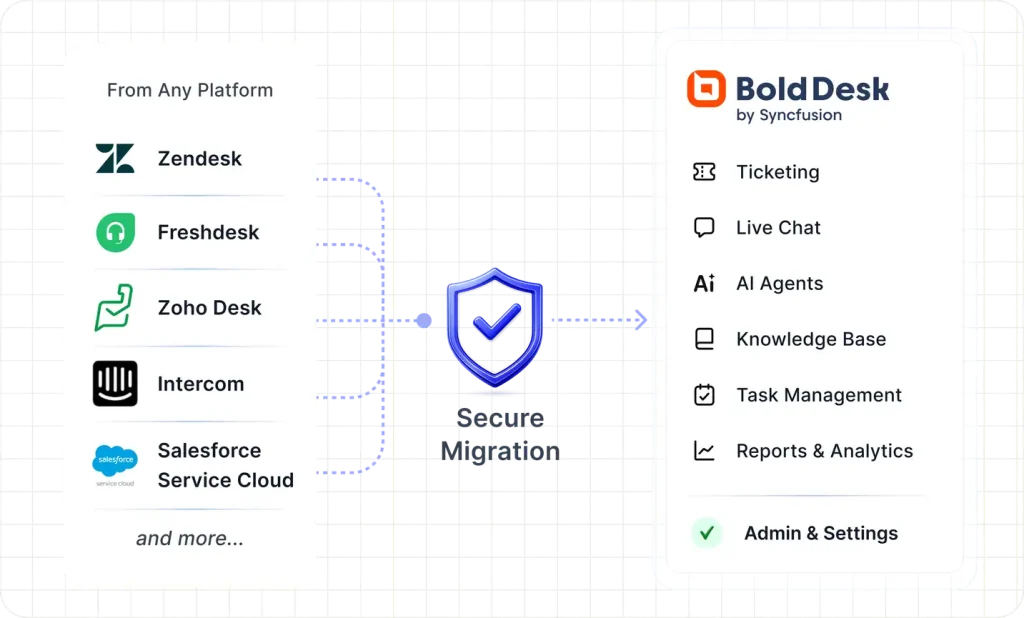
With intelligent ticket routing, real-time insights, and an AI Copilot that suggests relevant ticket responses, BoldDesk® empowers your team to respond faster, collaborate, and deliver consistent, high-quality customer experiences.
You are welcome to contact our support team and explore more features.
What are your biggest challenges with ticketing systems? Share your insights in the comments section below.
Related articles
Increase agent productivity by 3x
Increase customer satisfaction level to 92%
Decrease response times by 30 minutes