





TL;DR: Exceptional healthcare customer service combines empathy, clarity, and efficiency. Reducing wait times, protecting privacy, and communicating transparently boosts patient satisfaction, loyalty, and operational performance while helping healthcare providers stand out in a competitive market.
Customer service is often associated with retail or tech support, but in healthcare, it directly influences access, safety, trust, and patient outcomes.
Today’s healthcare environment, marked by rising patient volumes, widespread staffing shortages, and operational bottlenecks such as long wait times and fragmented systems, has made delivering quality customer service in healthcare more critical. These challenges create friction precisely when patients are already anxious and vulnerable.
When communication is transparent, compassion is evident, and processes are streamlined, patients feel supported at every stage of their journey.
By tracking meaningful KPIs and adopting modern, unified support systems, healthcare organizations can reduce delays, improve coordination, and deliver patient care with greater efficiency and empathy.
This guide outlines practical strategies to strengthen patient interactions, improve operational performance, and elevate the overall care experience.
What does it mean to deliver excellent customer service in healthcare?
Delivering excellent customer service in healthcare means recognizing patients as individuals who require compassionate care, clear communication, and coordinated support at every stage of their journey.
It goes beyond clinical treatment to encompass the full patient experience, from appointment scheduling and intake to diagnosis, billing, and follow-up care.
To consistently meet and exceed patient expectations, healthcare organizations should:
- Provide high-quality, evidence-based medical care
- Create a safe, welcoming, and comfortable environment
- Implement efficient processes that minimize wait times
- Ensure staff demonstrate empathy, professionalism, and active listening
- Maintain accurate, well-organized patient records
- Communicate medical procedures, treatment plans, and billing details clearly
- Protect patient data in compliance with regulations such as HIPAA and GDPR
Why customer service in the healthcare industry matters
Good customer service in healthcare plays a vital role in shaping patient experiences.
According to Silverline 82% of patients consider quality customer service to be the most important factor when choosing a healthcare provider.
Let’s look at the benefits of good support in healthcare facilities.
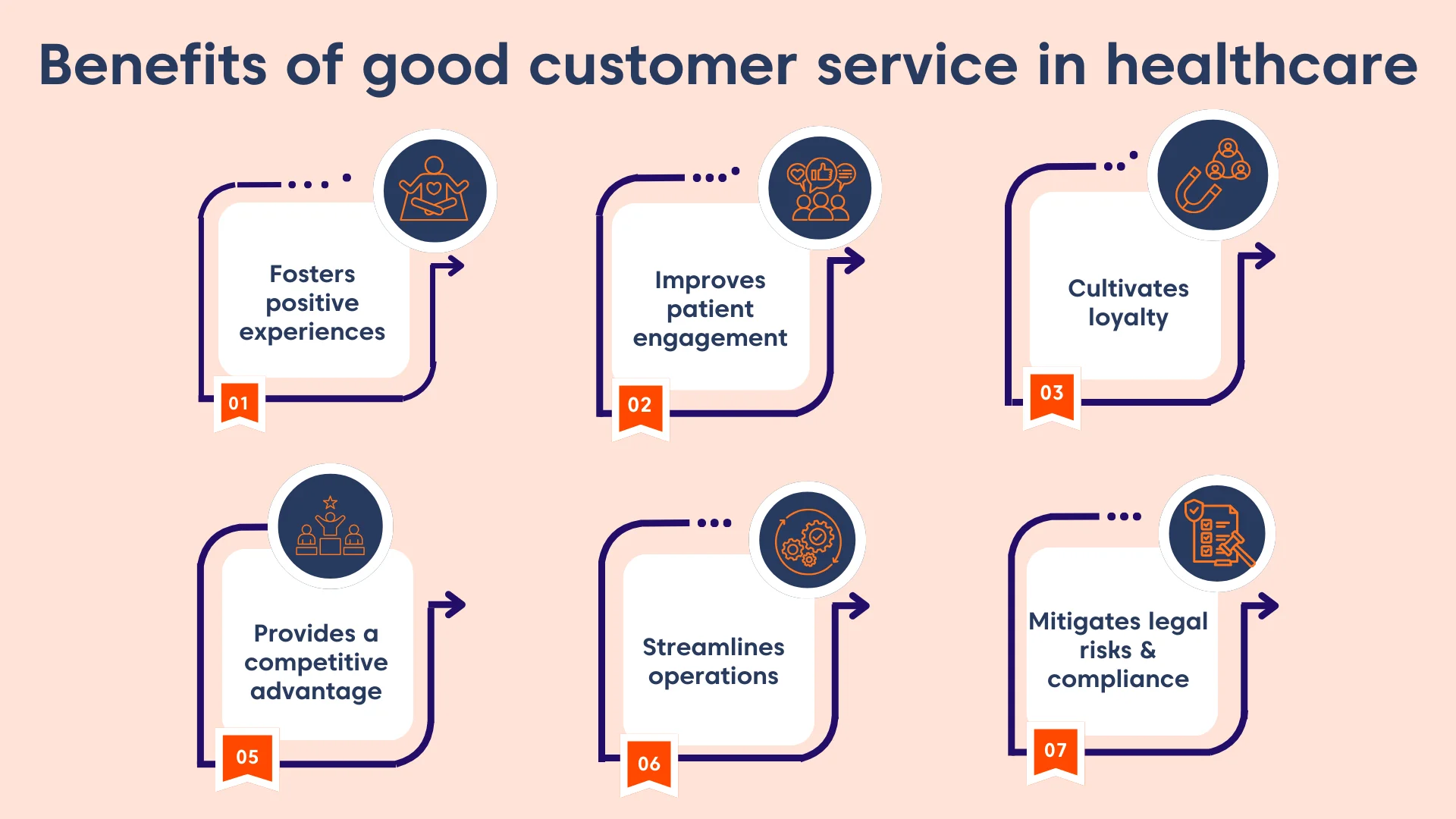
- Fosters positive patient experiences: Coordinated processes reduce wait times and lower frustration, which improves patient satisfaction.
- Leads to better patient engagement: Creating a safe, supportive environment in healthcare facilities encourages patients to express their symptoms, ask questions, and participate actively in improving their health.
- Improves patient loyalty: Patients who feel heard, supported, and well cared for are more likely to return to the same doctors and facilities for all their healthcare needs.
- Provides a competitive advantage: Offering excellent customer service in healthcare leads to a positive word-of-mouth that differentiates your facility from other healthcare providers.
- Streamlines operations and efficiency: Good customer service optimizes healthcare processes such as appointment scheduling, consultation, billing, discharge processes, and follow-up coordination.
- Supports patient safety and regulatory compliance: Effective communication and well-managed records reduce the likelihood of information gaps that can contribute to billing disputes, complaints, or diagnostic complications.
Simplify Support with an All-in-One Solution—Free!
Still switching between tools? Manage chat, email, and social media conversations in one inbox and respond faster with less effort.

Strategies to improve customer service in healthcare
You can improve customer service in the healthcare industry by applying a few proven practices.
Focusing on these strategies can help healthcare organizations provide high-level customer service.
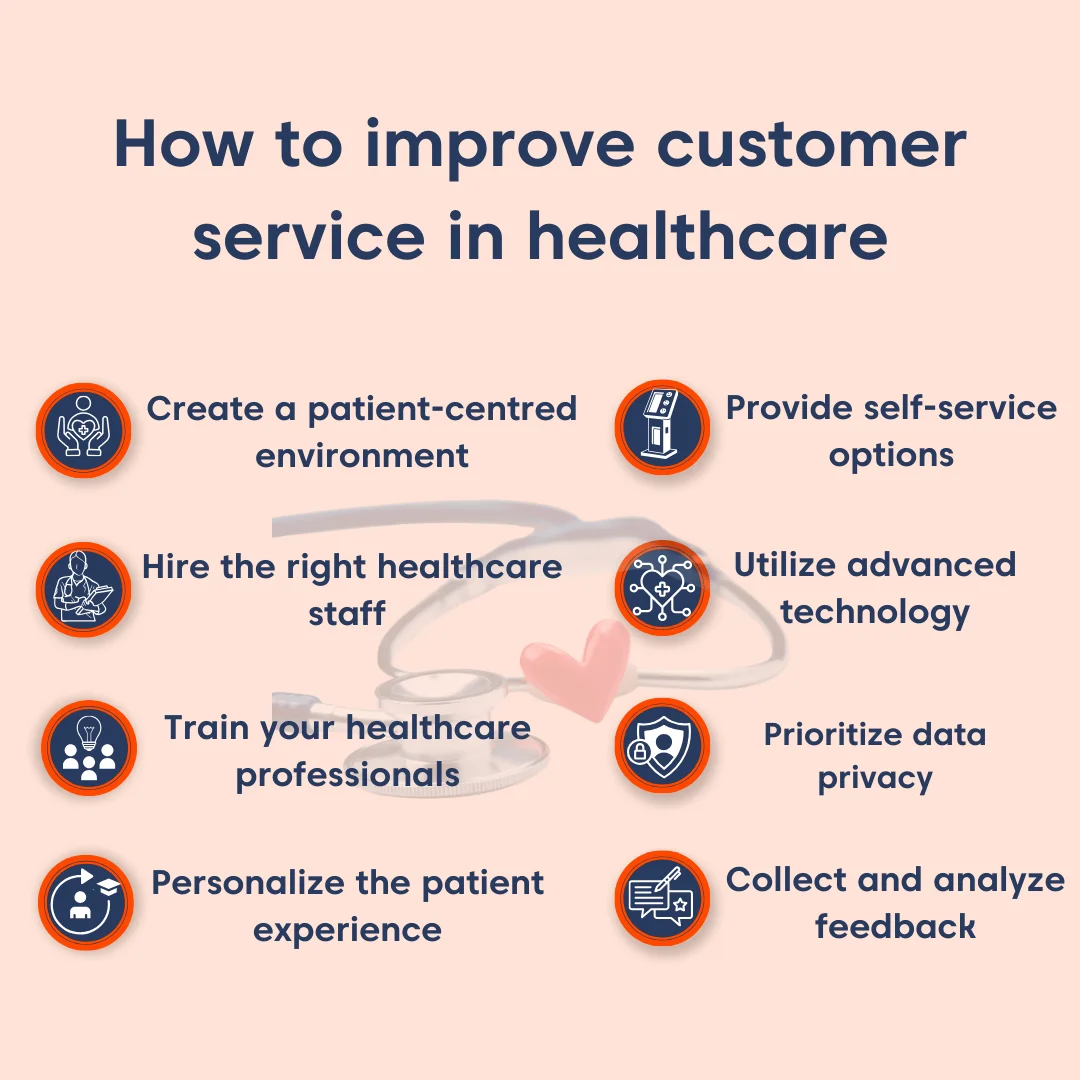
Create a patient-centered environment
Unlike typical customer interactions focused on transactions, customer service in the healthcare industry often involves dealing with patients in vulnerable, stressful situations.
Healthcare organizations should ensure that all employees, from front desk staff to physicians, understand that patients are people who need reassurance and care.
To ensure that each touchpoint provides a compassionate experience, adopt a patient-centered strategy to:
- Encourage empathy toward patients
- Cultivate emotional intelligence
- Prioritize personalized interactions
Hire the right healthcare professionals
While skilled doctors and nurses are at the core of excellent healthcare delivery, a truly consistent, high-quality healthcare experience requires that all patient-facing staff demonstrate consistent patient-centered service.
From administrative staff managing patient appointments to receptionists greeting visitors and support teams addressing patient concerns, every interaction contributes to the overall care experience.
Carefully consider customer service skills, such as active listening, a positive attitude, and clear communication, when hiring healthcare staff to ensure the entire team operates with a shared commitment to patient-centricity.
Train healthcare staff
Even minor errors in communication or documentation can have serious consequences in healthcare settings.
Training your staff on healthcare guidelines, as well as customer service policies, regularly guarantees that patients receive high-quality care regardless of who attends to them.
Identify the knowledge gaps in your team and tailor the training to focus on those areas. Customer service in healthcare training could include tips on handling specialized patients like rehabilitants, communicating better, and so on.
Personalize patient experience
Patients have unique needs, preferences, and values, making personalized customer service critical to the healthcare industry.
Hospitals can tailor care plans, customize communication channels, and involve patients in shared decision-making by utilizing customer data.
Encourage your staff to make personal follow-up calls instead of relying on automated messages, and consider sharing personalized emails, newsletters, or even thoughtful gestures like birthday greetings to strengthen patient relationships.
Offer self-service options
Research shows 79% of customers expect organizations to offer self-service resources so they can find solutions without having to reach out to an agent. (Higher Logic)
Provide self-help tools like patient portals to help patients independently carry out simple procedures such as scheduling visits, checking in, or making payments.
Leverage advanced technology
Customer service technology in healthcare automates repetitive tasks and streamlines operations.
For instance, telehealth platforms allow patients with minor issues to consult with doctors remotely without needing in-person visits.
Wearable devices further support care by tracking vital signs like heart rate, oxygen levels, blood sugar, and physical activity, and sending medication reminders.
Electronic health record (EHR) systems consolidate patient histories that gives clinicians a complete view of diagnostics and disease progression for more accurate decision‑making.
Hospital teams can also integrate a help desk for healthcare to efficiently manage patient queries across channels, monitor doctor schedules, coordinate appointments, and route patient inquiries efficiently.
Prioritize data privacy
Safeguarding sensitive patient information is essential in maintaining trust and compliance with regulations like HIPAA.
This can be achieved by putting in place the following measures:
- Implement advanced authentication measures and encryption protocols to protect patient records from unauthorized access.
- Provide regular cybersecurity training to inform employees of the latest security risks.
- Develop a robust crisis communication plan to effectively handle potential security breaches.
Collect and analyze patient feedback
Always ask patients or their caregivers to provide feedback on their overall experience at your facility.
Patient feedback enables healthcare providers to:
- Measure patient satisfaction
- Identify areas that need improvement
- Understand the entire patient journey
For instance, a healthcare clinic might send out CSAT surveys to gather feedback on patients’ satisfaction with the check-in process, wait times, and the quality of care provided.
This provides actionable insights into service quality, enabling continuous improvement.
How can customer service software facilitate good customer care in healthcare?
Today’s patients expect a seamless, personalized experience across multiple touchpoints. Meeting these expectations requires more than just basic tools.
It calls for unified customer service software to boost operational efficiency and improve patient experiences.
Here is how having the right set of tools can enhance customer service in the healthcare industry:
Improve communication and coordination
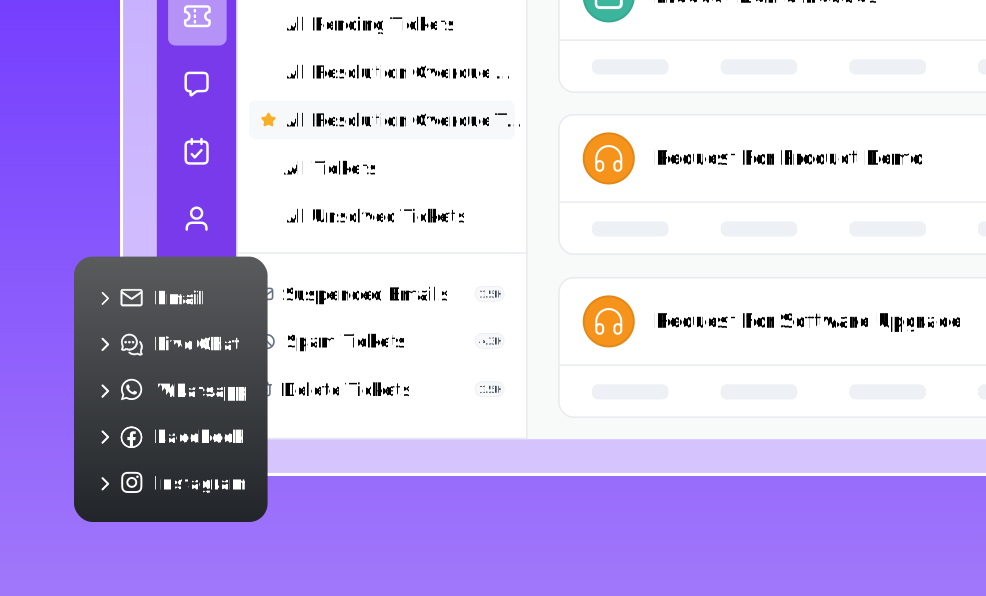
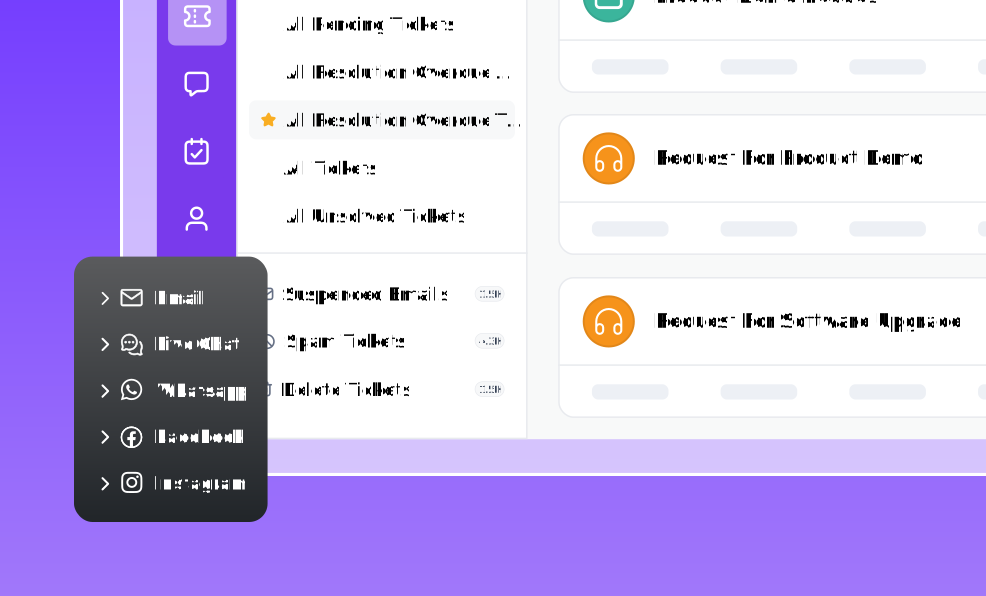
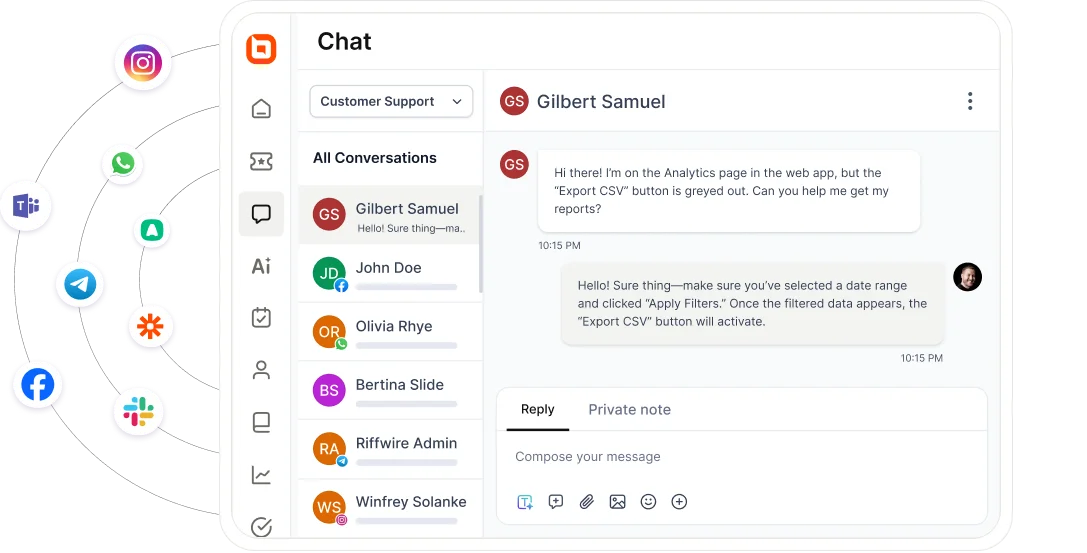
An omnichannel inbox unifies customer communication from various channels like live chat, email, and social media within one platform.
Shared inbox software fosters seamless collaboration among patient support teams, enabling them to share critical information, escalate complex cases, and guide patients effortlessly through different stages of care.
This continuity significantly enhances the patient’s experience and operational efficiency in healthcare settings.
Save time with automated healthcare workflows
Efficient help desk automation tools help streamline repetitive customer service in healthcare actions, such as:
- Notifying relevant team members of a patient’s status updates
- Scheduling follow-up messages after a visit
- Sending reminders for post-treatment care
These systems reduce patient waiting times and ensure that no request ever goes unnoticed.
For example, when a physician orders imaging, an integrated help desk or CRM system can automatically create a task for the radiology department, notify the patient with preparation instructions, and schedule follow-up reminders. This reduces manual handoffs, eliminates duplicate data entry, and improves coordination across care teams.
Real-time tracking and monitoring
Customer service platforms include reporting and analytics tools that help healthcare organizations monitor service performance, patient inquiries, response times, and satisfaction trends.
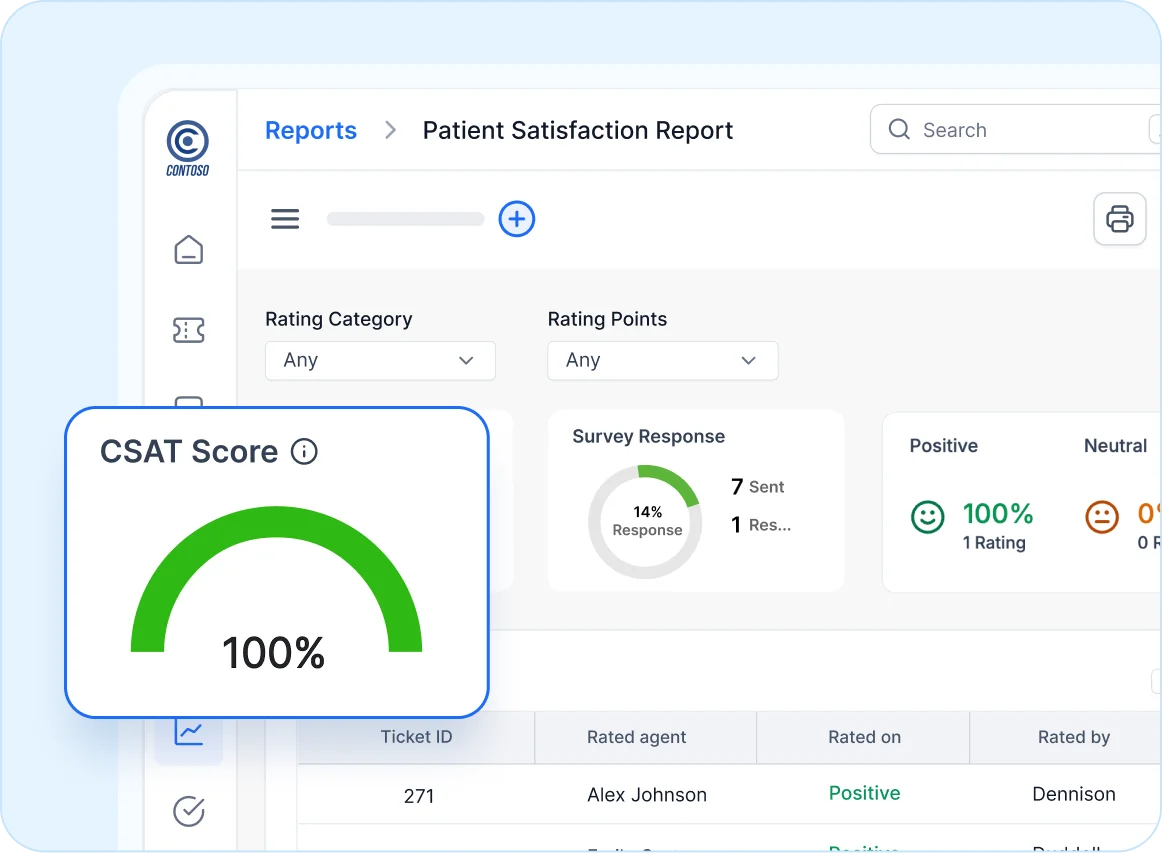
Healthcare managers can use these insights to:
- Improve care coordination and communication
- Optimize staffing and resource allocation
- Identify recurring patient concerns
- Enhance workflow efficiency
- Measure service quality and patient satisfaction
Efficient appointment and schedule management
Managing and aligning doctors’ schedules with the patients in the waiting room can be challenging.
Task management systems help healthcare providers maintain a well-organized schedule and effectively balance their workload to ensure smooth and effective patient care.
Online scheduling systems improve customer service in healthcare by helping patients book appointments, reschedule, or cancel without requiring agent intervention.
In addition, it offers up-to-date status availability for healthcare professionals to view and select suitable time slots, reducing wait times and improving customer care in healthcare.
Provide self-help resources
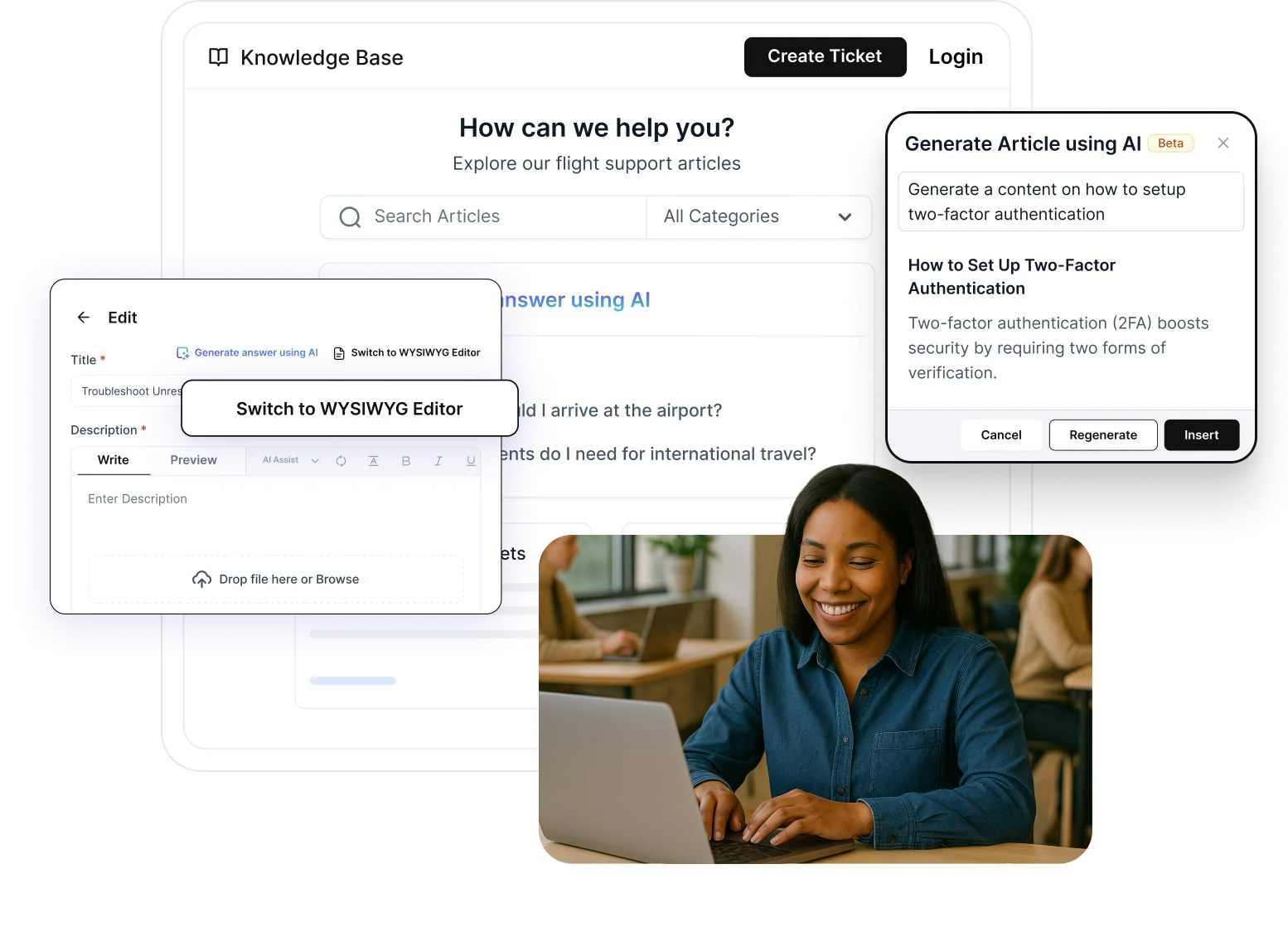
Healthcare organizations can utilize knowledge base software to create, store, and share information, including common questions, FAQs, and educational resources for patients and staff.
This customer service in healthcare tool enables patients to independently access information, such as the side effects of certain medications, while helping staff members resolve issues quickly.
For example, by assessing patient queries and trends, a facility can identify increased questions about a specific disease or disorder and compile all relevant information in a central place for easy retrieval.
Technology can streamline operations, but patient satisfaction depends on getting every interaction right.
Explore these healthcare help desk do’s and don’ts to ensure your team delivers consistent, empathetic, and compliant support at every touchpoint.
Good customer service examples in healthcare
Facilities offering excellent customer service in healthcare enhance patient satisfaction and experience throughout their journey.
Here are some good customer service in healthcare examples:
Singapore General Hospital (SGH)
Singapore General Hospital strives to deliver healthcare experiences that prioritize patient well-being and satisfaction.
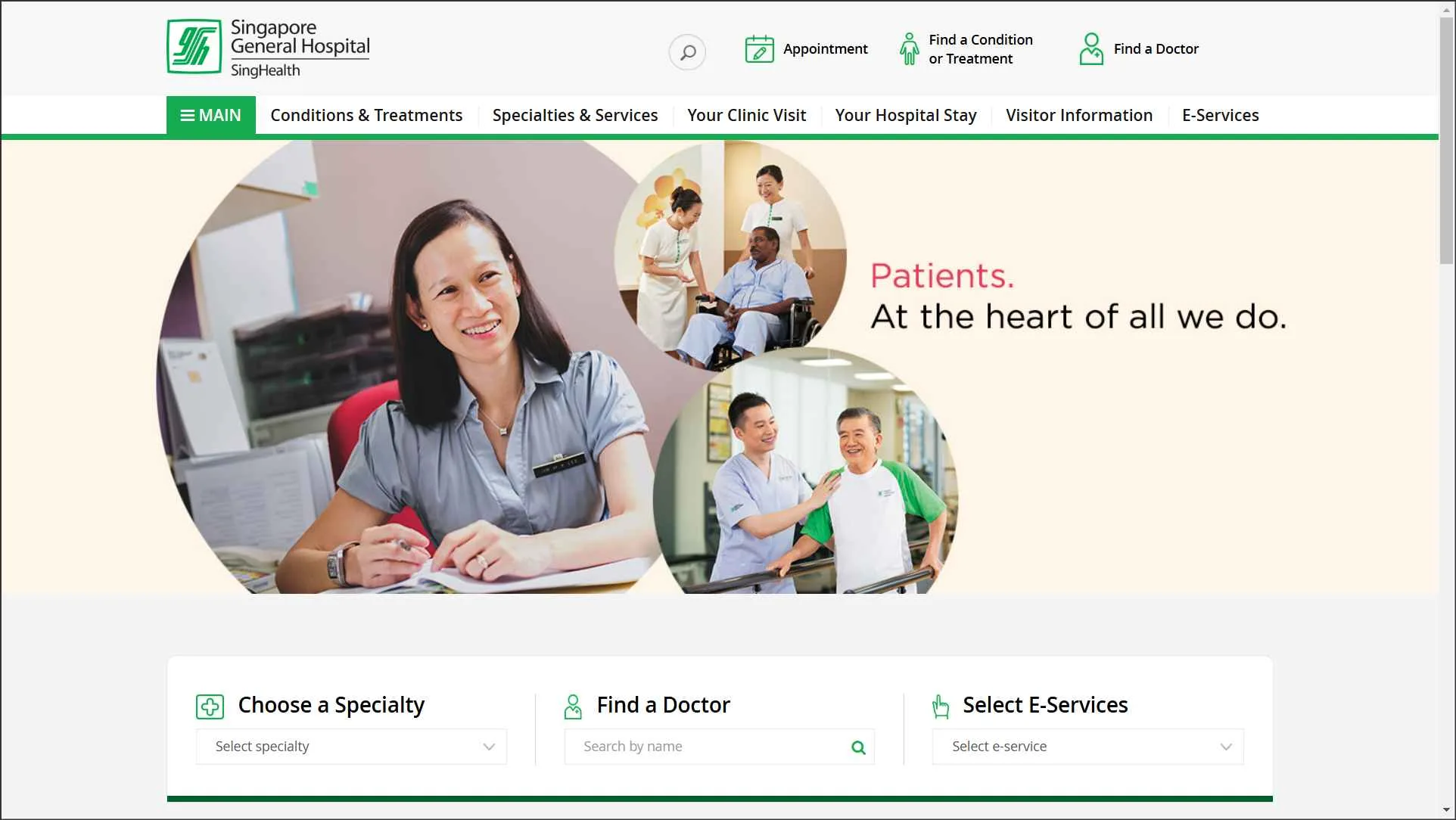
SGH supports patients through its SingHealth Patient Advocacy Network, addresses concerns, and answers queries on their behalf.
The facility also offers educational resources covering a wide range of topics, from disease prevention, management, and treatment options to self-care strategies, that encourage patients to take an active part in managing their health.
The Ohio State University’s Wexner Medical Center
The Ohio State University’s Wexner Medical Center optimized its system to provide online services.
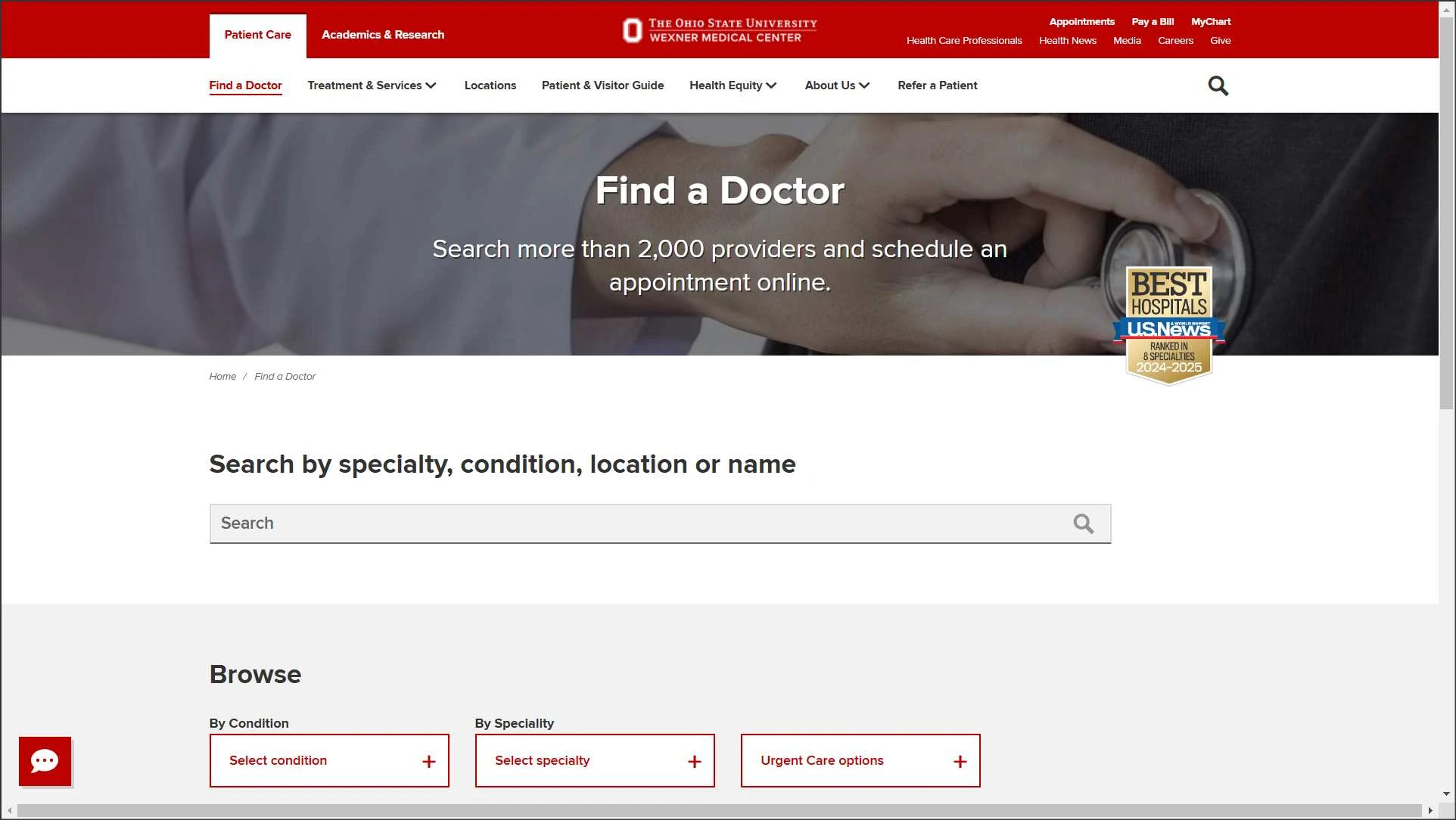
Patients can book and reschedule doctor appointments and access pre-registration forms, helpful resources, and telehealth support right from the portal.
By visiting the messaging portals, clients can review after-visit notes or directly message their doctors or the billing team.
Emory Saint Joseph’s Hospital
Emory Saint Joseph’s Hospital uses digital care coordination tools to enhance transparency during the treatment process.
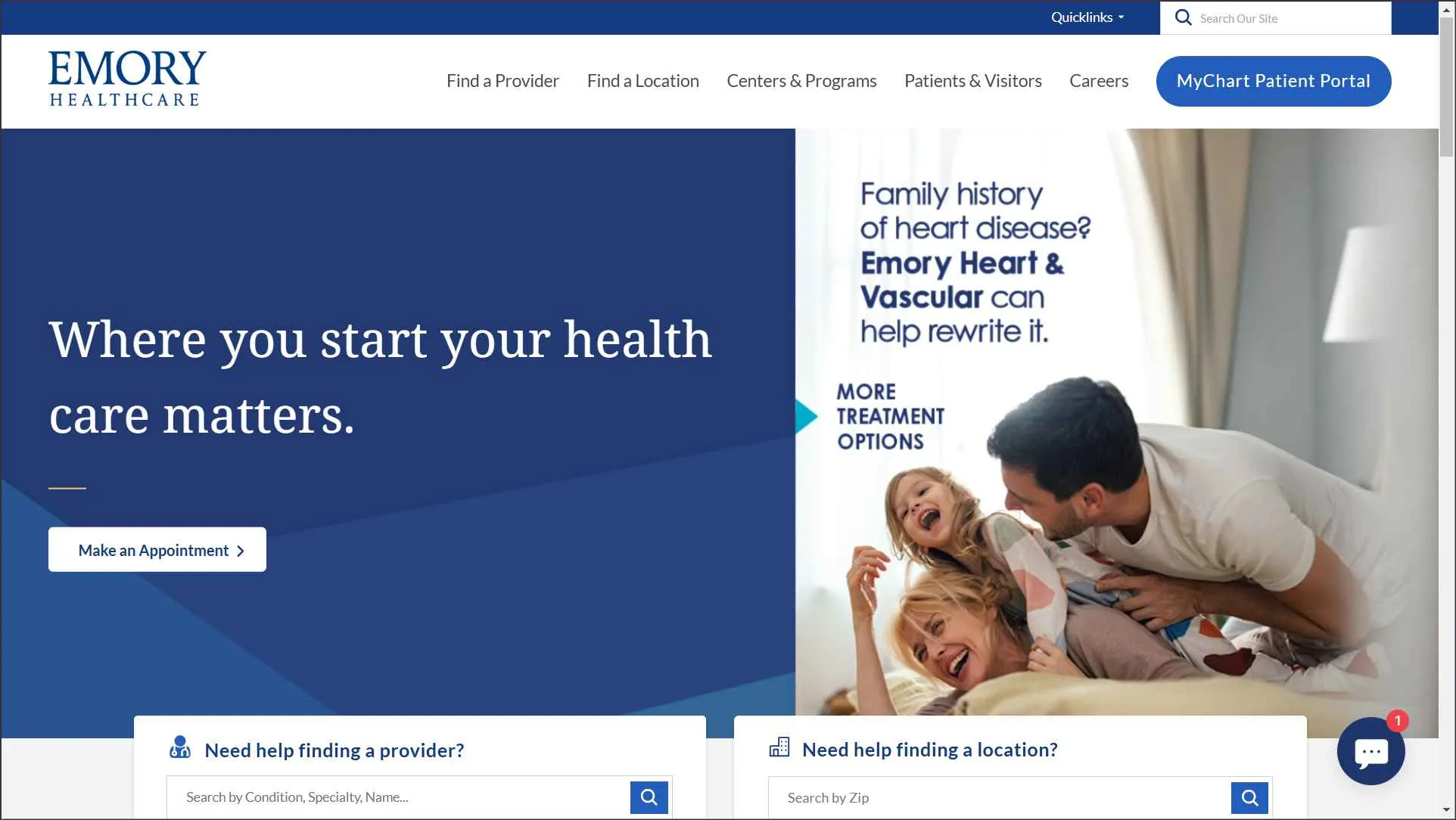
Through patient-facing systems, individuals and families receive timely updates regarding care stages, admissions, and discharge planning, reducing uncertainty and easing administrative burden on staff.
Streamline customer service in healthcare to enhance patient experience
Strong customer service in the healthcare industry transforms clinical encounters into coordinated, patient-centered experiences that prioritize well-being and comfort.
Complementing your team’s efforts with the right technology accelerates these outcomes. BoldDesk is a comprehensive, AI-powered customer service platform that integrates with healthcare systems to centralize patient communications, improve coordination, and streamline service workflows.
Start your 15-day free trial or book a live demo today to see how BoldDesk can elevate your healthcare service operations. Our support team is ready to answer your questions and help you get started.
Have additional strategies for improving patient experience in healthcare? Share your thoughts in the comments below.
Related articles
- 8 Strategies to Provide Efficient Customer Service
- 10 Common Customer Service Mistakes to Avoid
- 20 Best Customer Service Tips to Boost Your Customer Service
Frequently Asked Questions
Key healthcare customer service skills include:
- Empathy: Recognizing and responding to patient anxiety and emotional needs
- Clear communication: Explaining diagnoses, procedures, and costs in simple language
- Active listening: Ensuring patients feel heard and understood
- Responsiveness: Addressing questions and concerns promptly
- Accuracy: Providing reliable information and minimizing documentation errors