







TL;DR: Good customer service means providing prompt, helpful, and personalized support that meets or exceeds customer expectations. Key elements include empathy, responsiveness, clear communication, and consistent service, all of which help improve customer satisfaction, loyalty, and retention.
Excellent customer service interactions have a significant impact on repeat customers, referrals, and overall customer loyalty.
It directly affects revenue and is essential to retaining customers, so you shouldn’t underestimate the importance of offering great customer service.
Steps taken to acquire a new customer are more expensive than retaining an existing one. Good customer service will make customers feel satisfied and improve your company’s reputation.
In this blog, we will go over some of the important aspects of good customer service.
What is good customer service?
Good customer service entails offering support that meets and exceeds customer expectations whenever they raise questions or issues with your product.
Great customer service helps you retain customers and reduces your churn rate significantly. It is also one of the main avenues for building a brand’s reputation.
The 7 essential qualities of good customer service
Providing good customer service is about more than just solving problems; it’s about creating a positive and memorable experience.
Strong customer service skills help support teams build trust, resolve issues effectively, and create lasting customer relationships. Here are 7 characteristics of good customer service:
1. Empathy
Empathy in customer service is the ability to understand a customer’s situation, emotions, and perspective. Instead of focusing only on fixing the problem, empathetic support agents acknowledge how the issue is affecting the customer and respond with genuine understanding.
For example, acknowledging a customer’s disappointment before offering a solution can help de-escalate tension and create a more positive interaction.
2. Patience
Every customer is different, and some may need more guidance or reassurance than others. Patience helps agents remain calm and supportive, even during complex or repetitive conversations.
This quality is particularly important when assisting first-time users, handling complaints, or explaining technical concepts that may be unfamiliar to customers.
3. Clear communication
Clear, concise, and friendly communication helps avoid misunderstandings and ensures customers know exactly what to expect. Agents should explain solutions in simple, jargon-free language and provide clear next steps.
For instance, instead of using technical terminology, customer service representatives can break information into easy-to-follow instructions that customers can act on immediately.
4. Product and service knowledge
Great support agents have a strong understanding of the products and services they support. This knowledge enables them to answer questions accurately, troubleshoot issues efficiently, and provide relevant recommendations.
Customers are more likely to trust and follow guidance when they feel confident that the information provided is accurate and reliable.
5. Problem-solving skills
Customers contact support because they need help resolving an issue. Strong problem-solving skills allow agents to identify root causes, evaluate possible solutions, and take the most effective course of action.
Rather than focusing solely on the immediate issue, effective agents also look for ways to prevent the same problem from happening again.
6. Responsiveness
Timely responses demonstrate respect for the customer’s time and show that their concerns are a priority. Even when a resolution cannot be provided immediately, regular updates help maintain trust and reduce uncertainty.
For example, letting a customer know that an issue is being investigated is often better than leaving them waiting without communication.
7. A positive attitude
A positive, solution-focused attitude can make customer interactions more productive and enjoyable. Maintaining professionalism and optimism helps create a better experience, even when addressing difficult situations.
Simple actions such as using encouraging language, focusing on solutions, and expressing willingness to help can turn a potentially negative interaction into a constructive one.
Why excellent customer service matters
Customer service has evolved beyond its traditional role of simply addressing concerns. It now serves as a strategic tool and a crucial differentiator, enabling businesses to thrive.
Qualtrics XM Institute found that consumers reduce or stop spending after 47% of bad experiences, showing how service quality can directly affect retention and revenue.
However, what exactly are the benefits of good customer service?
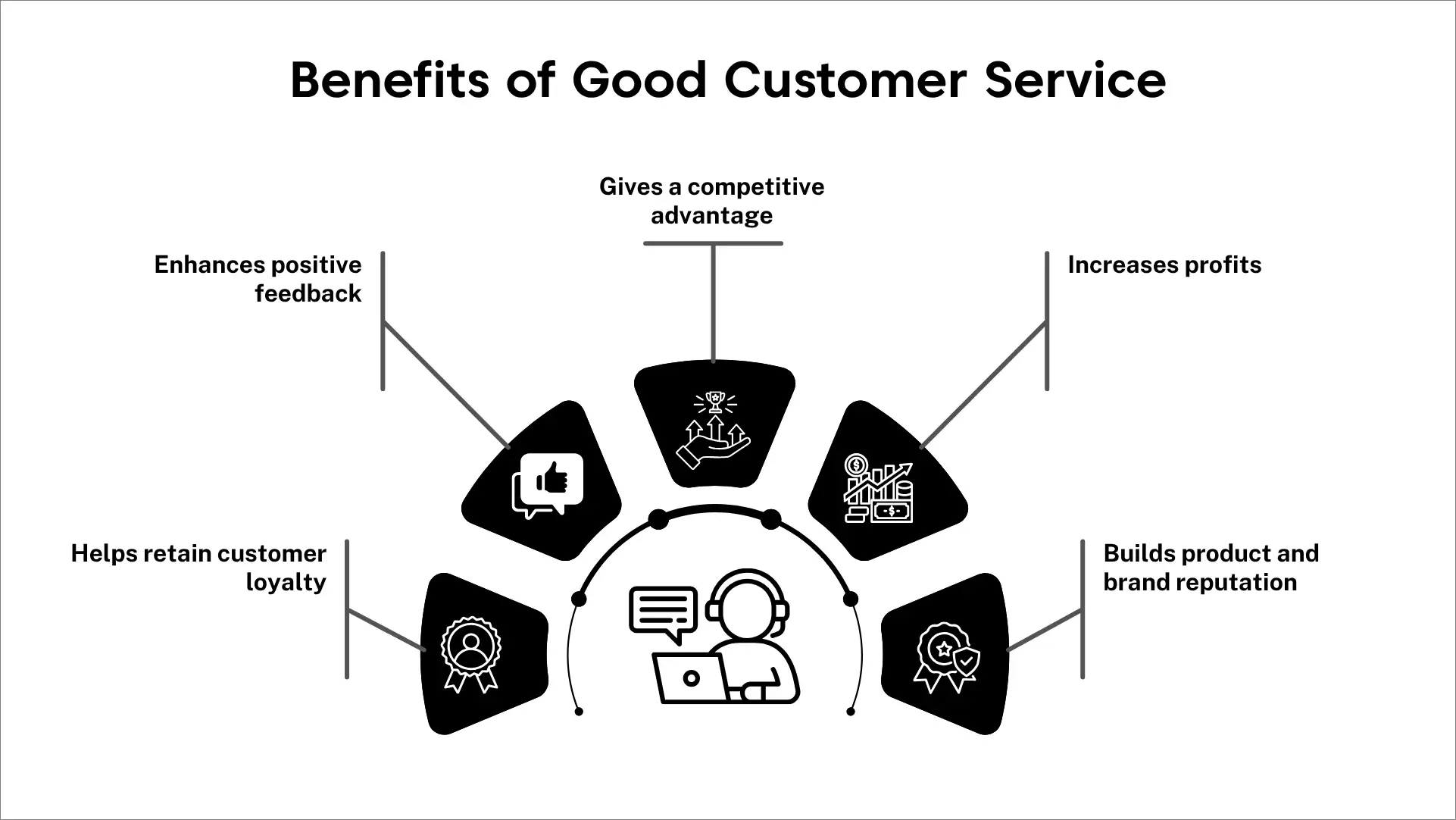
Here are some advantages of providing the best customer service.
- Helps retain customers: Excellent customer service encourages repeat purchases, strengthens customer loyalty, and reassures clients that they will receive reliable support whenever issues arise.
- Enhances positive feedback: Good customer service experiences generate favorable reviews, recommendations, and word-of-mouth referrals, helping attract new customers and strengthen brand credibility.
- Provides a competitive advantage: Exceptional customer service differentiates your brand from competitors, creates memorable experiences, and positions your business as the preferred choice in the market.
- Increases revenue: Satisfied customers are more likely to make repeat purchases, spend more over time, and recommend your business to others, driving long-term growth and profitability. In fact, customer-obsessed organizations achieve 41% faster revenue growth than less customer-focused organizations.
- Builds trust in your brand and products: Transparent communication, timely responses, and consistent support foster customer confidence, strengthen brand reputation, and encourage long-term customer relationships.
- Improves customer satisfaction: Fast, personalized, and proactive support ensures customer needs are met efficiently, leading to a better experience and stronger relationships.
- Boosts operational efficiency: Effective service processes, self-service resources, and proactive communication help reduce customer effort while enabling support teams to resolve issues more efficiently.
How to deliver good customer service
Businesses that consistently meet customer expectations focus on improving accessibility, responsiveness, and service quality across every interaction.
The following best practices can help create more efficient and customer-focused support experiences.
Respond quickly and resolve issues faster
Customers value timely support and expect businesses to address their concerns without unnecessary delays. In fact, responding within the first hour meets the expectations of 88% of consumers.
Fast responses reassure customers that their issues are being taken seriously, while efficient resolutions help improve customer satisfaction and retention.
To achieve this;
- Establish clear response and resolution goals.
- Provide realistic timelines.
- Proactively update customers on progress.
Tools such as canned responses, knowledge bases, and ticket prioritization can also help reduce resolution times and improve efficiency.
Listen actively and understand customer context
Customers want to feel heard. Before offering a solution, take the time to understand the issue from their perspective.
Practice active listening by paying close attention, asking clarifying questions, and avoiding assumptions. This helps prevent misunderstandings and leads to better outcomes.
One effective technique is to summarize the customer’s concern in your own words and confirm that you understand it correctly.
For example:
“Just to confirm, you’re unable to access your account after resetting your password. Is that correct?”
When customers feel understood, they are more likely to trust your guidance and remain satisfied with the interaction.
Personalize the customer experience
Every customer is different. Personalization helps make interactions more relevant and meaningful.
Use customer information, previous conversations, and purchase history to provide tailored support whenever possible.
Simple actions, such as using a customer’s name or referencing past interactions, can make a big difference.
Personalized customer service shows customers that they are valued as individuals, not just another support ticket.
Be proactive about customer needs and issues
Excellent customer service doesn’t wait for problems to happen. Proactive customer service identifies potential issues and addresses them before customers need to reach out for assistance.
For example, organizations can notify customers about delivery delays, scheduled maintenance, service disruptions, or known product issues before those events impact the customer experience.
Proactive follow-ups after support interactions can also help ensure issues have been fully resolved.
Being proactive reduces customer effort, prevents frustration, and shows customers that you care about their experience.
Make support easy to access and self-serve
Customers want help through the channels that are most convenient for them. Some prefer speaking with an agent, while others want to find answers on their own.
Provide support across multiple channels, including email, phone, live chat software, social media, and messaging apps.
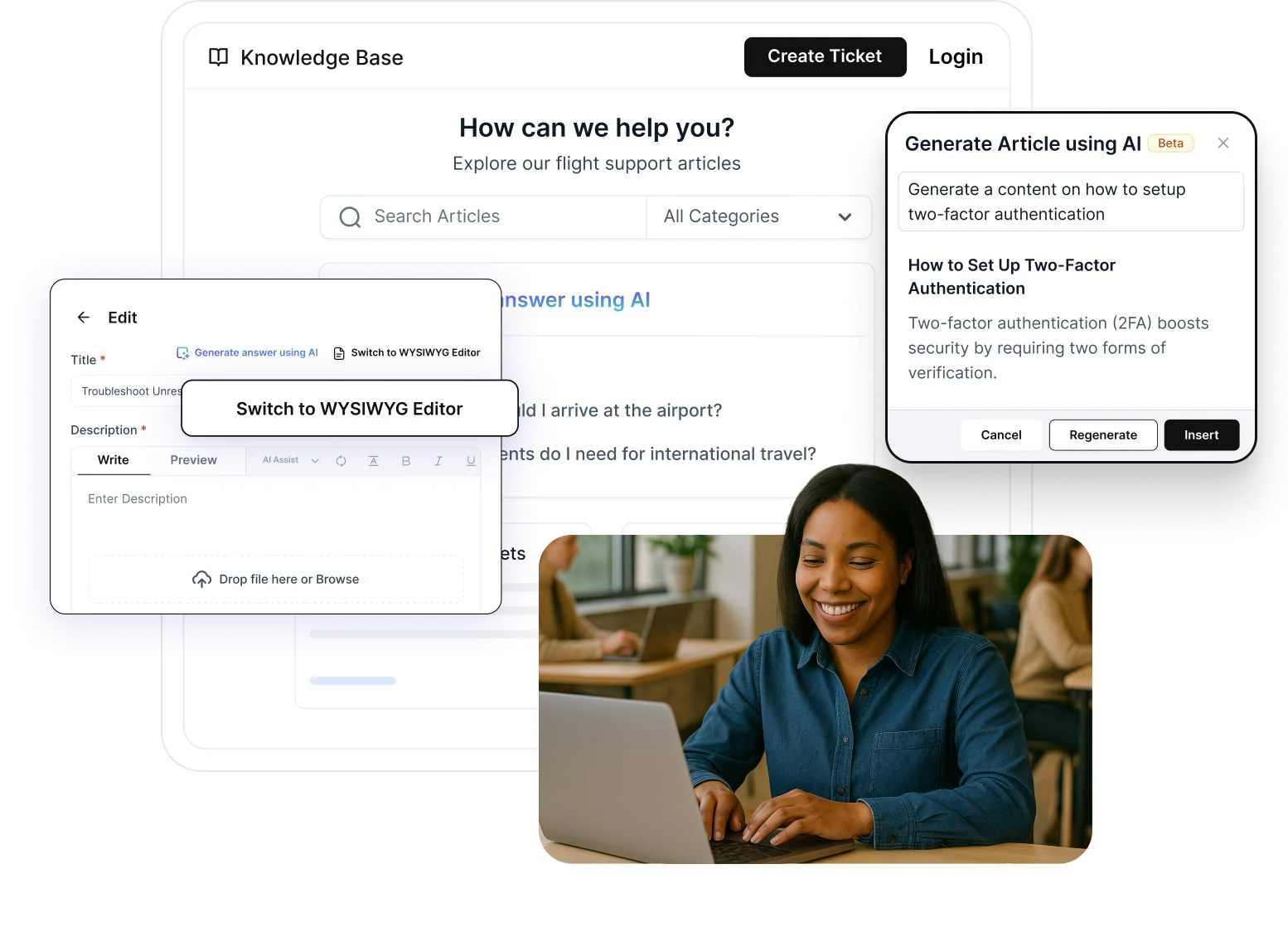
At the same time, offer self-service resources such as FAQs, help centers, knowledge bases, and chatbots.
Making support easy to access helps customers get answers faster and improves their overall experience.
These same principles apply in education, where students, parents, and staff rely on responsive support and easy access to information.
For example, effective customer service in schools helps educational institutions improve communication, streamline service requests, and create better experiences for all stakeholders.
Empower agents with knowledge and authority
Support agents need the right information and authority to help customers effectively.
Provide ongoing training, product education, and access to internal knowledge base resources. Encourage employees to share knowledge and learn from one another.
Agents should also have the authority to resolve common issues without waiting for multiple approvals.
When support teams are empowered, they can make decisions faster and deliver better customer experiences.
Use the right tools, AI, and automation to improve support
Technology helps service teams work more efficiently and provide good customer service.
Utilizing tools such as customer service software can help organize conversations, track customer history, automate routine tasks, and support self-service options.
AI and automation support is not meant to replace agents. The goal is to help teams work smarter so they can spend more time solving customer problems.
AI-powered tools such as AI agents, automated ticket routing, self-service assistants, workflow automation, and intelligent knowledge recommendations, when implemented thoughtfully, can improve response times and streamline customer interactions.
Deliver consistent, customer-centric service
Customers expect the same quality of service every time they interact with your business.
To maintain consistency, establish clear customer service standards and ensure all teams follow them.
A customer-centric culture means putting customer needs at the center of decisions, processes, and interactions.
When service is consistent across every channel and touchpoint, customers know what to expect and are more likely to trust your brand.
Measure performance and act on customer feedback
Collect customer feedback through surveys, reviews, customer interviews, social media, and support interactions. Look for patterns that reveal what customers like and where improvements are needed.
The most important step is taking action. Use feedback to improve processes, fix recurring issues, and enhance the customer experience.
When customers see that their feedback leads to meaningful changes, they feel valued and are more likely to remain loyal.
5 Real-world examples of good customer service
The following brands distinguish themselves by placing customer service at the forefront, centering on meeting their customer’s needs and ensuring their satisfaction.
Zappos: Personalized customer support
Zappos is an online retail store that is recognized for going out of its way to ensure customer satisfaction. The company reduces purchase friction through free shipping and free returns, giving customers a straightforward way to resolve purchases that do not meet their expectations.
Techniques behind the experience
- Remove friction: Generous, simple shipping or returns reduce “what if it doesn’t work?” stress.
- Relationship-first conversations: Agents are encouraged to be personable and focus on making the customer feel heard.
Pro tip
- Treat policies (returns, refunds, exchanges) as part of your service design, not just legal terms. Make them easy to find and easy to use.
Key takeaway: Prioritize relationships over transactions. Empower agents to connect with customers on a personal level and focus on making them feel valued.
Amazon: Customer confidence and reliability
Amazon is an online retail platform that sells a vast range of products and services. Amazon’s approach to customer service is exceptional, with a standout “A-to-Z Guarantee” feature for goods sold by third-party sellers.
Techniques behind the experience
- Set clear expectations: Customers know what’s covered and what steps to take.
- Standardize the resolution path: A consistent process reduces uncertainty and repeat contacts.
Pro tip
- Build a “resolution playbook” for common problems (late delivery, damaged item, missing access) so customers get the same clear steps every time.
Key takeaway: Trust scales when customers can predict what will happen next and how long it will take.
Trader Joe’s: Going the extra mile
Trader Joe’s is widely associated with friendly in-store service. Some locations also allow “try before you buy” sampling in certain situations.
Techniques behind the experience
- Low-effort assistance: Staff helps customers quickly without making them feel like a burden.
- Micro-delight moments: Small gestures (like helping a customer make a decision) create memorable experiences.
Pro tip
- Allow agents to do small, reasonable “extras” (a quick walkthrough, a helpful link, a proactive check-in) that reduce customer effort.
Key takeaway: Consistency and small acts of helpfulness can create memorable experiences that strengthen customer loyalty and satisfaction.
Ritz-Carlton: Empowerment with clear boundaries
Ritz-Carlton is frequently associated with employee empowerment, often referenced as the “$2,000 rule” for resolving guest issues without manager approval.
Techniques behind the experience
- Frontline ownership: The person closest to the problem can act fast.
- Service recovery mindset: Fix the issue and restore trust, not just “close the case.”
Pro tip
- Define empowerment rules your team can use, what agents can approve instantly, when to escalate, and what documentation is needed.
Key takeaway: Speed and confidence improve when agents don’t need permission for every reasonable fix.
Apple: Consistent omnichannel support
Apple is known for offering support through multiple channels, including in-store technical help (Genius Bar) and online or phone support options, with an emphasis on trained staff and guided troubleshooting.
Techniques behind the experience
- Strong diagnostics: Structured troubleshooting reduces guesswork.
- Consistency across channels: Customers can start in one place and still get a coherent experience.
Pro tip
- Standardize your troubleshooting flow (questions to ask, checks to run, when to escalate) so customers get reliable outcomes regardless of which agent they reach.
Key takeaway: Omnichannel support works best when knowledge, tone, and process are consistent everywhere.
Deliver good customer service consistently
Good customer service is built on clear communication, empathy, responsiveness, and a genuine commitment to helping customers.
By applying the right tips, techniques, and strategies, businesses can create positive experiences that strengthen customer relationships and foster long-term loyalty.
BoldDesk helps support teams put these practices into action by centralizing customer conversations, automating repetitive workflows, supporting self-service, and giving agents the context they need to respond consistently.
Sign up for BoldDesk to streamline your support operations and deliver outstanding customer experiences every time a customer reaches out.
What good customer service practices have worked best for your organization? Share your experiences and insights in the comments below.
Related articles
- BoldDesk Wins 2024 Excellence in Customer Service Award
- Customer Service Analytics: Types, Uses, and Benefits
- The Importance of Involving Your Entire Company in Customer Service
FAQs on good customer service
Great customer service is built on empathy, speed, and consistency. These core qualities ensure customers feel heard, valued, and supported every step of the way.
- Empathy: Understand and acknowledge customer concerns with patience and care.
- Fast resolutions: Respond quickly and resolve issues without delays.
- Consistency: Deliver the same high-quality service across all channels, every time.