

 In this page

In today’s highly competitive marketplace, customers have endless choices and zero tolerance for bad customer service. One bad experience is all it takes for them to switch to a competitor.
Poor customer service doesn’t just cause frustration; it damages your brand reputation, erodes trust, and drives customers away, often for good.
In a world where loyalty is fragile and social media amplifies every review, businesses that fail to prioritize exceptional service risk losing both revenue and relevance.
In this blog, we’ll explore what poor customer service is, examine its consequences, and share real examples of ineffective support along with practical solutions to fix them.
What is bad customer service?
Bad customer service occurs when a business fails to meet or exceed customer needs and expectations, particularly in areas such as service quality, response time, and overall experience
According to Zippia, after one poor customer service experience, 91% of customers are ready to change companies.
Bad customer service can lead to low sales in a business and even harm its reputation. Therefore, companies must prioritize delivering excellent customer service to retain customers and maintain their loyalty.
Good customer service vs. poor customer service
Understanding the key differences between good customer service and poor customer care helps businesses identify opportunities for improvement and create a better customer experience.
| Good customer service | Bad customer service |
|
|
|
|
|
|
|
|
|
|
Real-Time Support with Personalized Touch
Don’t let slow responses ruin your reputation. Live chat makes problem-solving faster and smoother.
Consequences of poor customer support in a business
Providing poor customer service can severely impact customer satisfaction, customer loyalty, and the company’s reputation.
Research by Verint shows that 70% of consumers will move to a competitor following a terrible customer experience.
Here are some of the consequences of bad customer care:
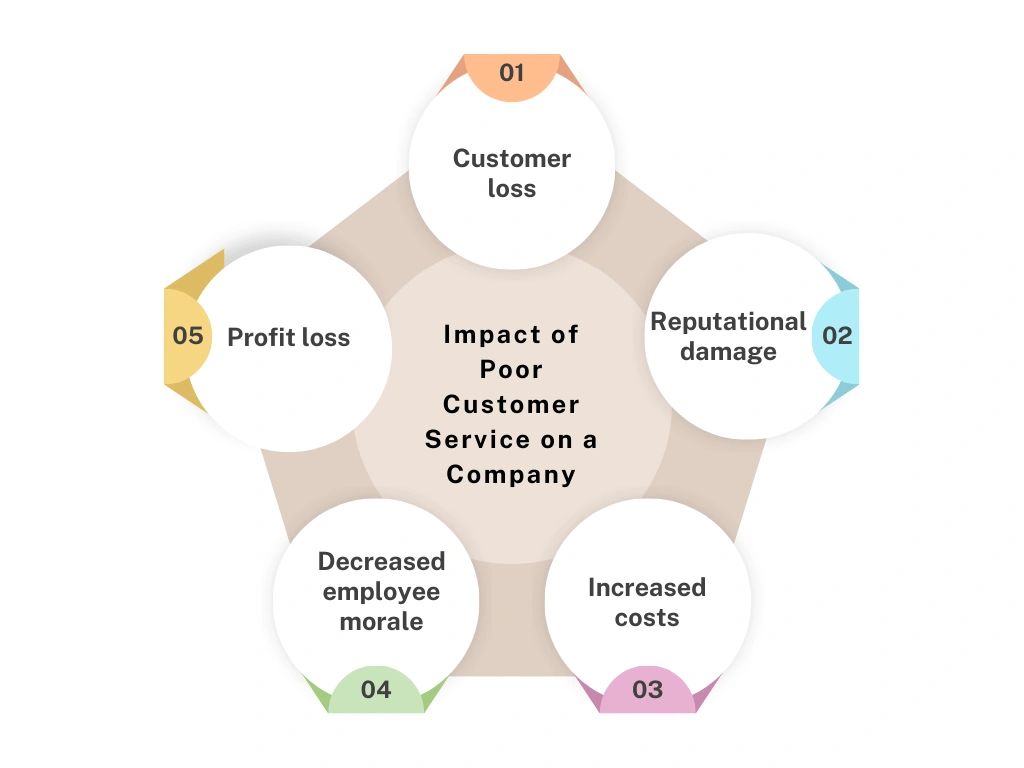
- Customer loss: Unsatisfactory customer service from a company causes clients to switch to other businesses, increasing the customer churn rate, decreasing the customer retention rate, and harming the company’s bottom line.
- Reputational damage: Bad customer service reviews and negative word of mouth spread more readily than praise. Such an unfavourable brand perception discourages customers and other businesses from partnering or associating with your company.
- Increased costs: Failure to provide satisfactory customer service experiences can lead to more product returns, refund requests, and exchanges, which lead to substantial financial challenges for the business.
- Decreased employee morale: Poor customer support can leave a company’s top employees overwhelmed as they manage frustrated customers. When competent support agents compensate for less effective ones, it can cause customer service burnout.
- Profit loss: Negative customer experiences usually lead to a decrease in customers, resulting in reduced sales. This can trigger a destructive cycle where a company attempts to save money by eliminating staff or customer service training, driving down service quality and leading to even more profit loss.
Examples of the worst customer service practices and how to fix them
In the field of customer service, there are certain practices that can lead to an unsatisfactory experience for customers.
Examples of bad customer service
-
-
- Incompetent customer support teams
- Keeping customers on hold for too long
- Inadequate communication channels
- Ignoring customer feedback
- Transferring customers from agent to agent
- Lacking empathy
- Hanging up on angry customers
- Dismissing customer problems
- Using language that demotivates the customer
- Asking customers to repeat themselves
- Lack of personalization
-
Here are some bad customer service examples and their possible solutions:
1. Incompetent customer support teams
Customer support teams that fail to resolve issues promptly and effectively create inefficiencies.
These shortcomings often stem from poor management, inadequate training, limited knowledge, insufficient resources, or a combination of these factors.
Such inefficiency results in a negative customer experience and increases the risk of losing business.
How to fix it
- Train your support team: Ensure that your customer service team is well trained to respond promptly and confidently.
- Provide self-help tools: Self-help tools, such as knowledge base software, enable customers to independently find solutions enhancing their experience and reducing the workload on support teams.
2. Keeping customers on hold for too long
Being put on hold is a common experience when clients contact a customer service team.
However, if they are kept on hold for too long, it can be frustrating to customers as they feel their time is not valued.
How to fix it
- Prioritization: Use SLAs to prioritize queries based on their urgency, ensuring that more urgent issues are handled first.
- Monitor and optimize processes: Regularly review customer service workflow processes to identify and rectify any inefficiencies that contribute to long wait times.
- Use automated responses: Utilize canned responses, email templates, and automated SLA reminders to acknowledge customer inquiries and provide estimated wait times.
3. Inadequate communication channels
Most customers are accustomed to having multiple options to access a company’s support or customer service such as live chat, phone calls, email, among others.
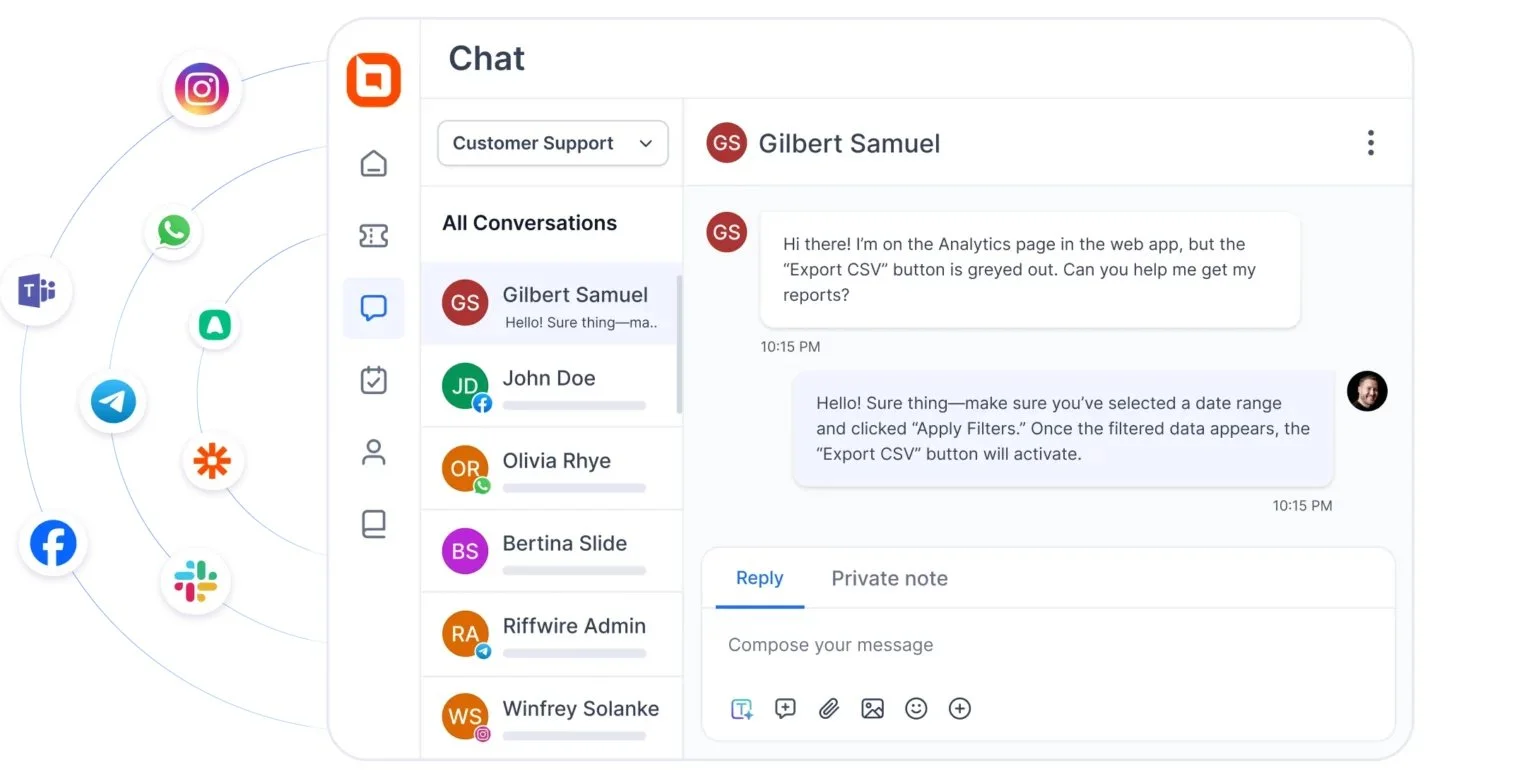
If a company only offers support through phone calls, it is neglecting many customers’ preferred communication channels.
How to fix it
- Offer multiple communication channels: Provide omnichannel customer service to facilitate smooth support experiences across multiple channels under a unified platform.
4. Ignoring customer feedback
Most businesses provide several platforms for customers to provide feedback.
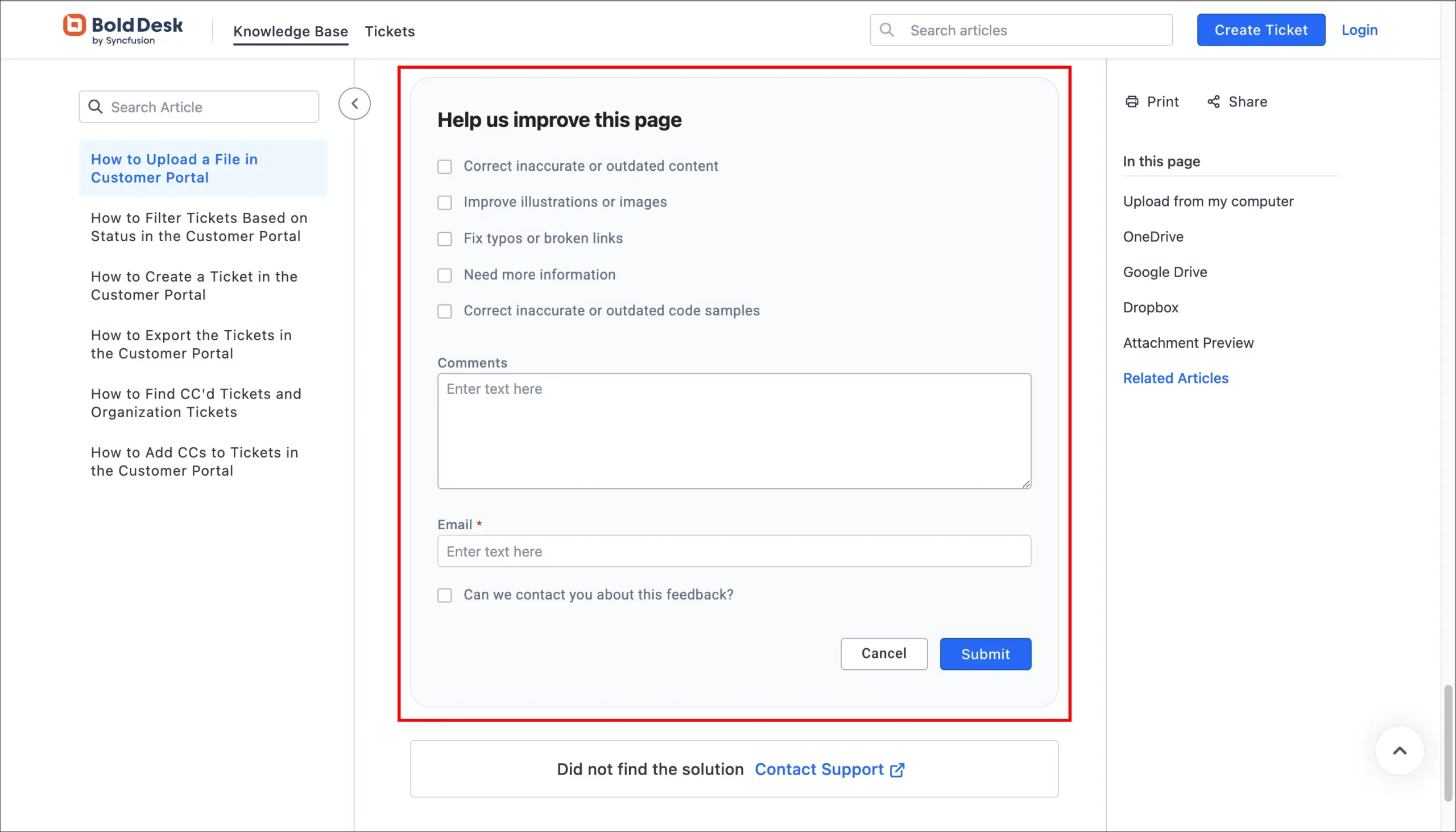
Ignoring customer complaints is more detrimental than acknowledging them, as it not only demonstrates a lack of concern for customer feedback, but also implies a disregard for the customer’s role in the success of the company.
How to fix it
- Follow up on customer feedback: Considering and acting on feedback from customers directly results in improvements to your customer service.
- Monitor interactions: Companies must ensure that each customer interaction progresses toward a positive outcome for both the customer and themselves. Social media interactions in particular require close attention because anyone can see them.
- Track customer satisfaction metrics: Businesses should collect data about their customers’ experiences and identify areas where they can improve their brand.
5. Transferring customers from agent to agent
Frequent transfers of clients between support agents to resolve a single issue can signal poor customer service, often leading to a bad customer service experience for the client.
Customers encountering such situations regularly will feel frustrated and may look to competing businesses for help.
How to fix it
- Utilize help desk software: Comprehensive help desk ticketing system can streamline support workflows and keep track of customers’ previous issues, making it easier for agents to help them.
- Implement automated ticket routing: With automated ticket routing, customer inquiries are directed to the right agent from the start, reducing the likelihood of transfers and leading to quicker resolutions.
6. Lacking empathy
Empathy and politeness are important qualities in customer support. The absence of empathy in customer service interactions can leave customers feeling frustrated and undervalued by your company.
How to fix it
- Active listening: Encourage support agents to give customers their full attention, remembering important details and responding in a way that shows the customers that their feelings are recognized and understood.
- Training on empathy: Agents can be trained on politeness and how to handle angry customers. Role-playing exercises are especially effective for practicing responses to different customer service scenarios.
- Create a culture that values empathy: Recognize and reward empathetic behavior, share positive feedback from customers, and lead by example.
7. Hanging up on angry customers
It is never appropriate to hang up on a customer as a way of dealing with a challenging situation. The customer is upset for a reason. Hanging up will make them feel neglected, disrespected, and worsen the situation.
How to fix it
- Train the support team on conflict resolution: Provide your team with training on effectively managing challenging circumstances, escalation management, and conflict resolution.
- Supervisor intervention: If a customer is inconsolable, it might be necessary for a supervisor or manager to intervene. Supervisor involvement can help resolve the issue and show the customer that their concerns are taken seriously.
8. Dismissing customer problems
More than anything, customers want their issues to be acknowledged and efficiently addressed. Failure to meet this expectation can make customers feel overlooked and undervalued.
Even if the customer service problem is due to a mistake of their own, it is in your best business interest to guide the customer to a solution.
How to fix it
- Acknowledge customers’ problems: Validate customer issues by showing understanding and empathy. This makes the customer feel heard and valued and sets the stage for a positive resolution. Customers’ issues can be acknowledged in the following ways:
- Recognize the challenges they are facing in writing or verbally.
- Apologize for any inconveniences.
- Let the customer know you are going to do everything in your power to help them.
9. Using language that demotivates the customer
The language used in customer service interactions can have a big impact on the customer experience.
If language is used in a way that discourages or diminishes the customer, it can result in them feeling frustrated and unappreciated, which can easily be one of their worst customer service experiences.
How to fix it
- Use the right language: Use positive language and steer clear of phrases that might discourage or blame the customer for their issue.
10. Asking customers to repeat themselves
Asking customers to repeat themselves results in frustration and an unsatisfactory support experience. It creates the perception that the customer service representative is disregarding or undervaluing the customer’s time.
How to fix it
- Take notes: Encourage support agents to make notes during customer conversations to help them remember important details and minimize the need for repetition.
- Record conversations: With the consent of your customers, record all interactions to enable you to revisit discussions as needed, reducing the burden on clients to repeatedly provide the same information.
11. Lack of personalization
Lack of personalization occurs when customer interactions feel generic, impersonal, and disconnected from their individual needs or history with the company.
Customers often expect personalized customer service where support agents have access to their preferences, previous purchases, or past interactions. When these expectations are unmet, they can experience dissatisfaction and a sense of being undervalued.
How to fix it
- Tailor communications: Personalize emails, messages, and responses based on customer preferences and past interactions.
- Train agents to personalize conversations: Provide training that emphasizes empathy and personalization. Encourage agents to ask about customers’ individual needs and offer recommendations based on their unique circumstances.
Fix bad customer service to build lasting relationships
Poor customer service doesn’t just frustrate customers; it costs businesses money and reputation.
As research by Higher Logics reveals, 61% of customers will consider switching to a competitor after a bad customer experience, underscoring the need to prioritize exceptional service.
Delivering outstanding customer experiences not only retains loyal customers but also strengthens brand image and drives long-term growth.
Ready to take your customer service to the next level? Try BoldDesk by Syncfusion, start a 15-day free trial or book a live demo today. Contact BoldDesk support for more information.
We hope this article was insightful. Do you have any additional comments? Please share them in the section below!
Related articles