



TL;DR: Customer focus is the practice of aligning business decisions, processes, and tools around customer needs and outcomes. It drives loyalty, retention, revenue, and long‑term growth. Businesses achieve customer focus by empowering employees, acting on feedback, delivering consistent experiences, and using the right customer service tools.
Customer focus is no longer a competitive advantage; it’s a business necessity. Companies that consistently understand and prioritize customer needs see higher retention, stronger loyalty, and long-term growth.
Customer focus goes beyond delivering good service. It requires aligning every team, process, and decision around what matters most to your customers.
In this guide, you’ll learn what customer focus is, why it matters, and how to build a strategy that improves customer experience and drives measurable business results.
What is customer focus?
Customer focus is a business approach where customer needs, expectations, and outcomes guide decisions across marketing, sales, product, and customer support.
The primary goal of customer focus is to reduce friction, improve satisfaction, and earn long‑term customer loyalty by consistently delivering value at every touchpoint.
Key principles of customer-focused strategy
A customer-focused strategy is built on core principles that guide how businesses understand, serve, and deliver value to customers at every stage of the journey.
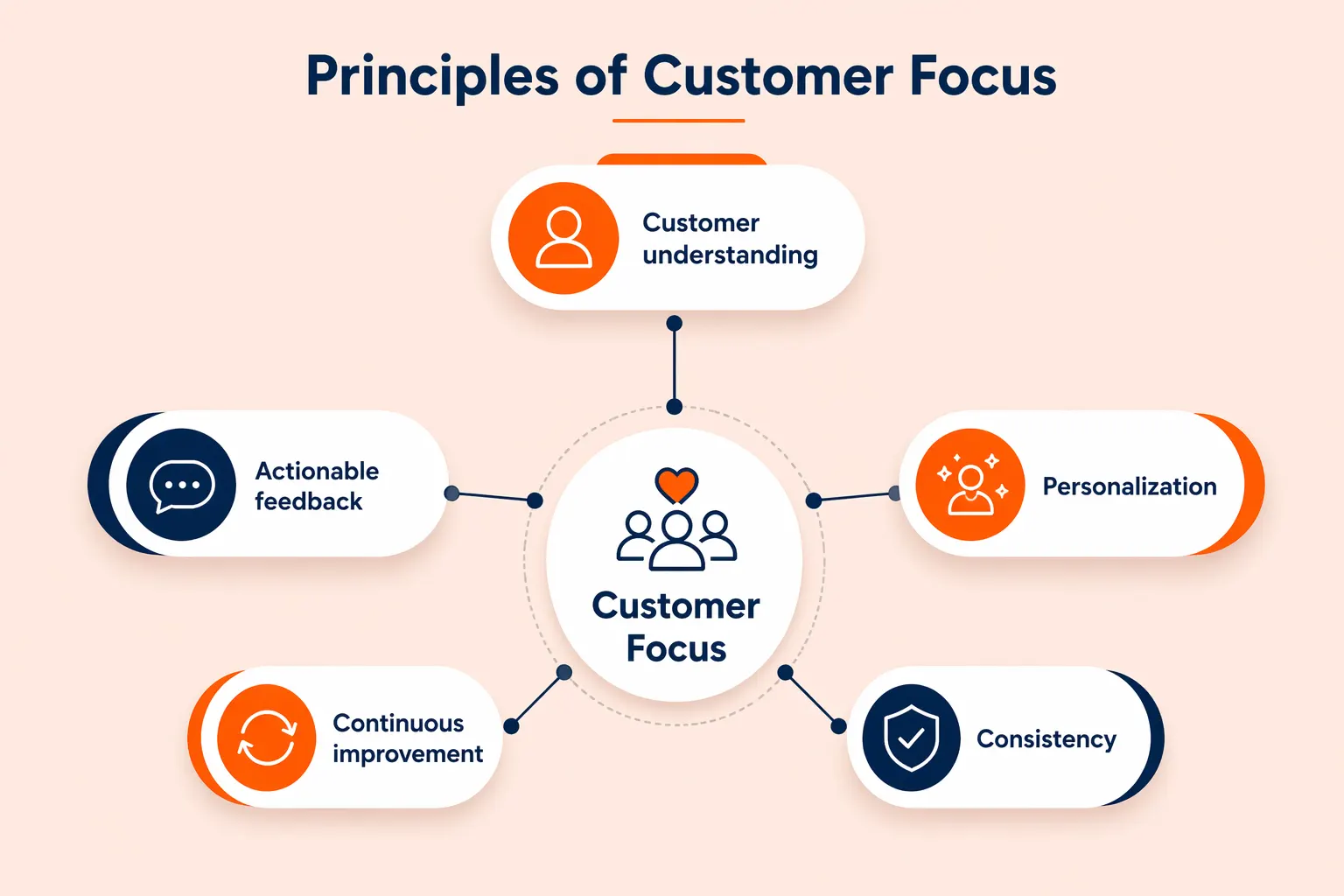
- Customer understanding: Use data and insights to identify customer needs, expectations, and preferences.
- Actionable feedback: Gather feedback, act on it, and communicate improvements clearly.
- Personalization: Deliver relevant, tailored experiences that improve engagement and satisfaction.
- Consistency: Provide reliable, high-quality experiences across all channels and touchpoints.
- Continuous improvement: Continuously refine processes to adapt to changing customer expectations.
Why is customer focus important in business?
In competitive markets, customer focus directly impacts customer retention, lifetime value, brand loyalty, and long-term business growth.
The key benefits of building a customer-focused business include:
Support Overload? Time to Automate Answers!
Give customers instant answers with a smart knowledge base. No waiting, no frustration—just fast, helpful support.
Improved customer loyalty and retention
A strong customer focus helps build long‑term relationships between customers and support teams, resulting in repeat business, higher lifetime value, and stronger brand advocacy.
This reduces acquisition costs by increasing repeat purchases and referrals.
Increased revenue and profitability
According to McKinsey’s research, companies that place customer experience at the core of their operations achieve twice the revenue growth of their less customer-focused peers.
A customer-focused business is more likely to enjoy increased revenue and profitability, as satisfied customers are more likely to make repeat purchases and refer new customers.
Enhanced employee engagement
Employees who understand how their work impacts customer outcomes are more engaged and take greater ownership of customer experiences.
Improved business reputation
A business with a strong customer focus generally has a positive brand reputation. This can increase customer trust and referrals, ultimately boosting a company’s credibility in the market.
How to build a customer‑focused strategy for your business
Building a customer‑focused strategy means aligning your business goals, processes, and decisions around delivering consistent value to your customers.
Here are seven approaches for improving customer focus in an organization:
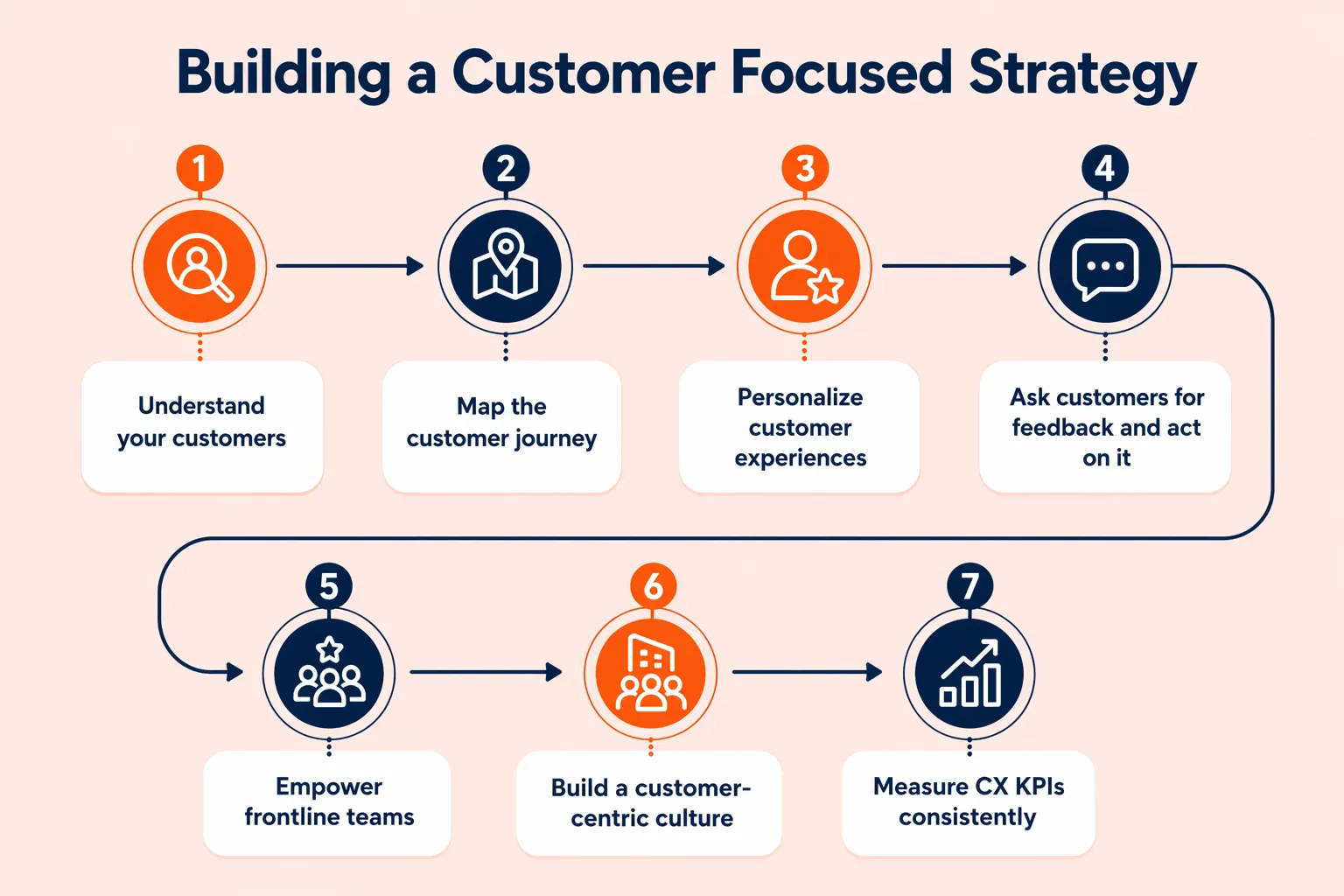
1. Understand your customers
When businesses truly understand their customers, they gain clearer insight into customer needs, uncover new ideas, and make better decisions that improve engagement and satisfaction.
According to Salesforce, 66% of customers expect companies to understand their needs and expectations, making customer insights essential for delivering relevant and meaningful experiences.
Develop a clear understanding of who your customers are, including their needs, preferences, expectations, and motivations.
How to do it effectively
- Research on customer behavior, goals, and pain points
- Create detailed customer profiles or personas
- Put yourself in the customer’s position to see your business from their perspective
2. Map the customer journey
Customer journey maps align teams around customer needs and help improve experiences where they matter most.
Create a clear view of every step customers take when interacting with your business, from awareness to post‑purchase support.
Tips to do it effectively
- Define key customer personas
- Outline each stage of the journey
- Spot gaps and improvement opportunities
3. Use customer data and AI to personalize experiences
By combining customer insights such as preferences, behavior, and interaction history with AI capabilities, teams can move beyond reactive support to proactively meeting customer needs.
AI helps analyze patterns, predict intent, and automate responses, allowing businesses to deliver faster resolutions, reduce friction, and maintain consistency across every interaction.
How to do it effectively
- Centralize customer data in a CRM
- Segment customers based on behavior and needs
- Use AI to automate responses and deliver personalized recommendations
4. Ask customers for feedback and act on it
Customer feedback helps teams uncover friction points, validate whether expectations are being met, and prioritize the improvements that matter most to customers.
When this feedback is visible and acted on consistently, it keeps teams aligned, accountable, and focused on delivering better customer outcomes.
Collect customer feedback regularly and make it visible and accessible to employees across the organization.
This drives continuous improvement in the customer service experience.
Tips to do it effectively
- Use surveys, reviews, NPS, and support interactions to gather feedback
- Collect feedback at key stages of the customer journey
- Share insights through dashboards, meetings, or internal communications
5. Empower frontline teams with context and tools
Empowered teams improve satisfaction while reducing escalations and operational delays.
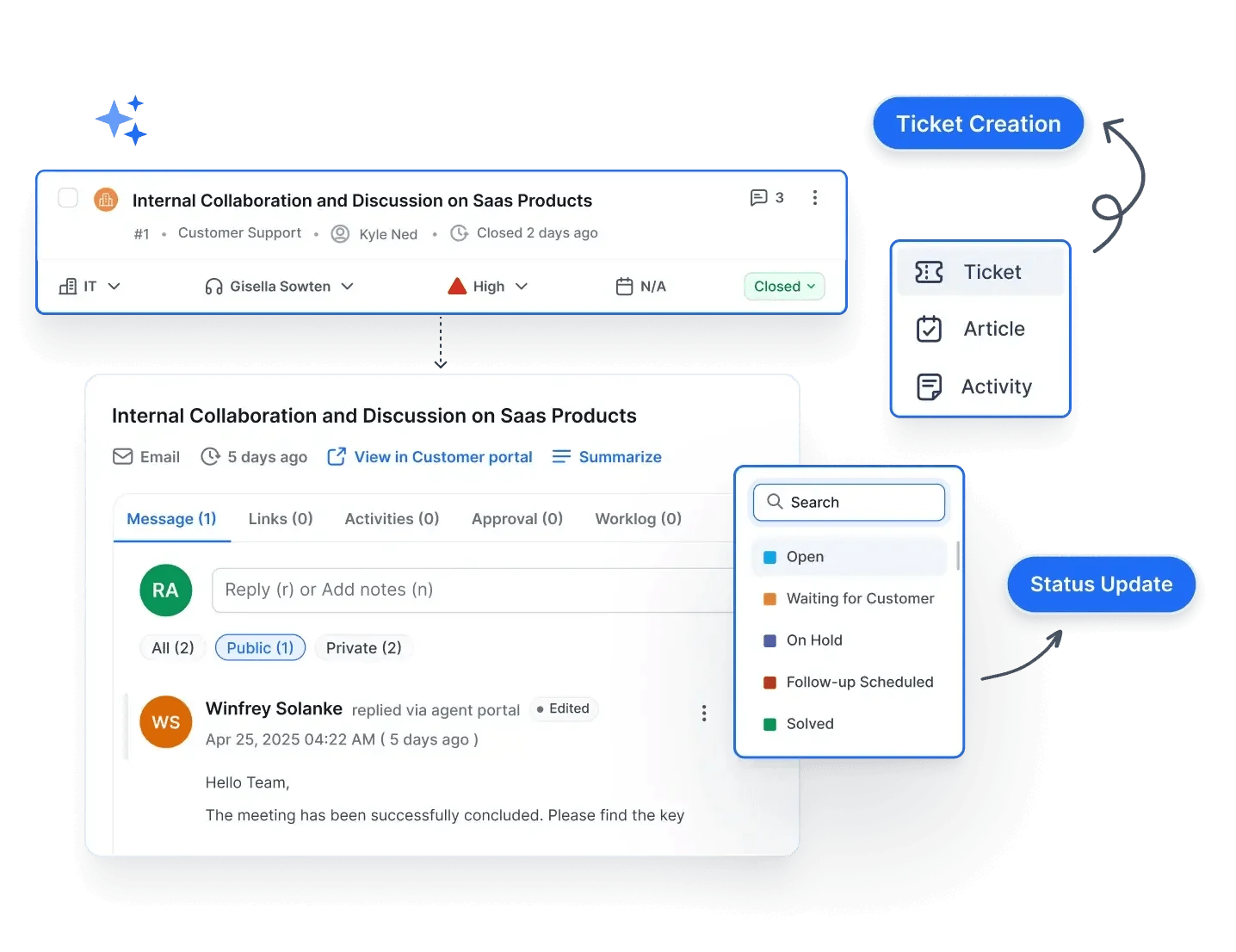
Equip employees interacting with customers with the right data, tools, permissions, and workflows to take effective action in real-time.
Tips to do it effectively
- Give access to complete customer histories so agents can understand past interactions
- Provide your team with productivity tools that streamline workflows
- Allow flexibility to make customer‑first decisions
6. Build a customer-centric culture across your organization
A customer‑centric culture drives accountability, improves collaboration, and ensures every employee contributes to delivering better customer experiences and increasing customer satisfaction.
Building a company culture starts with leadership and values.
Clear goals, aligned incentives, and consistent training reinforce customer‑first behavior across the organization, leading to reliable, high‑quality service at every customer touchpoint.
Tips to do it effectively
- Set clear customer‑focused goals across teams
- Recognize and reward customer‑first behavior to reinforce values and motivate employees to go above and beyond
- Train teams to adopt consistent customer‑first practices, ensuring shared standards, language, and expectations company‑wide
7. Measure customer experience KPIs consistently
Tracking customer experience metrics helps businesses understand performance, identify friction points, and make data-driven improvements to customer interactions.
Key metrics to track
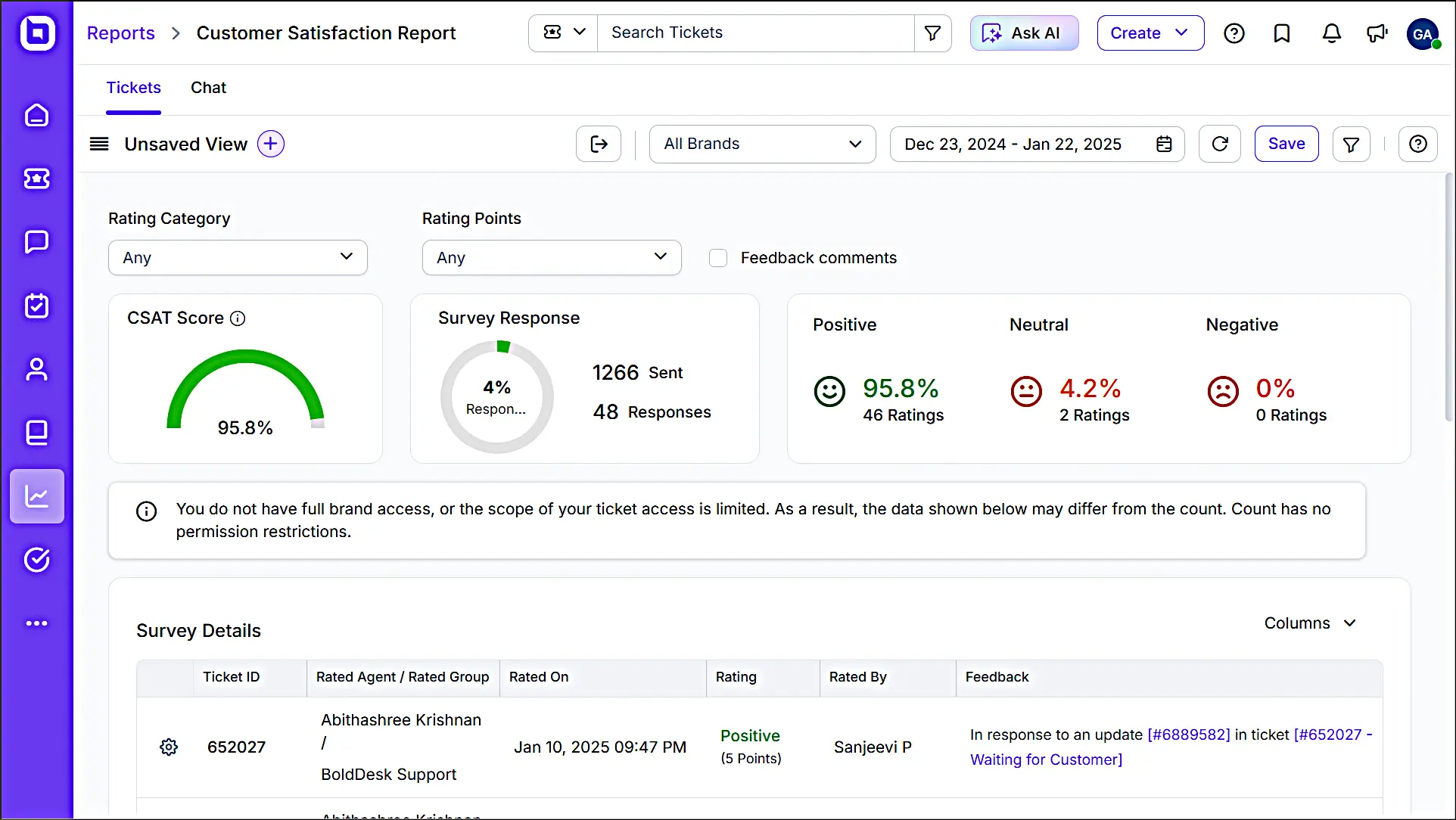
- Customer Satisfaction Score (CSAT): Measures satisfaction with a specific interaction at a specific moment, helping teams quickly assess whether customer expectations were met.
- Net Promoter Score (NPS): Measures customer loyalty and advocacy to gauge long‑term sentiment and strength of customer relationships.
- Customer Effort Score (CES): Measures how easy it is for customers to resolve issues, typically used after support interactions to identify friction that impacts loyalty.
- Customer retention and churn rates: Measure the ability to keep customers over time, reflecting the cumulative impact of your customer experience on loyalty and growth.
Tip: You don’t have to calculate these metrics manually. You can utilize free tools like BoldDesk’s AI ROI, CSAT, and NPS calculators to quickly measure performance and make data-driven improvements to your customer experience.
Customer focus examples from top companies
To see how these benefits translate into real outcomes, let’s explore customer focus examples from leading brands.
Zappos
Zappos built its brand around exceptional customer service by offering free shipping, free returns, and a 365‑day return policy.
Its customer service representatives are empowered to make decisions that prioritize customer satisfaction, even when it costs the company more in the short term.
Why it reflects customer focus
Zappos removes risk and inconvenience from the buying process, putting customer comfort and trust first.
By empowering employees to act in the customer’s best interest, the company shows that long‑term relationships matter more than short‑term savings.
Key takeaway:
Businesses that prioritize customer convenience and empower frontline employees build stronger customer trust and long-term loyalty, even when it involves higher upfront costs.
Amazon
Amazon adopted a deeply customer‑centric model by offering a vast product selection, fast and reliable shipping, easy returns, and a highly intuitive website.
It also uses data and AI to deliver personalized recommendations based on customer behavior.
Why it reflects customer focus
Amazon consistently simplifies the shopping experience and anticipates customer needs.
It focuses on speed, personalization, and convenience to reduce friction and increase value for customers at every touchpoint.
Key takeaway:
By using customer data to remove friction and invest in convenience, usability, and reliability, businesses can create seamless experiences that boost satisfaction, loyalty, and repeat business.
Ritz-Carlton
Ritz‑Carlton empowers its employees to go above and beyond to create personalized, memorable guest experiences.
Staff members are trusted to make decisions that enhance guest satisfaction without needing managerial approval.
Why it reflects customer focus
The company places emotional connection and personalized service at the heart of its operations.
By treating each guest as an individual and responding proactively to their needs, Ritz‑Carlton delivers exceptional experiences that exceed expectations.
Key takeaway:
Empowering employees and delivering personalized, emotionally engaging service transforms routine interactions into memorable experiences that strengthen customer relationships and loyalty.
Scale customer focus with the right tools
Customer focus isn’t a one-time initiative; it’s a system you build and reinforce as you scale. Culture and leadership set the direction, but the right customer service software keeps execution consistent.
It centralizes customer conversations, makes feedback visible across the organization, empowers agents with full customer context, and tracks key service KPIs, so every interaction is seamless, informed, and measurable.
Empower your teams with tools like BoldDesk to stay aligned, reduce response times, and deliver a dependable customer-first experience across every channel.
Book a live demo or start your 15‑day free trial to see how BoldDesk strengthens customer focus across every interaction. For further inquiries, feel free to contact our support team.
Related articles
- 11 Customer Engagement Strategies for Long-term Business Success
- 6 Customer Follow-Up Strategies in Customer Service
- Future of Customer Service: Top Trends for Businesses in 2026