

 In this page

TL;DR: Improving customer service in insurance requires faster claims handling, clear communication, and consistent omnichannel support. With the right workflows and tools, insurers can scale support while maintaining trust and reliability.
Filing an insurance claim is often stressful, and for many customers, it’s the moment they decide whether to stay or switch providers.
One poor service experience can drive them away for good.
In fact, J.D. Power research shows that 80% of policyholders consider switching insurers after a bad claims experience.
So, how do leading insurance companies deliver fast, empathetic, and reliable support when it matters most?
In this guide, you’ll learn what customer service in insurance is, why it matters, and explore 7 proven ways to improve it.
What is customer service in insurance?
Customer service in insurance refers to the support insurers provide throughout the policyholder journey, including onboarding, billing support, policy inquiries, claims handling, renewals, and coverage clarification.
These interactions align closely with established customer service standards that define response times, communication clarity, and issue resolution benchmarks.
Because many interactions occur during emergencies or high‑stress situations, insurance customer service requires a careful balance of empathy, accuracy, and timely assistance to reassure policyholders and guide them effectively.
Why is insurance customer support important?
Insurance is fundamentally a promise that policyholders hope they never have to test. But when they do, the quality of your customer service becomes the clearest reflection of your brand
Here’s why getting the policyholder service experience right directly impacts your bottom line:
- Builds loyalty and retention: Insurance customer service improves retention by ensuring policyholders feel supported during claims or inquiries, making them more likely to renew policies and remain loyal to your brand in the long‑
- Reduces churn and saves costs: Poor service is one of the top reasons insurance customers switch to a new insurer. According to PwC’s CX research, up to 32% of consumers globally and 17% in the U.S. would leave a brand after one bad experience. Great support reduces cancellations and acquisition costs.
- Boosts brand reputation: In an industry built on reliability, your reputation is everything. Positive insurance CX leads to glowing reviews on social media and word-of-mouth referrals.
- Drives operational efficiency: Strong insurance customer service processes reduce repetitive inquiries, streamline claims handling, and free up resources for higher-value tasks.
- Enhances compliance and reliability: Clear communication and accurate guidance help clients understand policies and avoid disputes, reinforcing reliability and regulatory compliance.
How to improve customer service in insurance
As policyholder expectations rise and digital transformation accelerates, insurers must evolve their service models to remain competitive and reliable.
Here are key best practices insurers use to improve customer service while managing increasing complexity.
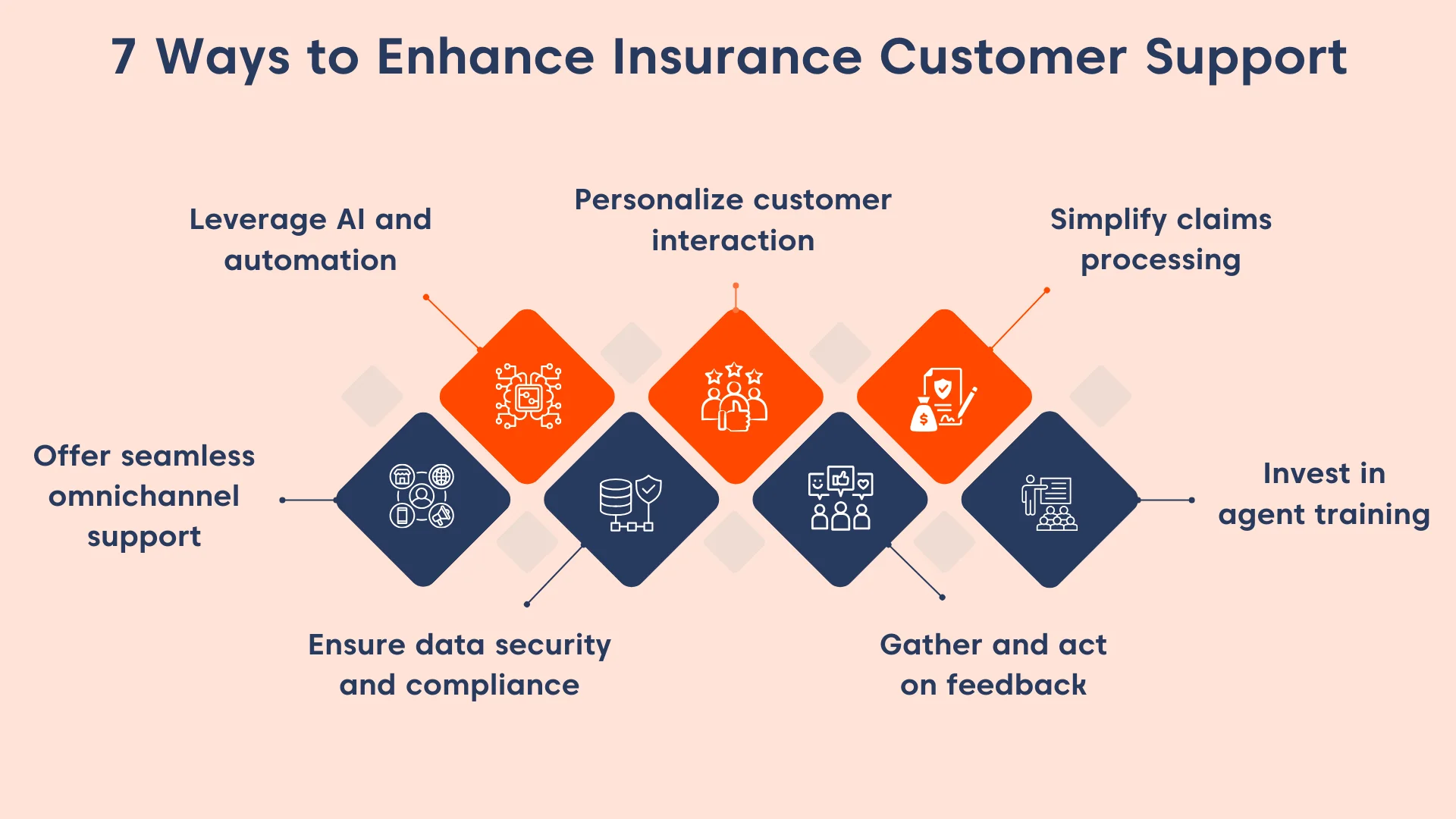
1. Simplify the claims experience to build trust
The claims process is often the most stressful part of insurance. Simplifying it helps reduce confusion and builds trust.
Use digital tools, e-signatures, and real-time updates to keep policyholders informed at every stage. Provide self-service portals where customers can:
- Upload documents and photos
- Track claim progress
- Communicate with claims handlers
Clear communication and minimal paperwork make the process easier to navigate and improve overall satisfaction.
2. Deliver seamless omnichannel insurance support
Policyholders expect to reach insurers on their preferred channels without repeating information.
Offer support across phone, email, live chat, social media, and mobile apps, while ensuring conversations remain connected across channels.
A unified omnichannel engagement approach improves accessibility, reduces friction, and creates a more consistent customer experience.
3. Reduce wait times with AI and automation
Delays are a common source of frustration in insurance customer service, especially for simple requests like claim updates or document access.
Use AI and automation to:
- Handle routine inquiries such as claim status, billing questions, and policy documents
- Collect complete claim details during first notice of loss (FNOL) through guided forms or chat
- Send proactive updates at key milestones to reduce follow-ups
- Route urgent or complex cases to the right teams faster
- Escalate sensitive issues like claim denials with full context
Automation improves speed and efficiency while allowing agents to focus on high-impact, human interactions.
4. Personalize policyholder interactions for better outcomes
Generic responses often lead to repeat contacts and poor experiences. Effective personalization isn’t about underwriting; it’s about using context to deliver better support.
Use customer and policy data to:
- Communicate through preferred channels
- Provide relevant coverage details and next steps
- Proactively reach out during renewals or changes
- Guide customers clearly through each stage of the claims process
Personalization helps shift support from reactive to proactive while improving clarity and reducing friction.
5. Strengthen support with well-trained agents
Insurance support is inherently high‑stakes. Customers often reach out during stressful moments, especially during claims, when emotions run high and clarity matters most.
To deliver confident, empathetic service, insurers should equip agents to:
- Explain policies clearly in simple language
- Handle frustration and set realistic expectations
- Support vulnerable customers with empathy
- Understand the full claims process to guide customers effectively
- Maintain accurate and compliant documentation
Well-trained agents resolve issues faster and build trust during critical moments.
6. Gather and act on policyholder feedback
Feedback helps identify gaps in communication, delays, and service breakdowns.
Collect input through surveys, reviews, and sentiment analysis, then act on it by addressing common issues like unclear updates or slow responses.
Closing the customer feedback loop shows accountability and builds confidence.
7. Strengthen trust with secure, compliant data practices
Insurance customer service teams handle sensitive personal and financial data, so security and compliance aren’t optional.
Implement strong data protection measures, including:
- Encryption and multi-factor authentication
- Role-based access controls
- Compliance with regulations such as GDPR, GLBA, or HIPAA
Strong data practices reduce risk and reinforce customer trust.
Note: Regulatory requirements vary by region. Always align processes with local compliance standards.
Examples of insurance companies getting customer service right
Leading insurers use proactive communication, digital tools, and personalized support to strengthen reliability and create better policyholder experiences.
Amica Mutual: Personalized policyholder support
Amica is known for its customer-first approach, offering dividend-paying policies and maintaining strong communication throughout the policy lifecycle.
Policyholders can manage claims online, track updates, and receive timely notifications during the process.
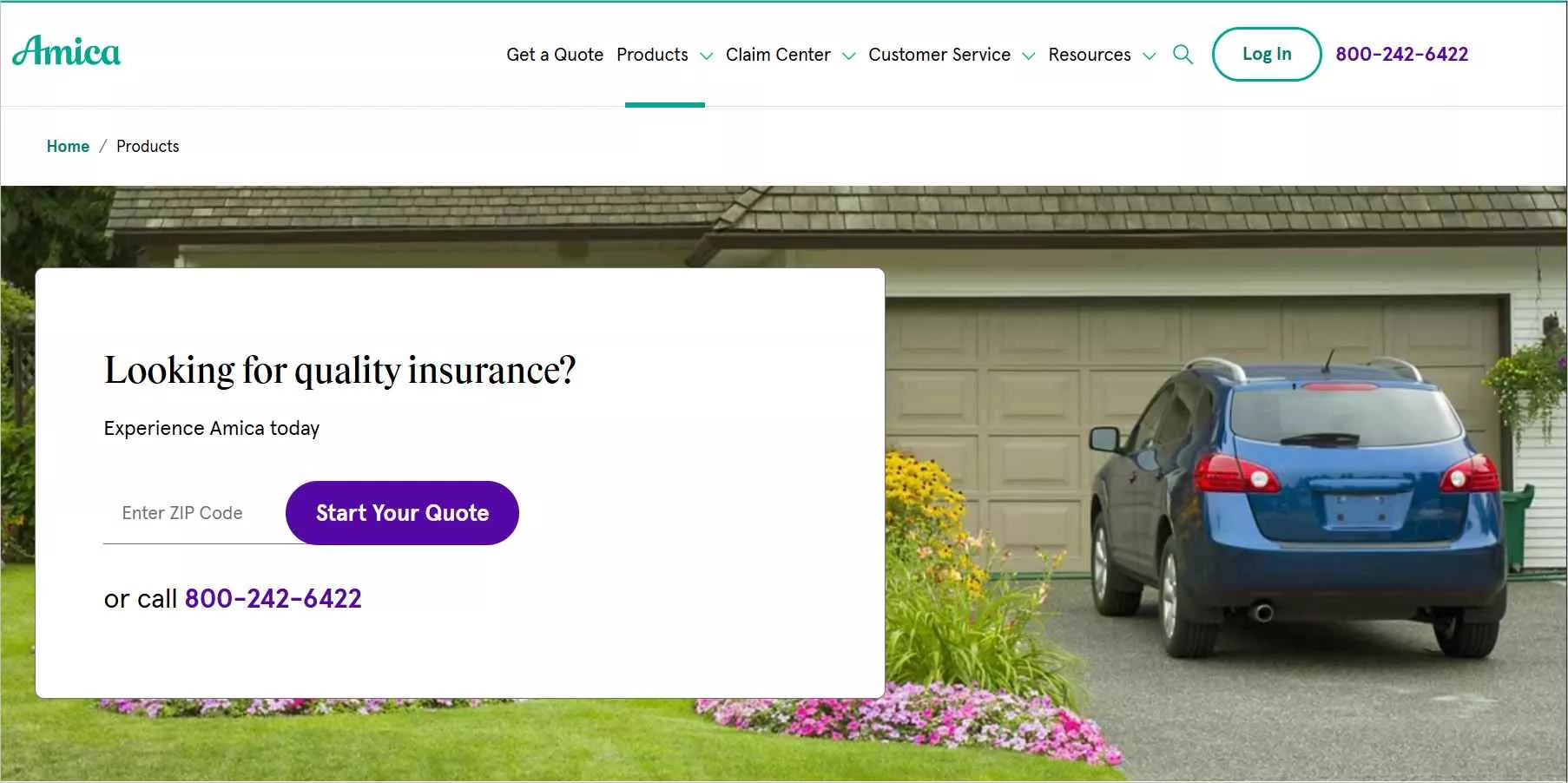
What it solves: Reduces uncertainty during claims by keeping customers informed at every step.
How it delivers results: Frequent, transparent updates improve visibility and reduce the need for follow-ups during high-stress interactions
Liberty Mutual: Seamless digital claims support
Liberty Mutual provides a 24/7 digital claims experience where policyholders can file claims, upload documents, and track progress in real time through its web and mobile platforms.
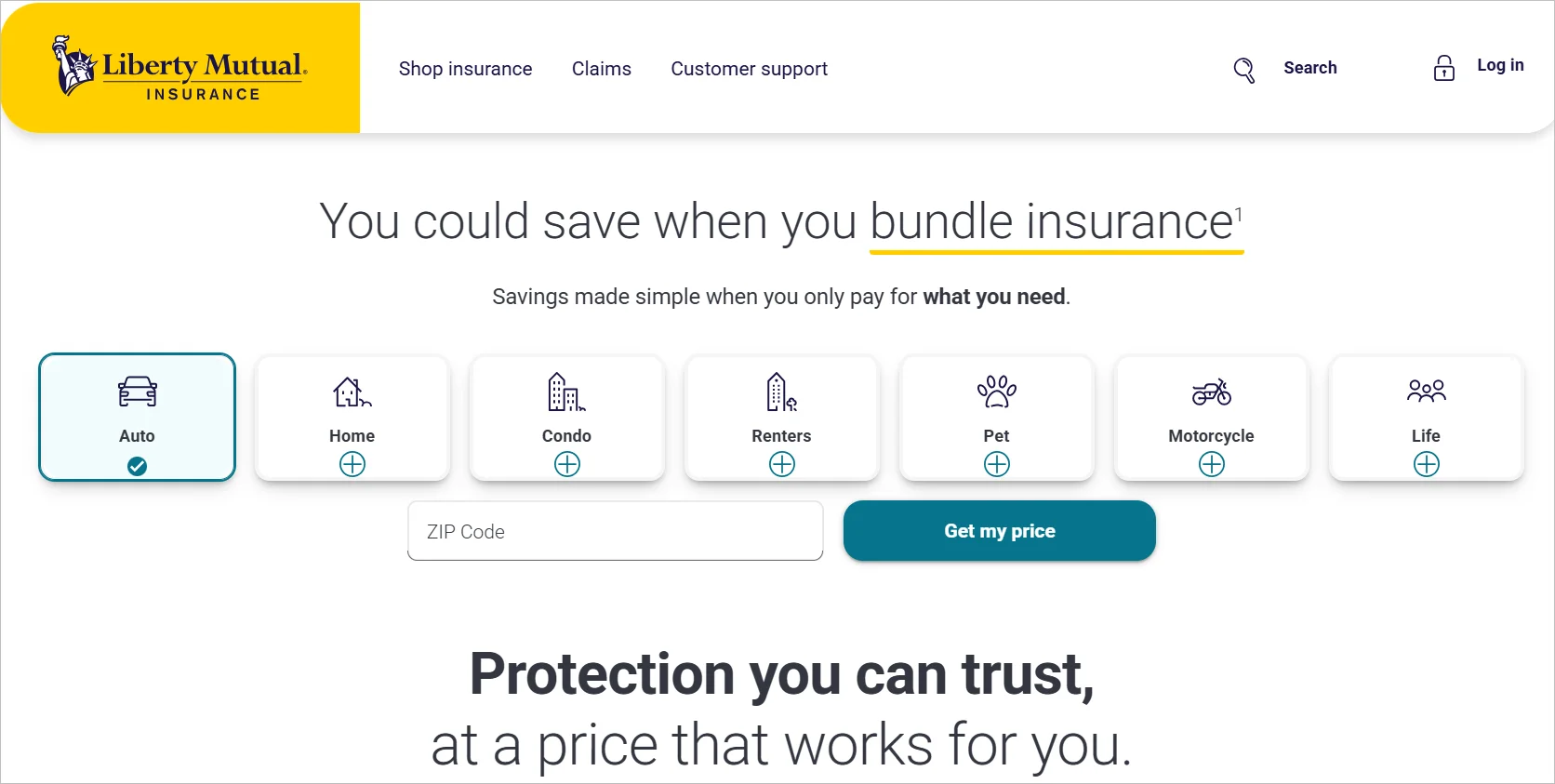
What it solves: Eliminates delays and reduces dependency on support agents for routine claims.
How it delivers results: Self-service tools and real-time tracking allow customers to complete common actions instantly without waiting for assistance.
Erie Insurance: High claims satisfaction and responsiveness
Erie Insurance ranked highly in a recent J.D. Power Auto Insurance Shopping Study and claims satisfaction survey.
The company focuses on quick response times, clear communication about coverage, and fair settlement practices.

What it solves: Prevents confusion and frustration caused by slow responses or unclear coverage details.
How it delivers results: Clear communication combined with faster response times ensures customers understand their claims and next steps without uncertainty.
How BoldDesk supports insurance customer experience
Modern insurance support requires visibility, consistency, and efficiency across channels.
BoldDesk’s help desk software for insurance companies helps teams centralize conversations, streamline claims workflows, and deliver faster, more reliable policyholder support.
Deliver consistent support across all client touchpoints
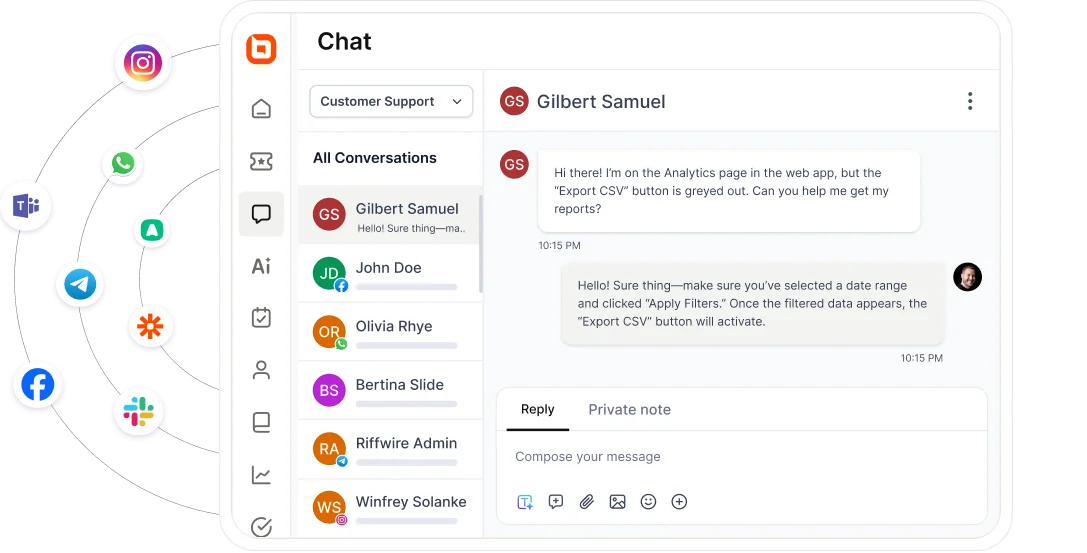
Policyholders use multiple channels, such as email, phone, social media, and live chat, to get assistance from insurers.
BoldDesk brings these interactions into a unified omnichannel inbox, ensuring agents have full context and can respond consistently without missing requests.
Route claims and inquiries faster with intelligent ticketing
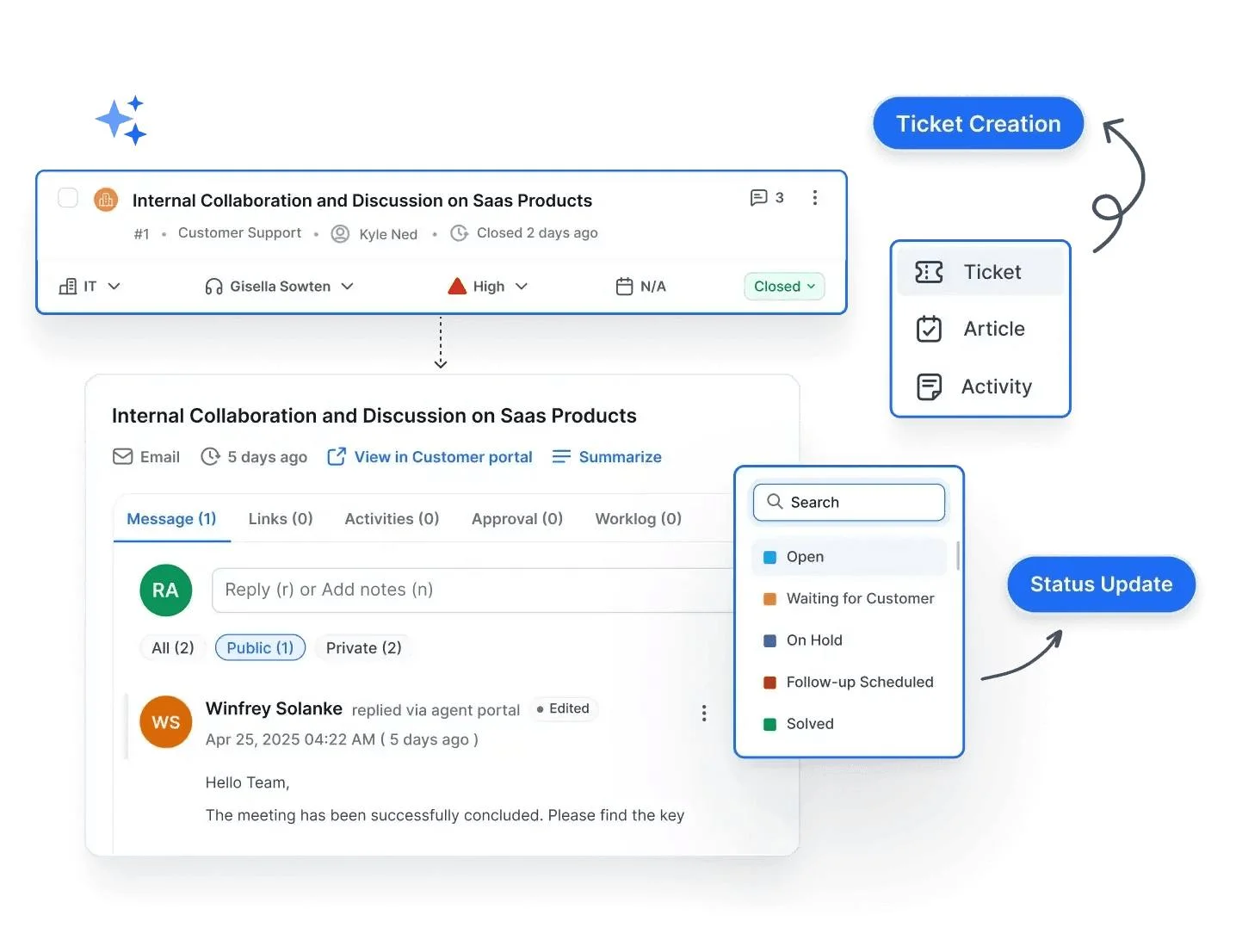
Claims and policy inquiries often involve multiple steps and internal handoffs, which can slow down resolution.
BoldDesk’s ticketing system automatically organizes, prioritizes, and routes requests to the right teams, helping insurers handle claims and inquiries faster and more accurately.
Built-in collaboration tools such as internal notes and @mentions enable teams to coordinate efficiently, while duplicate detection helps prevent repeated responses and unnecessary follow-ups.
Improve response speed with AI-assisted support
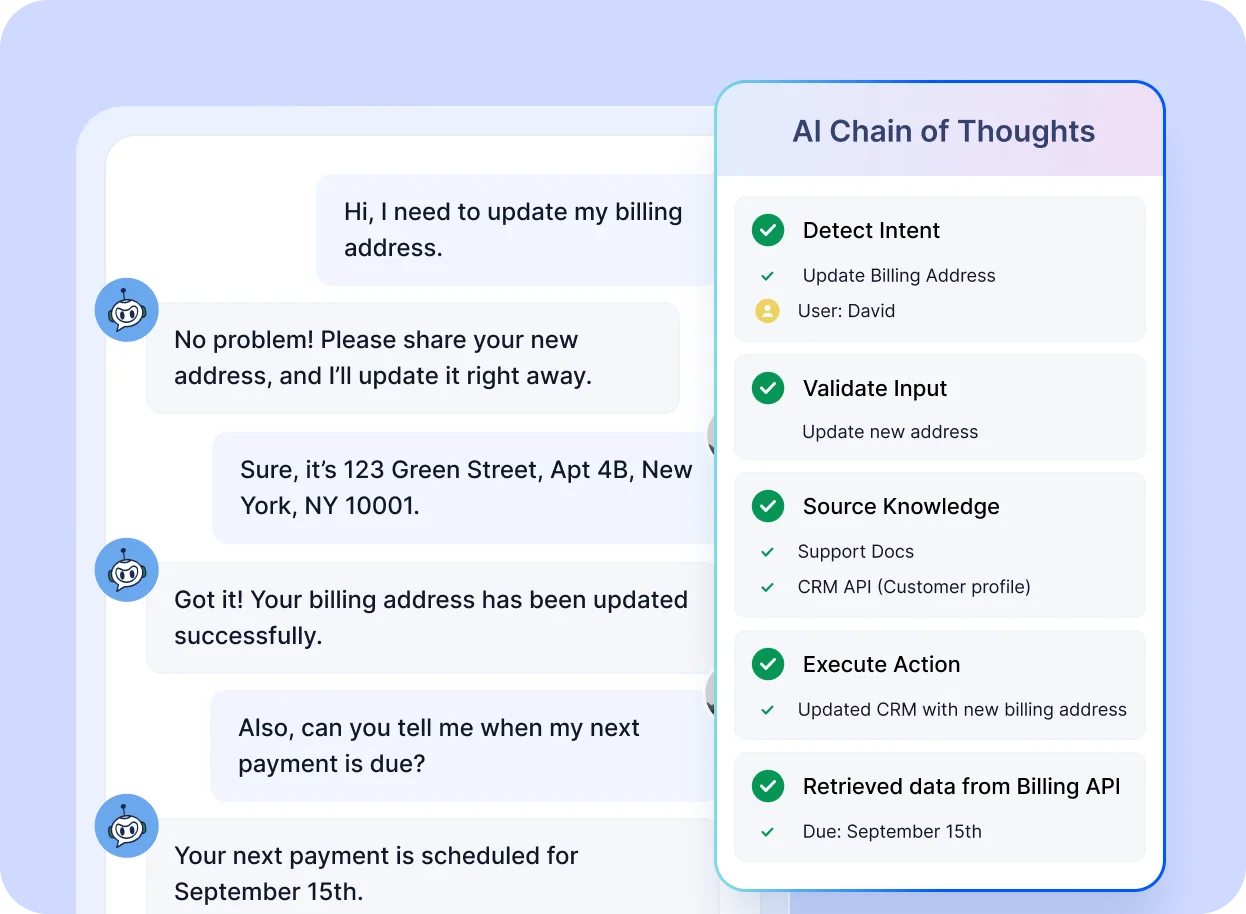
Routine inquiries can slow down support teams.
BoldDesk uses AI tools to handle common questions, summarize conversations, and highlight high-priority cases, enabling faster and more consistent responses.
Enable self-service for faster policyholder resolution
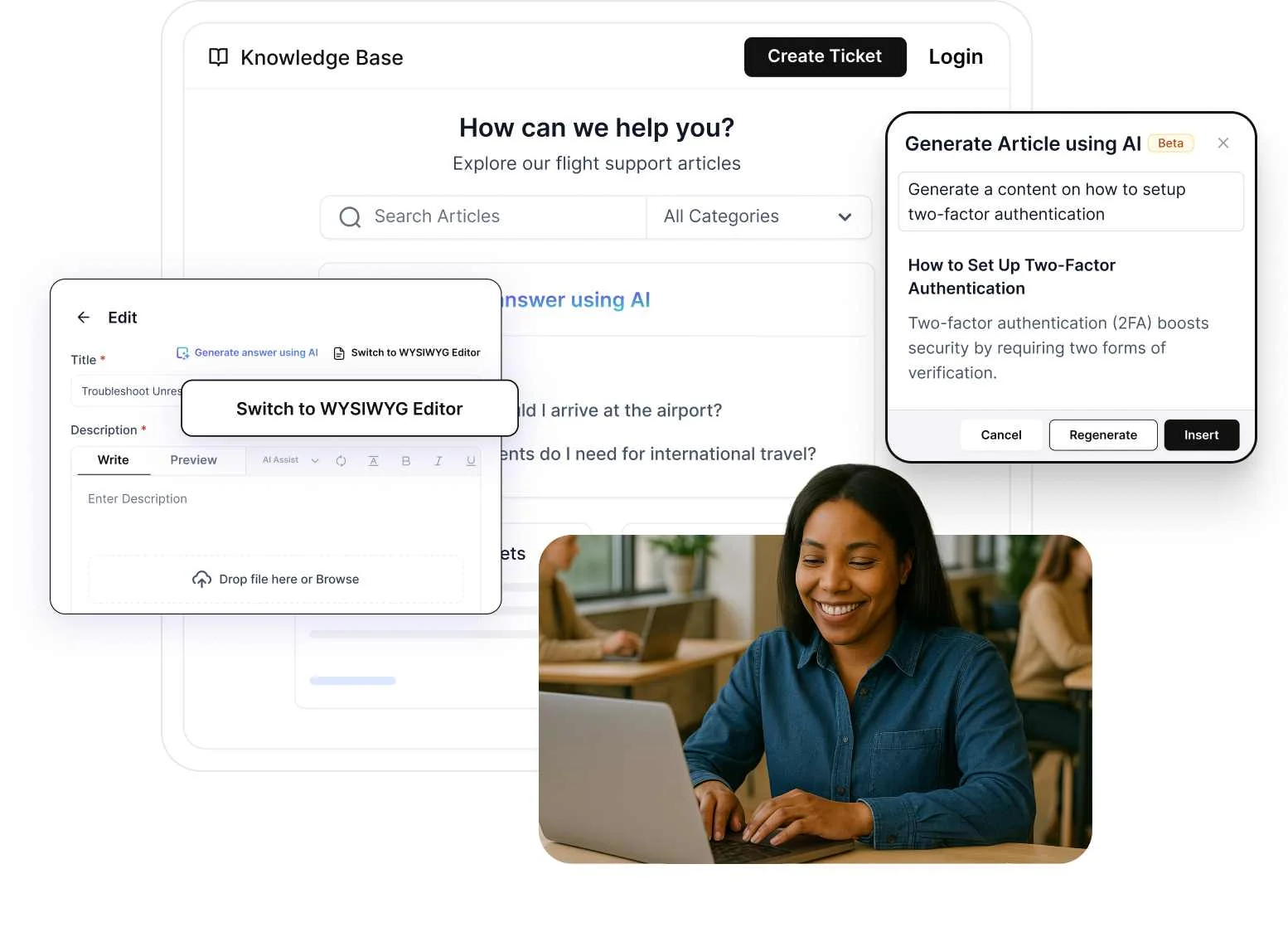
Many policyholders prefer quick, independent access to information.
BoldDesk supports self-service through a robust knowledge base that helps clients find answers faster while reducing inbound requests.
Gain visibility into support performance and trends
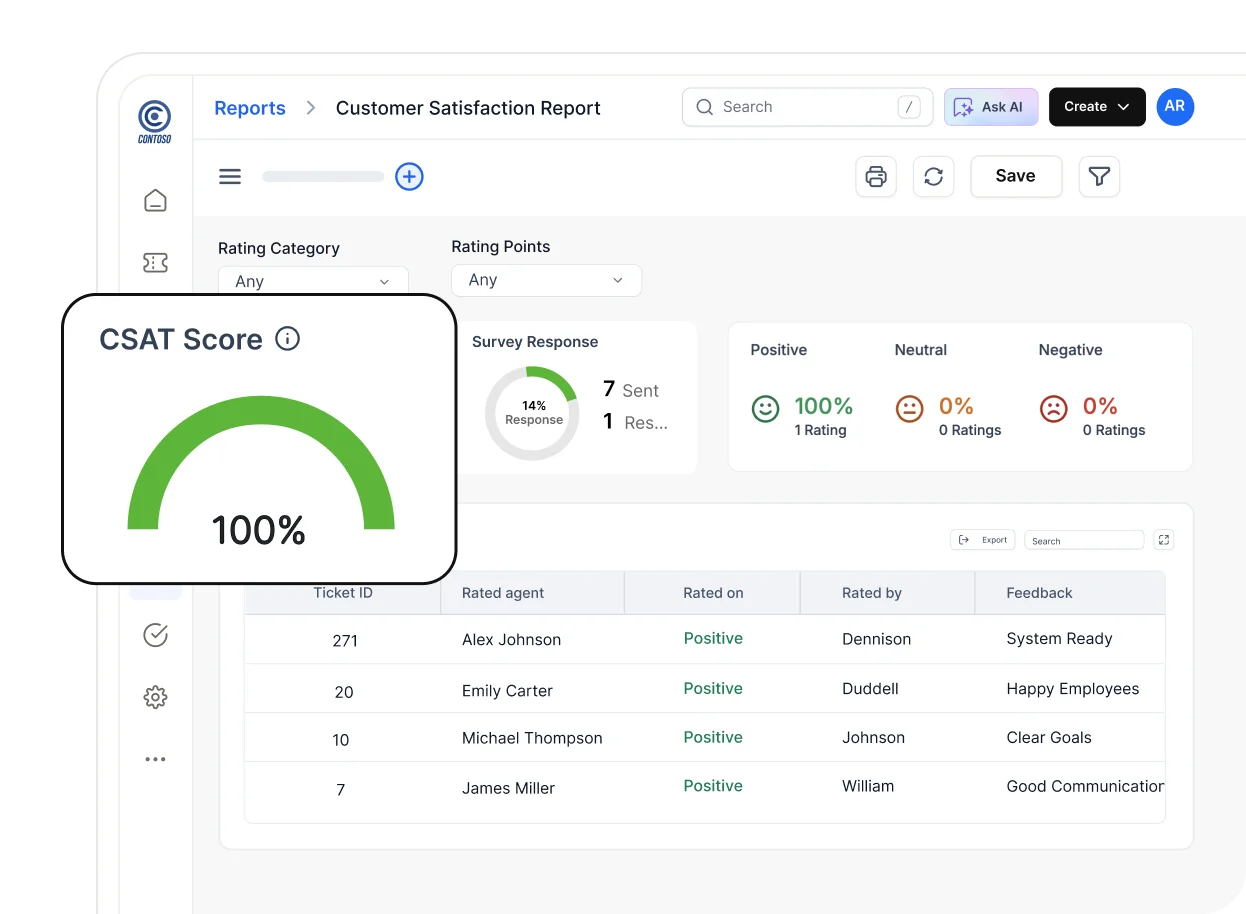
Maintaining service quality requires clear insights. BoldDesk provides reports and analytics on response times, resolution rates, and customer satisfaction, helping teams identify gaps and improve insurance support performance over time.
A claim is not just another ticket, it is often the defining moment when customers decide whether their insurer truly stands by them.
By following smart do’s and don’ts for insurance help desk teams, agents can respond with the right balance of speed, empathy, and accuracy, building trust and reinforcing long term policyholder loyalty.
Building trust through exceptional customer service in insurance
Customer service in insurance is about building trust when customers face uncertainty, especially during claims.
Clear communication, empathy, and fast support help insurers deliver consistent and reliable experiences.
Improving claims workflows, enabling omnichannel support, and using AI to reduce delays allow teams to respond faster while maintaining accuracy and care.
BoldDesk helps insurers centralize customer conversations, streamline claims routing, and use AI to handle routine inquiries, enabling faster, more consistent support across the policyholder journey.
Start a 15‑day 15-day free trial to see how BoldDesk improves insurance customer support.
Feel free to share your thoughts in the comment section below.
Related articles
- What Is Customer Service Experience? Key Tips and Insights
- Understanding Customer Service Standards in Modern Workflows
- Future of Customer Service: Top Trends for Businesses in 2026
Frequently Asked Questions
Insurance customer service is challenging because policies are complex, customers expect fast answers, and communication is often spread across multiple channels.
Claims require sensitive, empathetic handling, and regulatory rules increase operational pressure. Seasonal spikes in inquiries further strain teams and create delays when systems aren’t integrated.
Help desk platforms like BoldDesk unify email, chat, social messages, and self-service inquiries in one place, eliminating silos and improving collaboration across teams.
AI can improve insurance customer service by automating routine requests, providing instant claim status updates, summarizing conversations for agents, routing inquiries based on urgency, and supporting 24/7 self-service.
It helps teams respond faster while allowing agents to focus on sensitive or complex policyholder issues.
Insurers can implement encryption and multi-factor authentication, comply with regulations like GDPR or HIPAA, and invest in fraud detection systems and real-time monitoring to protect policyholder data and maintain reliability.
Insurers can streamline claims by automating intake, digitizing documentation, using AI for initial assessment, and enabling real-time status tracking for policyholders.
Good insurance customer service combines speed, empathy, accuracy, and clear communication.
Policyholders should be able to get answers quickly, understand their coverage and claim status, and move between channels without repeating information.