




TL;DR: Clients often have ongoing, personalized service relationships, sometimes under formal agreements. Customers typically make transaction-based purchases with lighter, short-term support needs. Knowing the difference helps businesses tailor communication, SLAs, pricing, and retention strategies.
“Clients” and “customers” are often used interchangeably, but they are not the same.
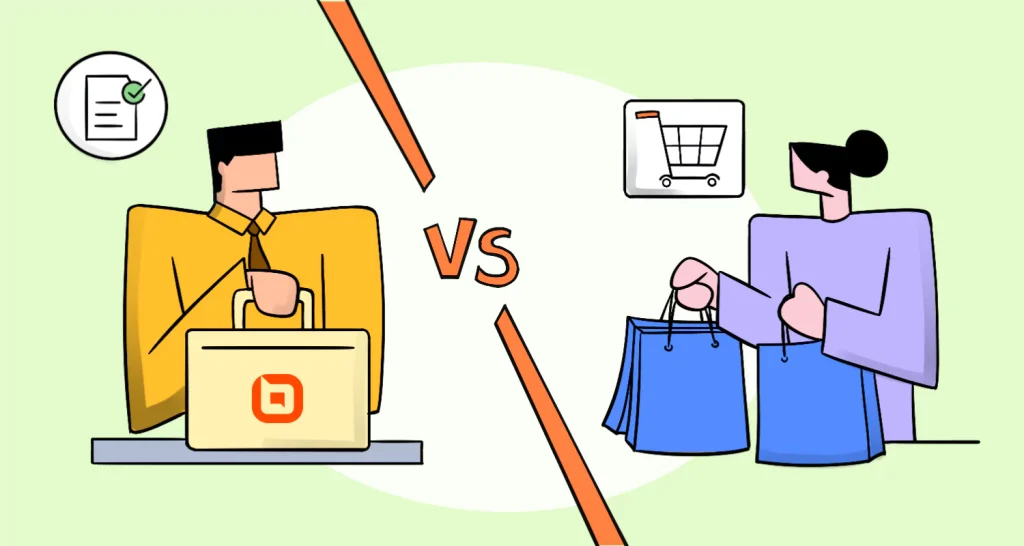
Customers typically buy a product with limited ongoing interaction, while clients enter a long-term relationship built on personalized service and ongoing guidance.
Understanding these differences helps you tailor your strategies, set the right expectations, and deliver the level of support each group needs.
In this guide, we break down the difference between client vs customer and share practical ways to attract, support, and retain both to drive business growth.
Client vs customer: Key definitions
Clients are individuals or entities that engage with businesses to receive professional services or advice. They often have long-term relationships with companies that build trust over time.
Clients usually receive personalized solutions and dedicated support.
Examples of client services
- Professional consulting and advice in areas such as management.
- Legal services and guidance for individuals or companies.
- Financial services like accounting or tax preparation.
- Health care services like patient care and medical consultations.
- IT support, technical assistance, and software development based on client needs.
- Marketing services and promotion management.
Customers are individuals or organizations that purchase a company’s products or services.
Customer relationships are often transaction-based (especially in retail and e-commerce), but they can also be ongoing, such as subscriptions, repeat purchases, or enterprise accounts.
In many cases, customer interactions happen as separate transactions rather than a continuous, consultative relationship.
Examples of customer service
- Self-serving SaaS subscribers
- E‑commerce purchases
- Training platforms
- Cloud services purchased on fixed pricing tiers
- IT hardware and device purchases
- Restaurants
- Retail stores
What is the difference between a customer and a client?
The terms “client” and “customer” differ across several business dimensions.
The distinctions between client v customer include:
Nature of engagement
Customer engagement involves short-term interactions that are based on transactions.
Clients focus on long-term relationships, personalized services, and continuous communication.
Business management
Client-centered businesses have dedicated professional service teams to give personalized attention and guide each individual client throughout the customer journey.
Customer-based businesses often rely on support teams and self-service at scale, though some (especially B2B and enterprise) also use account managers or customer success managers.
Customer acquisition
Businesses acquire customers through marketing and advertising strategies such as commercials and social media ads that boost brand awareness.
However, these tactics often come with high expenses, driving up the overall customer acquisition cost.
Client acquisition often relies more on referrals, reputation, partnerships, and networking, but costs vary by industry and competition.
Formal business agreements
Customers may or may not have formal agreements between them and the seller.
On the other hand, clients commonly operate under defined service scopes that involve formal agreements that include:
- Summary of the agreement
- Terms of service
- Performance measurement
- Consequences
- Review and termination
Lifetime value
Clients typically have an ongoing, advisory or service‑based relationship, which often includes repeat engagement, personalized support, and continuity over time.
Customers, on the other hand, usually purchase products or standardized services in ways that are more transactional, sometimes recurring, depending on the business model.
Revenue model
Client-based businesses generate high revenue and include a monthly billing program, which is essential for sustaining the business over time.
Customer-based models often rely on higher volume and repeat transactions (or subscriptions), while client-based models often rely on fewer relationships with higher value per account.
Most businesses need a steady flow of customers to grow, while client relationships often stabilize revenue through longer-term commitments.
The table below summarizes the key differences between client vs customer meanings.
| Criteria | Client | Customer |
| Nature of engagement | Continuous relationship. | Transactional relationship. |
| Business management | Dedicated managers. | Support agents. |
| Customer acquisition | Commonly through referrals. | Most likely through marketing and demand‑generation efforts. |
| Formal business agreements | Often require formal agreements. | May or may not require formal agreements. |
| Lifetime value | Long-term impact. | Short-term impact. |
| Revenue model | Often rely on higher-value accounts and recurring billing structures. | Typically rely on volume and repeat transactions. |
Examples of client vs. customer approaches
The scenarios below highlight how everyday service situations shift when dealing with quick, transactional customer needs versus the ongoing, relationship‑driven expectations of clients.
| Scenario | Client approach | Customer approach |
| Software onboarding | Guided onboarding with a specialist who tailors the setup to their goals. | Quick self‑service setup with guides and tutorials. |
| Support interaction | Ongoing, context‑aware support with deeper troubleshooting. | Fast responses and simple steps for resolving common issues. |
| Feedback and improvement | Scheduled review discussions to refine long‑term outcomes. | Short CSAT surveys after interactions. |
| Growth opportunities | Strategic planning and tailored solution recommendations. | Product recommendations based on recent activity. |
| Example | Payroll and HR services. | Retail purchase. |
Why is understanding the difference between client and customer important?
Knowing the client vs customer difference helps businesses build smarter strategies to attract, retain, and support each group effectively.
The following are some of the benefits you stand to gain from having client versus customer knowledge.
- Builds stronger relationships: Tailoring support to each group strengthens long-term loyalty. Microsoft’s Global State of Customer Service report (2019) found 96% of consumers say customer service influences their brand loyalty.
- Optimizes resource allocation: Customers benefit more from fast responses and strong self-service. Understanding the difference helps businesses invest effort where it has the most impact.
- Enhances satisfaction: Matching your approach to each group’s expectations, proactive and high-touch for clients, fast and friction-free for customers, creates better experiences.
- Supports smarter pricing decisions: McKinsey found that pricing can boost performance but may also affect sales volume in some markets, and distinguishing clients from customers helps align prices for client v customer.
How to tailor customer service for clients vs customers
Clients and customers may sound similar at a glance, but the support they need is often very different.
Clients typically need:
- A steady point of contact who understands their goals
- Regular check‑ins and proactive communication
- Context‑aware support that connects each interaction to long‑term outcomes
- Higher‑priority handling and clear visibility into progress
Customers typically need:
- Fast answers and simple steps to resolve issues quickly
- Reliable self‑service options when they prefer solving problems independently
- Straightforward policies that reduce friction
- Predictable first response and resolution times
Success is measured differently too: client support is evaluated by long-term outcomes like retention and account health, while customer support is measured by interaction metrics such as CSAT, response times, and deflection.
In summary, clients need continuity and proactive guidance; customers need speed, clarity, and scalable self-service.
How BoldDesk helps manage clients and customers efficiently
The difference between clients and customers isn’t just semantic; it directly impacts how your support system should be structured.
The software you use should enable your team to collaborate in real time, automate repetitive tasks, and generate reports.
BoldDesk is a powerful cloud-based help desk solution designed to help businesses across different industries deliver the right level of service for each group.
To effectively support both clients and customers, your help desk must be configured differently for each relationship model.
BoldDesk allows you to segment contacts, apply tailored SLA policies, automate workflows strategically, and generate separate performance insights for each group.
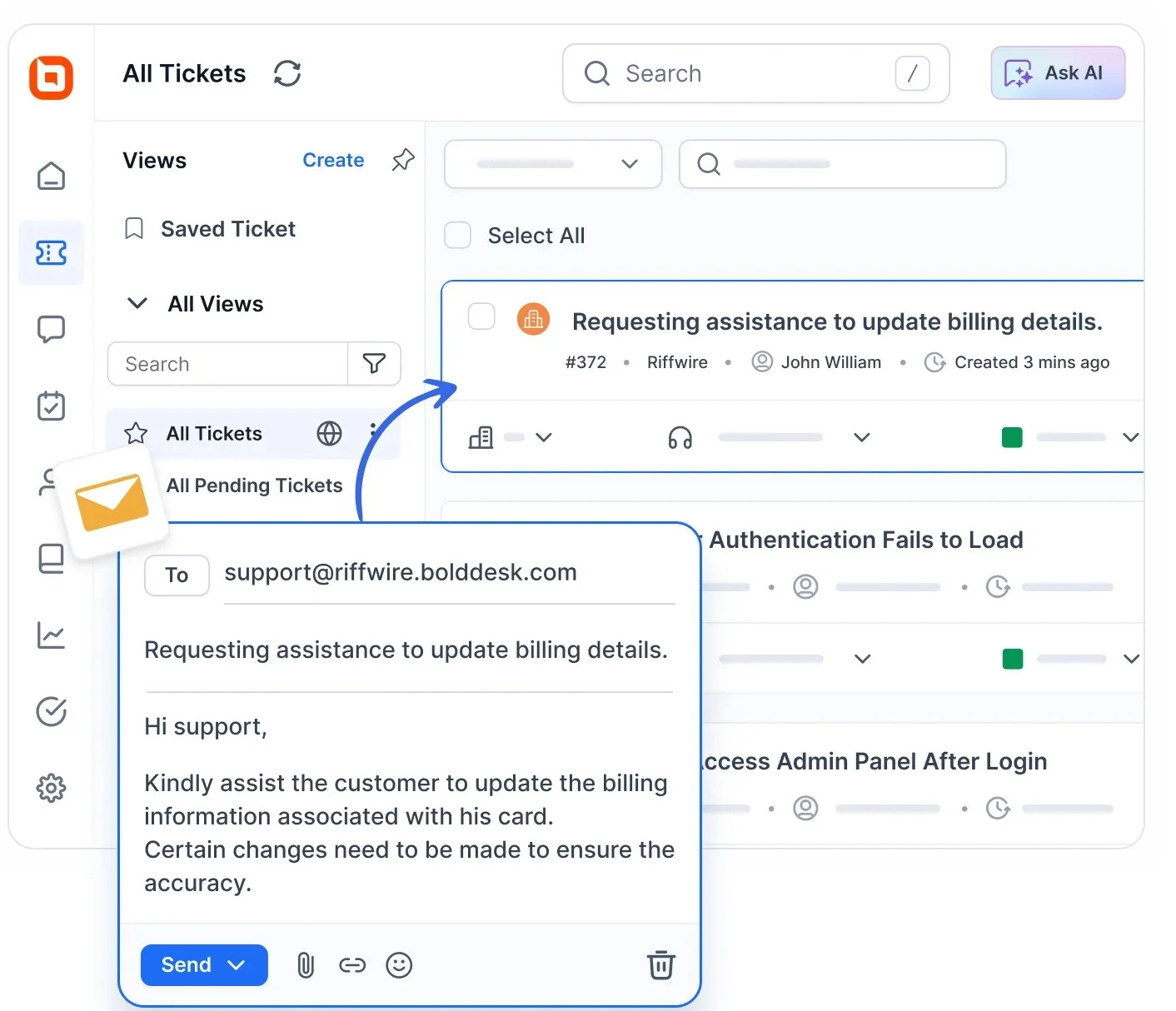
The following are some of the features that make BoldDesk stand out in supporting both relationship models:
Robust help desk software
BoldDesk empowers businesses to deliver exceptional customer vs client support by simplifying ticket management and boosting team performance.
With powerful reporting and analytics, you gain actionable insights to optimize service efficiency.
As a comprehensive help desk software, BoldDesk streamlines workflows, making it easy to manage client and customer inquiries seamlessly.
Contact management
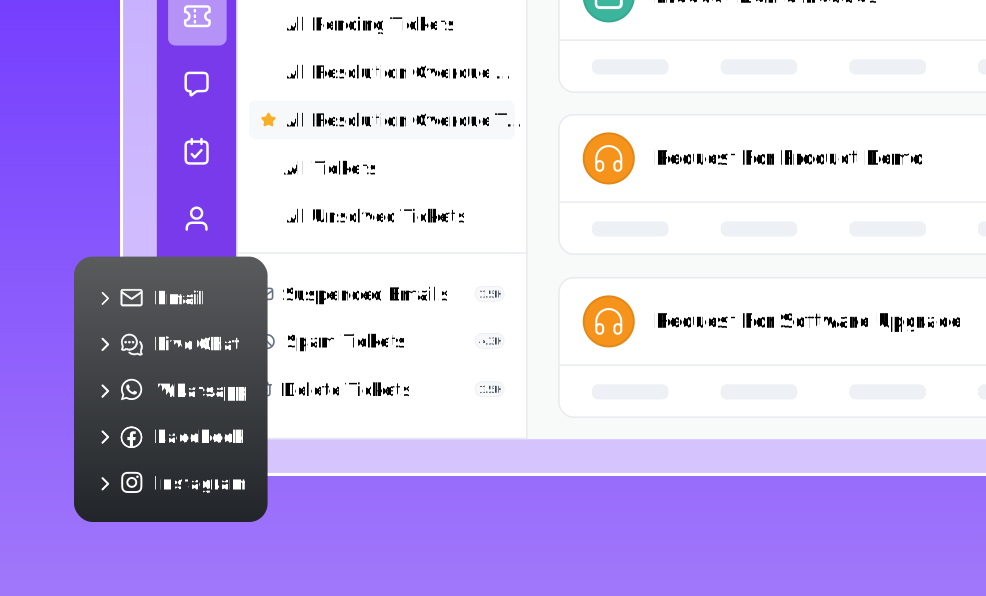
The BoldDesk contact management system allows you to organize and maintain contacts and contact groups for your clients and customers, along with their associated information.
Purchase history, customer conversations, and logs are held in a centralized, secure location. This enables agents to retrieve up-to-date client and customer information for more personalized service.
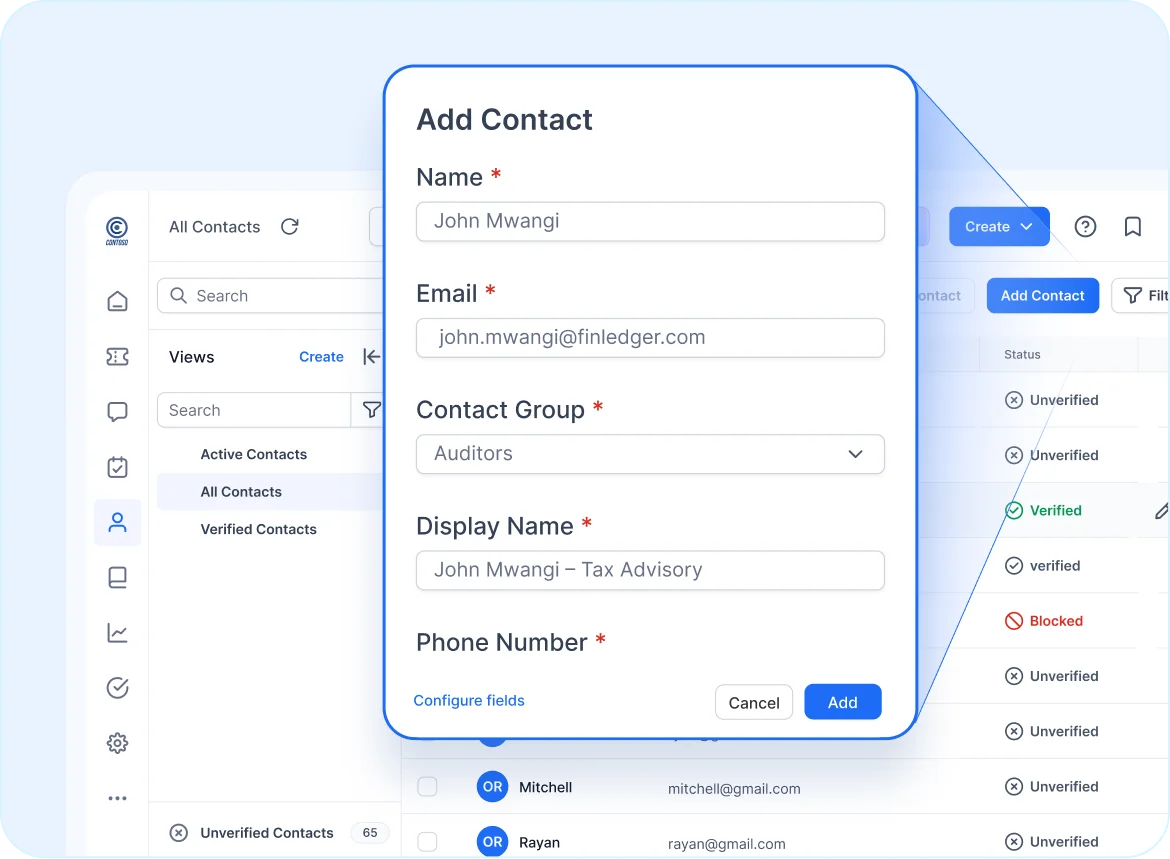
You can create custom fields such as “Relationship Type” (Client or Customer) and organize enterprise accounts under Organizations.
This ensures client accounts receive account-level visibility, while customers can be managed at scale.
Integration options
BoldDesk allows you to integrate many of your currently used apps. These integrations empower your team to create and maintain relationships with clients and customers from a unified platform.
For example, you can:
- Integrate with MailChimp to send marketing email campaigns to clients and customers for lead generation.
- Make calls to customers and clients, transfer calls, and organize and monitor conversations directly with Ringover.
These capabilities allow businesses to tailor service delivery without switching tools.
Automation capabilities
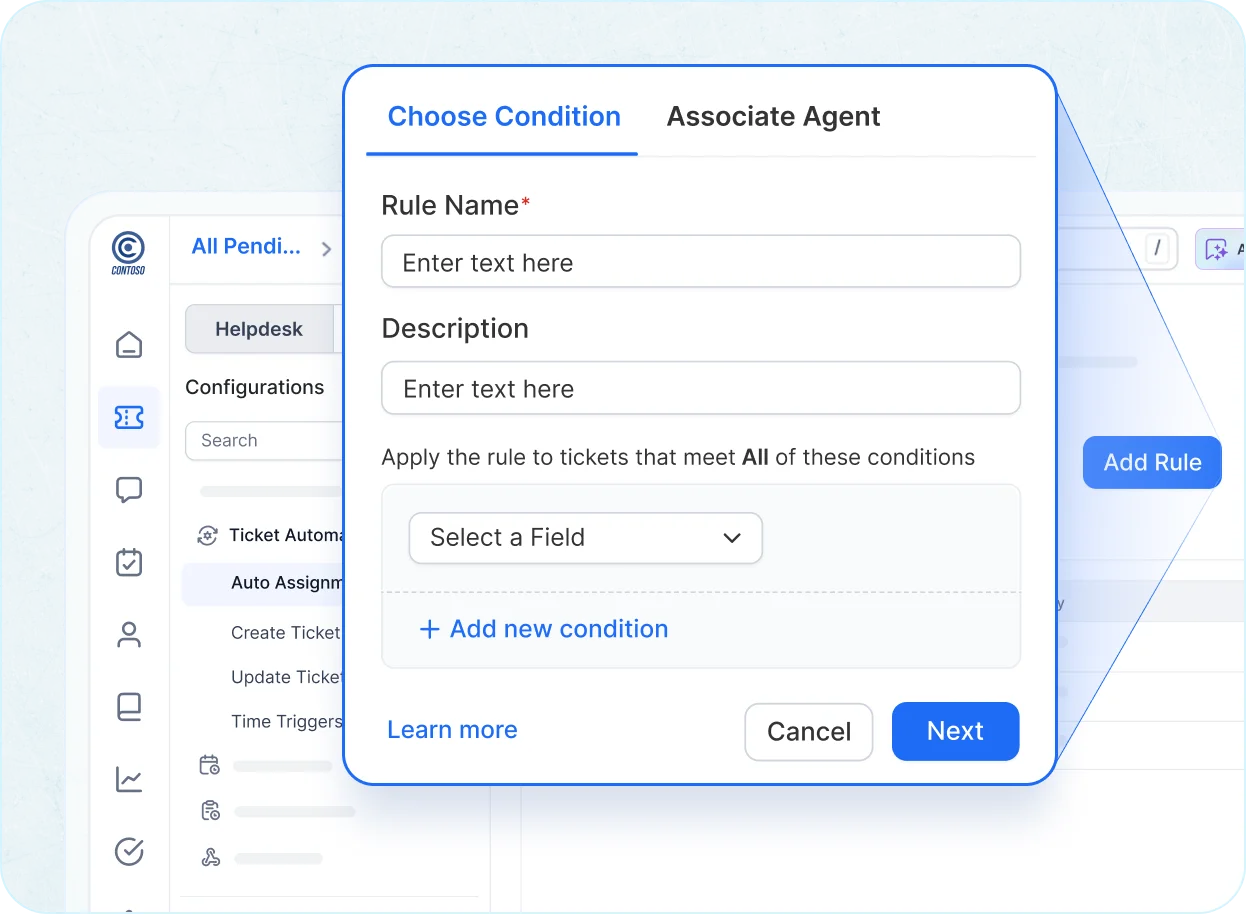
BoldDesk has automation tools that take various ticket actions off your plate, guaranteeing faster resolution and ensuring no support request ever goes unnoticed.
Automation can be configured differently depending on whether you’re handling client or customer requests.
You can automate the following workflows for more efficient buyer vs client support operations. For example:
- Clients: Escalation rules, dedicated SLA reminders, and account manager alerts.
- Customers: Ticket routing, automated surveys, SLA triggers, and canned responses for faster resolution.
AI-powered support
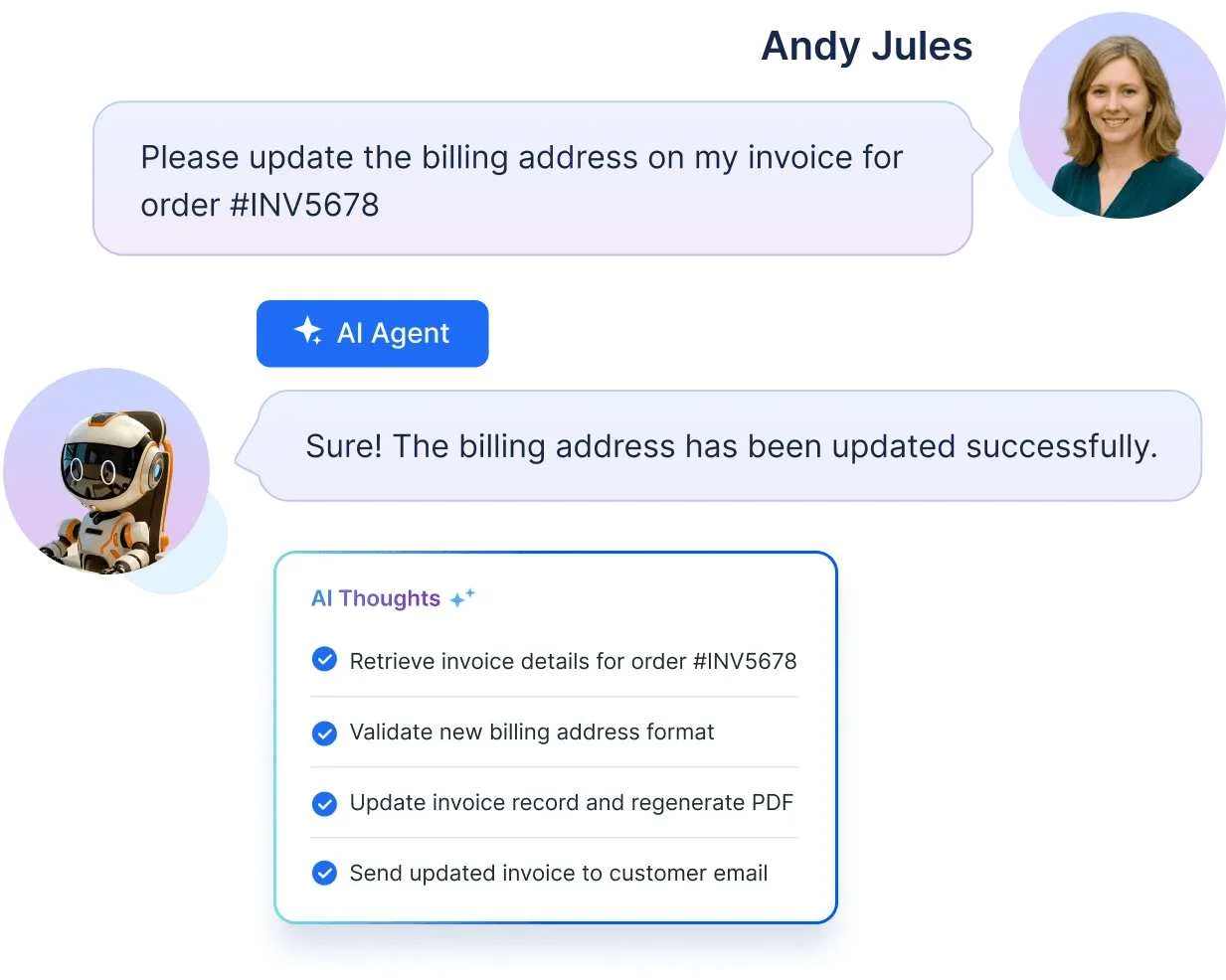
BoldDesk’s AI setup includes AI Copilot and AI Agent that simplify support for both clients and customers by automating tasks and enhancing response quality.
- AI Copilot: Summarizes conversations and suggests replies to help agents respond faster and more accurately.
- AI Agent: Provides instant answers to common queries, reducing ticket volume and improving self-service.
Reporting and analytics
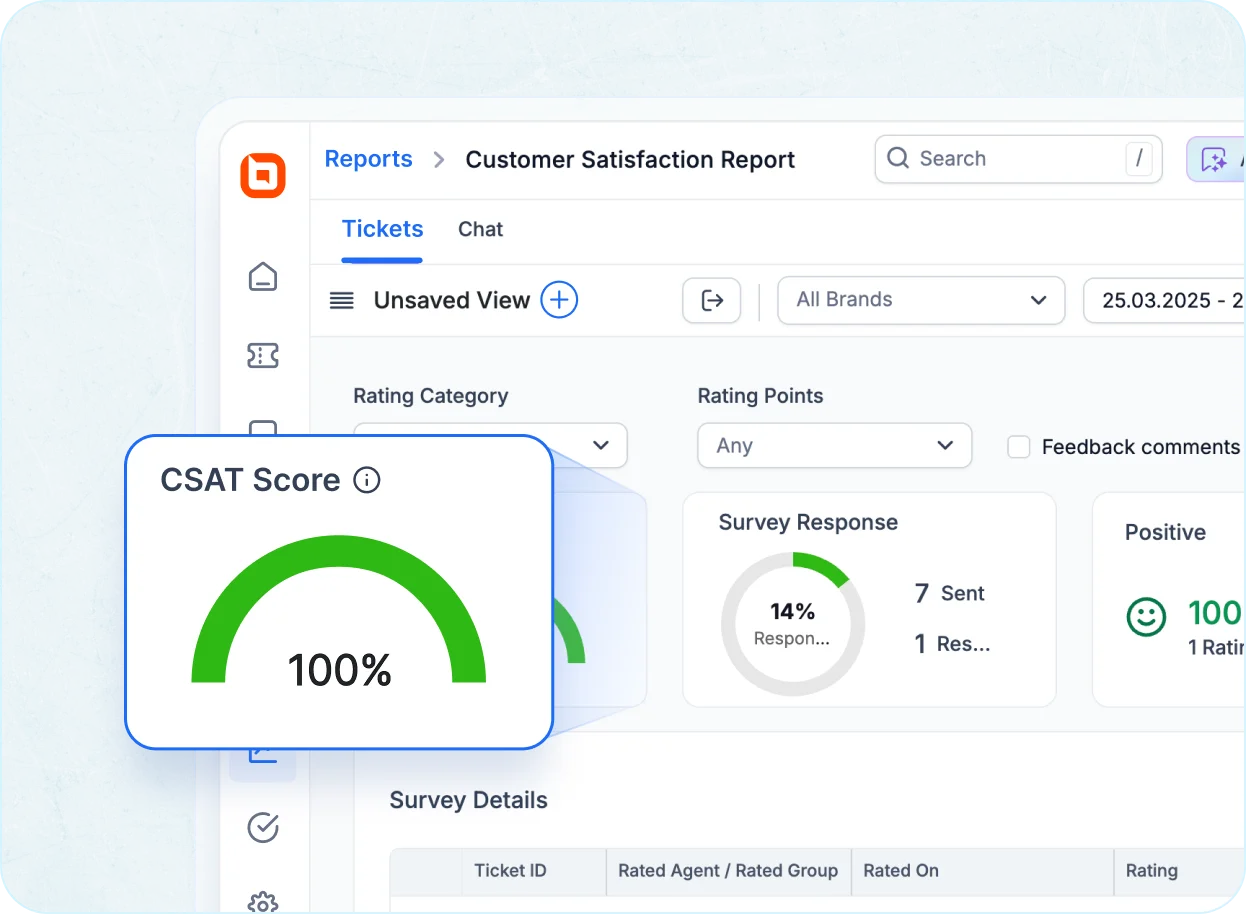
BoldDesk provides insightful data through built-in reporting and analytics dashboards.
Managers can create separate dashboards to monitor client retention metrics and SLA compliance, while tracking customer-focused KPIs such as first response time, ticket volume, and CSAT scores.
Building effective support through client vs customer intelligence
Knowing the client vs customer distinction helps your team deliver the right kind of support, personalized where it matters and efficient where speed matters most.
It’s not just about resolving tickets; it’s about structuring your support model to match the relationship you’re building.
With BoldDesk, you can put these distinctions into practice using features like segmentation, custom SLAs, automation, and AI‑powered assistance, ensuring every interaction aligns with the level of service each group needs.
Ready to create more meaningful, efficient support experiences? Start a 15-day free trial or book a live demo to see the client versus customer difference. You can also contact our support team for more information.
If you have thoughts or ideas on how you tailor support for clients and customers, feel free to share them in the comment section.
Related articles
- What is Customer Retention? (10 Powerful Strategies & Metrics)
- Customer Acquisition Cost: Best Ways to Calculate and Reduce It
- Guide to Customer Relations: Definition, Benefits & Tips
Frequently Asked Questions
Yes. A customer can transition into a client if their needs grow to include long-term guidance, specialized services, or deeper strategic involvement.
But enterprise or premium subscribers can be clients if they receive ongoing guidance, customization, or dedicated account management.
Help desk software like BoldDesk can manage both clients and customers through unified ticketing, custom workflows, and role-based permissions for tailored support.
It uses tags, custom fields, and segmentation to classify users, enabling different SLAs, routing rules, and communication styles. Advanced analytics provide insights to improve service efficiency across both segments.
Yes. Many businesses serve clients and customers by offering products for customers and services for clients, often using segmentation for tailored support.