


 In this page

TL;DR: Artificial intelligence is transforming customer experience by enabling personalized interactions, predictive analytics, and faster support. AI-powered tools like chatbots, virtual assistants, and sentiment analysis help businesses improve customer satisfaction, boost efficiency, and deliver seamless omnichannel experiences.
AI for customer experience (CX) is the use of machine learning and natural language processing to automate routine tasks, personalize interactions, and improve resolution speed.
Rather than focusing solely on transactions, AI enables companies to anticipate customer needs, tailor interactions, and deliver consistent, high-quality support across multiple channels.
This intelligent approach enhances efficiency, scalability, and customer satisfaction, making it a game-changer for industries like e-commerce, banking, and healthcare, where speed and personalization are critical.
This blog will explain what AI for customer experience means, why it’s essential for businesses today, and share practical steps to implement AI-driven strategies for delivering exceptional customer service.
What is AI for customer experience?
AI for customer experience refers to the use of artificial intelligence technologies such as machine learning, NLP, and predictive analytics to automate support, personalize interactions, and enhance the end-to-end customer journey.
Artificial intelligence enhances the efficiency and productivity of support teams by automating repetitive tasks and forecasting customer behavior.
This helps businesses identify and overcome customer issues effectively, thereby providing first-class customer service that fosters customer loyalty and maintains a competitive edge.
Types of AI used in customer experience include:
- Natural language processing (NLP)
- Machine learning (ML)
- Generative AI
- Sentiment analysis
- Predictive analytics
- Robotic process automation (RPA)
Top benefits of artificial intelligence in customer experience
Artificial intelligence is redefining how businesses connect with customers. AI for customer experience brings smarter interactions, faster resolutions, and deeper insights, setting the stage for the benefits below.
- Delivers personalization experience at scale: AI analyzes customer data such as purchase history, browsing patterns, and preferences to deliver personalized recommendations, offers, and experiences for each user.
- Enhances customer support with 24/7 availability: AI virtual assistants offer instant, 24/7 responses, eliminating wait times and ensuring support beyond business hours.
- Speeds up resolution for common queries: AI automates routine tasks like password resets and order tracking, freeing agents to handle complex issues and improving resolution times and customer satisfaction.
- Provides predictive insights for proactive service: AI can forecast customer behavior, identify churn risks, and predict buying patterns, helping businesses take proactive steps to retain customers and boost sales.
- Ensures a seamless omnichannel experience: AI for customer experience ensures consistent service across channels like social media, email, or live chat, creating a unified omnichannel customer experience that strengthens trust and loyalty.
How to get started with AI for customer experience
Implementing AI customer experience doesn’t have to be overwhelming. Here’s a simple roadmap to begin:
1. Assess data quality: AI thrives on clean, structured data. Audit your CRM, support logs, and customer interaction history to eliminate gaps and inconsistencies.
2. Define AI CX outcomes: Set clear customer service goals tied to KPIs like first response time (FRT), customer satisfaction (CSAT), deflection rate, and customer effort score (CES).
3. Select high-impact use cases: Start with areas that deliver quick wins, automating FAQs, enabling 24/7 support, or predictive churn alerts.
4. Choose the right tools: Choose AI-powered solutions that seamlessly integrate with your existing systems, like CRM, help desk, and chat, while supporting multilingual and omnichannel customer experiences for a unified customer journey.
5. Integrate seamlessly: Ensure your AI tools connect with ticketing systems, knowledge bases, and communication channels to avoid workflow disruptions.
6. Train teams: Educate agents on AI-assisted workflows and establish governance for compliance, data security, and ethical AI use.
7. Monitor and optimize: Track customer service KPIs like AHT, CSAT, FCR, and NPS. Use insights to refine AI models and improve performance continuously.
7 Ways to utilize artificial intelligence for customer experience
Each client interaction can significantly shape the customer perception of your brand. The following are ways you can leverage customer experience AI to improve your interactions with customers.
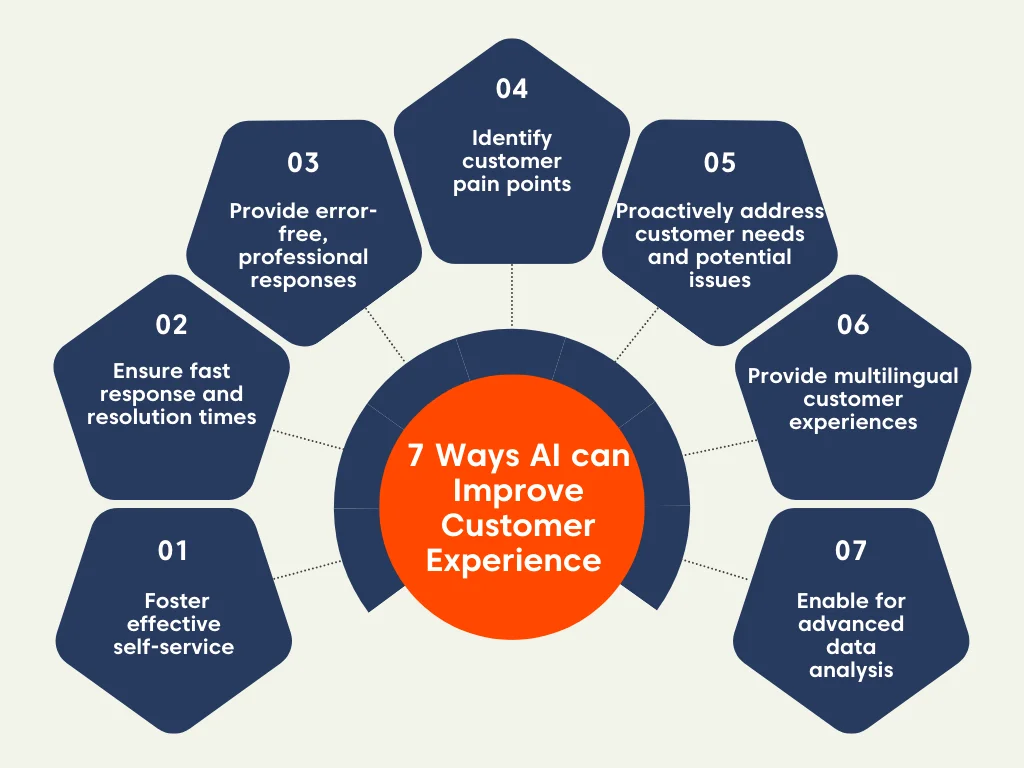
1. Foster effective self-service
Research conducted by Get.Nice in 2022 shows that 81% of customers want brands to offer more self-service options.
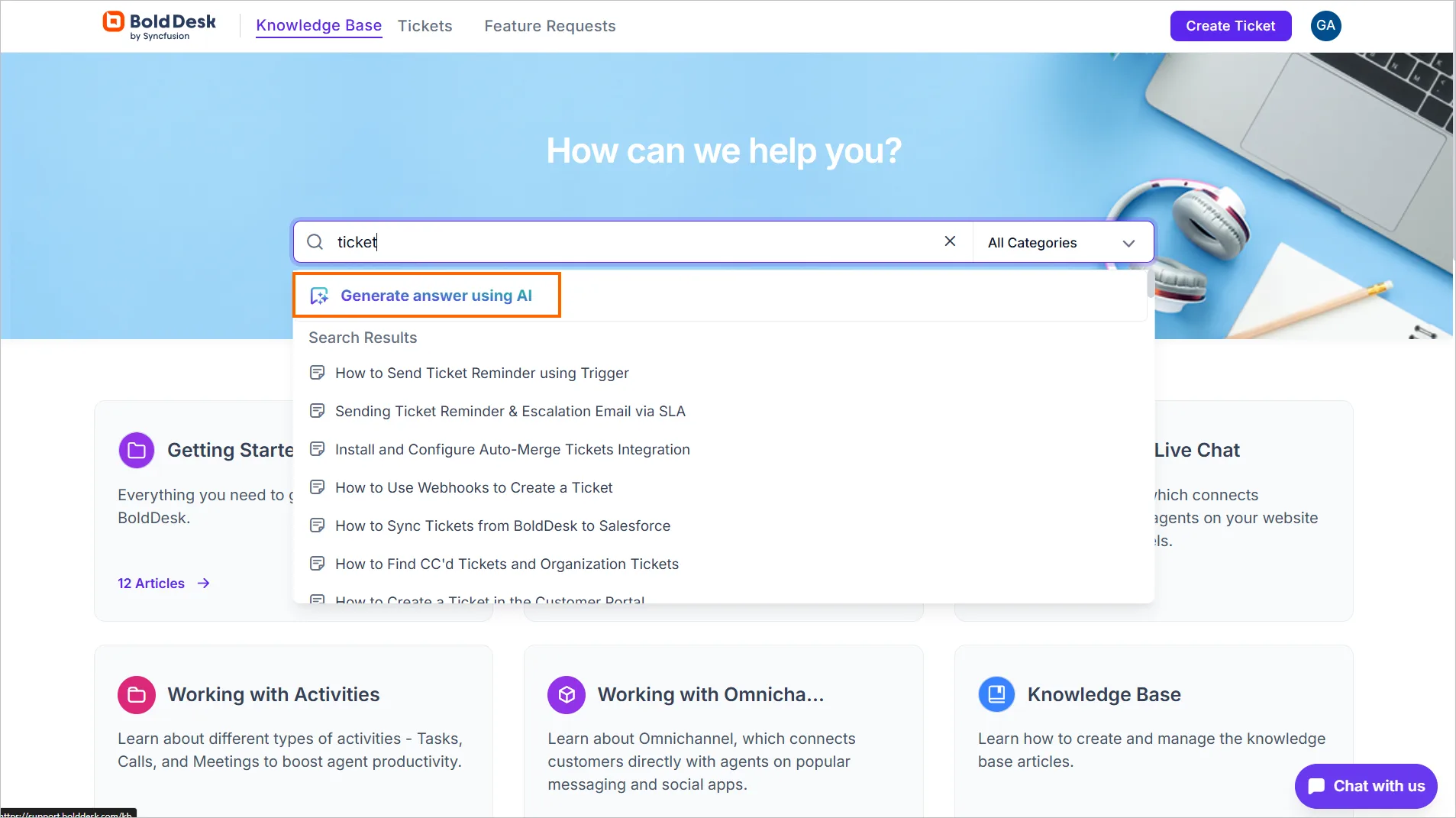
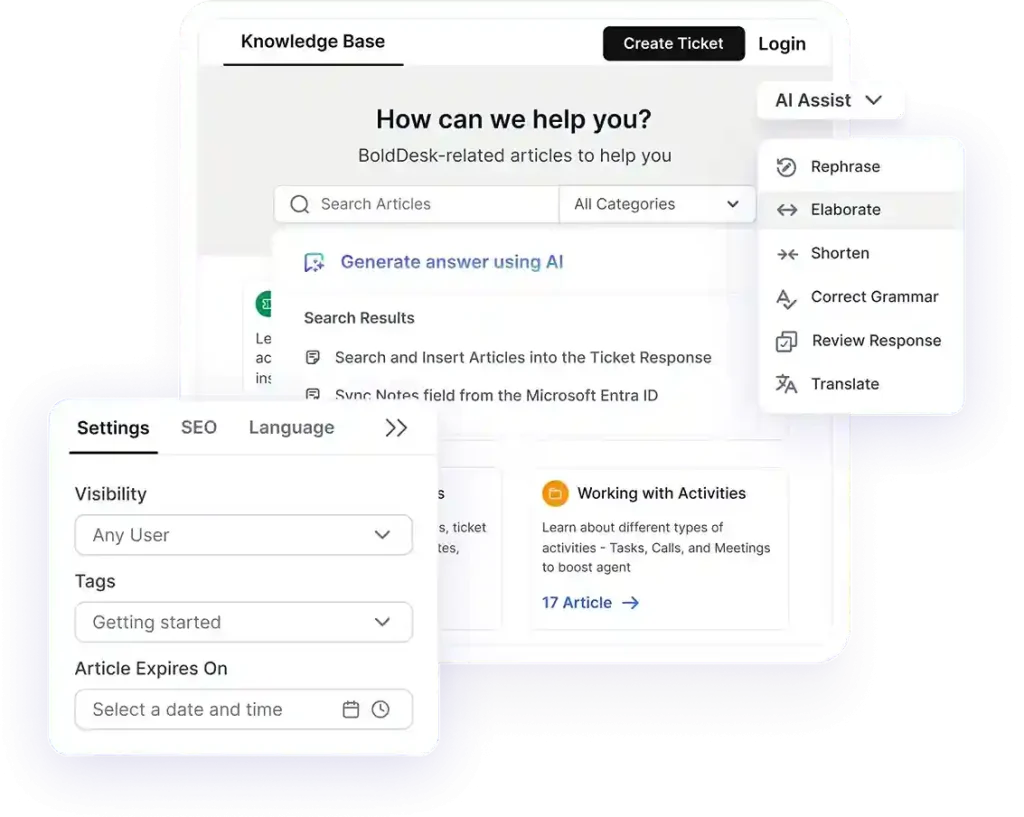
AI for customer experience makes this possible by enhancing your knowledge base with intelligent features.
Use AI-powered tools like:
- Summary tools: Generate quick article overviews.
- Translation tools: Provide multilingual access for global users.
- SEO optimization: Suggest titles and meta descriptions for better visibility.
Additionally, AI for customer experience analyzes search patterns and recommends relevant knowledge base articles, ensuring customers find answers faster and with minimal effort.
2. Ensure fast response and resolution times
To ensure quick responses and resolution times, AI for customer experience uses help desk automation to streamline workflows. Implement these capabilities:
- Auto-ticket creation: Convert support emails into tickets instantly.
- Smart categorization & routing: Use AI to scan ticket content, apply tags, and assign tickets to the right agents or groups automatically.
- SLA compliance monitoring: Automate SLA tracking and escalation to prevent delays and maintain service quality.
3. Provide error-free, professional responses
Maintaining high-quality communication is essential for customer trust. Implement AI-assisted tools to ensure every response is clear, accurate, and professional.
- Use AI to rephrase responses so they are clear, professional, and consistent.
- Apply AI to shorten text to keep replies concise and easy to read.
- Automate grammar checks with AI to ensure error-free communication.
Additionally, leverage AI to suggest the most appropriate canned response based on ticket content. This guarantees consistency and professionalism across all interactions, regardless of the agent handling the issue.
4. Identify customer pain points
- Analyze customer data: Use AI tools to evaluate demographics, purchase history, and preferences for deeper insights.
- Leverage sentiment analysis: Detect emotional undertones in feedback to uncover hidden pain points.
- Turn insights into action: Use findings to guide product improvements and tailor services to customer needs.
5. Proactively address customer needs and potential issues
Predicting customer behavior and issues before they happen is a powerful way to improve the experience.
In fact in 2021 research by Netomi, 27% of customers expect customer service to be proactive.
- Leverage predictive analytics: Use AI to analyze trends, patterns, and historical data to anticipate future customer needs.
- Design proactive solutions: Prepare products, services, and support strategies based on predicted behaviors.
- Prevent risks early: Identify potential issues and take action before they impact customers.
- Seize opportunities ahead of competitors: Use AI insights to spot emerging trends and act quickly.
6. Provide multilingual customer experiences
AI for customer experience makes global support effortless by enabling real-time translation and multilingual customer support. Here’s how it transforms engagement:
- Enable instant translation: Automatically translate tickets, KB articles, and feedback into the customer’s preferred language.
- Offer multilingual help centers: Make your support portal accessible in multiple languages for a seamless experience.
- Ensure clear communication: Reduce misunderstandings with accurate translations during interactions.
- Expand global reach: Serve international customers and tap into new markets with confidence.
7. Enable advanced data analysis
AI for customer experience doesn’t just collect data; it transforms it into actionable intelligence. By analyzing customer behaviors, preferences, and satisfaction levels, AI-powered tools help you:
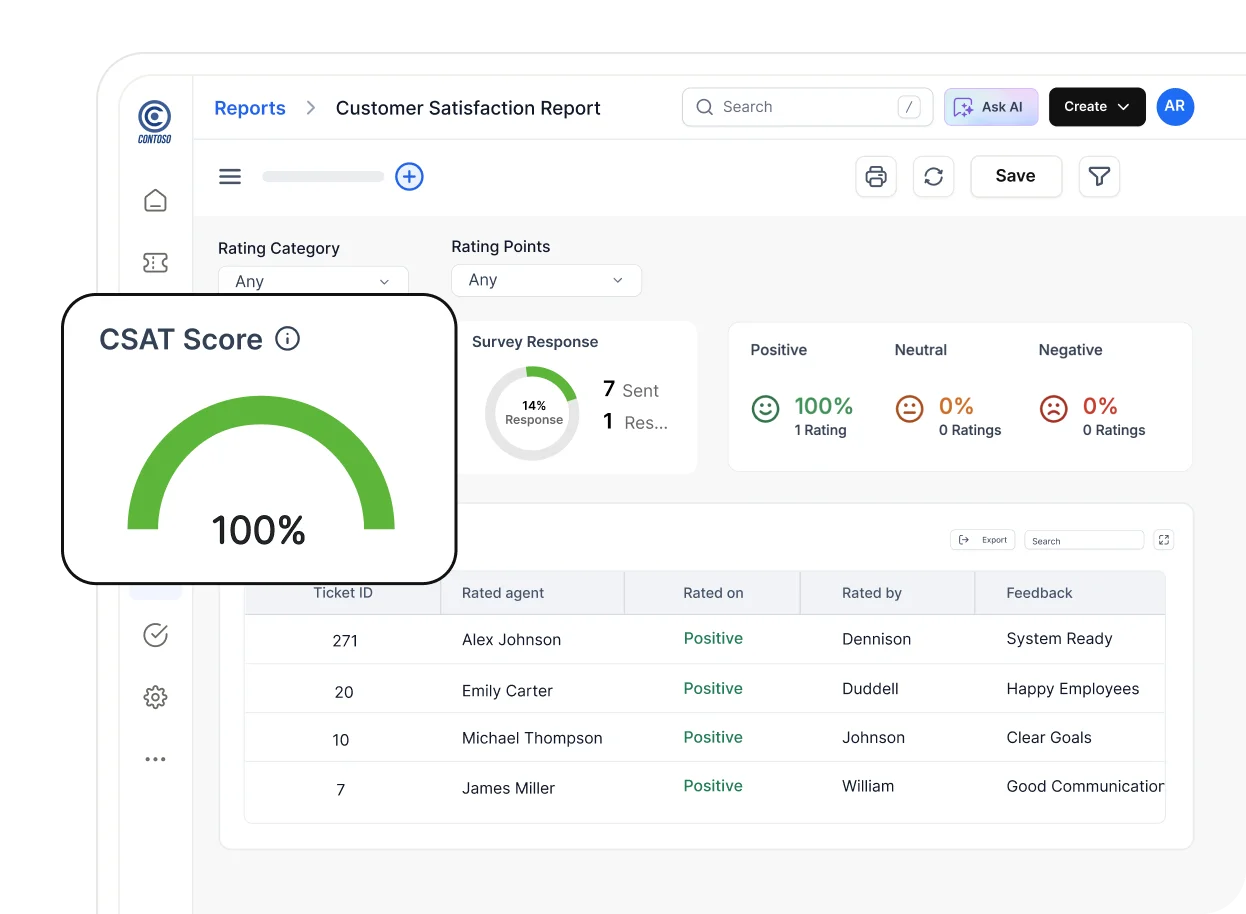
- Generate comprehensive reports: Understand patterns in customer interactions and feedback.
- Track help desk performance: Evaluate key help desk metrics to identify gaps and opportunities.
- Drive continuous improvement: Use visualized insights to refine processes, enhance products, and deliver consistently outstanding experiences.
AI in customer experience challenges
AI for customer experience is powerful, but it’s not without obstacles. From high implementation costs to integration hurdles and trust concerns, businesses must overcome these challenges to unlock AI’s full potential.
- High implementation costs: Implementing AI for customer experience demands major investment in technology, infrastructure, and skilled talent, upfront costs that can slow adoption and limit scalability.
- Reduced human interaction: AI-driven systems improve efficiency but often lack the empathy in customer service that human agents provide. Over-reliance on AI automation in CX can leave customers feeling disconnected when they need human support.
- Integration with existing systems: Businesses often operate on legacy systems that are not easily compatible with AI tools. Upgrading or integrating these systems can be costly and disruptive, requiring careful planning to avoid operational downtime and customer service interruptions.
- Customer trust and acceptance: Some customers avoid AI systems over concerns about empathy and data security. Without strong safeguards and transparency, trust declines, adoption slows, and businesses miss AI’s full potential.
AI for customer experience: Real-world examples driving transformation
These real-life AI for customer experience examples show how leading brands use intelligent technology to deliver tailored shopping experiences, predict customer needs, and provide instant support that feels effortless.
E-commerce – Personalized product recommendations
Amazon uses AI algorithms in e-commerce shopping to analyze customer data such as browsing history, purchase patterns, and preferences.
Amazon uses AI-driven personalization to predict purchases, boost engagement, and increase conversions. Personalized recommendations now drive a major share of its revenue.
Customer service – AI-powered virtual assistants for instant support
Sephora employs AI-powered chatbots across its website and messaging platforms to provide instant assistance to customers using natural language processing (NLP) to understand queries and deliver accurate responses.
This automation cuts response times and boosts customer satisfaction. With 24/7 customer service, Sephora ensures convenience and accessibility while lowering costs.
Retail and hospitality – Sentiment analysis for social media monitoring
Starbucks leverages AI-powered sentiment analysis tools to monitor social media conversations and customer feedback. These tools analyze language patterns to detect emotions such as frustration or satisfaction.
When negative sentiment is detected, Starbucks escalates the issue to a human agent for fast resolution, helping maintain brand image and customer trust
Embrace AI for customer experience to unlock your potential
AI for customer experience is evolving fast, and the businesses that embrace it will lead the way in delivering smarter, faster, and more personalized support
Ready to put AI for customer experience into action? Explore BoldDesk, an advanced help desk solution designed to harness AI and deliver smarter, faster support.
Get in touch with us to set up a live demo to see what you can accomplish with BoldDesk’s AI-powered customer service features, such as AI agents, AI copilot, and AI actions. Or sign up for a 15-day free trial today. Additionally, you can explore our features through the product tour.
We hope this article was insightful. Do you have any additional suggestions or feedback? Please let us know what you think in the comments section below.
Related articles
- Customer Service vs Customer Experience: Key Differences
- How to Create a Customer Experience Strategy
- Top 10 Customer Experience Metrics & KPIs to Measure Success
Frequently Asked Questions
AI customer service agents are software tools that use artificial intelligence to interact with customers. They provide automated responses, assist with tasks, and offer 24/7 support for common queries.
AI improves customer support by automating ticket routing, predicting intent, and delivering personalized solutions.
AI customer service agents use machine learning and NLP to understand queries, provide instant responses, and assist human agents with context.
No, AI doesn’t replace human agents; it complements them by handling repetitive tasks and freeing humans for complex issues.