

 In this page
  In this page

TL; DR: A customer journey map is a visual representation of how customers interact with a business across every stage of their lifecycle. By mapping customer actions, emotions, and touchpoints, teams can identify friction, improve communication, and design more consistent experiences.
In a business, each stage presents an opportunity to connect with its customers and guide them on how to interact with the company.
Companies can meet customer needs and expectations at each touchpoint and visualize the progressive steps a customer goes through to accomplish a task by creating a well-defined customer journey map.
Customer journey mapping is a narrative that goes beyond mere events, encompassing the emotions and motivations that influence the decisions made.
This serves as an opportunity for businesses to see their company from the customer’s perspective, helping them understand not just what the customer is doing, but also why they are doing it.
In this article, we will learn about the concept of customer journey map, its importance, how to create one, and some customer journey map examples.
What is a customer journey map?
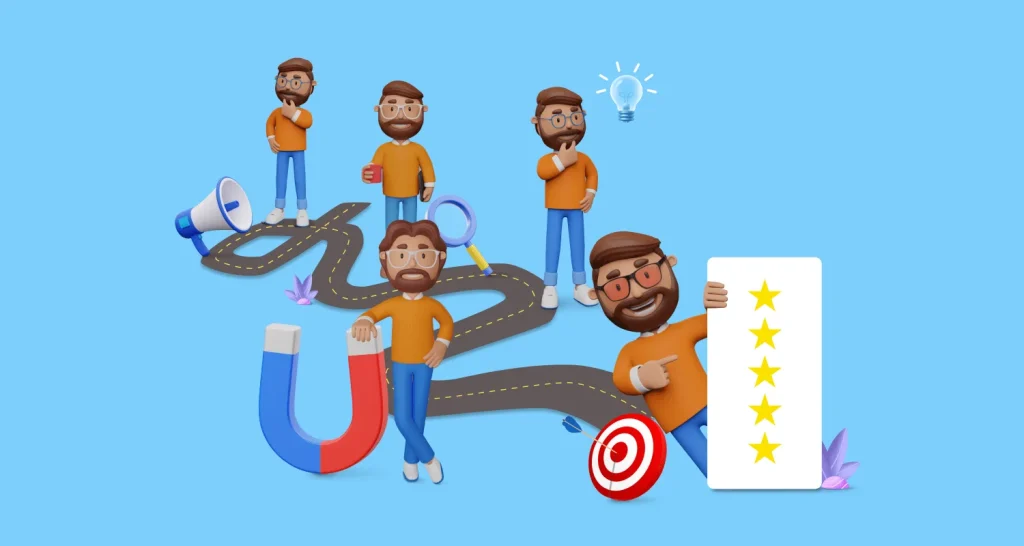
A customer journey map is a visual representation of the steps a customer takes to complete a specific interaction with your brand or company.
The map displays every interaction a consumer has with your company, from the first time they become aware of your business to the post-purchase follow-up.
Why is customer journey mapping important?
Below are some of the benefits a business has when it maps its customer journey:

- Enhances customer service experience: By visualizing every customer touchpoint, businesses can identify friction, delays, and breakdowns in support interactions. According to Statista, 82% of customers say they are more likely to recommend a business after a positive customer service experience, highlighting the direct link between service quality and advocacy.
- Enables proactive customer service: Journey maps reveal customer needs, expectations, and pain points at each stage of the journey. This allows teams to anticipate issues and address them early, before they escalate into complaints or churn.
- Improves understanding of customer perspectives: Mapping the customer journey helps businesses step into the customer’s shoes, uncovering how customers think, feel, and act at different moments. The deeper understanding supports more empathetic and customer-centric decision-making.
- Strengthens customer engagement: When customers feel understood and supported throughout their journey, they are more likely to interact, respond, and stay connected with the brand. A seamless journey builds trust and encourages ongoing customer engagement.
- Increases customer retention and loyalty: Consistent positive experiences across the journey make customers more likely to return and recommend your brand. Journey mapping helps ensure that no stage of the experience undermines long-term relationships.
- Boosts customer lifetime value (CLV): By improving engagement, retention, and satisfaction, customer journey mapping contributes to longer customer relationships, repeat purchases, and higher overall revenue over time.
What are the key elements of customer journey maps?
To gain a complete understanding of the customer experience and create an effective customer journey map, it is necessary to include the following key elements:
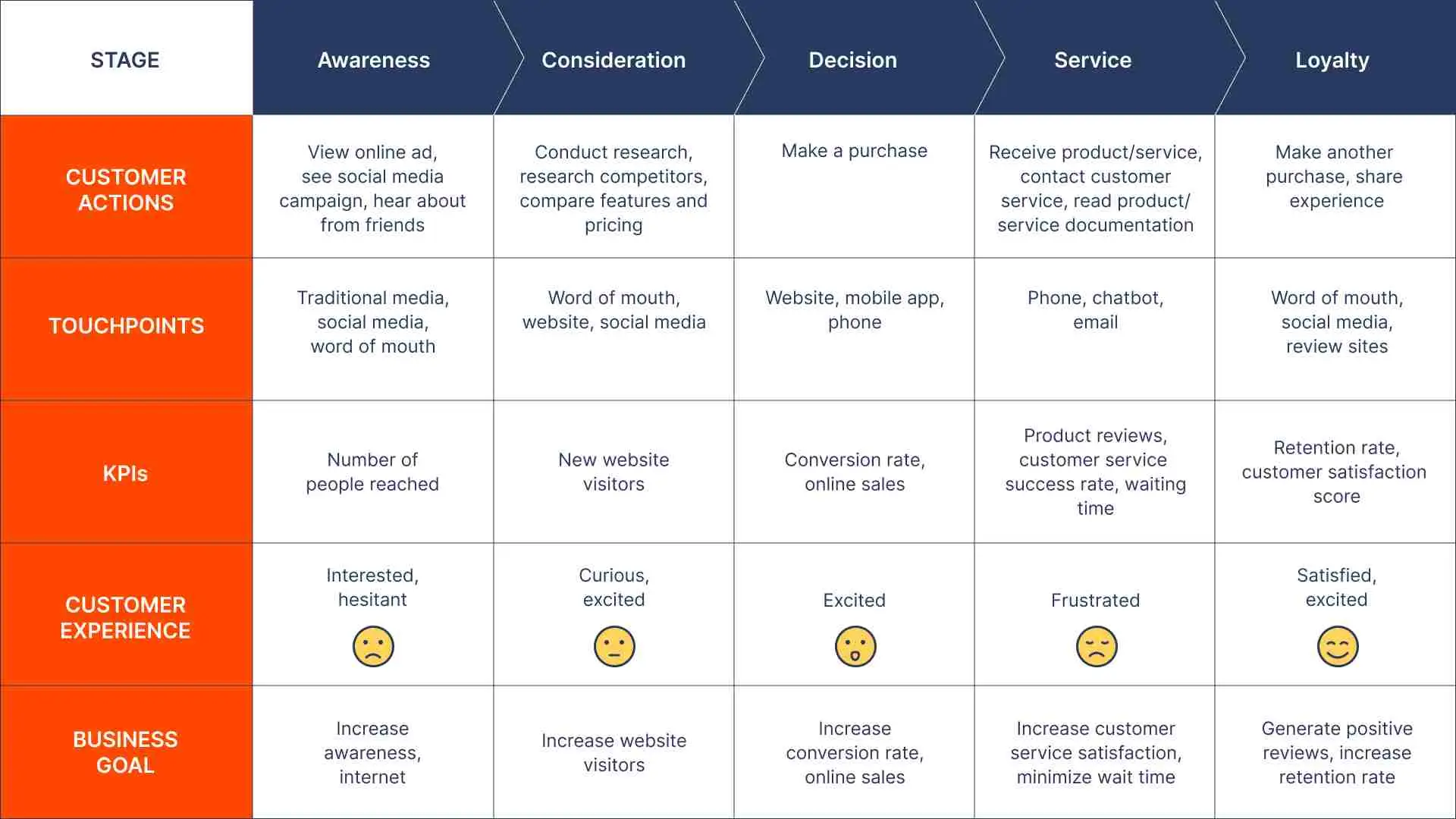
- Customer journey stages: Map the main stages customers go through when interacting with a brand, including awareness, consideration, decision, purchase, usage, experience, and advocacy. Analyzing each stage helps improve processes, communication, and customer satisfaction.
- Customer actions and emotions: Capture what customers do and how they feel at each stage of the journey. Recognizing behaviors and emotional responses helps teams build empathy and design customer experiences that meet customer expectations.
- Touchpoints: Identify every digital and physical point where customers interact with the brand. Understanding these interactions helps ensure consistent communication and address issues throughout the journey.
- Metrics: Track relevant key performance indicators (KPIs) such as conversion rates, customer satisfaction scores, and customer retention rates provide valuable insights for ongoing optimization and strategic decision-making.
- Pain points and opportunities: Pain points in a customer journey map out areas for improvement, helping businesses innovate, fix problems, and exceed expectations.
- Persona identification: Create buyer personas using real data about customer preferences, behaviors, and demographics. This helps businesses build a clear and realistic view of their ideal customer and develop more focused strategies.
Types of customer journey maps and examples
Customer journey mapping can be modified to fit a specific need and help you better understand your customers’ journey. Below are some types of customer journey maps and customer journey map examples:
Buyer’s journey map
A buyer’s journey maps visualize the customer’s journey from recognizing a need to making a purchase. It’s ideal for aligning marketing, sales, and product messaging with buyer intent at each stage.
This journey map highlights the following stages, which provide insights into motivations and challenges:
- Awareness
- Consideration
- Decision-making
Example:
A SaaS company maps the buyer’s journey to identify where prospects drop off during the trial phase. Based on insights from the map, they introduce targeted onboarding emails and in-app prompts, improving trial-to-paid conversions.
Current state journey map
This type of customer journey mapping represents the way consumers currently engage with your product or service.
It starts with the initial awareness or interaction, progresses through the engagement phases, and concludes with a post-purchase scenario.
It’s used to identify gaps, inefficiencies, and frustrations in the existing customer experience, capturing:
- Customer actions and behaviors
- Emotional highs and lows
- Customer pain points and friction areas
Example:
A support team maps the current journey and discovers that customers are repeatedly switching channels to get help. The insight leads to implementing a shared omnichannel inbox, reducing resolution time and customer effort.
Future state
The future state journey map outlines the ideal customer experience a company aims to offer in the future.
A future state journey map is helpful for strategic planning, digital transformation, and CX improvement initiatives. It focuses on:
- Desired interactions and touchpoints
- Improved workflows and service standards
- Long-term CX goals
Example:
A company designs a future-state journey to reduce response times and improve self-service. The map guides investments in automation, AI agents, and a knowledge base to deliver faster, more consistent support.
Day-in-the-life journey map
This is a comprehensive journey map that presents a typical day in a customer’s life, encompassing all their daily interactions, transactions, and tasks both within and outside the company.
They include:
- Daily routines and external influences
- Moments where your product fits naturally
- Hidden pain points outside direct interactions
By understanding how and when their product or service aligns with the customer’s daily routine and tailoring their products and services accordingly, companies can meet customers’ demands.
Example:
A B2B product team maps a day in the life of an operations manager and discovers peak stress periods. They redesign notifications and workflows to reduce interruptions during critical work hours.
100% Free Tool to Elevate Customer Interactions!
Effectively manage customer interactions with AI-powered support tools—startups can access it and scale with ease!
What is a touchpoint in a customer journey map?
In a customer journey map, touchpoints are places a customer interacts with a business.
These occur in different ways and at different times, like when they first hear about the business, when they buy something, or when they need help after buying.
Touchpoints are important because they are the points in time that shape how customers feel about the brand.
How to create a customer journey map
For businesses to have an effective customer journey mapping, they should consider using the following criteria:
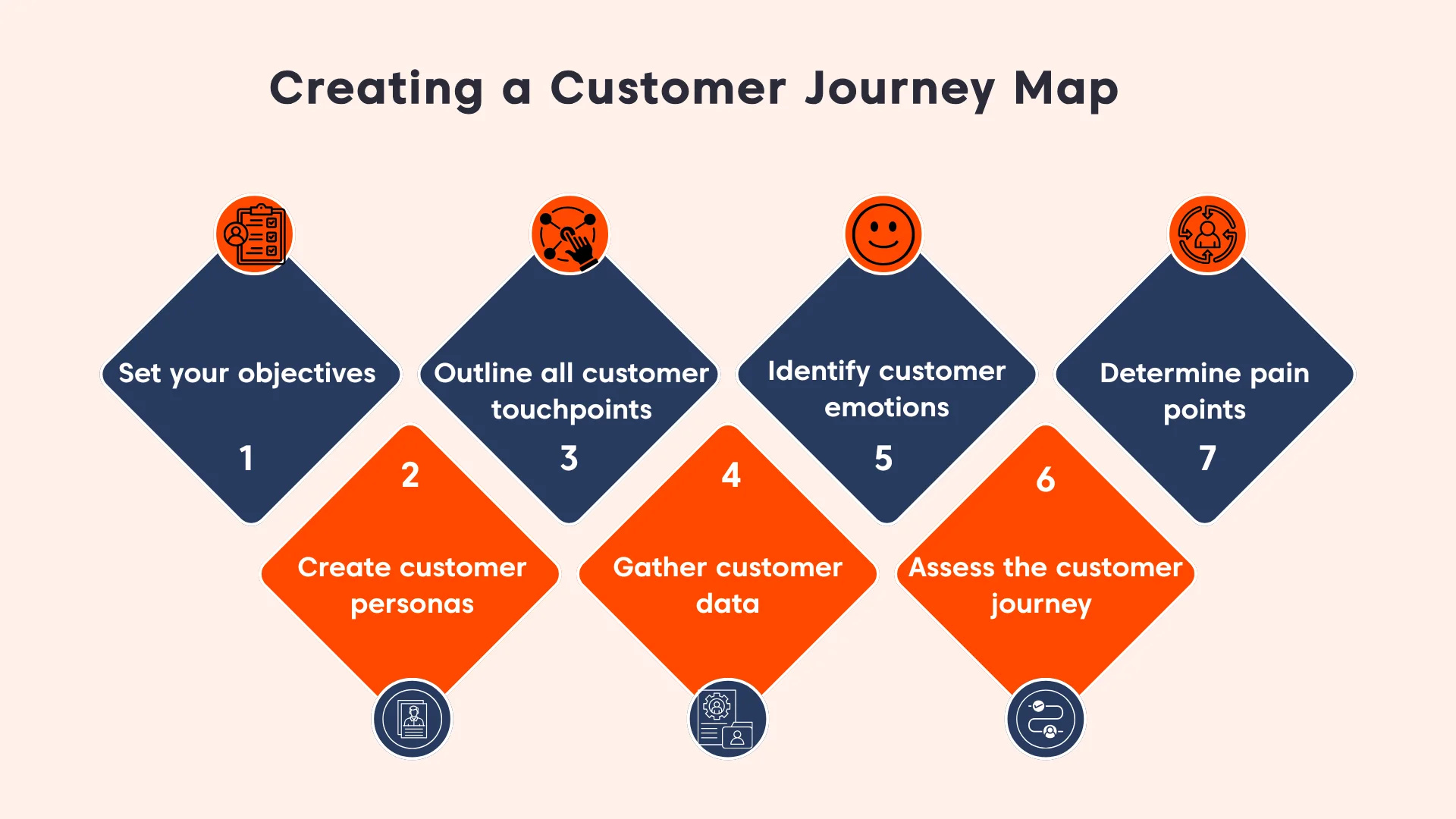
Set your objectives
Establishing your goals and objectives for the customer journey map is the first step. In this stage, businesses should ask themselves, “Why are they creating a customer journey map and who their audience is?”
Setting objectives may include:
- Enhancing customer satisfaction
- Identifying areas of concern
- Optimizing customer interactions
It is crucial to have a clear understanding of what you aim to accomplish during the customer journey.
Create a customer persona
A customer persona is a detailed and semi-fictional representation of your ideal customers. These personas are created based on real data about your existing customers, market research, and insights into your target audience.
The purpose of developing customer personas is to gain a deep understanding of the diverse range of customers who interact with your brand, product, or service.
These profiles should encompass the following:
- Demographics: Customer personas should include details such as age, gender, income, education, and location. This information helps you understand the varied backgrounds of your customers.
- Behaviors: Persona development involves examining the behaviors and patterns of your customers, which include online behavior, buying habits, and interaction preferences.
- Needs and goals: By delving into the specific needs and goals of each persona, you gain insight into the motivations that drive their interactions with your business and help you with product development.
Outline all possible customer touchpoints
This step entails the identification and acknowledgement of all the touchpoints where customers interact with your brand.
Identifying these customer touchpoints allows businesses to comprehend and strategically address the various interactions customers have with their brand, understand consumer experience, and identify problems and potential areas for improvement.
These touchpoints encompass both digital and physical communication channels, such as:
- Social media platforms
- Official website
- Emails
- Customer support services
- Physical stores (if available)
Gather customer data
This stage involves the process of collecting detailed customer data about customer interactions and experiences.
Since customer data directly informs service improvements, 65% of businesses say that enhancing data analysis is very important to delivering better customer service (LLCBuddy).
This valuable data can be acquired through the following methods:
- Customer feedback
- Surveys and interviews
- Reports and analytics
By utilizing customer information, organizations can gain a better understanding of customers’ specific issues, emotional responses, and underlying motivations at every point of contact.
Identify customer emotions
This involves capturing the emotional condition of the customer at different stages throughout their interaction with your brand.
This will allow you to pinpoint and differentiate the moments that cause customers to feel satisfied, dissatisfied, or confused.
Therefore, it is essential to identify and understand these feelings to raise the standard of the customer’s experience.
Assess the customer journey on your own
This step involves experiencing your brand from the customer’s perspective
It helps you gain firsthand insight into the customer’s experience, identify potential pain points, and understand areas for improvement or adjustments are necessary.
Determine opportunities and pain points
This is the stage where a company will recognize areas where its customers might have experienced dissatisfaction, challenges, or pain points.
After a business has identified these areas, it can seek out opportunities to improve the customer experience and create positive interactions with customers through the entire customer journey.
Build a well-structured customer journey map!
Every company hoping to provide a first-rate client experience needs to have a customer journey map.
It helps companies to see how their consumers interact with them at each touch point, identify areas for improvement, and eventually create a more customer-focused organization.
By representing the customer’s journey visually, organizations can recognize chances for enhancement and establish a more favorable and smoother customer experience.
To experience the benefits of BoldDesk in improving your customer experience, book a live demo. Additionally, you can initiate a 15-day free trial on BoldDesk. If you require further details, kindly reach out to our support team.
If you have any suggestions or feedback regarding customer journey mapping, feel free to share in the comment section below.
Related articles
- SMART Customer Service Goals: A Guide to Setting and Achieving Them
- Great Customer Service Skills to Master for Business Success in 2026
- 8 Best Ways of Delivering Efficient Customer Service in 2026
Frequently Asked Questions
A customer journey map should be updated quarterly, yearly, or when products, channels, or customer behavior change.
Regular updates keep the journey accurate as customer expectations evolve.
Customer journey maps are most effective when tracked with metrics such as CSAT, response time, resolution time, retention rate, and repeat contacts.
These metrics show whether journey improvements are actually improving customer experience.
By identifying friction and gaps across key touchpoints. Fixing these issues leads to faster support, clearer communication, and more consistent service.
The customer journey typically includes awareness, consideration, decision, retention, and advocacy, which describe how customers move from identifying a need to becoming loyal promoters of a brand.
Each stage requires different content and support, from education and evaluation to onboarding, ongoing assistance, and loyalty-building efforts.