



 In this page

TL;DR: Startup customer service evolves quickly as teams grow. What works at low ticket volume soon creates bottlenecks, missed replies, and unhappy customers. This guide explains when early support tools start breaking, and how startups can build scalable customer support without losing speed or personalization.
When customers keep asking, “Any update on this?”, it’s a clear signal your support process is under strain.
As ticket volume expands, startup customer service becomes harder to manage without structure.
Early support setups, shared inboxes, basic live chat software tools, and manual tracking often lead to duplicate replies, missed messages, and unclear ownership.
This guide explores where entry‑level tools fall short and how startups can scale customer support without losing the personal touch customers expect.
How startup customer service works in the early stages
In the earliest phase, startup customer service is intentionally lightweight. Teams prioritize speed, low cost, and flexibility over structure, using tools that work well at low volume but lack scalability.
Shared inboxes for quick email support
Many startups start with a shared inbox because it’s quick to set up and works well at low volume. As the business develops and more teammates respond to customer emails, managing priorities and follow-ups becomes increasingly difficult.
Over time, shared inboxes lack the structure needed to maintain consistent, organized support as conversations scale.
Free live chat tools for instant engagement
In the early stages, customer support for startups often relies on low-cost live chat tools to provide instant solutions. These tools limit the number of agents and conversations, making them suitable only for small teams with low support volume.
While customer conversations rise, these constraints become restrictive. Limited message history and single-agent workflows make it difficult to track conversations or maintain context.
As a result, growing startups are forced to upgrade to more advanced systems that support higher chat volumes and integrated support channels, without losing chat history.
Manual tracking with spreadsheets or tags
Several startups initially track customer issues with simple tags, which is a low-cost setup, because it’s quick to implement and works at very low volumes.
As requests and participants increase, row/worksheet limits, version conflicts, and user‑access caps make updates hard to maintain, scattering information and causing follow-ups to slip.
At that point, teams typically need a structured system that preserves full history, supports more users and messages, and avoids losing records during handoffs or growth.
Why do free tools break as your startup support team grows
As startups grow, customer support volume increases faster than most teams expect. Tools designed for small teams lack the workflows and visibility needed to manage rising demand.
According to Salesforce research, 88% of customers say that good service makes them more likely to purchase from the same company again, meaning support quality directly influences revenue, not just satisfaction.
Below are the most common startup customer support challenges that appear as teams scale.
Misses replies and duplicate responses
Shared inboxes and basic support tools don’t clearly show who is working on each customer message.
As a result:
- Some customers receive multiple responses from different agents
- Others are left waiting with no reply
Without real-time visibility into message status, teams struggle to track what’s pending, resolved, or overdue, which leads to frustration and declining customer trust.
Lack of clear ticket ownership or accountability
Basic inboxes and email threads don’t enforce ticket ownership. There’s no structured way to assign responsibility, set priorities, or track progress.
As support teams grow, this lack of accountability leads to:
- Agents assuming someone else will follow up
- Managers struggling to monitor resolution status
- Slower response times and inconsistent customer experiences
When no one owns a ticket, customers feel ignored, even if the support team is busy.
Zero oversight into workload or backlog health
When support volume increases, founders and managers need insight into how the team is performing.
Basic tools provide little to no insight into queue health, aging requests, or agent workload.
According to Accenture, 87% of customers are likely to avoid a company after a single bad support experience, making every dropped message a potential revenue loss.
Without proper oversight, bottlenecks go unnoticed, high-priority issues go unresolved, and teams operate in a constant reactive mode instead of a structured, predictable workflow.
Inadequate tracking of response and resolution expectations
While startups scale, especially in B2B, customers begin to expect defined response times
Teams may want to set basic service level agreement expectations, such as how quickly a customer should receive a first reply or resolution.
Entry-level tools don’t support consistent tracking of response and resolution times. This makes it difficult to meet customer expectations, identify delays, or hold teams accountable as support operations mature.
Reporting and analytics stop working
In the early stages, startup customer service often relies on manual tagging, notes, or spreadsheets to track support activity. As volume increases, these methods quickly become inconsistent and unreliable.
Teams lose clarity on key insights such as:
- Common customer issues
- Ticket volume trends
- Agent performance
- Support workload distribution
- Early signals of customer dissatisfaction
Without reliable reporting, startups can’t spot patterns or improve proactively. This makes it harder to scale customer support in a sustainable way.
What a help desk should solve for startup customer service
When customer demand extends, startups don’t need complex enterprise tools, but they do need structure, visibility, and accountability.
A help desk transforms incoming customer messages into trackable tickets with clear ownership, status, and history.
This allows startup teams to scale support operations without sacrificing speed or personalization.
You’re likely ready for a help desk if:
- You’ve hired more than one support agent
- Customers regularly follow up for updates
- You need visibility into response and resolution times
- You can’t easily track open issues or team workload
A right-sized help desk for startup customer service teams should deliver:

Unified ticketing for all customer conversations
Startups receive customer requests through email, live chat, contact forms, and social media. Without a centralized system, messages get scattered.
A help desk centralizes all customer interactions into a single ticketing platform, ensuring:
- Every request becomes a trackable ticket
- Agents have a full conversation history in one view
- No messages are lost, duplicated, or forgotten
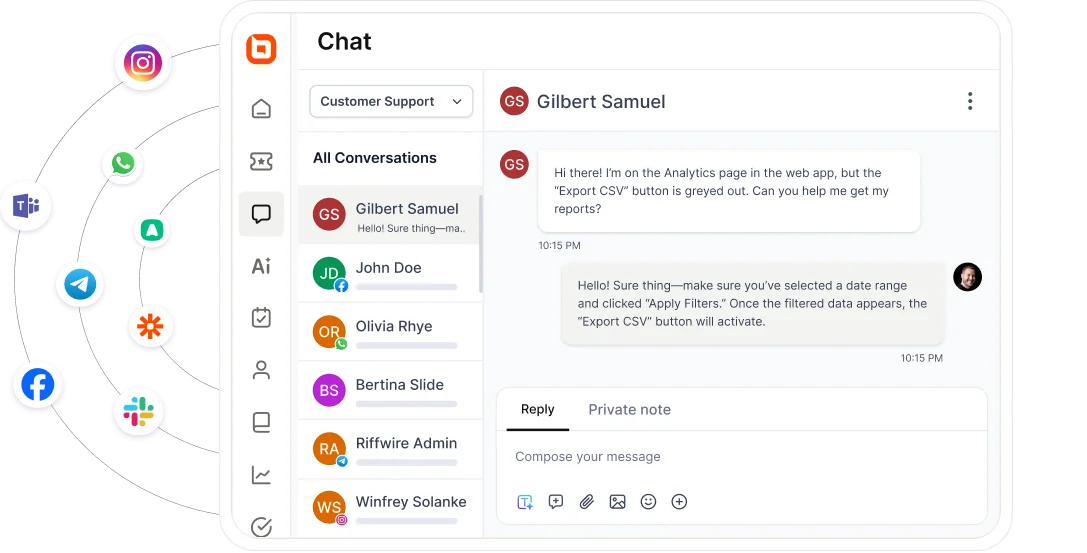
This single source of truth helps startups respond faster, prioritize correctly, and deliver consistent customer communication as support volume increases.
Automated ticket conversion, categorization, and routing
Manually turning messages into tickets and assigning them one by one creates delays and inconsistency, particularly for small teams handling multiple tasks.
Help desk automation converts incoming emails, chats, and form submissions into tickets, automatically categorizes them based on predefined rules, and routes each request to the appropriate
agent or team.
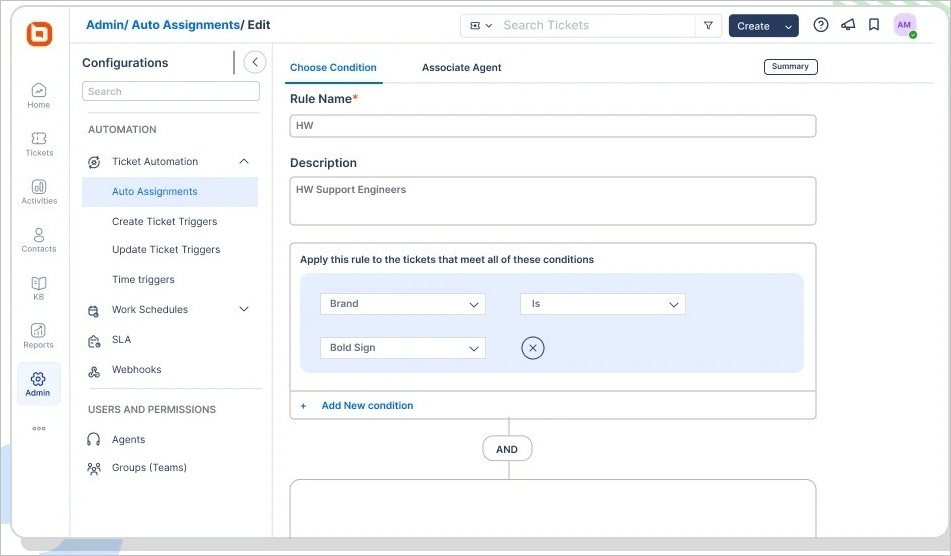
Why this matters for startups:
- Faster first-response times without manual effort
- Consistent answers across all customer interactions
- Reduced workload for small support teams
- Scalable support processes as ticket volume multiplies
Automation allows startups to deliver professional customer support from day one without the complexity of enterprise systems.
Self-service knowledge base to reduce ticket volume
Many customers prefer using self-service in help desk over contacting support, especially for simple or repetitive questions.
Without a knowledge base, even minor issues turn into support tickets, increasing workload for small teams.
A help desk with a comprehensive knowledge base, such as FAQs, troubleshooting guides, docs, and more, allows customers to find answers anytime, without waiting for an agent.
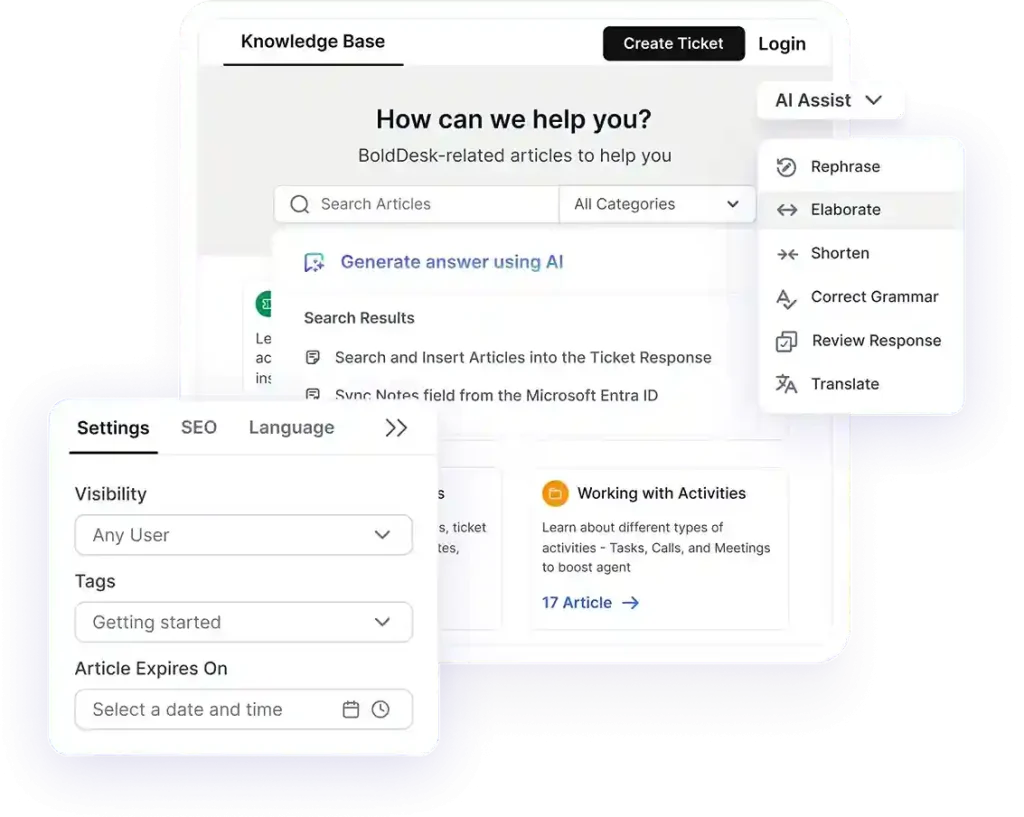
With a comprehensive knowledge base software, startups can:
- Reduce repetitive tickets and overall support volume
- Free up small teams to focus on complex, high-value issues
- Scale customer support efficiently as the startup escalates
This creates a faster, more satisfying customer experience while keeping support operations lean and manageable.
Internal notes and collaboration tools for better team coordination
Growing support teams rarely resolve issues in isolation. Complex problems often require context sharing, internal discussion, or escalation before a resolution is sent to the customer.
Help desks support this collaboration through internal notes, private comments, @mentions, and CCs, allowing teams to coordinate directly within tickets without exposing internal conversations to customers.
These features allow teams to:
- Share context, insights, and troubleshooting steps internally
- Add escalation details without exposing them to customers
- Hand off tickets smoothly between teammates
- Scale support without losing consistency
New agents gain instant context, escalations move faster, and first-contact resolutions stay accurate, even during peak support periods.
Dashboards and analytics for smarter startup support
Startups need clear visibility in their support operations to make informed decisions and improve customer experience.
A help desk provides reporting and analytics for SLA tracking, AI usage, customer satisfaction (CSAT), and ticket performance to analyze daily support activity.
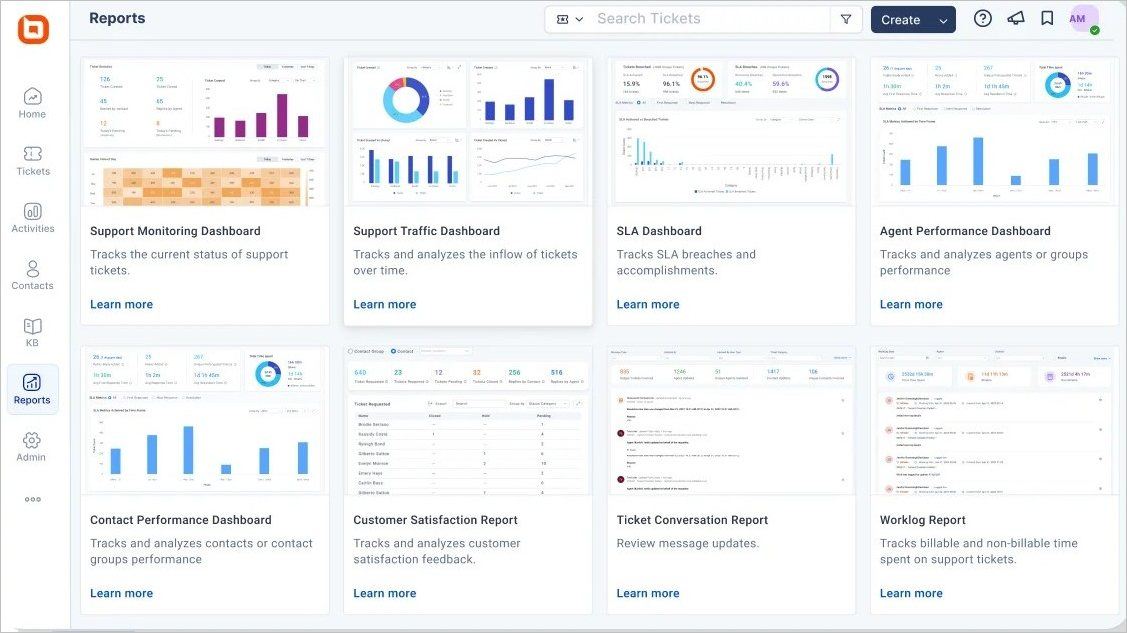
These tools allow startup teams to:
- See real-time ticket volumes and identify bottlenecks quickly
- Track response and resolution times to improve service speed
- Monitor AI usage to understand how AI-powered replies and tools are reducing workload
- Plan resources and staffing based on data, not assumptions
With dashboards and AI usage insights, startups can scale support more efficiently. Teams resolve issues faster, optimize automation, and enhance customer satisfaction, even as ticket volume raises.
Building startup customer service that scales with growth
As startup support volume grows, manual processes and disconnected tools create missed messages, slow responses, and unhappy customers.
Building scalable customer service for startups isn’t about adding complexity; it’s about introducing structure, visibility, and accountability at the right time.
BoldDesk empowers growing teams with clear ticket ownership, faster responses through automation, and the visibility they need to improve team performance and customer satisfaction.
Ready to simplify support and scale your startup? Explore the scalable help desk for startups.
Contact our support teams to book a 30-minute live demo or start your 15-day free trial today.
Was this article helpful? Share your suggestions and ideas in the comments below!
Related articles
- Top 10 FREE Help Desk Software for Startups in 2026
- Top Help Desk Software for Small Businesses in 2026
- Best SaaS Tools for Business Success in 2026