


 In this page

TL;DR: Most customer support challenges for eCommerce stem from process and system gaps, not agent performance. As brands scale, issues cluster around transparency, collaboration, workload management, and data insight. Solving them requires structured systems: omnichannel support, automation, task management, and analytics. This blog explains why these challenges emerge and what operational gaps teams must fix to maintain service quality during growth.
As eCommerce brands grow, customer support often breaks before revenue does.
When daily ticket volume increases, sales channels multiply, and promotions create sudden demand, businesses face eCommerce customer support challenges that didn’t exist at smaller scale.
These issues range from missed tickets to slower response times and inconsistent customer experiences.
This article outlines the key eCommerce customer support challenges that arise as brands grow, why they occur, and which operational gaps create them before they impact retention and revenue.
Why eCommerce support breaks as brands scale
eCommerce customer support challenges become difficult as brands grow because ticket volume, channel complexity, and order variability increase faster than internal support systems can scale.
Typical growth-related factors include:
- Increased order volume and delivery-related questions
- Expansion into multiple support channels (email, chat, social, marketplaces)
- Larger support teams handling shared queues and customer histories
Without a structured customer service, teams often move into reaction mode. This is when customer service challenges in eCommerce begin to affect response quality, consistency, and customer trust.
What are the top customer support challenges in eCommerce?
The top customer support challenges for scaling eCommerce include disorganized tickets, divided communication, slow peak‑period responses, unclear ownership, repetitive inquiries, and limited visibility.
These issues make it harder for teams to maintain fast and consistent support as they grow.
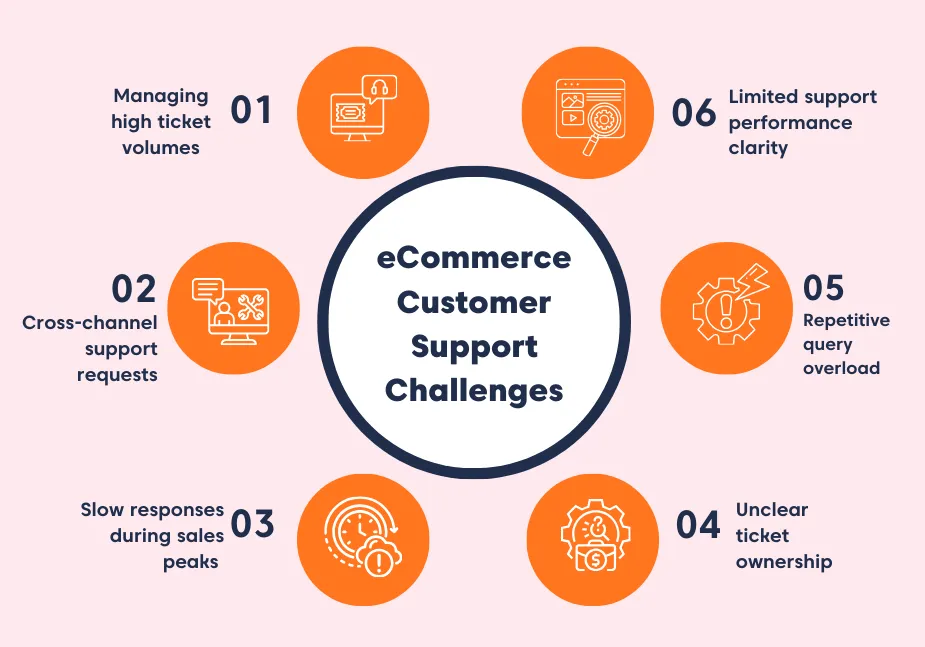
1. Managing disorganized ticket workflows
Disorganized ticket management occurs when growing ticket volumes exceed the team’s ability to track responsibility, priority, and status consistently.
As order volume increases and more agents join the team, manual assignment and disjointed tools create blind spots.
This often leads to:
- Tickets being assigned to the same agent repeatedly
- Missed or delayed responses
- Limited transparency into ticket status and priority
2. Addressing uncoordinated communication across channels
Communication lacking a unified view happens when customer conversations occur across multiple channels but aren’t centralized for agents to review in one place.
As inquiry volume grows and teams expand, separate tools and disconnected histories make it difficult for agents to maintain continuity across interactions.
This often leads to:
- Scattered customer details across different platforms
- Agents responding with incomplete context
- Customers repeating the same information multiple times
3. Resolving slow response times during peak sales periods
High-traffic periods such as promotions, holidays, and product launches place significant strain on teams. Ticket volume can increase suddenly, often without warning.
During these times, customer service teams commonly face the various eCommerce support challenges:
This often leads to:
- Longer wait times for first responses
- Pending customer inquiries that take days to resolve
- Customers sending multiple follow-ups due to uncertainty
According to Emplifi’s survey, over 52% of customers expect a response within one hour, and even short delays during high‑traffic periods can result in dissatisfaction.
During high-volume periods, delayed responses increase order anxiety and directly reduce customer trust, especially for time-sensitive issues like shipping or cancellations.
4. Overcoming unclear task workflows as support teams grow
Unclear task management occurs when growing support teams lack defined ownership, routing rules, and escalation paths for customer issues.
With more agents working on tickets, overlap, gaps in coverage, and missed responsibilities become common.
This often leads to:
- Task collision that causes multiple agents to respond to the same customer
- Tickets remaining unresolved because issue handling is unreliable
- Sharing conflicting information
From a customer’s perspective, this feels disorganized and unprofessional. Internally, it creates frustration, slows ticket resolution times, and makes it harder for teams to maintain consistent service quality.
5. Tackling repetitive customer questions that overwhelm agents
Many customer inquiries in eCommerce are repetitive in nature. Common questions revolve around order status, delivery timelines, returns, and refunds.
This often leads to:
- Agents have less time for complex or sensitive requests
- Response quality becomes inconsistent
- Team morale and engagement decline
With continued growth, this repetitive workload can lead to burnout. Customers may notice shorter or less thoughtful responses, affecting how supported they feel after making a purchase.
6. Missing clarity into support performance metrics
Scaling customer support makes it increasingly difficult to measure performance accurately.
This often leads to:
- Unactionable response and resolution benchmarks
- Difficulty identifying bottlenecks or peak demand periods
- Challenges in planning staffing or process improvements
In the absence of measurable performance insights, improvements tend to be reactive rather than proactive, limiting long-term growth and service consistency.
How can growing eCommerce brands overcome support challenges?
Growing eCommerce brands overcome support challenges by replacing reactive work with structured systems.
The most effective improvements come from centralizing customer interactions, automating repetitive tasks, clarifying task ownership, and using analytics to guide staffing and process decisions.
Successful brands fix eCommerce support challenges by strengthening four foundational areas.
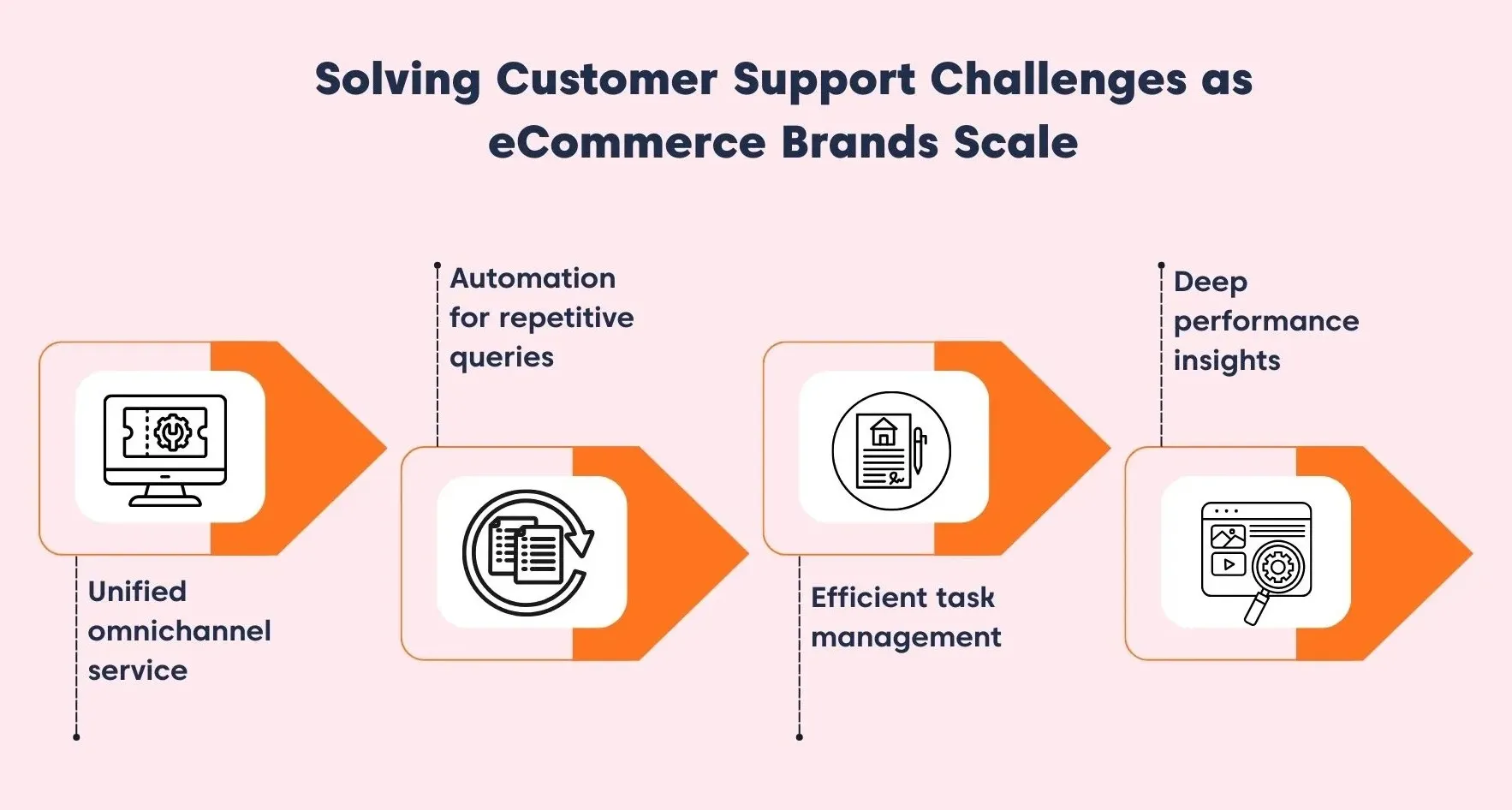
Centralize all interactions in one unified hub
eCommerce brands receive customer conversations across email, live chat, social media platforms, and online marketplaces.
When these interactions are not connected across different tools, agents lose essential order context, customers repeat information, and resolution times slow down.
A unified omnichannel support brings every message together, enabling teams to:
- View all customer conversations from every channel in one place
- Connect each interaction to customer profiles and order history
- Collaborate on a ticket within a unified platform
- Maintain consistent communication, regardless of the channel
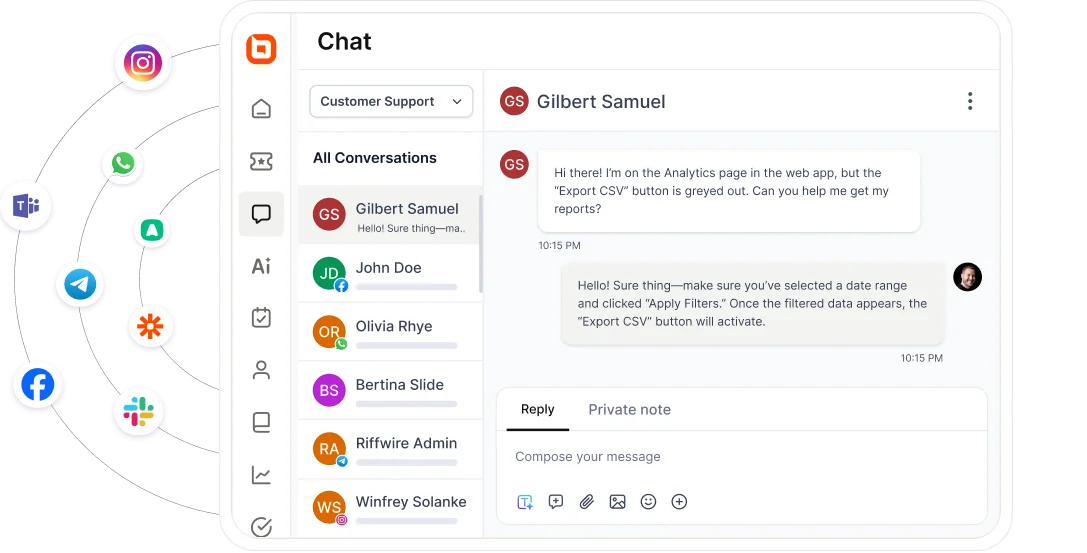
Outcome summary:
Omnichannel support bring all customer interactions and internal collaboration tools into one centralized workspace, keeping every conversation visible and easy to act on.
Automated ticketing to reduce repetitive support work
Customers message you via email, live chat, social platforms, and marketplaces. Without a single workspace, agents lose order context, customers repeat information, and resolutions slow down.
During peak periods, siloed context across multiple tools leads to inconsistent answers, longer handling times, and avoidable customer follow‑ups.
Automation allows teams to manage this surge more efficiently by enabling them to:
- Route tickets automatically based on issue type, channel, or priority
- Use canned responses to deliver instant answers to common order questions
- Trigger automated notifications when order or ticket statuses change
- Assign tasks or escalate issues without manual intervention
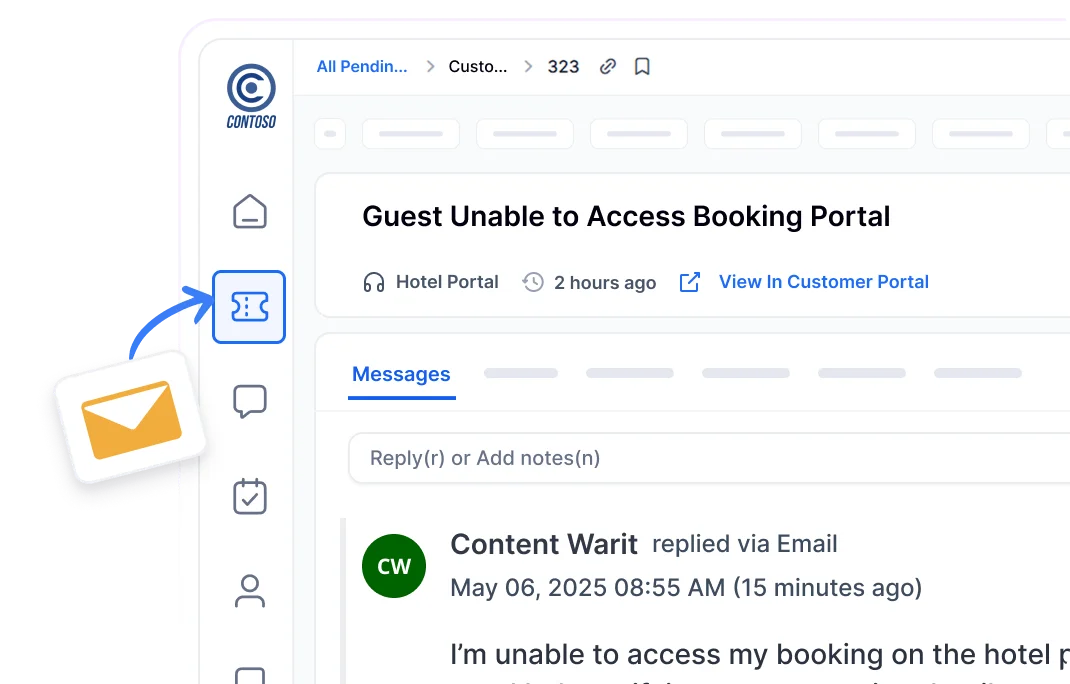
Outcome summary:
Automated workflows reduce repetitive order-related inquiries, allowing support teams to focus on complex or high-impact customer issues.
Streamlined task management for smoother support operations
Unclear tsks processes often lead to delayed responses, duplicated work, and tickets bouncing between agents.
Without structured task assignment and defined timelines, customer service problems take longer to resolve and quality becomes inconsistent.
Effective support operations rely on strong task management practices, including:
- Comprehensive task ownership for each ticket type
- Defined escalation paths for complex issues
- Standardized response and resolution time targets (SLAs)
- Automated task routing to the right agent or team
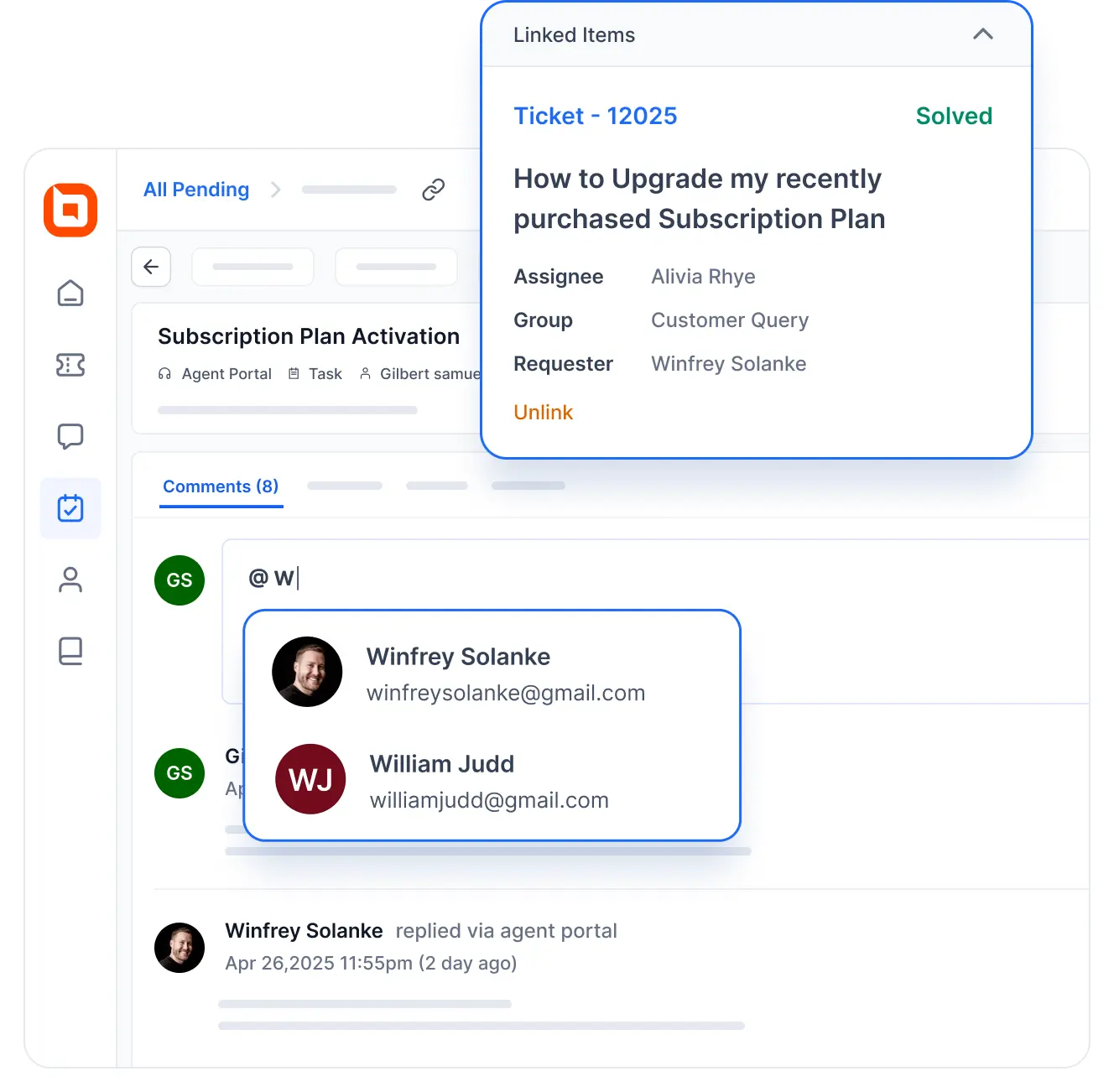
Outcome summary:
Brands that scale eCommerce customer support successfully prioritize organized support operations and measurable SLAs, ensuring consistency, accountability, and faster resolutions.
Clear data insights for smarter support
Scaling e‑commerce customer support without informative data turns growth into guesswork.
Powerful reporting and analytics tools reveal exactly where response delays occur, which issues generate the most tickets, and how performance changes as order volume increases.
What the reporting tools do:
- Track ticket trends by issue, channel, and order stage
- Monitor agent performance in real time
- Evaluate the impact of automations
Outcome summary:
With actionable dashboards and performance insights, support teams can make informed decisions that protect customer satisfaction during periods of rapid growth.
Transform eCommerce support challenges into operational leverage
Customer support challenges in eCommerce rarely appear overnight. They emerge when growth outperforms the systems designed to manage conversations, tasks, and data.
Brands that address these eCommerce support problems early maintain faster responses, clearer communication, and more consistent customer experiences, even during high demand.
Want to identify your biggest friction points across channels, automation, workflows, and reporting?
See how structured support systems prevent these issues as you scale.
Was this article helpful? Share your thoughts or experiences in the comments section. We’d love to hear from you.
Related articles
- Proactive Customer Service: Best Strategies and Benefits
- 15 Best Customer Service Metrics to Measure and Track
- Understanding First-Contact Resolution: Benefits and Strategies
Frequently Asked Questions (FAQs)
eCommerce customer service is the support provided to online shoppers before, during, and after a purchase. It includes handling questions related to orders, shipping, returns, payments, and product details across digital channels.
eCommerce brands should start preparing to scale customer support once ticket volume becomes inconsistent or begins increasing faster than the team can manage.
Early signals include missed responses, frequent follow-ups from customers, and agents relying heavily on manual processes.
As eCommerce brands scale, they experience higher order volumes, more customer inquiries, and expanded communication channels.
In the absence of scalable support systems in place, this added complexity quickly triggers slower responses, disorganized ticket handling, and inconsistent customer experiences.