

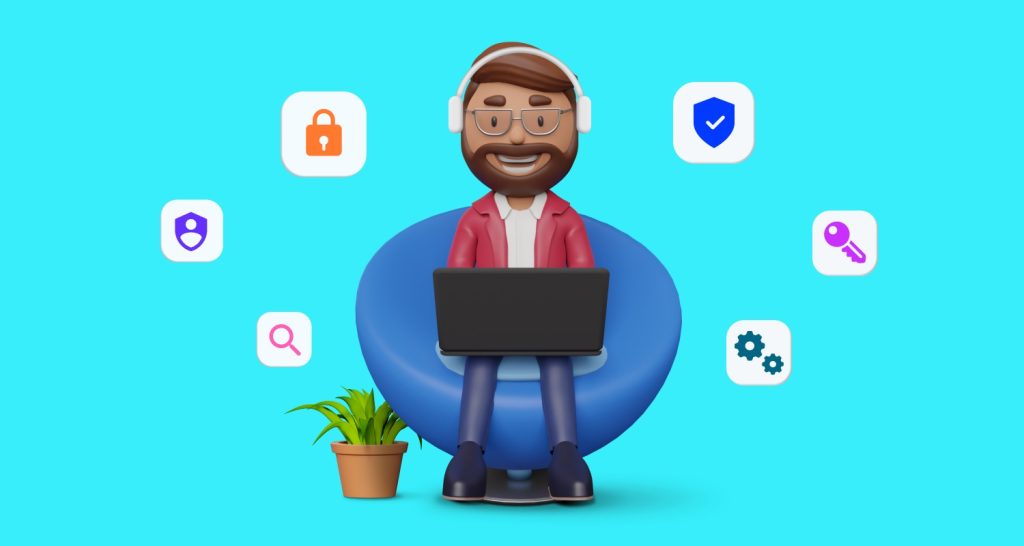



TL;DR: Customer service security protects sensitive customer information from threats such as data breaches, phishing, malware, and unauthorized access. Organizations can strengthen security through employee training, access controls, multi-factor authentication, regular audits, and secure communication practices, helping maintain customer trust and regulatory compliance.
Security is a critical aspect of modern customer support operations, helping organizations protect sensitive customer information, ensure private and secure communication, and maintain customer trust.
Cisco’s Consumer Privacy Survey found that 75% of consumers would not purchase from an organization they don’t trust with their data, reinforcing the connection between privacy and customer trust.
With the increasing dependence on digital channels for customer interactions and the growing threats to data security, it is essential to understand and implement robust customer service security practices.
In this blog, we will discuss what customer service security is, the potential risks, and advice on enhancing your customer service security measures.
What is customer service security?
Customer service security refers to the measures and practices implemented by a company to protect sensitive customer information and ensure privacy and safety during support interactions.
Information security is crucial for protecting sensitive data and supporting effective security and compliance practices.
Common customer service security risks
Business success relies heavily on customer trust, which can be quickly undermined by security breaches and data loss incidents. With that in mind, let’s look at some common ways customer service security can be compromised.
Data breaches, malware, and system attacks
Digital threats include unauthorized access, theft, or manipulation of electronic data, systems, or networks, causing:
- Data breaches: Unauthorized access to customer data can lead to data breaches, compromising sensitive information.
- Disruption in service: Viruses can cause disruptions in customer service operations, such as network outages or system failures, resulting in delays or interruptions in service delivery.
Impersonation and social engineering attacks
Through email or phone scams, impersonators can gain unauthorized access to customers’ personal and financial information.
This data can be used for fraudulent activities, including unauthorized transactions and identity theft.
Impersonators can trick customers into revealing sensitive information by posing as legitimate customer service staff.
They may also send emails or text messages containing malicious links or attachments, which, when clicked or opened, can result in the installation of malware and the theft of personal information.
Some industries are more prone to this sort of scam, especially ones with vulnerable customers in confusing, emotional situations. Scammers will use emotional manipulation and a false sense of urgency to maliciously:
- Exploit customer vulnerabilities.
- Gain unauthorized access to sensitive information.
- Commit fraud.
If scammers gain access to your systems, it can result in data breaches, financial losses, and reputational damage.
Physical security risks in customer service
Physical compromises, such as unauthorized access to customer service facilities or workstations, can lead to the same security problems as remote unauthorized access to your digital systems.
It can also result in the theft or damage of critical equipment, such as computers, servers, or communication devices, and can disrupt the operations of the customer service department.
How to improve customer service security
The foremost objective of customer service security is to safeguard customer data, including personal and financial information, from unauthorized access, theft, or misuse.
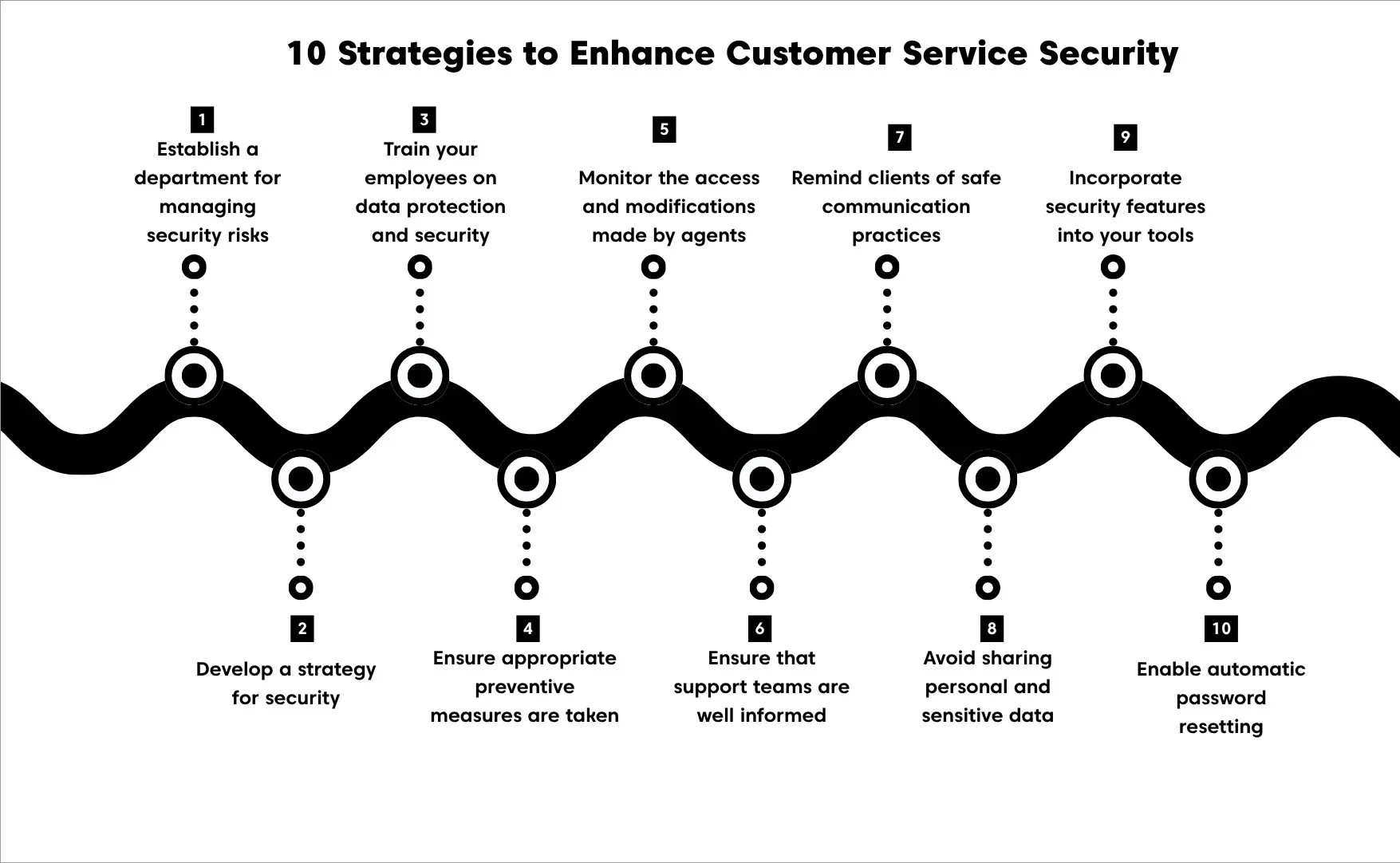
Let’s discuss 10 ways to improve customer security.
1. Assign security ownership and assess risks
Understanding your cybersecurity posture will enable you to implement a risk management program. Businesses need an expert or a team of experts to assess their risks and the steps needed to mitigate them.
Security owners or designated teams can help organizations:
- Evaluate risks by analyzing the probability of different types of threats.
- Identify and apply appropriate risk reduction methods.
- Keep track of internal data usage.
Security owners can develop effective security strategies to prevent potential cyber hazards and their consequences.
2. Develop a strategy for security
To enhance safety measures within your support team, it is crucial to consistently implement and update a strategy that minimizes potential risk while supporting overall customer service objectives.
Having a well-defined plan for dealing with potential attacks can significantly improve the speed and efficiency of your response.
This plan should secure data following a breach and outline the necessary steps to resolve the situation.
A readily available checklist outlining the signs of a breach and the steps to take in the event of such a security issue will significantly increase the chances of a prompt and secure response.
3. Educate and train your employees on data protection and security
Verizon’s Data Breach Investigations Report shows that human-related attack paths, including phishing, social engineering, and stolen credentials, remain significant security risks.
Employees are often the first line of defense against security threats. Regular training helps support teams recognize risks and respond appropriately before incidents occur.
Focus training on:
- Recognizing phishing emails, scams, and social engineering attacks.
- Handling sensitive customer information securely.
- Following password and access management policies.
- Understanding data privacy and compliance requirements.
- Using customer service tools securely and responsibly.
Ensure that your entire support team is trained on the importance of information security and aligned with established customer service standards.
Instruct them on the appropriate course of action in case of a suspected attack and methods for maintaining data security.
4. Establish clear incident reporting procedures
Even with strong preventive measures in place, security incidents can still occur.
Organizations should have clear reporting and escalation processes to ensure threats are addressed quickly and consistently.
Best practices include:
- Encouraging employees to report suspicious activity immediately.
- Defining clear escalation paths for potential security incidents.
- Documenting response procedures for different types of threats.
- Establishing communication protocols between support, IT, and security teams.
- Reviewing and updating incident response processes regularly.
Having clear reporting procedures helps organizations respond more effectively to security events and minimize potential business impact.
5. Monitor the access and modifications made by agents
Limit employee access to and management of customer data to a need-to-know basis. This can aid in preventing unauthorized entry and minimizing the likelihood of data breach incidents.
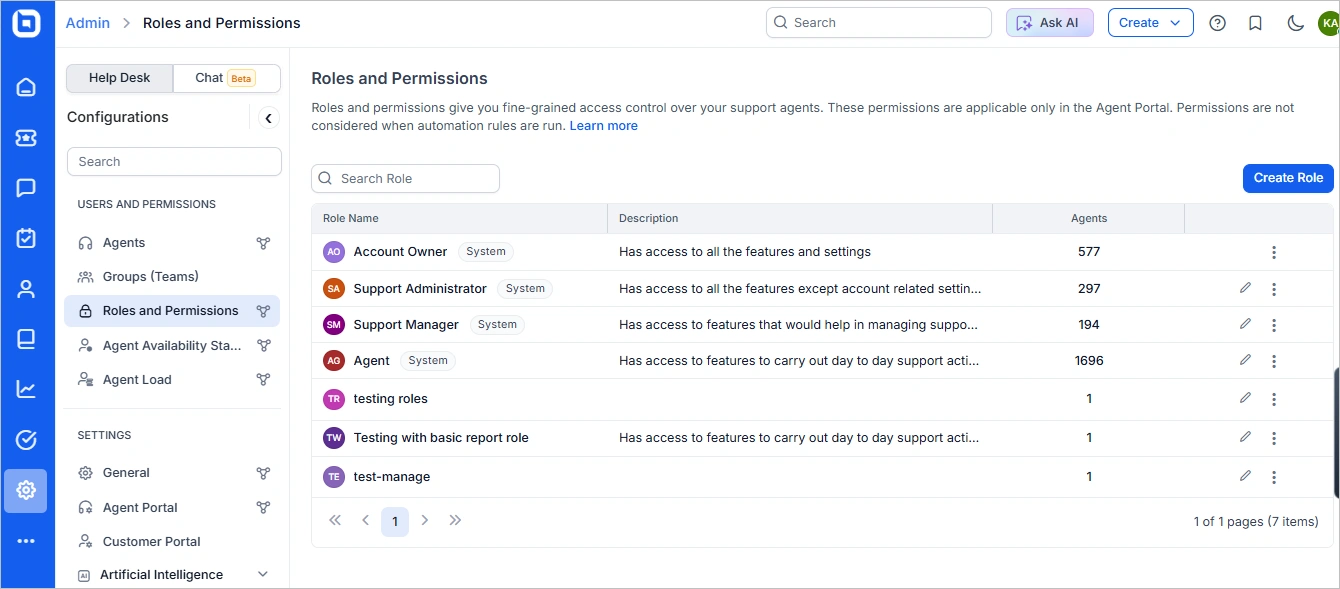
When customer service representatives require access, recording their entry to and alterations of client data will aid in detecting fraud and identifying hazardous situations sooner.
6. Keep support teams informed about emerging security risks
Cybersecurity threats continue to evolve, making ongoing communication essential. Support teams should stay informed about new attack methods, policy updates, and emerging risks that could affect customer data and support operations.
Best practices include:
- Sharing security updates and threat alerts regularly.
- Communicating changes to security policies and procedures.
- Reviewing lessons learned from past incidents.
- Encouraging discussions about emerging risks and mitigation strategies.
- Monitoring emerging cybersecurity threats relevant to support operations.
Keeping support teams informed helps organizations strengthen security awareness and respond more effectively to evolving threats.
7. Remind clients of safe communication practices
One of the best ways to ensure the safety and security of your customers’ data is by frequently reminding them to only communicate through official channels.
If it is the case for your company, reassure customers that your company will never initiate contact via phone, email, or text asking for sensitive information such as passwords, credit card numbers, or social security numbers.
Have this reminder prominently featured in your customer portal and possibly as an add-on to official communications.
8. Avoid sharing personal and sensitive data
This applies to both employees and customers.
According to IBM’s Cost of a Data Breach Report, compromised credentials, phishing attacks, and human error continue to be common factors in security incidents.
Employees should also avoid requesting personal information from customers unless it is absolutely necessary and collected through secure channels.
9. Incorporate security features into your tools
Whenever feasible, incorporate secure mechanisms within your systems instead of depending on individuals to manually adhere to the correct protocols.
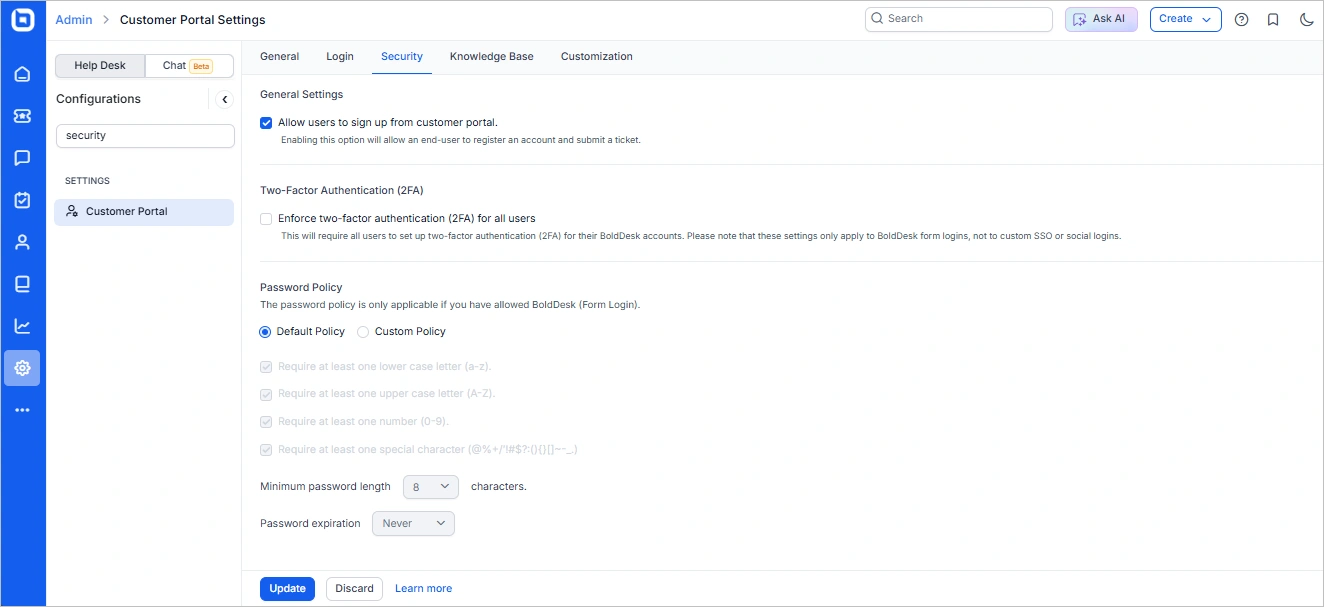
Implementing multi-factor authentication (MFA) might be an effective solution for enhancing the security of your customer service.
10. Implement secure account recovery processes
Account recovery is often targeted by attackers because it can provide access to customer accounts without requiring the original password.
Organizations should design recovery processes that verify a user’s identity while minimizing the risk of unauthorized access.
Best practices include:
- Using multi-factor authentication (MFA) during account recovery.
- Providing secure recovery tokens or verification codes instead of relying solely on passwords.
- Requiring additional identity verification before granting account access.
- Automating recovery workflows to reduce manual handling of sensitive information.
- Monitoring and reviewing suspicious account recovery attempts for potential fraud.
A secure account recovery process helps organizations balance customer convenience with strong security controls, reducing the risk of account compromise and unauthorized access to sensitive information.
Why is customer service security important?
Customer service security protects both your customers and your business from potential harm.
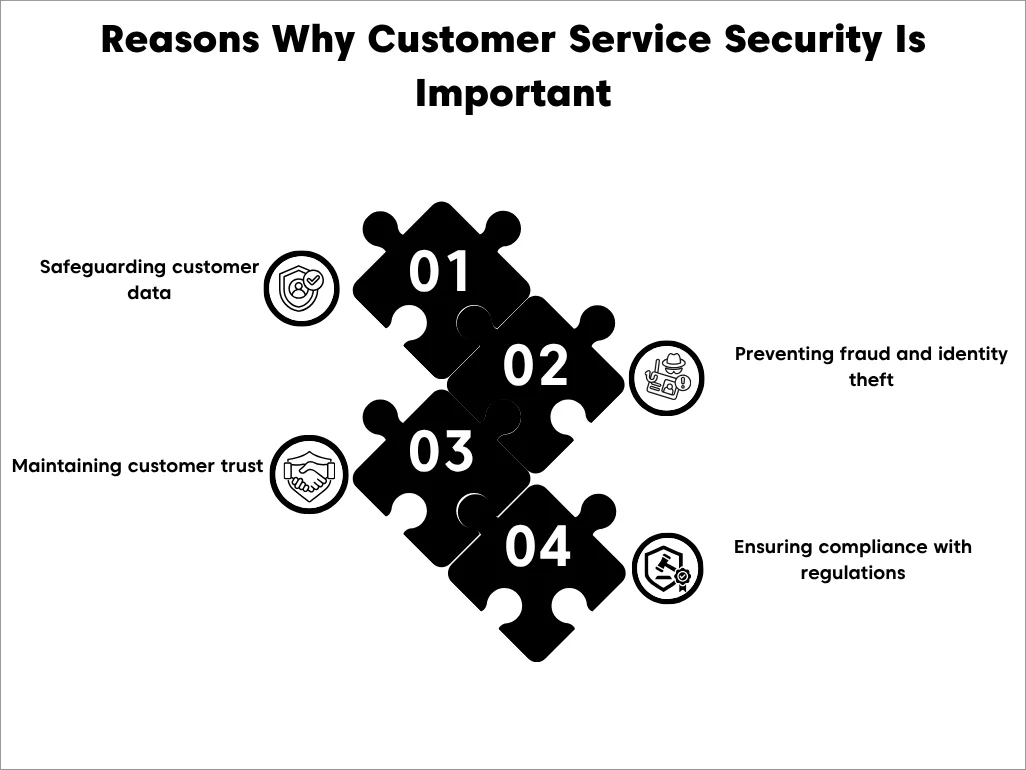
Here’s a breakdown of why it’s important:
- Safeguarding customer data: Customer service interactions often involve sensitive information like addresses, credit card numbers, and account details. Robust security measures ensure this personal data is protected from unauthorized access, breaches, or leaks.
- Preventing fraud and identity theft: Hackers and scammers may target or impersonate customer service representatives to gain access to accounts or personal information. Strong security protocols minimize the risk of fraudulent activity and identity theft.
- Maintaining customer trust: Customers entrust their data to your business when they seek support. When you have a reputation for high security standards, it builds public trust in your brand.
- Ensuring compliance with regulations: Many regions have data privacy regulations that require specific safety precautions for customer information. Robust customer service security helps support compliance with applicable privacy and security requirements while reducing regulatory and data-protection risks.
How customer service software improves customer service security
Customer service software plays a critical role in protecting customer information and reducing security risks.
When evaluating a solution, organizations should prioritize features that support data protection, access control, compliance, and business continuity.
Key security capabilities to look for include:
- Encryption in transit and at rest to protect customer data during transmission and storage.
- Secure authentication methods such as multi-factor authentication (MFA) and single sign-on (SSO) to prevent unauthorized access.
- Audit logs and activity tracking that help teams monitor system activity and investigate potential security incidents.
- Role-based access control (RBAC) to ensure employees only have access to the data required for their responsibilities.
- IP restrictions and access controls to limit access to approved IP addresses or ranges.
- Data backup and disaster recovery capabilities that help prevent data loss and support business continuity.
- Compliance capabilities and security controls that support applicable privacy and regulatory requirements, including GDPR, HIPAA, and SOC 2 assurance requirements.
These capabilities help organizations safeguard customer data while maintaining secure and reliable support operations.
Enhance your customer service security with proven strategies
Given the potential impact of cyberattacks and the importance of protecting customer information, customer service security should be a top priority for any organization.
By adopting these robust security measures and fostering a culture of security awareness, organizations can safeguard customer data, maintain trust, and ensure the overall success of their customer service operations.
Strengthen customer service security with secure, SOC 2® Type 2-certified customer service software. Explore BoldDesk® through a free trial and discover how support teams can protect customer data more effectively.
Related articles
- 10 Ultimate Strategies to Identify and Overcome Customer Pain Points
- 7 Best Techniques to Improve Customer Experience
- What is Good Customer Service? 9 Best Practices and Examples
FAQs on customer service security
Customer service teams can use authentication methods such as multi-factor authentication, one-time verification codes, secure recovery tokens, or approved identity-verification workflows before sharing sensitive information.
Support teams should protect personally identifiable information (PII), payment details, account credentials, contact information, and any confidential customer communications.
Yes. Remote teams can increase risk if employees use unsecured networks, weak passwords, or personal devices without proper security controls. Secure access policies and employee training help reduce these risks.
Organizations should contain the breach, investigate the cause, notify affected parties where required, strengthen security controls, and review processes to prevent similar incidents.
Role-based access control limits access to customer data based on job responsibilities, reducing the risk of unauthorized access and accidental exposure of sensitive information.