





TL;DR: Customer service in schools is the process of supporting students, parents, staff, and other stakeholders through clear communication, timely responses, self-service resources, and efficient support systems. Schools improve customer service by making help easy to access, resolving issues quickly, and providing consistent support that builds trust, satisfaction, engagement, and student success.
Schools are expected to serve more than students alone. Parents, teachers, staff, board members, and community stakeholders all rely on timely communication, accessible information, and responsive support.
When questions go unanswered, concerns are not addressed promptly, or services become difficult to access, trust and engagement can suffer.
Customer service in schools helps address these challenges by creating consistent, student-centered experiences across every interaction, from admissions and academic support to parent communication and administrative services.
Many institutions strengthen these efforts with a help desk for education that centralizes requests and improves service delivery. The result is stronger stakeholder relationships, better communication, and a more positive educational experience for everyone involved.
In this blog, you’ll learn about the essentials, examples, and strategies for improving customer service in schools.
What is customer service in schools?
Customer service in schools refers to the assistance provided to students, parents, and stakeholders to ensure a positive learning environment.
School customer service is about building and maintaining strong relationships with stakeholders, parents, tutors, and learners.
Regarding students, good customer support in schools includes:
- Timely and accurate responses to all concerns.
- Providing them with self-service options.
- Recognizing them for their achievements.
For parents, good customer service involves:
- Giving them regular updates on their children’s academic performance.
- Timely responses to questions on payroll, upcoming meetings or events, and school curriculum.
- Assuring them of the safety and well-being of their children.
Other customers such as teachers, board members, and donors also need excellent support from the school, such as:
- Involving them in school activities like extracurricular activities, annual general meetings (AGM), and fundraisers.
- Providing reports on overall school performance.
- Ensuring timely payments of salaries, reimbursements, and software subscriptions.
- Providing teaching and learning resources.
The level of support experience for every individual in the education industry will determine how the school values, supports, and cares for them.
Common school customer service requests
Schools receive a wide variety of service requests from students, parents, staff, and visitors each day.
Identifying the most common request types, service gaps, and improvement opportunities helps schools deliver faster, more consistent support experiences.
| Requester | Typical request | Common failure mode | Recommended fix |
| Parent | Attendance updates | Delayed responses or uncertain ownership | Define response procedures and provide self-service access where appropriate |
| Parent | Admissions and enrollment inquiries | Multiple handoffs between departments | Create a clear admissions process with a single point of contact |
| Parent | Fee and payment questions | Inconsistent information across channels | Maintain centralized payment information and FAQs |
| Student | Learning platform access issues | Requests routed between multiple teams | Use ticketing systems with clear ownership and tracking |
| Student | Timetable or scheduling questions | Information difficult to locate | Provide up-to-date student portals and self-service resources |
| Teacher | Classroom technology support | Requests lost in email chains | Implement structured IT request management workflows |
| Staff | HR or administrative requests | Limited visibility into request status | Use request tracking and workflow automation |
| Visitor | Appointment and campus access inquiries | Unclear check-in procedures | Standardize visitor management and communication processes |
Schools that understand their most common request types can reduce delays, improve communication, and create a more consistent customer service experience for every stakeholder.
Customer service in private schools
Private and independent schools operate in a competitive enrollment environment where fee-paying families often expect personalized support, responsive communication, and a consistently positive experience throughout their child’s education.
As a result, customer service plays an important role in building trust, strengthening parent relationships, and maintaining a school’s reputation.
Key elements of effective customer service in private schools include:
- Responsive admissions support: Prompt and clear communication helps families make informed enrollment decisions and creates a strong first impression.
- Transparent communication: Because families are making a direct financial commitment, they typically have higher expectations for service and expect clear information about tuition, financial aid, school policies, academic progress, and the services included in their fees.
- Regular progress updates: Consistent communication about academic performance and student well-being helps keep families informed and engaged.
- Accessible support resources: Parent portals, FAQs, and self-service resources make it easier for families to find answers without waiting for assistance.
- Consistent follow-up: Questions, concerns, and complaints should be acknowledged and addressed promptly to maintain trust, reduce dissatisfaction, and protect the school’s reputation.
Strong customer service helps private and independent schools improve family satisfaction, increase engagement, strengthen retention, protect their reputation, and create a more positive experience for students and parents alike.
What customer service looks like for staff working in schools
Customer service in schools extends far beyond the front office. Every employee who answers a question, explains a process, resolves a problem, or connects someone with the right resource contributes to the overall experience students, parents, staff, and visitors have with the school.
In practice, this can look different across departments:
- Front-office and administrative staff are often the first point of contact for families, answering admissions, attendance, fee, and policy questions, managing appointments, addressing parent concerns, and escalating issues when needed.
- Teachers support families by communicating academic progress, addressing concerns, setting expectations, and helping students access the support they need.
- Admissions and finance teams guide families through enrollment requirements, tuition, financial aid, payment processes, and important deadlines.
- IT, HR, facilities, and administrative teams deliver internal services by resolving technical issues, managing employee requests, providing access to resources, and maintaining smooth school operations.
- Support staff across departments often manage challenging conversations, address complaints, de-escalate conflicts, coordinate follow-up actions, and ensure stakeholders receive accurate information and timely resolutions.
Consistency is especially important because families frequently interact with multiple departments before an issue is resolved.
While this article focuses on K-12 schools, colleges and universities face many of the same challenges, including admissions inquiries, student services requests, campus IT support, and cross-department communication. Learn more about customer service in higher education and how institutions manage support at scale.
Benefits of customer service in educational institutions
Effective customer service in schools means solving issues for students, parents, and staff to guarantee educational success when they arise.
Let’s look at the key benefits of providing customer service in the education sector.
Creates a positive reputation
The reputation of a school is built on the success stories it creates and the care it shows for every member involved, be it teachers, parents, board members, or staff.
Prioritizing students’ success, providing effective communication, and celebrating their success drives a positive learning environment that will attract more learners.
What’s more, a parent who has good experience with a school will most likely recommend it to other parents, helping build the school’s reputation.
Builds trust between parents and school
Trust begins when parents feel they can rely on your school for their children’s needs.
Excellent and transparent communication when addressing issues and concerns helps parents believe that your school is concerned about their student’s education and well-being.
Therefore, parents will feel confident and engage positively because they can rely on your school to handle issues positively, keep promises, and act in the best interest of their children.
Increases financial opportunities
More scholars means more funding. This means that when your school enrolls more students, it will gain more revenue from fees.
However, without the best support experience, some learners will churn, and new learners won’t join your school.
Good customer service also attracts more donors, contributions from parent-teacher associations (PTAs), and scholarships to make education more affordable, reducing the financial burden on families and allowing students to attend school without the burden of tuition.
For example, the LeBron James Family Foundation partnered with the University of Akron to provide eligible I PROMISE students with four-year college scholarship opportunities, highlighting the impact of strong community support for education.
Enhances student achievement
According to Highereddive, four-year public institutions see the highest persistence and retention rates, with 86.4% of their new students returning to higher education for their second year and 78% electing to stay at the same college.
Customer service is the key to unlocking students’ potential and success. Have you ever sat down with your children and asked what grades they scored or what academic challenges they are facing?
Students’ success relies on providing them with the right learning materials, guiding and supporting them with academic problems, giving them full attention, and providing timely feedback on their concerns.
By meeting all these school customer service expectations, learners will feel cared for and motivated to pursue their academic goals.
Better conflict resolution
While conflict might seem like a negative experience, it also presents an opportunity for growth, success, and improvement in customer service in schools.
Managing conflict in schools lies in proactive communication, empathy, and problem-solving, ensuring that both parties are heard, respected, and satisfied with the outcome.
A sympathetic approach can help solve issues between teachers, parents, and students quickly and effectively.
Strategies for boosting customer support in education
Every school’s goal is to meet parents’ and students’ needs and foster a positive learning environment by improving their customer service.
Since students spend most of their time in school, it makes them feel loved, hence becoming their second home.
Below are some of the strategies for effective customer service in schools:
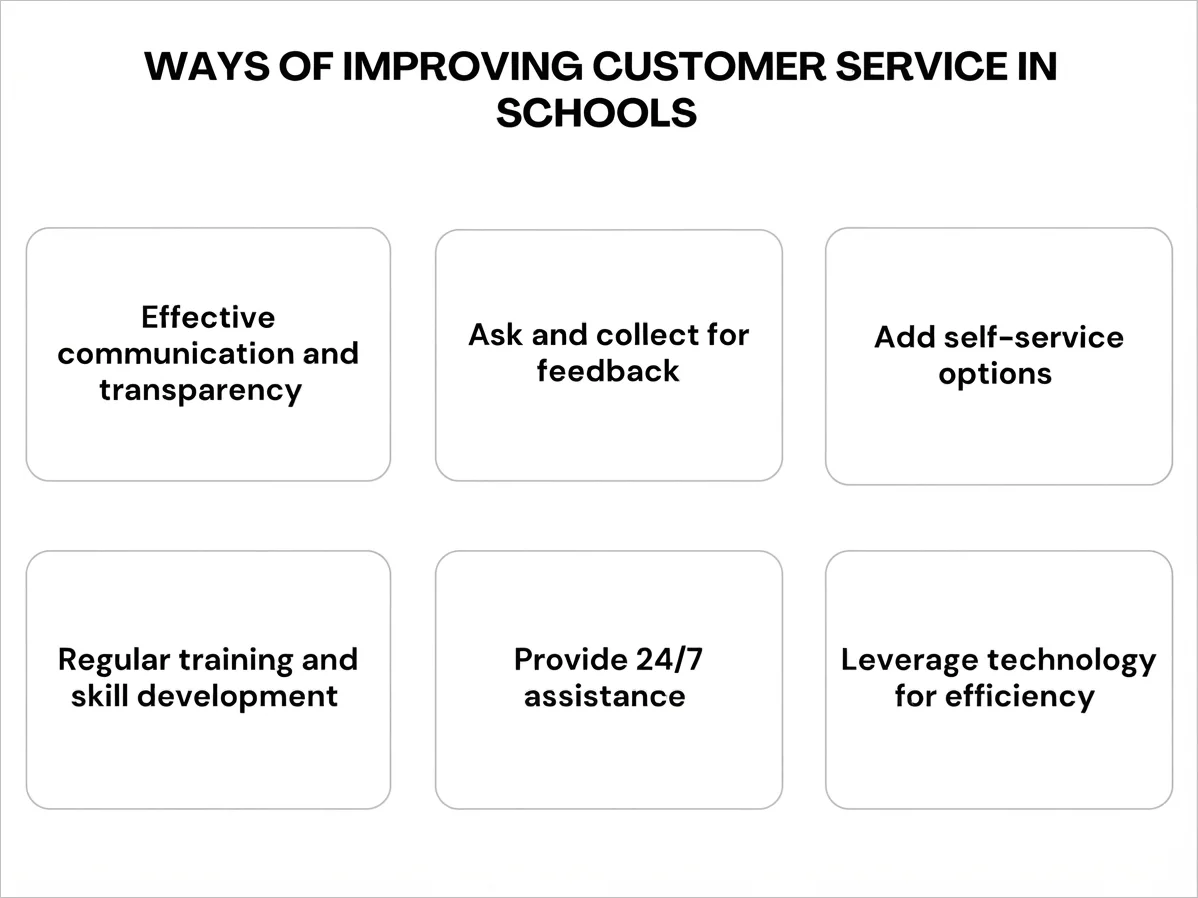
Effective communication and transparency
Good communication involves providing parents, learners, and staff with easily accessible information and resources needed for them to excel.
Schools that regularly communicate with parents via letters, meetings, and digital platforms like WhatsApp promote parents’ involvement in their children’s education.
For instance, a parent may call the school about a question concerning the student’s academic progress. They need feedback regarding the matter.
Social media provides real-time communication for schools by posting updates about school events, sharing emergency announcements on school portals, and answering queries.
Omnichannel customer service allows stakeholders to choose suitable communication platforms and channels such as email, live chat, phones, WhatsApp, social media, and text messages to streamline customer interactions.
Omnichannel communication allows quick and efficient responses to questions; for instance, AI chatbots that answer questions on school websites or parent portals reduce the need for your staff to answer repetitive questions.
Ask for and collect feedback
For any school to have a successful support system behind it, feedback is the way to go.
Find out what your students, parents, and other stakeholders think of your support or the education system in general, and if they have any suggestions on how to do things better to ensure success.
Conducting feedback through surveys, suggestion boxes, and focus groups can help your staff address issues and better understand them.
For instance, you can send a survey question by asking parents how satisfied they are with their children’s progress, or by asking students if they feel supported in their studies.
When teachers listen to their students’ concerns and address them immediately, your school will prevent conflicts and misunderstandings and, hence, improve student-parent relationships.
Add self-serve options
The foundation of excellent customer service in schools is giving students and parents the ability to help themselves when needed.
Learn how a self-service platform allows learners and their families to access any information they need from your school without any assistance.
By offering a knowledge base, learners and their parents can find quick answers to their queries, explore education topics, and troubleshoot common problems like failed online fee payments.
According to K-12dive, 82% of parents were satisfied with the district’s customer service when they reached out to the school system.
Self-service tools, such as parent portals, let parents monitor their children’s academic progress or attendance at any time.
Regular training and skill development
The more your school invests in training, the better equipped your staff will be to foster positive relationships and handle any situation.
Consider training and development methods such as onboarding bootcamps, seminars, e-learning, workshops, and community forums to ensure school support teams have the right knowledge and skills.
Regularly teach your team customer service skills such as communication, problem-solving, conflict resolution, and empathy, which will assist them in handling complaints better.
Develop a resource library where staff can access frequently asked questions, troubleshooting guides, and best practices, which helps them resolve common issues quickly.
Provide 24/7 assistance
In education, immediate assistance is a necessity for supporting students and parents who need help outside typical school hours.
Schools can utilize customer service tools such as live chat, self-service, omnichannel inbox, or AI to guarantee parents and students get assistance from anywhere, at any time, or any hour of the day, without having to wait for school to open.
A ticketing system can create and send automated canned responses whenever students or parents submit queries during off-hours to acknowledge receipt and provide an alternative option to get help.
Smarter Conversations. Faster Resolutions.
Empower your team with AI-powered omnichannel support that brings every customer interaction into a single platform.

Leverage technology for efficiency
Learning without technology is like a car without wheels. Technology transforms both learning and teaching. Schools should consider the following to improve support and productivity.
- Use AI Copilot to answer common parent-student questions, get AI-generated ideas, and translate messages to different languages.
- Implement school help desk software to track and manage support requests, automate workflows, and improve service delivery for students, parents, and staff.
- Use automation to send students and parents automated messages about attendance, school events, and school policies and upgrades.
- Use knowledge base software as a repository of information for school policies, how-to articles, videos, and FAQs. It provides teachers, parents, and students with a centralized way to find quick answers without direct assistance from the school. Access to information helps schools reduce support tickets and workload.
- Create dedicated customer self-service portals for parents to monitor their children’s progress and attendance, while allowing students to access their schedules, track their study hours, submit assignments, and more.
If you are committed to optimizing technology in schools, BoldDesk help desk software is the ultimate solution.
With its powerful features all in one, your school can efficiently manage support requests and automate communication, ensuring students, parents, and staff have quick access to the information they need.
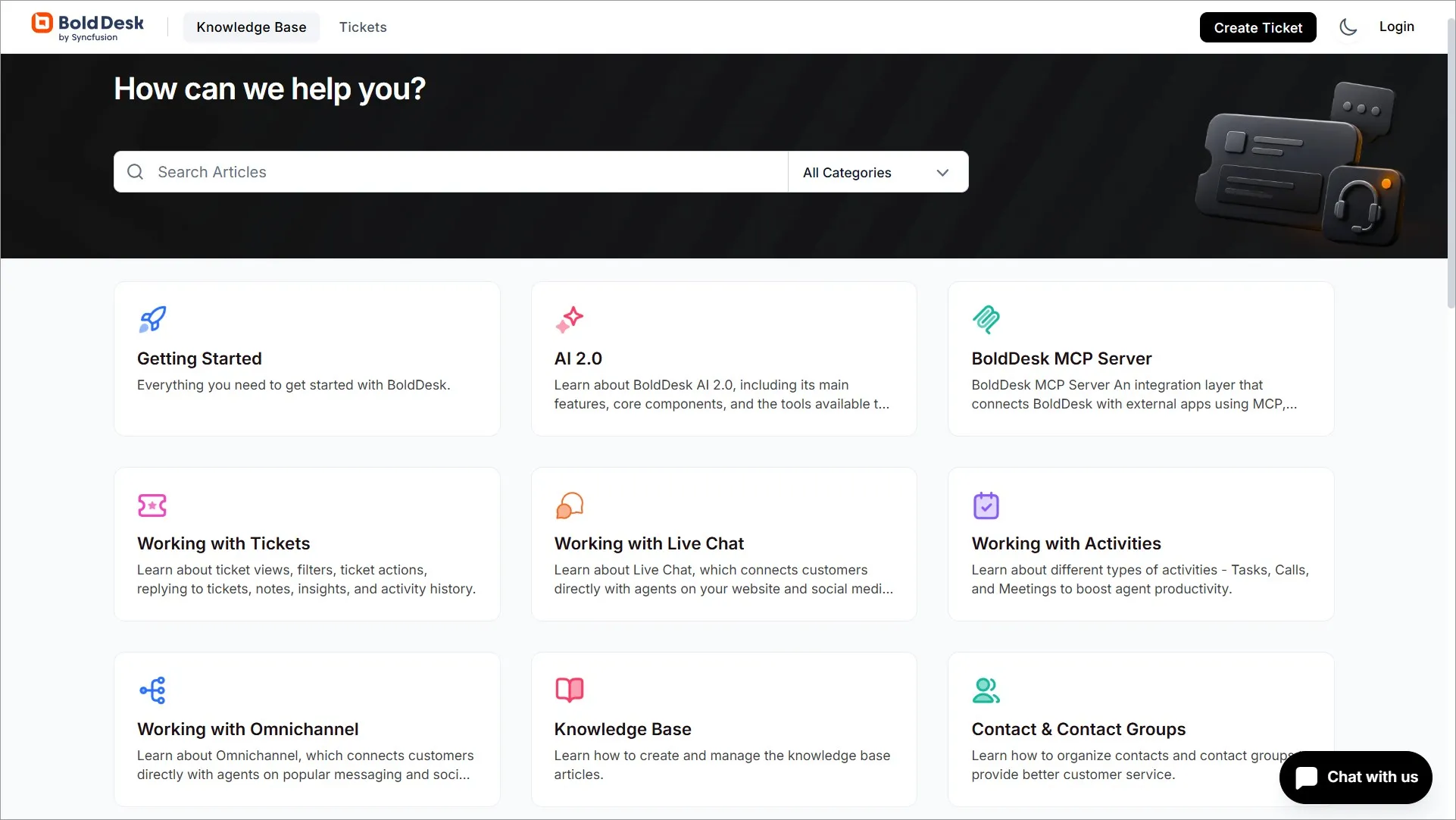
All these tools centralize the search for quick answers by teachers, parents, and students without direct assistance from the school.
In educational settings, support interactions involve students, parents, and staff, each with unique expectations.
Following help desk do’s and don’ts for the education sector can help teams communicate clearly, stay consistent across stakeholders, and avoid common issues that disrupt coordination.
What research says about customer service in schools
Research on school customer experience highlights three factors that consistently influence how families perceive and interact with educational institutions: communication, consistency, and accessibility.
- Communication drives parent satisfaction: A 2025 survey by GreatSchools found that 90% of parents who were likely to recommend their child’s school were satisfied with school communication, compared with just 19% of parents who were unlikely to recommend it.
- Accessible information reduces friction: The same GreatSchools survey found that 74% of parents who were likely to recommend their school said information was easy to find, compared with only 20% of parents who were less likely to recommend it.
- Consistency remains a challenge: Research from NSPRA and Qualtrics found that while 63% of respondents said their district places a high or very high priority on positive external experiences, only 38% considered their district very or extremely effective at delivering them consistently.
Together, these findings suggest that effective customer service in schools depends not only on responsive support but also on how easily families can access information, receive consistent communication, and build trust in the institution.
Examples of excellent customer service in schools
Excellent customer service is crucial in schools because it creates a supportive, efficient, and responsive environment for learners.
Everyday examples of good customer service in schools
Here are some of the best examples of good customer service in schools:
| Situation | Poor response | Better response |
| A parent asks about admission requirements. | The parent is transferred between multiple departments without clear guidance. | Admissions staff provide a single point of contact, explain requirements clearly, and outline the next steps. |
| A parent requests attendance information. | The inquiry sits unanswered for several days. | Staff respond promptly, provide the requested information, and explain attendance policies if needed. |
| A family raises a complaint about a school policy. | The concern is ignored or receives a generic response. | Staff acknowledge the concern, explain the policy, and provide a clear resolution path. |
| A student cannot access the learning portal. | The student is repeatedly redirected to different departments. | The issue is logged, assigned to the appropriate team, and tracked until resolution. |
| A parent asks about tuition or fee payments. | Information is difficult to locate or inconsistent across channels. | The school provides clear payment instructions, deadlines, and FAQs. |
| A visitor arrives for a scheduled appointment. | The check-in process is unclear and time-consuming. | Reception staff greet the visitor, verify details, and direct them efficiently. |
| A teacher reports a classroom technology issue. | The request gets lost in email chains. | The support team tracks the issue and provides updates until it is resolved. |
| A parent requests an update on academic performance. | The family receives a generic response with little context. | Teachers provide personalized feedback and recommend next steps. |
| A student needs counseling or wellbeing support. | The student is referred from one office to another. | Staff connects the student directly with the appropriate support service. |
| A parent asks about an upcoming school event. | Different departments provide conflicting information. | Staff provides consistent, up-to-date information across all communication channels. |
Real-world examples of customer service in schools
The examples below demonstrate how schools and universities use these customer service principles in practice:
California State University, Northridge’s Mobile App (CSUNMP)
With this mobile app, students can access dozens of features. They can ask any question and get instant feedback since it is a phone call service. Features of the mobile app include:
- Tuition and bill payment system
- Class enrollment from phone
- Social media integration
- Ask Matty, a chatbot that answers questions and solves problems
- Employee directory for quick customer service outreach
- Student support resource
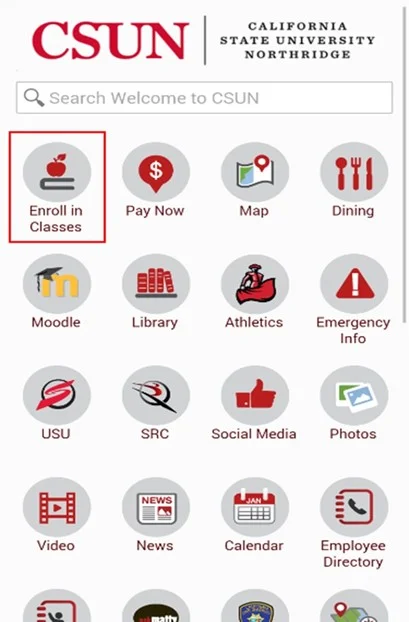
CSUNMP serves as a knowledge base because it’s user-friendly, convenient, and focused on students’ success.
It combines real-time data, personalized features, easy access to academic information, and school services in one location.
Boston University Newsletter
The Boston University Newsletter produces online and offline newsletters that keep customers informed about the latest school development programs.
It serves as a crucial tool to update students, staff, and faculty about the institution’s events, achievements, news, and developments.
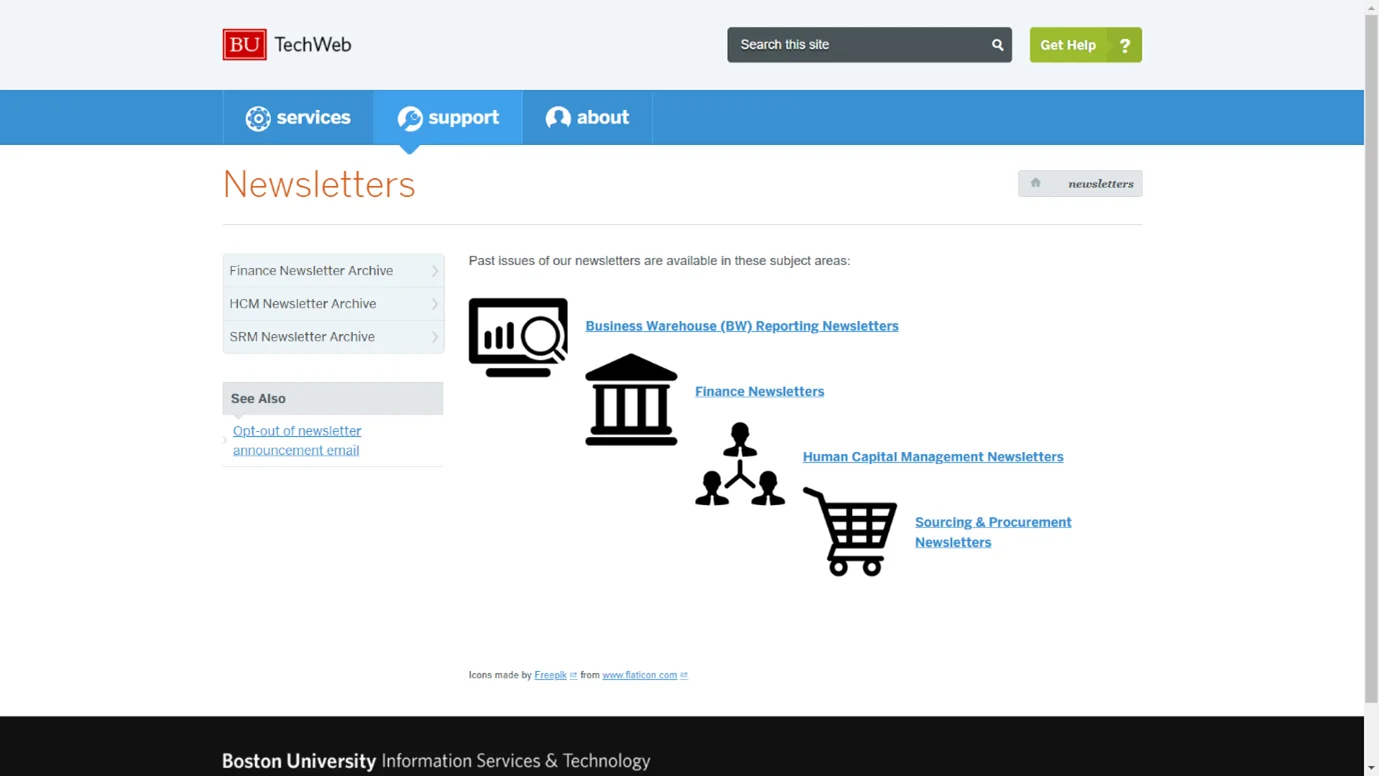
The newsletter structure is flexible and can be modified to fit the specific interests of a target audience.
Kern High School District (KHSD), California
KHSD receives large numbers of questions across different departments and different support groups.
KHSD provides a high-quality education that prepares students for university, careers, and future life. Features of KHSD include:
- Academic programs
- Community engagement
- Technology and facilities
- Extracurricular activities
KHSD is committed to improving students’ academic outcomes through expanding colleges, improving student achievement, and promoting equality.
School District Philadelphia’s Knowledge Base (SDPKB)
School District Philadelphia has the perfect knowledge base for school customer service that ensures consistency in customer support. Features of SDPKB include:
- Technology support
- Parent and community engagement
- Student performance and data analysis
It supports efficient communication, improves engagement with parents and students, and helps your staff provide accurate responses.
Achieving success with effective customer service in schools
Customer service in school is about creating a positive and conducive environment that enhances the educational experience and creates engagement among students, parents, and staff.
Customer support in education strengthens community relationships, enhances students’ success, and creates a good working environment.
When you focus on providing school customer service, your school will strengthen its bond and partnership with families, improve student outcomes, and build a positive school culture that benefits everyone involved.
You can book a 15-day free trial to see how BoldDesk allows your school to solve issues, reduce workloads, and track the resolution process. Contact us if you have any questions or suggestions.
I hope this article is helpful! Feel free to leave a comment in the section below.
Related articles
- Strategies to Provide Efficient Customer Service
- Customer Service Training: The Ultimate Guide for Your Team
- Essential Customer Service Channels for Modern Businesses
FAQs
Teaching is not the same as customer service, but it includes many customer service skills. Teachers support students, communicate with parents, solve problems, and respond to needs while maintaining academic standards and educational goals.
Yes, tutoring can involve customer service because tutors provide support, answer questions, communicate with learners and parents, and help meet educational needs. However, the primary goal is learning and student progress, not customer satisfaction alone.
Schools can improve customer service by responding promptly, communicating clearly, collecting feedback, offering self-service resources, training staff, and using technology to manage student, parent, and staff requests more efficiently.
Good customer service in a school means providing timely responses, clear communication, helpful support, accurate information, and consistent follow-up so students, parents, staff, and visitors feel informed, respected, and supported.