




TL;DR: Live chat statistics highlight its impact on customer experience and business growth. Research shows strong customer preference for live chat, high satisfaction levels, improved conversions, and greater customer loyalty. As AI adoption increases, live chat software continues to evolve as a key customer engagement and support channel.
Instant communication has become the norm in today’s world. Live chat has gone from being a “nice-to-have” feature to becoming the cornerstone of customer service.
It’s not only about convenience. Live chat software is transforming how brands engage with customers by delivering immediate, personalized support experiences.
However, the real story relies on the numbers. Live chat statistics reveal its great impact, from increasing satisfaction and loyalty to revenue generation and operational efficiency.
Those statistics tell us why live chat is important and how it is shaping the future of customer engagement.
In this article, we’ll learn the importance of live chat and how it can lead to growth and success in your business.
Live chat statistics based on client preferences
In no time, live chat has emerged as the preferred communication for most clients seeking assistance and online guidance.
Because it streamlines communication, live chat consistently features at the top of most customer service communication channel options.
These live chat conversion statistics will help you know and understand consumer preferences, which is key to improving customer experience and driving the success of any business.
- 73% of clients say that live chat is the best way to communicate with a business. (invespCRO)
- 82% of customers would use live chat on mobile devices if available. (SaaSworthy)
- About 15% of all visitors join live chat conversations on a website. (Tidio)
- 66% of customers often search for websites that offer live chat after using it. (WhosOn)
- 38% of clients are more likely to purchase from a company that provides live chat support. (Kayako)
- Live chat is 17%-30% more affordable compared to a phone call. (Call Center Helper)
- 63% of consumers prefer live chat support as their communication channel. (Hiver)
- 20% of shoppers prefer to use live chat over other means of communication. (SaaSworthy)
- Millennials prefer live chat support over other communication channels due to its convenience and speed. (Comms100)
- 68% of online clients use live chat to communicate. (WhosOn)
- 62% of live chat interactions usually happen on mobile devices, which is convenient for users who are on the go. (Chatim)
- 44% of online customers say that one of the greatest features a website can have is the opportunity to ask a live person questions while in the middle of an online buying experience. (Forrester)
- 51% of consumers prefer to use live chat, as it enables effortless multitasking. (Upscope)
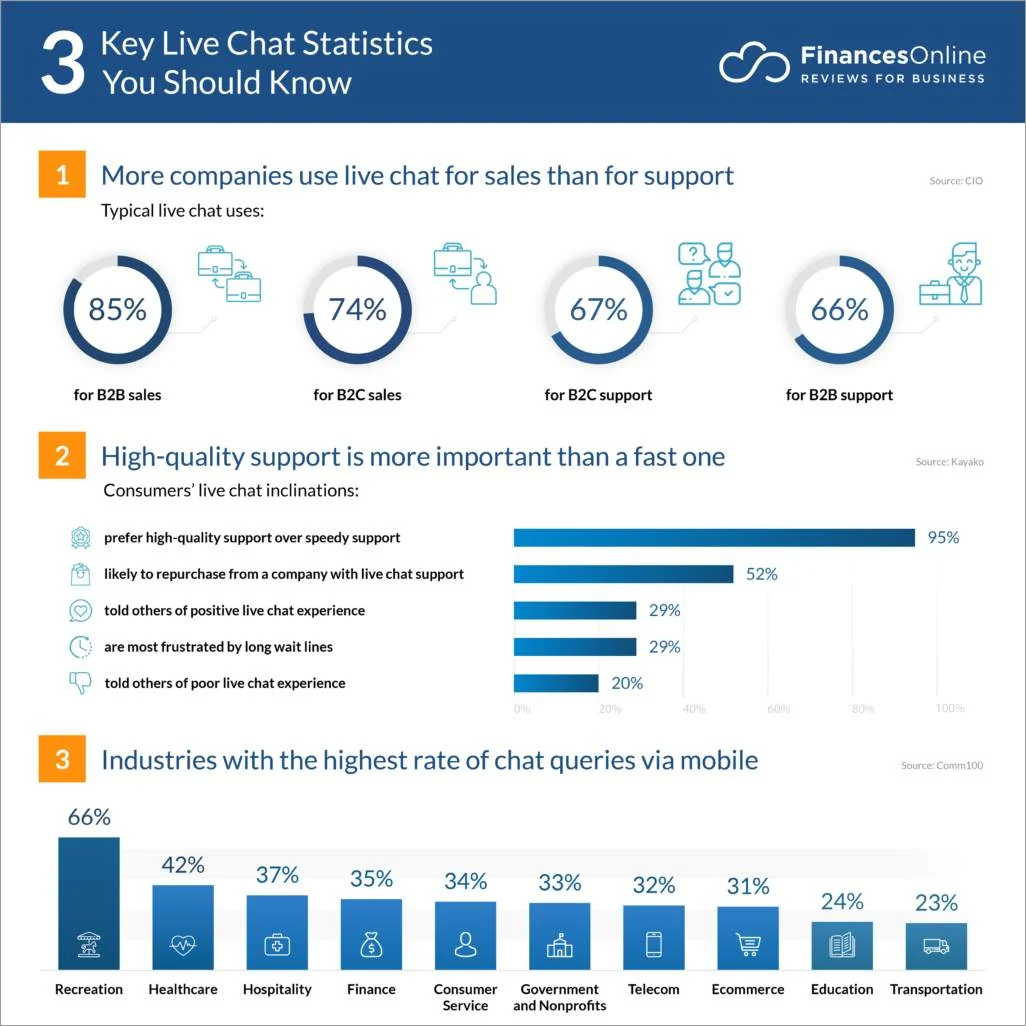
Most customers today choose to utilize live chat as their primary communication channel, as it is more immediate and hassle-free, avoiding lengthy email exchanges and phone calls.
Therefore, businesses should implement it to gain insights into customer preferences, which enables them to tailor the experience for each client.
Live chat usage statistics across demographics
Usage trends refer to how various groups of people utilize the live chat tool. These statistics assist companies in determining their customer base and optimizing corresponding support strategies.
- 41% of clients aged 18–46 would rather use online customer care than use a telephone. (rep.ai)
- 61% of consumers under 24 acknowledge that they actively avoid calling companies, with 60% of millennials favoring the live chat channel to get responses to shopping queries rather than traditional means. (WhosOn)
- Reports show that respondents aged 18–34 have used live chat numerous times. 32.9% of respondents aged 35–54 and 22.3% aged 55 and older have also used live chat support but only a few times. (Nurturely.io)
- By geography, North America is the leading region in live chat software usage. (Verified Market Research)
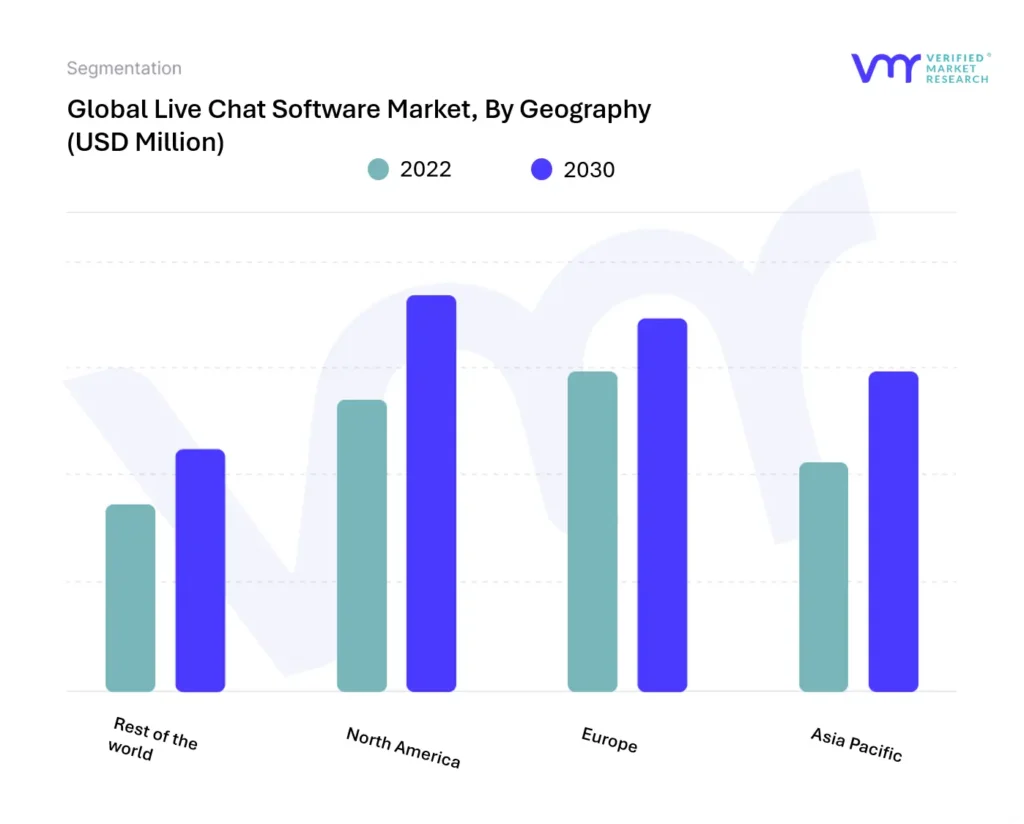
Knowing demographic usage can help organizations customize their live chat interfaces, response strategies, and customer communication styles for different customer segments.
Statistics on consumer satisfaction with live chat
Live chat reports show that live chat is the number one communication channel that highly satisfies clients compared to other means, such as email or phone.
- 87% of live chat conversations receive a positive CSAT rating. (Tidio)
- 63% of customers prefer to reuse a website that has a live chat feature when making repeat purchases. (WhosOn)
- Live chat has greater consumer satisfaction—about 92%. (Reve Chat)
- Of the clients who were invited to a live chat session, 94% expressed being highly satisfied with the experience. (Vitaldesign)
- 91% of consumers who utilize live chat claimed to be satisfied with its capabilities, such as providing timely answers to questions about products, assisting in decision-making for online product purchases, and solving customer service or technical support issues. (Vitaldesign)
Live chat support statistics on response and wait times
A stitch in time saves nine. Clients expect to receive quick responses to their queries, and if there are any delays, it can lead to dissatisfaction.
- The average wait time for an organization to respond to a message on live chat is 2 minutes 40 seconds. (SuperOffice)
- It takes around 20 seconds to respond to a live chat message. (SQM Group)
- Customer satisfaction can exceed 84% when responses arrive within 5-10 seconds. (LiveChat)
- 15 seconds is considered the average live chat response time among top-performing support teams, with the fastest responses recorded at nearly 5 seconds. (TechJury)
- It takes around 23 seconds to respond to a live chat message. (WhosOn)
These live chat statistics highlight how strongly customer satisfaction is tied to response speed. Businesses that provide fast, accurate assistance through live chat are more likely to improve customer experiences, strengthen loyalty, and increase engagement.
Impact of live chat on customer loyalty and retention
Live chat has become an increasingly important feature for brands aiming to retain their clients and make them loyal. It not only provides instant answers to client queries, but it also creates a connection between the client and the business.
- Over 60% of consumers are happier and more likely to return for repeat purchases from businesses that offer live chat support. (rep.ai)
- 75% of consumers claim that they will buy again from a business that offers customer support in their native language. (Slator)
- 41% of clients trust a company that provides live chat. (WhosOn)
- 79% of people living in the US believe that live chat helps solve problems quickly. (Upscope)
- Brands that offer a live chat feature are more likely to increase their efficiency in customer service by 15%. (WhosOn)
- Customer retention rate increases by 5% when using live chat. (SaaSworthy)
Tracking important live chat metrics can help organizations measure the impact of these improvements on retention and customer satisfaction.
Live chat market statistics for sales and conversion rates
With live chat support, agents can guide customers toward completing their purchases and suggest related products or services to clients during a chat, thus promoting upselling and cross-selling. Let’s look at some related statistics.
- Customers who interact with live chat agents are 2.8 times more likely to end up purchasing a product at the end of the conversation. (CampaignMonitor)
- 82% of clients who have communicated with a support agent via live chat are more likely to place an order. (Reve chat)
- Among clients who switched service providers, 83% stated that live chat influenced their decision. (WhosOn)
- 79% of organizations say providing a live chat tool has impacted their sales in a positive way. (SMB Guide)
- Clients who chat before making a purchase are estimated to increase revenue by 48%. (Upscope)
- Adding the live chat feature onto your website can increase conversion rates by 20%. (WhosOn)
- Having a live chat feature on your website will increase conversions by 40%. (SaaSworthy)
From these live chat statistics, it’s clear that the instant communication that live chat offers builds trust and motivates potential buyers to complete their purchases.
Statistics on future trends in live chat
As technology advances, live chat support will also improve. Features such as conversational AI, personalization, and data-driven interactions are becoming key trends in live chat.
These stats indicate future industry trends in live chat statistics and its impact.
- By 2029, agentic AI will resolve 80% of common customer service issues autonomously without human intervention. (Gartner)
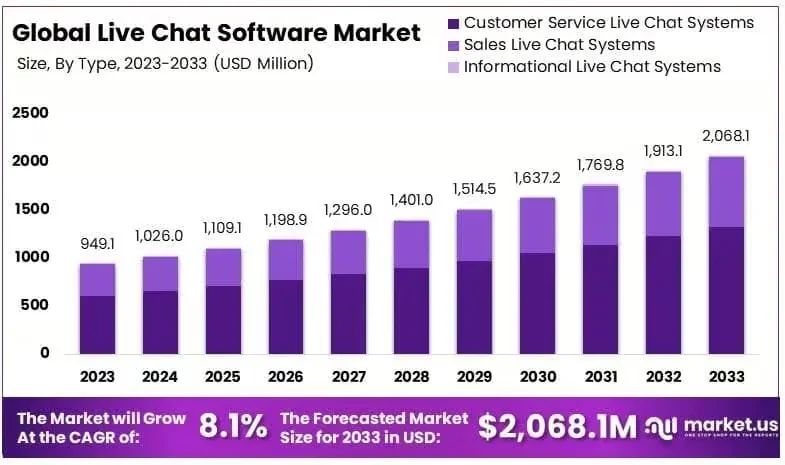
- The global live chat software market is estimated at $1.21 billion in 2025 and is projected to reach $1.78 billion by 2030. (MordorIntelligence)
Statistics were reviewed using publicly available industry reports and benchmark studies published or updated between 2020 and 2026.
Live chat statistics for AI usage offer insight into how organizations and users interact with automated systems, thus revealing trends and performance metrics. Nevertheless, support from a human agent is still more relevant for complicated or emotionally sensitive issues.
Utilize live chat statistics to secure the future of your business
Given the aforementioned live chat statistics, live chat is one of the most effective customer support channels available today.
Businesses evaluating the best live chat software solutions should prioritize features such as AI-powered assistance, analytics, automation, and omnichannel support.
Schedule a 30-minute live demo or use a 15-day free trial to see how live chat statistics in BoldDesk can help you provide instant replies and streamline the support process. For more information, contact the BoldDesk support team.
We’d love to hear feedback from you or any other suggestions you might have in the comment section below.
Related articles
- How to Add Live Chat to a Website in 8 Practical Steps
- Live Chat Support: Transforming Customer Engagement
- 11+ Best E-commerce Live Chat Tools for Customer Engagement