




TL;DR: Knowing how to say no to customers is essential for protecting service quality, team well-being, and long-term relationships. When requests exceed capabilities, violate policies, pose business risks, or cross behavioral boundaries, support teams should respond with the right approach to set boundaries politely without damaging trust.
Saying no to a customer is one of the hardest parts of support. A poorly worded refusal can trigger frustration, escalate a ticket, or make customers feel dismissed.
At the same time, saying yes to every request can create unrealistic expectations, strain your team, and reduce service standards.
While businesses strive to meet customer needs, the goal isn’t to shut customers down; it’s to protect service quality while preserving trust.
In this guide, you’ll learn how to say no to customers using practical tips and ready‑to‑use examples that help set boundaries without offending customers.
Why saying no matters in customer service
Knowing the value of saying no to a customer is an important part of delivering effective customer service. It helps support teams set clear boundaries, manage expectations realistically, and maintain consistent, trustworthy customer experiences.
Here are some key benefits of saying no to customers when necessary.
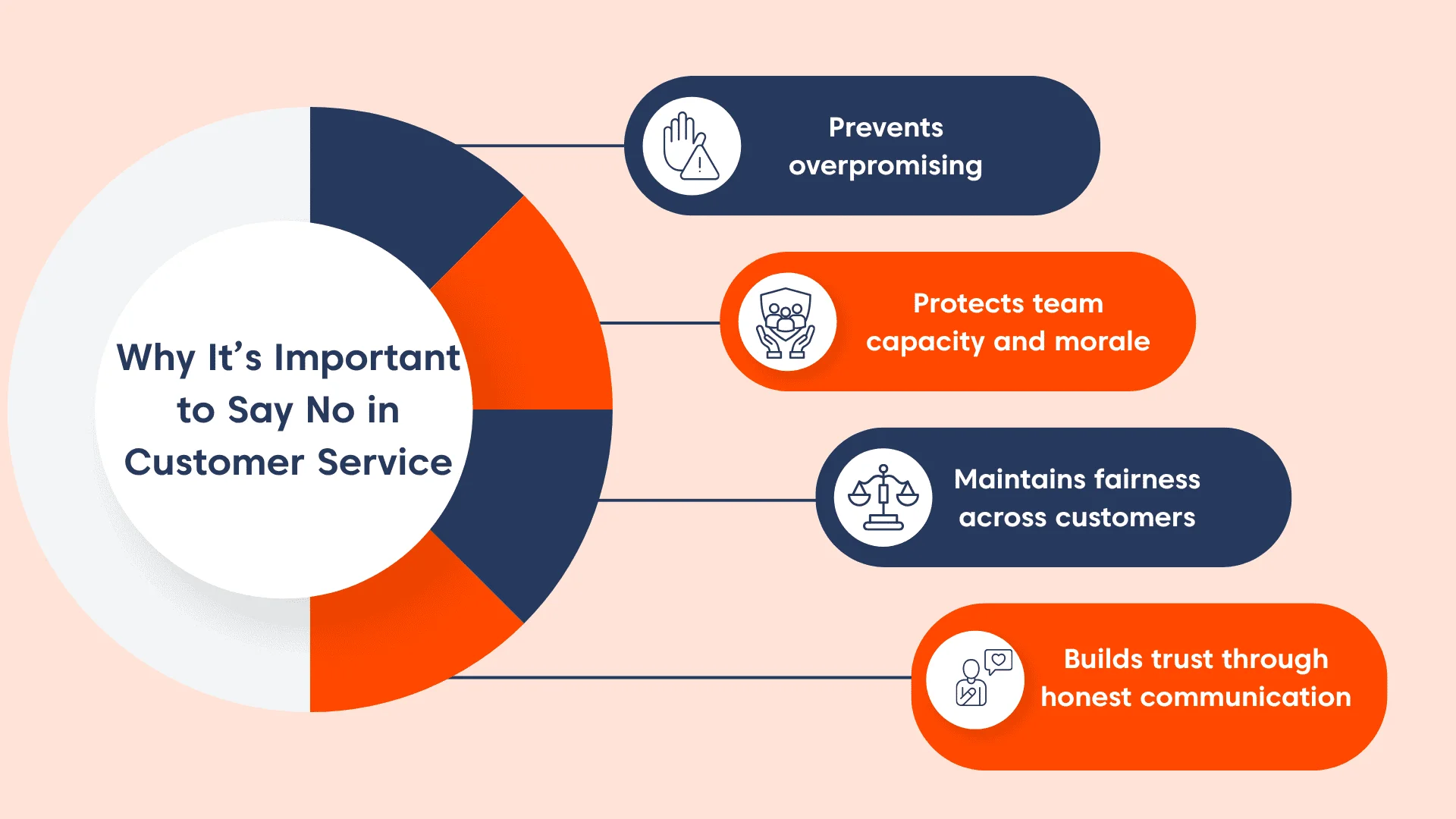
- Prevents overpromising: By declining requests that fall outside policies, timelines, or capabilities, support teams avoid commitments that cannot be met and reduce later frustration.
- Protects team capacity and morale: When teams are expected to say yes to everything, workloads quickly become unmanageable. Saying no to a customer helps agents focus on realistic priorities, reduces stress, and prevents service burnout.
- Maintains fairness across customers: Granting exceptions to a few customers can create inconsistency and resentment. Saying no ensures policies and service standards are applied evenly.
- Builds trust through honest communication: Clear and honest explanations when delivering a refusal demonstrate integrity and strengthen long‑term customer trust, even when the answer isn’t what the customer hoped for.
How to say no to customers without damaging trust
Turning down a customer’s request may feel counterintuitive to a customer‑centric approach.
In fact, according to PwC, 48% of customers say friendly, welcoming service is what truly defines success in an industry.
However, agreeing to every request, particularly those beyond your SLA or team capabilities, can ultimately reduce service quality.
The following best practices can help you learn how to say no to a customer without damaging the overall experience.
Validate the customer’s request
Before declining any request, start by acknowledging the customer’s intent or underlying need.
This shows that you understand why the customer is asking, not just what they are asking for, and helps prevent the response from feeling abrupt.
Example:
Thanks for explaining what you’re trying to achieve. I appreciate the context you shared. While we’re unable to move forward with this request, I’d like to walk you through what options are available.
Use an empathetic tone before explaining the limit
Empathy helps defuse tension before you introduce a limitation.
Recognizing urgency, frustration, or importance makes the refusal feel human rather than procedural.
Example:
We understand how important this is to you, and we genuinely wish we could help. Unfortunately, we’re unable to fulfill your request at this time.
Explain the reason clearly
Transparency builds trust, but clarity matters more than length. Explain the reason in plain, factual terms, without over‑justifying or sounding apologetic.
Example:
I understand why this delay is frustrating. However, we’re unable to bypass the testing process because doing so could affect system stability for your team. What I can do is keep you updated on progress and help prioritize the rollout once validation is complete.
Offer the next best option
Whenever possible, shift the conversation from what isn’t possible to what is. Offering alternatives reinforces a solution‑oriented mindset and keeps the interaction productive.
Example:
While we can’t customize that workflow, we can help you configure an existing setup that achieves a similar result with your current plan.
Keep the response constructive
Even when the answer is no, your tone should signal collaboration. Avoid language that shuts down the conversation or suggests finality without options.
Example:
Thank you for sharing your idea. While we’re unable to implement this request right now, we’ve documented your suggestion and will consider it as we plan future updates.
Invite feedback when it can improve the experience
Asking for customer feedback isn’t always appropriate immediately after a refusal. Use it selectively, when it can genuinely help improve the product or service.
Example:
Thanks for reaching out. Although we can’t fulfill this request, we’d appreciate any feedback on how this limitation affects your workflow. It helps us prioritize future improvements.
Follow up when there is a next step
Following up is most effective when there’s a clear next action, such as an alternative solution, escalation, or update. This reinforces reliability without reopening a closed decision.
Example:
I wanted to follow up and check whether the alternative approach we discussed worked for you. Let me know if you’d like help with the setup.
Common scenarios where support teams should say no to customers
Sometimes, saying no to customers is not only appropriate but necessary to protect business integrity and the quality of service you deliver.
Below are the most common scenarios where support teams should confidently set boundaries while maintaining professionalism and trust.
When the request is beyond your scope of expertise
Not every customer request falls within a support team’s technical knowledge, product scope, or role responsibilities.
Attempting to assist with issues outside your expertise can lead to incorrect information, operational risks, or reduced customer trust.
In such cases, saying no or redirecting the request is the most responsible course of action.
Example:
I understand what you’re trying to achieve. Currently, this request falls outside our support scope. However, I can connect you with the appropriate team or help guide you toward relevant documentation or resources.
Refund requests outside the company policy
Refund requests that fall outside documented refund terms can create inconsistencies and set expectations that your team cannot sustain.
In these cases, it’s important to reference policy clearly while maintaining a respectful tone.
Example:
I understand why you’re requesting a refund. However, this situation falls outside our refund policy. I’m happy to explain the policy in more detail or explore other ways we can support you.
Demands for unrealistic SLA timelines
Requests for expedited resolutions beyond agreed SLAs can put unnecessary pressure on teams and disrupt service for other customers.
Saying no to customers helps preserve fairness and reliability.
Example:
To ensure consistent support for all customers, we’re unable to guarantee a faster turnaround than our current SLA. I’ll continue to keep you updated as we work on this.
Abusive or disrespectful customer behavior
Protecting your employees’ well‑being is essential to maintaining a healthy and effective support environment.
In such cases, it’s appropriate to set boundaries, decline further assistance, or escalate the interaction according to company policy.
Example:
I’m here to help, but I can’t continue this conversation under these circumstances. If you’d like to proceed respectfully, I’ll be happy to assist. Otherwise, I may need to escalate this interaction according to our support guidelines.
Say no to customers while maintaining trust and service standards
Customer requests can sometimes go beyond a team’s capacity, timelines, or scope, making it challenging to balance customer satisfaction with sustainable service delivery.
Clear, respectful refusals don’t just prevent conflict; they help support teams maintain consistency, reduce escalations, and build stronger long-term customer relationships.
When these conversations are supported by the right tools, setting expectations becomes easier and more consistent.
Help desk platforms like BoldDesk help support teams use predefined responses for consistent communication, track SLA expectations, add internal notes for context, escalate sensitive conversations, and maintain clear ticket histories.
Book a live demo to see how BoldDesk streamlines support workflows or start a 15-day free trial to experience it firsthand.
Have your own tips on how to decline a customer request? Share your thoughts in the comments. We’d love to hear from you.
Related articles
- Great Alternatives to “Happy to Help” in Customer Support
- Customer Thank You Notes: Examples and Tips
- Exceptional Customer Service Phrases for Better Communication
Frequently Asked Questions
Common mistakes include sounding dismissive, over-explaining, using vague language, failing to offer alternatives, or responding inconsistently across different support agents.
Help desk software like BoldDesk includes tools, such as predefined responses, internal notes, SLA management, and consistent workflows that help teams communicate refusals clearly and professionally across all interactions.
Yes. Documenting decisions helps ensure consistency, provides context for future interactions, and supports internal alignment when similar requests arise again.
To say no to customers without sounding rude, acknowledge their request, and respond with empathy before clearly explaining the limitation in neutral, factual terms.
When possible, offer alternatives or next steps so the customer feels supported even if the request cannot be fulfilled.