





TL;DR: Prepare for Black Friday by forecasting ticket volume, staffing peak hours, updating FAQs and return policies, creating response templates, prioritizing urgent issues, and monitoring support performance in real time.
Black Friday is one of the most significant shopping events of the year, drawing millions of shoppers searching for seasonal discounts and promotions.
Providing excellent Black Friday customer service is essential for businesses looking to handle increased demand, support shoppers effectively, and create positive purchasing experiences during peak sales periods.
As Black Friday approaches, businesses prepare for increased order volumes while customers actively compare prices, search for deals, and fill their holiday wish lists.
An Optimove 2025 consumer survey found that 37% of shoppers are willing to switch retailers for better prices, while 57% choose unplanned stores when they find better deals.
Before launching your Black Friday offers, prepare for the expected increase in customer inquiries by reviewing your staffing, support processes, self-service resources, and tools.
In this article, we’ll share 10 Black Friday customer service tips to help you prepare your support team, improve response times, and manage peak support demand.
Black Friday customer service tips for handling peak demand
Here are some Black Friday customer service tips on maintaining a low-stress environment and boosting customer satisfaction this Black Friday.
1. Create unforgettable experiences with personalized customer engagement
In the height of the holiday shopping season, customers are presented with an array of choices. While Black Friday can be a thrilling experience, the true delight lies in establishing enduring connections with your customers.
Personalize your customer service by using customer purchase history, previous interactions, and order information to provide relevant recommendations and faster resolutions.
Even small details, such as addressing customers by name and understanding their past purchases, can create a more positive experience.
Providing a memorable customer experience will not only help you retain existing customers but also attract new ones.
For example, agents can reference previous purchases, recommend related products, or provide tailored updates for existing orders.
2. Quickly assist customers to ensure a successful checkout
During the rush to secure the best Black Friday deals, holiday shoppers require immediate answers to their queries.
Delayed responses, particularly during high-traffic events, can lead to lost sales.
To reduce response times during this season:
- Plan ahead before Black Friday begins.
- Review expected ticket volume, identify peak support periods, and ensure adequate staffing coverage.
- Train agents on promotions, policies, and common customer issues.
The better prepared your team is before the event, the faster they can respond when demand increases.
3. Ensure return and exchange policies are readily available
Having clear and easily accessible return and exchange policies is essential during Black Friday.
Publish these policies in your FAQs, knowledge base, checkout pages, and order confirmation emails so customers can find them quickly.
Clear policies reduce customer uncertainty, build trust, and help your customer support team avoid answering the same questions repeatedly.
This becomes especially important during high-volume sales periods when return and refund inquiries increase.
4. Allow customers to assist themselves using self-service resources
Self-service resources have become a critical part of modern customer support.
Gartner’s 2025 customer service research highlights that self-service portals and knowledge management systems are becoming essential technologies for fast, scalable support, reflecting the growing demand for self-service experiences.
With Black Friday looming, now is the perfect opportunity to enhance your self-service options and keep them updated with relevant information.
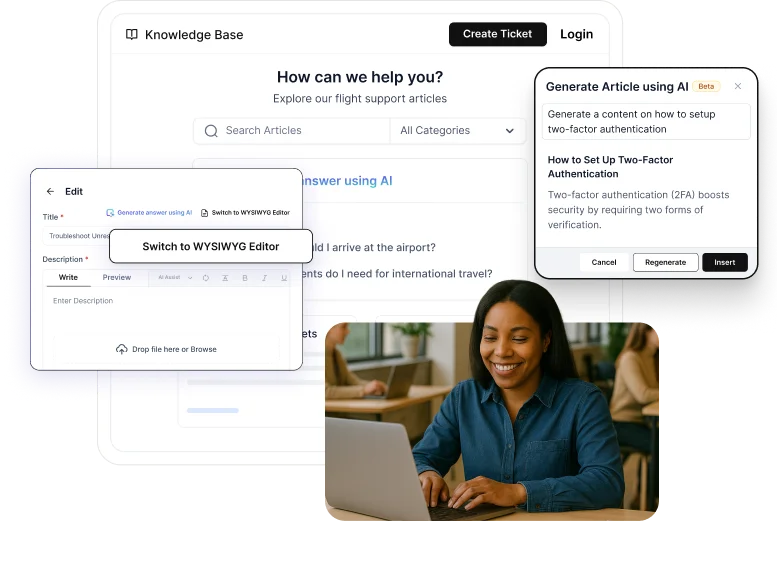
To improve self-service, review the questions customers frequently ask during sales events and create dedicated FAQs, knowledge base articles, shipping guides, and return-policy resources.
Making this information easy to find can help customers resolve simple issues without waiting for agent assistance.
5. Make it easy for customers to get in touch
Customers have different communication preferences and may choose to contact a business through various channels.
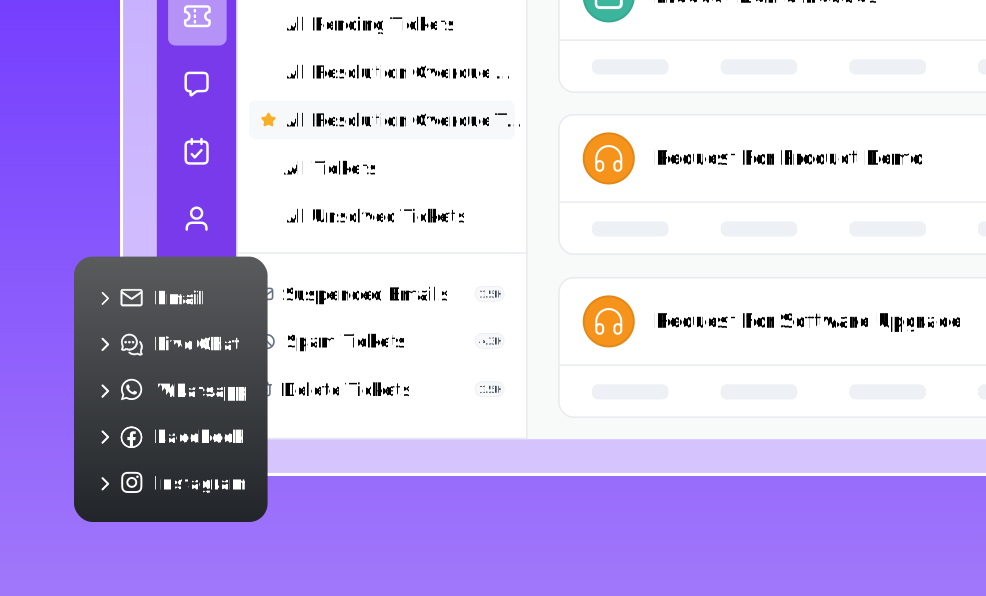
Review previous customer interactions to identify whether shoppers prefer email, live chat, social media, messaging apps, or phone support.
Provide consistent information across every channel so customers receive the same answers regardless of how they contact your business.
6. Prepare response templates for common inquiries
Black Friday often brings a surge of repetitive questions about discounts, shipping, returns, and order status.
To prepare, you need to:
- Review support tickets from previous sales events and identify the most common customer inquiries.
- Create pre-approved Black Friday email templates for those scenarios and store them in a shared knowledge base or help desk platform so agents can access them quickly.
- Keep templates updated with current promotions, policies, and delivery timelines.
This helps agents provide faster, more consistent responses during peak demand.
7. Centralize customer conversations across channels
Offering multiple support channels is important, but managing them separately can lead to delayed responses and inconsistent support.
Centralize all customer interactions in a single omnichannel inbox so agents can view conversation history, customer details, and previous interactions in one place.
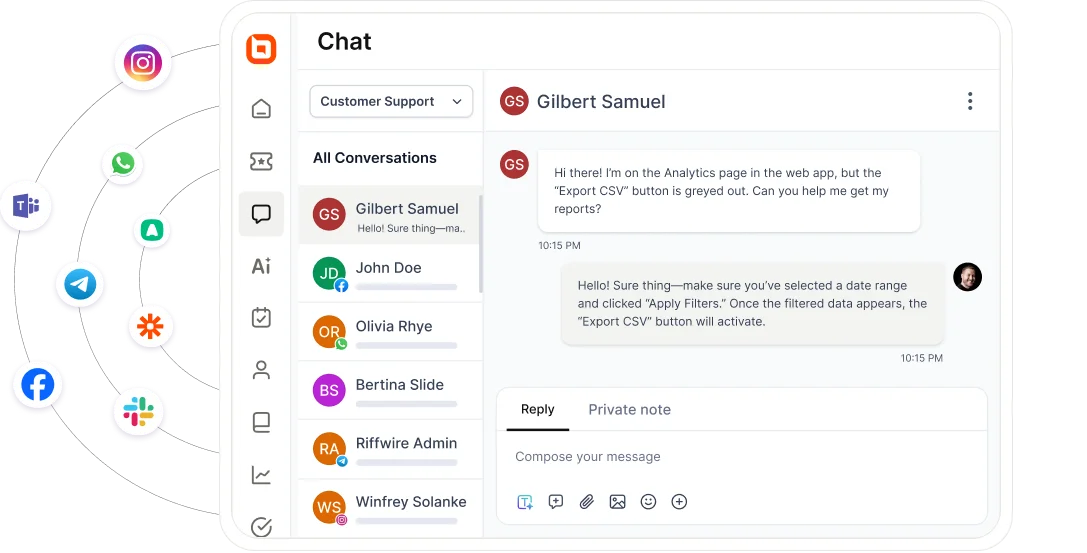
This prevents customers from having to repeat information when switching between support channels, helps agents collaborate more effectively, and provides a seamless customer experience across channels.
8. Establish clear escalation paths
Not every issue can be resolved by frontline agents.
Some issues, such as payment failures, website outages, delivery disruptions, or dissatisfied customers, require immediate attention from specialized teams.
Before Black Friday, document escalation management procedures for these scenarios and assign clear owners for each type of issue.
Ensure agents know when to escalate a ticket, who to contact, and what information must be included so critical issues can be resolved quickly.
9. Monitor support performance in real time
Support demand can change rapidly during Black Friday. Create dashboards to track metrics such as ticket volume, queue length, first response time, resolution time, and escalations.
Monitor these metrics throughout the event and set alerts for unusual spikes or backlogs.
Real-time visibility allows managers to adjust staffing, redistribute workloads, and address bottlenecks before they impact customer satisfaction.
10. Plan for post-Black Friday support demand
Customer inquiries often continue after Black Friday ends. Prepare by forecasting post-sale ticket volume and creating workflows for returns, refunds, exchanges, delivery delays, and order-status requests.
Review staffing levels for the weeks following the event and ensure self-service resources remain updated.
Planning ahead helps customer service teams manage post-purchase inquiries efficiently, maintain customer satisfaction, and strengthen loyalty long after the shopping event ends.
Preparing for Black Friday requires more than good intentions. Use the downloadable checklist below to ensure your team, processes, and support systems are ready for peak demand.
Get ready for Black Friday customer service
As Black Friday support volume increases, the right customer service software can help teams centralize conversations, automate repetitive tasks, and deliver faster support at scale.
Modern platforms such as BoldDesk can help teams centralize conversations, automate ticket routing, provide self-service resources, deliver consistent responses through templates, monitor performance using real-time dashboards, and manage escalations more effectively during peak support periods.
Together, these capabilities can help teams protect the customer experience during peak demand, reduce support friction, and encourage shoppers to return.
Start a free trial to explore BoldDesk’s features and see how it can support your team during busy shopping periods.
If you have any queries about the product and its capabilities, feel free to contact the BoldDesk support team.
Have a Black Friday customer service tip that works for your team? Share it in the comments section below.
Related articles
- 5 Ways to Prepare Your Support Team for Black Friday 2026
- 80+ Best Black Friday SaaS Deals in 2025 (Top Picks)
- Top 75+ Black Friday Quotes and Slogans to Win Sales
FAQs on Black Friday customer service
Businesses should start preparing at least four to eight weeks before Black Friday.
This gives teams enough time to train staff, update self-service resources, test support workflows, and plan for increased ticket volumes.
Businesses can reduce support volume by providing up-to-date FAQs, knowledge base articles, order-tracking tools, and clear return and shipping information.
Proactive communication also helps customers find answers without contacting support.
Businesses should prioritize the channels customers use most, such as live chat, email, help desk portals, social media, and phone support.
Connecting these channels in one system helps agents provide faster and more consistent support.