




TL;DR: Help desk software customization allows support teams to adapt roles, forms, workflows, communication templates, and customer-facing experiences to their specific needs. These changes help collect better information, improve ticket routing, streamline daily operations, and create a more unified support experience for both agents and customers.
Support teams handle a wide variety of requests, but not every help desk is configured to support the way a business actually works.
Generic ticket forms, rigid workflows, and limited branding options can create unnecessary friction for both agents and customers.
Help desk customization helps teams adapt their support environment to match their processes, priorities, and customer needs.
In this article, we’ll explore ten practical help desk software customization strategies and look at examples of how they can be implemented using help desk platforms like BoldDesk.
10 Help desk software customization strategies to improve support operations
Every support team has its own processes, priorities, and customer expectations. As those needs evolve, customizing your help desk can help ensure the system supports the way your team works rather than forcing your team to adapt to default settings.
The ideas below highlight some of the most effective ways to adapt a help desk software to your team’s unique requirements.
1. Tailor agent access to support responsibilities
Different support roles rely on different tools and information to do their jobs effectively. A frontline agent may need quick access to tickets, customer conversations, and knowledge base articles, while a team lead may spend more time reviewing escalations, monitoring SLA performance, and balancing workloads across the team.
Customizing access allows each role to work from a focused workspace built around its responsibilities rather than a one-size-fits-all setup.
This becomes even more valuable as support teams grow. When access is aligned with responsibilities, ticket ownership becomes clearer, escalations are easier to manage, and agents can spend less time navigating the help desk and more time serving customers.
Example
BoldDesk allows teams to create custom agent roles and permission levels based on responsibilities. Support managers can monitor team performance and escalations, while frontline agents can focus on ticket handling and customer conversations.
2. Customize ticket forms to collect more useful information
The quality of a support conversation often depends on the quality of the information collected at the start. When customers submit tickets without key details, agents have to spend time asking follow-up questions before they can begin troubleshooting.
Customizing ticket forms helps you collect information that is relevant to the specific issue being reported, whether that’s an order number, account ID, product version, or preferred contact method.
A well-designed ticket form does more than gather information. It helps route tickets accurately, reduces unnecessary back-and-forth, and gives agents the context they need to provide faster support.
The goal isn’t to ask more questions; it’s to ask the right ones.
Example
Many help desk platforms support custom ticket fields. BoldDesk supports custom ticket fields, conditional field visibility, and field dependencies. This allows teams to collect issue-specific information while showing customers only the fields relevant to their request.
3. Capture customer information beyond basic contact details
Every customer interaction adds context that can help support teams provide better assistance. Instead of limiting customer profiles to names and email addresses, consider capturing details that are relevant to your support process, such as product ownership.
This gives agents a more complete view of the customer without having to gather the same information repeatedly.
When customer information is organized and easily accessible, support teams can personalize responses, identify recurring issues faster, and make more informed decisions during interactions. It also helps maintain continuity when tickets are transferred between agents or departments.
Example
With BoldDesk, teams can use contact groups to organize contacts and capture additional details using custom fields (such as subscription plans, locations, or product information). Contacts can also be grouped automatically based on their email domains, making contact management easier and more reliable.
4. Create a branded support experience
Your help desk is often one of the most frequently visited customer touchpoints, yet many businesses leave it looking disconnected from the rest of their brand.
Customizing elements such as logos, colors, portal layouts, and support content helps create a more familiar experience for customers and reinforces trust throughout the support journey.
With digital interactions on the rise, 44% of companies now prioritize a digital-first customer service strategy, emphasizing the importance of customizable support experiences that are easy for customers to access and navigate.
Branding also plays a functional role. When customers recognize they are in the right place, they can navigate support resources more confidently, which can reduce friction and improve self-service adoption.
Example
BoldDesk lets businesses customize the customer portal with their own portal name, logo, favicon, portal URL (including custom domain mapping), and theme colors, with additional styling available through custom CSS/JavaScript. This helps create a seamless support experience that reflects the company’s identity.
5. Use a custom support domain
A support portal should feel like a natural extension of your website, not a separate destination customers have to learn and trust. Customizing your support domain helps create a more seamless experience by allowing customers to access support through a familiar web address, such as support.yourcompany.com.
This small change can make support resources easier to find, strengthen brand credibility, and create a more consistent customer journey.
A custom domain also makes it easier to promote self-service resources because customers can quickly recognize that they are still interacting with your organization rather than a third-party platform.
Example
BoldDesk allows businesses to map their help center to a custom domain such as [support.yourcompany.com]. This creates a more seamless experience by keeping support resources aligned with the company’s website and brand.
6. Standardize customer communication with response templates
Customers should receive accurate, reliable information regardless of which agent handles their request. Customizing response templates for common scenarios such as password resets helps teams maintain consistency while reducing time spent writing the same messages repeatedly.
Well-designed templates can also ensure important details, instructions, and next steps are not accidentally left out. As support operations grow, response templates become an effective way to protect service quality and create a more predictable customer experience across the team.
Example
BoldDesk includes canned responses that teams can create, edit, and reuse for common inquiries. This helps agents deliver faster, more aligned responses while ensuring important information is communicated accurately.
7. Adapt ticket statuses to match your support workflow
Ticket statuses should reflect the way your team actually handles requests, not force every issue into a handful of generic stages. While statuses like Open and Closed are useful, many teams benefit from adding stages such as Waiting for Customer Response, Pending Vendor Update, Under Investigation, or Ready for QA.
These custom statuses make it easier to identify bottlenecks in the support process, helping teams reduce ticket aging and improve operational efficiency.
Well-defined statuses also improve reporting. Instead of simply knowing a ticket is unresolved, teams can understand the stage of work, uncover recurring process issues, and make data-driven improvements over time.
Example
If standard statuses don’t reflect your workflow, BoldDesk allows you to create custom statuses such as Waiting for Customer Response or Under Investigation. Teams can also manage and configure statuses based on their support processes.
8. Create dedicated support experiences for different brands
Supporting multiple brands, products, or business units from a single help desk can become challenging when customers are presented with the same support resources, forms, and content.
Customizing the experience for each brand allows you to present relevant information, workflows, and support channels without forcing customers to navigate through services that don’t apply to them.
This creates a more personalized experience and helps ensure requests reach the right team faster. A well-structured multi-brand setup also makes support easier to scale. Teams can manage multiple brands from one platform while maintaining distinct identities, support processes, and customer experiences for each audience.
Example
BoldDesk enables organizations to create separate customer portals for different brands while managing operations from a shared agent workspace. Each brand can have its own identity, portal design, and support experience.
9. Create custom ticket views for different support priorities
Not every support team measures work the same way. An agent may want to see tickets assigned to them, a team lead may want to monitor overdue requests, and a manager may need visibility into high-priority issues.
Custom ticket views help agents focus on high-priority work faster, reducing the risk of missed SLAs and improving response consistency. Well-designed views can also reveal patterns that are easy to miss, such as recurring issues, growing backlogs, or tickets that are approaching SLA deadlines.
This helps teams prioritize work more effectively and make faster decisions based on real-time support activity.
Example
BoldDesk lets agents and managers create custom ticket views by saving filters (for example, by priority, status, assignee, and other criteria). These views can be shared across the organization, restricted to selected groups, or kept private depending on how work is organized.
10. Customize support email channels for better ticket routing
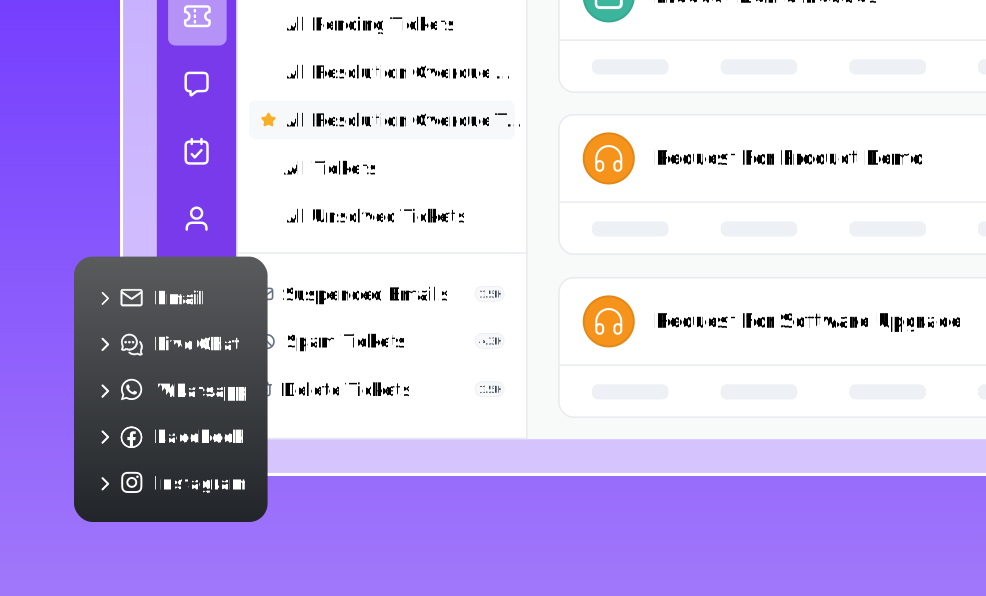
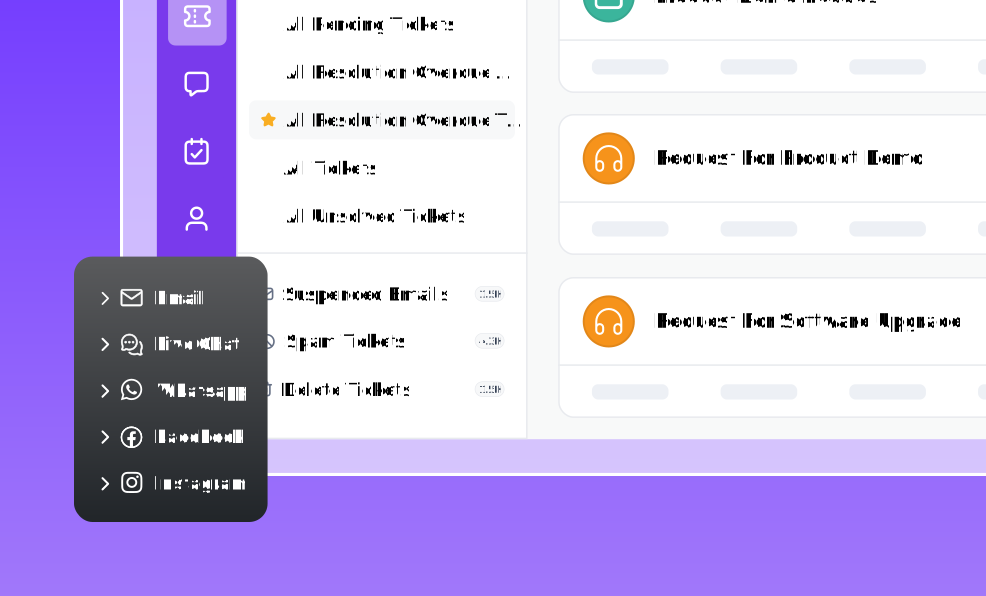
Customer emails often reveal what type of assistance is needed before a ticket is even opened. Creating dedicated support email addresses for different teams, products, or brands helps route requests more accurately and ensures inquiries reach the right queue from the start.
For example, billing requests, technical issues, and sales inquiries can all follow different support paths without relying entirely on manual sorting.
This customization also helps support teams measure demand across different areas of the business and identify where additional resources may be needed. When email channels are aligned with the way support is structured, ticket management becomes more organized, and response times are easier to maintain.
Example
BoldDesk supports custom business email addresses and can automatically convert incoming emails into tickets. Teams can also create separate email channels for different departments, products, or brands to simplify ticket routing.
How to evaluate help desk software customization options
Not all help desk platforms offer the same level of flexibility. Some only support basic cosmetic changes, while others allow extensive customization of workflows, permissions, forms, and customer experiences.
Use the evaluation criteria below to assess whether a help desk software can adapt to your team’s current needs and scale as your support operations evolve.
| Evaluation area | Question |
| Ease of customization | Can support processes be adjusted without developers? |
| Flexibility | How easily can forms, workflows, and rules be updated? |
| Scalability | Will these customization options work as the team grows? |
| Multi-team support | Does the platform support different departments or brands? |
| Customer experience | Can customer-facing experiences be tailored independently? |
The goal isn’t to find software with the most customization options. It’s to find a platform that gives your team enough flexibility to evolve without creating unnecessary complexity.
Customize your help desk with purpose
Help desk software customization is about creating a support environment that works for your team, your processes, and your customers.
From customizing ticket forms and workflows to improving communication and ticket routing, small adjustments can have a meaningful impact on efficiency and service quality.
If you’re evaluating help desk software, look for a platform that gives you the flexibility to implement these customizations as your support needs evolve.
If you’re looking for a help desk that offers this level of flexibility, BoldDesk provides a wide range of customization options designed to support different team structures, workflows, and customer experiences.
Sign up for a 15-day free trial of BoldDesk today and see how BoldDesk can optimize your support team and better satisfy your customers.
Related articles
- Top Ecommerce Help Desk Solutions in the Market
- 11 Best Help Desk Software for Small Businesses in 2026
- Best Practices for Building and Managing Help Desk Macros
FAQs
Help desk software customization is the process of modifying a help desk platform’s workflows, forms, permissions, communication channels, and customer-facing experiences to align with a company’s support processes and business goals.
Help desk customization helps teams collect better information, route tickets more accurately, improve productivity, and deliver a better customer experience.
Most organizations should start with roles, permissions, ticket fields, and ticket forms before moving to workflows and branding.
Yes. Well-designed custom fields and statuses improve reporting, while excessive customization can make reporting less reliable.
Review major workflows, ticket fields, and statuses at least quarterly to ensure they still support business needs.