





TL;DR: Knowledge sharing helps organizations capture, organize, and reuse valuable expertise across teams. With the right processes, collaboration tools, and knowledge-sharing platforms, businesses can reduce repeated work, improve communication, preserve institutional knowledge, and help employees work more efficiently.
Most organizations don’t have a knowledge problem; they have a knowledge-sharing problem. Critical insights sit buried in chat threads, lost in past projects, or locked in the minds of employees who are too busy to document them.
The result is costly: teams repeat the same mistakes, spend time rediscovering solutions, and slow each other down without realizing it.
A structured approach to knowledge sharing helps organizations break this cycle by turning everyday experience into a reusable advantage embedded directly into daily workflows.
In this blog, you’ll learn what knowledge sharing is, why it matters, the common barriers that prevent it, and practical ways to capture, organize, and reuse knowledge effectively.
What is knowledge sharing?
Knowledge sharing is the process of exchanging information, skills, and expertise between people, teams, and departments within an organization.
It transforms individual insights into a collective resource, ensuring that everyone has access to the information they need to succeed.
In customer-facing teams, this may include support resolutions, troubleshooting steps, onboarding lessons, product workarounds, escalation notes, and internal best practices.
Think of it this way: In a traditional workplace, people often believed knowledge is power and kept secrets to stay ahead. In the modern workplace, sharing is power.
Types of knowledge shared in the workplace
Organizations rely on different types of knowledge to support collaboration, decision-making, problem-solving, and day-to-day operations across teams.
Understanding these knowledge types helps organizations capture valuable expertise more effectively and make information easier to transfer, document, and reuse across departments.
Workplace knowledge generally falls into three main categories:
| Type | Description | Example |
| Tacit knowledge | Knowledge that is difficult to articulate and is gained through personal experience.
Includes skills, insights, and intuition that are learned over time. |
Knowing how to handle a difficult customer conversation |
| Explicit knowledge | Information that can be easily documented, stored, and shared through manuals, guides, processes, and knowledge bases. | Using a step-by-step troubleshooting guide to resolve a common customer issue. |
| Implicit knowledge | Unwritten routines, behaviors, and ways of working learned through observation rather than formal documentation. | Knowing when a customer issue should be escalated and which teams are typically involved in resolving it |
Benefits of a knowledge-sharing culture
When information flows freely across an organization, teams spend less time searching for answers and more time solving problems, collaborating effectively, and making informed decisions.
According to Deloitte, 73% of employees say they do better work when they collaborate, and 60% say it drives innovation, reinforcing the value of knowledge sharing in modern workplaces.
Below are some of the key ways a strong knowledge-sharing culture improves organizational performance
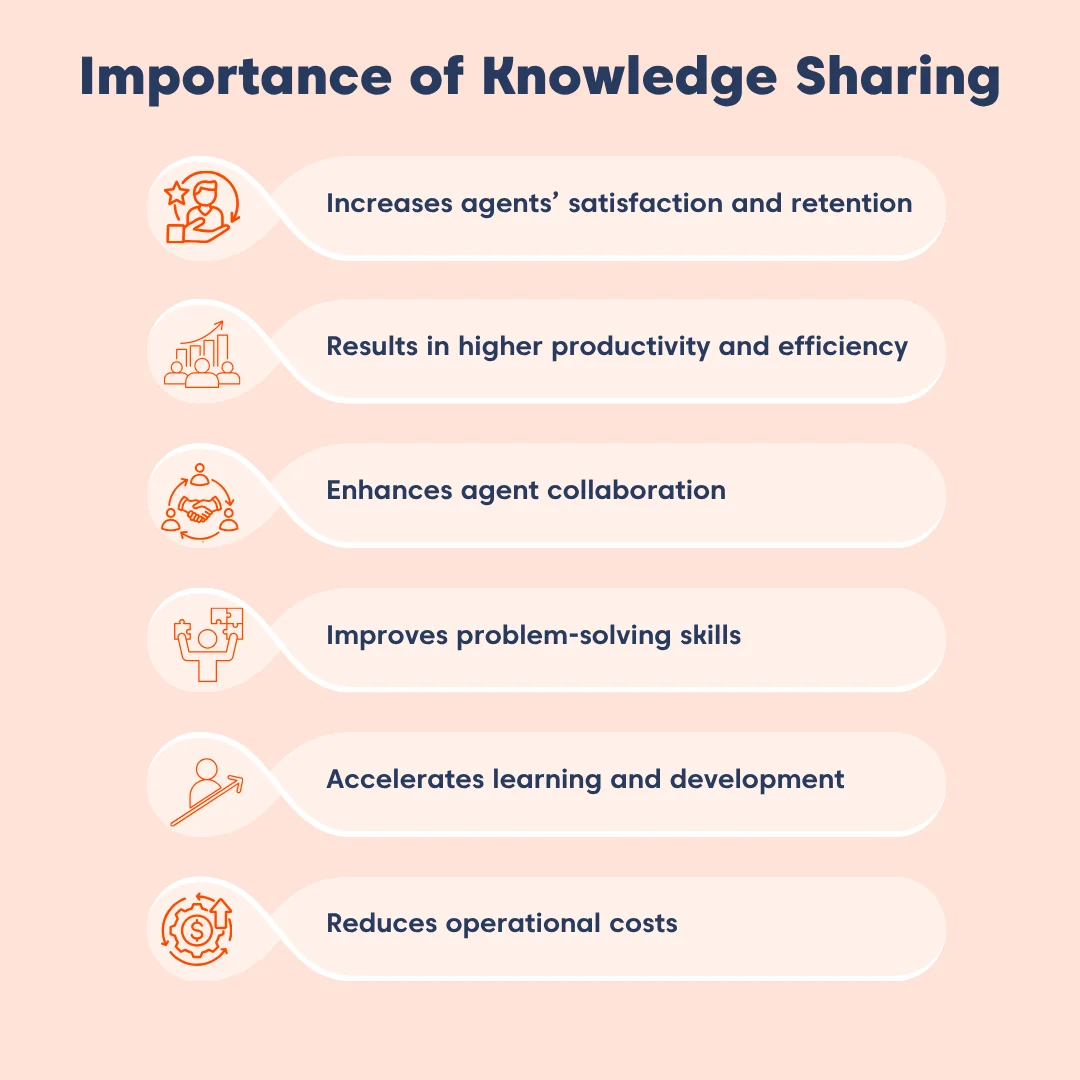
- Increases employee satisfaction and retention: Structured collaboration, accessible documentation, and peer mentorship reduce the frustration caused by disconnected information, empowering employees to feel more confident and supported in their work.
- Improves productivity and efficiency: Instead of repeatedly searching for answers or recreating processes, teams can reuse approved workflows, documented solutions, and shared expertise to complete tasks more efficiently.
- Strengthens collaboration across departments: Shared knowledge systems improve visibility into workflows, decisions, and ongoing discussions, making it easier for teams to collaborate, align priorities, and solve problems together.
- Enhances problem-solving and decision-making: Access to documented experiences, lessons learned, and institutional knowledge helps teams respond to challenges faster and make more informed decisions.
- Accelerates onboarding and learning: New employees can onboard quickly when they have access to centralized training materials, process documentation, and real-world examples from experienced team members.
- Minimizes dependency on individuals: Critical knowledge is captured and shared across teams, ensuring expertise is not limited to specific employees and helping organizations maintain continuity when roles change.
- Reduces operational costs: Documenting repeatable solutions and best practices minimizes duplicated effort, lowers training costs, and prevents teams from repeatedly solving the same problems.
Examples of knowledge sharing in the workplace
Knowledge sharing becomes most valuable when information moves effectively between business functions, helping organizations improve coordination, preserve expertise, and make better operational decisions.
The examples below show how shared knowledge supports cross-functional collaboration across different business functions.
Customer support and product teams
Customer support teams often identify recurring customer issues before other departments.
By documenting troubleshooting steps, escalation patterns, and repeated customer complaints in a shared knowledge base, support teams can help product teams identify usability issues, prioritize fixes, and improve future product updates.
Sales and marketing teams
Sales and marketing teams regularly share campaign insights, customer objections, and messaging feedback to improve lead generation and sales conversations.
For example:
Sales representatives may share recurring customer pain points gathered during demos, while marketing teams use that feedback to refine campaign messaging, improve content relevance, and create more targeted resources.
This alignment helps teams deliver more consistent messaging throughout the customer journey.
IT and security teams
IT and security teams often share system alerts, incident reports, compliance updates, and troubleshooting procedures to respond to technical issues more effectively.
For example:
IT teams may document recurring infrastructure issues while security teams provide risk assessments and response guidelines.
Sharing this information helps organizations respond to incidents faster, reduce operational disruption, and maintain compliance.
Finance and leadership teams
Finance teams share budgeting guidelines, reporting standards, and forecasting insights with leadership teams to support planning and business decision-making.
Documented financial processes and shared reporting structures help leadership teams access accurate information quickly, improve transparency, and maintain consistency during planning cycles and audits.
Best practices for building a knowledge-sharing culture
Building a strong knowledge-sharing culture requires clear processes, accessible platforms, and consistent collaboration across teams.
Below are knowledge sharing best practices organizations can use to promote collaboration, capture insights, and make information easier to access across teams.
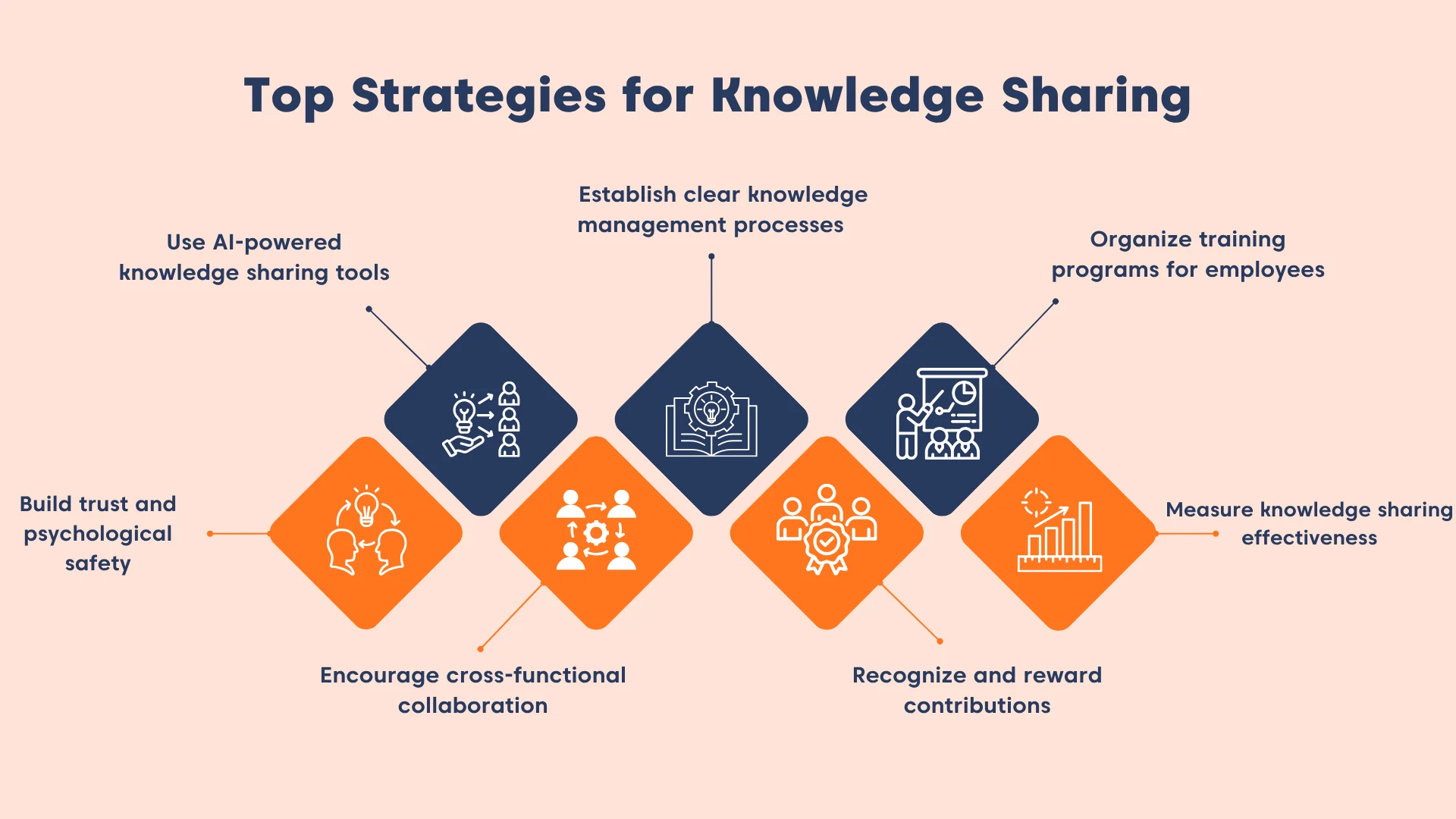
Build trust and psychological safety
Create an environment where employees feel safe to share ideas, ask questions, and learn from mistakes without fear of judgment.
Leaders should model open communication, encourage feedback, and reinforce that every contribution is valued.
When people feel supported, they are more willing to share knowledge, leading to stronger collaboration and faster problem solving across teams.
Use knowledge-sharing platforms to centralize information
Without centralized systems, valuable information often becomes difficult to find or reuse across teams.
Knowledge-sharing platforms like BoldDesk help organizations centralize internal documentation, FAQs, troubleshooting guides, reusable workflows, and team discussions in one searchable workspace.
These platforms may include:
- Knowledge bases for SOPs, FAQs, and help articles
- Collaboration tools for real-time discussions
- Project management systems for documenting workflows and decisions
- Searchable repositories or intranets for storing organizational knowledge

AI assistants can also help summarize discussions and support content creation more efficiently.
Encourage cross-functional collaboration
Encourage teams to collaborate beyond their immediate roles by forming groups around shared goals, challenges, or areas of expertise.
These communities create natural opportunities for exchanging ideas, solving problems, and sharing insights that might otherwise stay siloed.
When knowledge flows across teams, organizations benefit from diverse perspectives that often spark more innovative thinking.
Promoting cross-team collaboration helps surface new ideas, improve alignment, and strengthen overall decision-making.
Establish clear knowledge management processes
Knowledge sharing focuses on exchanging information, while knowledge management ensures that information is captured, organized, and reusable.
Organizations should create simple workflows for documenting repeatable solutions, recurring issues, lessons learned, and key processes in a centralized knowledge base.
Using consistent tags, categories, and review processes within the knowledge management system helps employees quickly find accurate, up-to-date information when they need it.
For example, support teams can document troubleshooting steps and ticket resolutions in a shared knowledge base to resolve similar issues faster in the future.
Acknowledge and reward contributions
Employees are more likely to contribute when knowledge sharing is consistently recognized and tied to measurable outcomes.
To reinforce accountability, knowledge-sharing contributions should also be reflected in performance reviews and team expectations.
Recognition can include:
- Monthly knowledge contributor highlights
- Peer recognition and team shout-outs
- Performance review recognition
- Internal awards or achievement badges
Consistent recognition encourages employees to make knowledge sharing part of their daily workflows.
Organize training and knowledge-sharing sessions
Training sessions also support knowledge transfer by helping experienced employees share practical expertise with newer team members.
These sessions may include onboarding workshops, troubleshooting clinics, process walkthroughs, peer-led demos, and lessons learned from completed projects.
You can also run live workshops where subject matter experts demonstrate real-world methods and answer questions.
Recording and storing these sessions in a centralized knowledge hub helps preserve institutional knowledge and ensures ongoing access for future teams.
Measure the effectiveness of knowledge sharing strategies
Organizations should continuously evaluate how knowledge is created, shared, and reused to ensure it stays relevant and accessible.
Track key indicators such as content usage, search success rates, adoption levels, and employee engagement to identify gaps.
Businesses can also analyze search behavior and conduct regular audits to uncover missing information and maintain content freshness.
Use these insights to update resources, create new content, and improve overall knowledge-sharing performance.
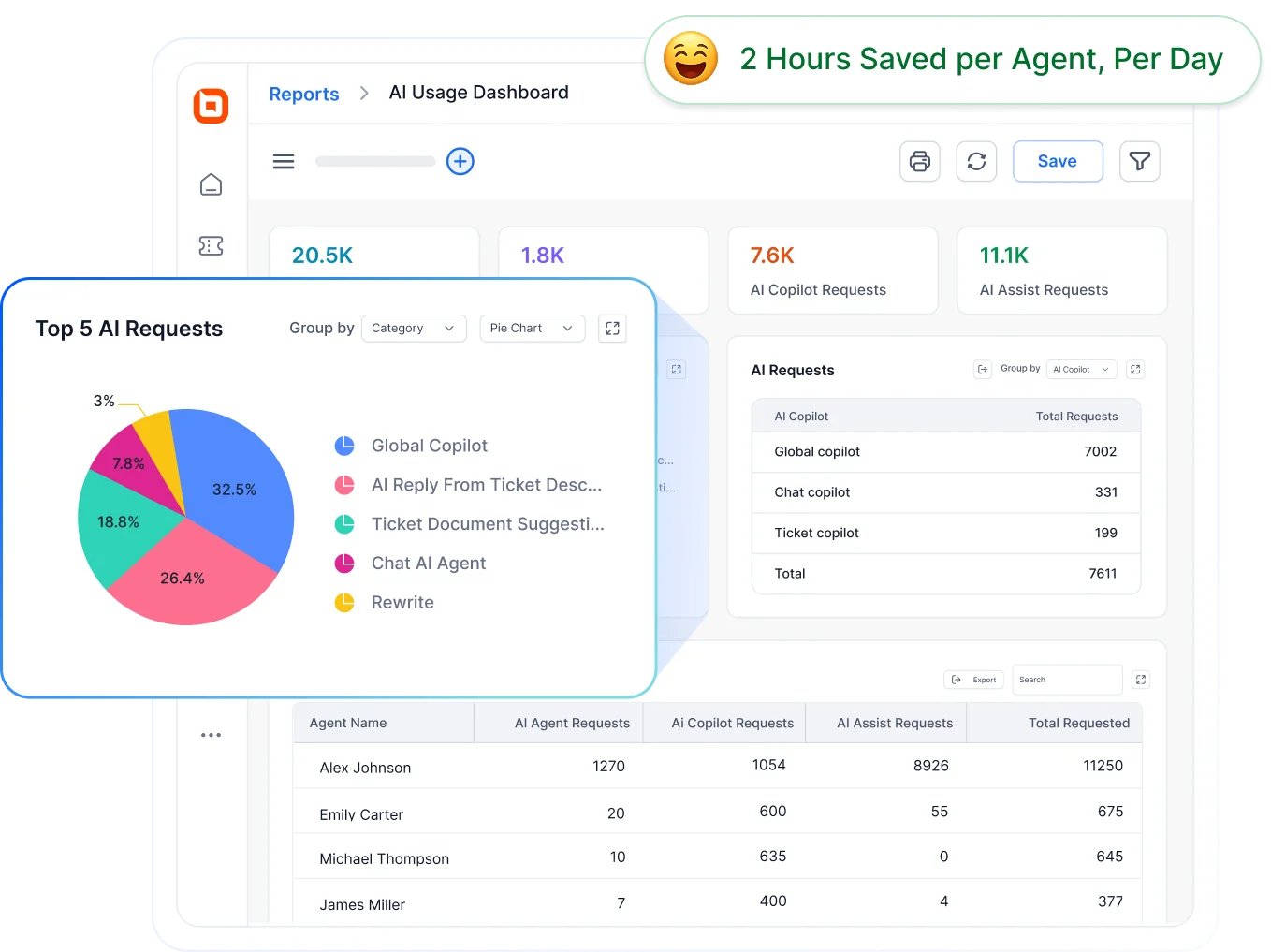
BoldDesk provides the integrated analytics and reporting tools necessary to track these metrics and continuously optimize your knowledge-sharing efforts.
Common barriers that stop employees from sharing knowledge
Effective collaboration at work depends on people being willing and able to share what they know.
However, many organizations face hidden challenges that make the exchange of ideas, experience, and expertise difficult to sustain.
Time constraints that prevent knowledge sharing
Employees often feel overwhelmed by daily tasks and see knowledge sharing as extra work. As a result, useful information stays undocumented and repeatedly re-explained.
Solution: Integrate lightweight knowledge sharing into daily workflows using short templates, quick Q&A formats, or brief capture conversations.
Unclear value of shared insights
Many employees underestimate how helpful their experience or insights could be to others. This leads to critical knowledge remaining invisible across the organization.
Solution: Actively guide employees on what to share by prompting them to document recurring questions, common processes, and lessons learned.
Fear of losing value by sharing knowledge
Some employees worry that sharing knowledge could make them less valuable or replaceable. This fear creates resistance and encourages information hoarding.
Solution: Clearly reinforce that knowledge sharing is tracked, recognized, and linked to growth and accountability rather than job loss.
No clear process for sharing knowledge
When employees do not know where to document information, what format to use, or who should review it, knowledge sharing becomes inconsistent.
Solution: Define ownership, templates, review workflows, and publishing standards.
Complex or unfriendly technology
Difficult or unintuitive systems make knowledge sharing feel frustrating and time-consuming, so employees avoid tools that add friction to their work.
Solution: Use simple, intuitive platforms that support multiple content formats and provide hands-on support to reduce technical barriers.
Lack of recognition for contributions
Employees are less likely to share knowledge when their contributions go unnoticed. Over time, motivation declines and participation drops.
Solution: Introduce consistent recognition mechanisms such as contribution highlights, peer acknowledgment, or inclusion in performance expectations.
Build better support experiences with knowledge sharing
Strong knowledge sharing helps organizations reduce repeated work, improve collaboration, preserve institutional knowledge, and help teams make faster, more informed decisions.
Platforms like BoldDesk help organizations centralize documentation, improve visibility across teams, and make important knowledge easier to access and reuse throughout the workplace.
With shared knowledge bases, automation, analytics, and collaborative workflows, organizations can reduce information silos and deliver more consistent customer experiences.
Ready to strengthen knowledge sharing across your organization? Start a free trial or schedule a live demo to see how BoldDesk can help your teams build a more connected and scalable knowledge-sharing culture.
Related articles
- Internal Customer Service: Definition and Best Practices
- How to Create a Knowledge Base in 7 Easy Steps
- 13 Best Knowledge Management Software Tools to Enhance Self-Service
Frequently Asked Questions
Knowledge sharing is the exchange of information, skills, and expertise between employees and teams. Knowledge management is the structured process of capturing, organizing, storing, and maintaining that information so it can be reused across the organization.
Organizations can encourage knowledge sharing by creating clear processes, using accessible collaboration platforms, recognizing contributions, and making knowledge exchange part of daily workflows.
Building trust and psychological safety also helps employees feel more comfortable sharing ideas and expertise.
Organizations commonly share knowledge through documentation, knowledge bases, training sessions, mentorship programs, collaboration platforms, workshops, and regular team meetings.
These methods help employees exchange information, learn from experience, and work more effectively together.
Organizations measure the success of knowledge-sharing efforts using metrics such as article views, search success rates, content usage, repeated issue reduction, employee engagement, and resolution times.
These metrics help teams understand how effectively knowledge is being shared and reused across the organization.
Employees may avoid sharing knowledge due to time constraints, lack of recognition, unclear processes, fear of losing value, or tools that make information sharing difficult or time-consuming.
Knowledge sharing improves customer experience by giving employees faster access to accurate and consistent information. This helps teams resolve issues more quickly, provide more reliable support, and deliver better customer interactions.