




TL;DR: Intercom is a powerful customer support platform, but it can be expensive and complex for growing teams. The best Intercom alternatives offer more predictable pricing, strong ticketing systems, AI capabilities, live chat, and scalable support features, helping businesses deliver efficient customer support without unnecessary costs.
Intercom is a powerful customer communication platform, but it is not always the best fit for every growing support team.
As support operations grow, many teams discover they need stronger ticketing capabilities, omnichannel support, and more predictable pricing than Intercom provides. This often leads organizations to evaluate other Intercom alternatives that better align with their workflows, budgets, and long-term growth plans.
These platforms typically offer live chat, ticketing, automation, AI tools, self-service options, and integrations with more flexible pricing and workflow models.
This guide compares the best Intercom alternatives for startups, SMBs, SaaS companies, and larger support teams, helping you identify the right solution based on your business needs.
Why businesses look for Intercom alternatives and competitors
While Intercom is a popular customer communication platform, it may not fit every business.
Businesses switch to Intercom alternatives due to unpredictable pricing, paid add-ons for essential features, and limited flexibility for ticket-first support workflows, especially as customer volume grows.
Here are some considerations that may affect Intercom’s suitability for your enterprise:
Service reliability issues
Some reviewers report performance limitations, particularly with AI features.
According to a long-term G2 reviewer, Intercom’s Fin may struggle to understand certain languages, which can result in inaccurate responses and customer confusion.
Pricing limitations
Intercom’s pricing structure often raises concerns among expanding businesses. Costs are tied to the number of users and the volume of interactions, resulting in unpredictable monthly bills.
As your team expands or customer engagement increases, the final bill can escalate quickly, something many startups and SMBs find challenging to manage.
AI feature limitations
On Intercom’s entry-level plan, AI may be limited to writing assistance, while features like summaries and autofill may require higher tiers.
Add-on costs
Beyond the base subscription, Intercom charges additional fees for certain features, including SMS and WhatsApp messaging, advanced automation tools, and proactive customer service options such as product tours and surveys.
These add-ons can significantly complicate budgeting for businesses that require comprehensive functionality without incurring high costs.
How to choose the best Intercom alternative for your business
Choosing the right Intercom alternative requires evaluating key factors that impact cost, scalability, and support efficiency, especially if you are switching from Intercom’s pricing model, AI tools, and chat-based workflows.
Use the framework below to compare tools effectively and select a platform that aligns with your business needs and growth goals.
- Assess ease of use: Choose an Intercom alternative that simplifies onboarding and allows agents to manage conversations, tickets, and workflows without extensive training.
- Evaluate feature set: Compare essential features such as live chat support, ticketing, automation, reporting, and knowledge base tools to ensure the platform supports both real-time communication and structured support workflows.
- Review integration capabilities: Check how well the platform integrates with your existing tools, including customer relationship management (CRM) systems, analytics platforms, and communication channels, to maintain unified customer data and streamline operations.
- Assess customization options: Evaluate how easily you can customize workflows, branding, user roles, and customer journeys without requiring complex technical configurations.
- Evaluate scalability: Ensure the alternative can grow with your business by supporting more agents, channels, and advanced features without performance issues or sudden cost increases.
- Compare AI capabilities and pricing: Evaluate how each platform uses AI for automation and support, including chatbots, copilots, and AI agents. Pay close attention to pricing models such as per-resolution fees, flat rates, or AI credits.
- Check ticketing workflows and chat-to-ticket conversion: Ensure the platform offers strong ticket management capabilities and allows seamless conversion of live chat conversations into trackable support tickets.
- Review migration support: If you are moving from Intercom, assess how easily you can migrate chat history, tickets, and customer data. Look for alternatives that offer assisted migration to minimize disruption.
- Evaluate reliability and user feedback: Review platform performance, uptime, and verified customer feedback on platforms like G2 or Capterra to understand real-world usability, support quality, and long-term satisfaction.
Top Intercom alternatives compared by features, pricing, and use cases (2026)
The table below compares the most popular Intercom alternatives based on key evaluation criteria, including core support features, pricing transparency, free trial availability, and verified user ratings from platforms such as G2.
This Intercom competitor comparison helps businesses quickly identify the best Intercom alternative based on their team size, budget, and customer communication needs, before exploring detailed comparisons.
| Intercom alternatives and key features | Pricing | G2 reviews | Best Intercom alternative for |
BoldDesk
|
Starts at $99/month for 5 agents | 4.5/5 ⭐️⭐️⭐️⭐️⭐️ | Scalable ticketing, live chat, and AI-powered customer support |
HelpCrunch
|
Starts at $12/agent/month | 4.7/5 ⭐️⭐️⭐️⭐️⭐️ | Multiple communication channels |
Drift
|
Contact Drift | 4.4/5 ⭐️⭐️⭐️⭐️ | Conversational customer service |
Tidio
|
Starts at $24.17/agent/month | 4.7/5 ⭐️⭐️⭐️⭐️⭐️ | Simple AI-powered live chat |
Help Scout
|
Starts at $25/agent/month | 4.4/5 ⭐️⭐️⭐️⭐️ | Unified communication and customer support |
Zendesk
|
Starts at $19/agent/month | 4.3/5 ⭐️⭐️⭐️⭐️ | Enterprise customer support |
Olark
|
Starts at $29/agent/month | 4.3/5 ⭐️⭐️⭐️⭐️ | Simple live chat and website engagement |
HubSpot
|
Starts at $9/agent/month | 4.4/5 ⭐️⭐️⭐️⭐️ | CRM-connected customer support |
Zoho Desk
|
Starts at $4/agent/month | 4.4/5 ⭐️⭐️⭐️⭐️ | Support automation within the Zoho ecosystem |
Freshdesk
|
Starts at $19/agent/month | 4.4/5 ⭐️⭐️⭐️⭐️ | Ticketing and call center support |
LiveAgent
|
Starts at $15/agent/month | 4.5/5 ⭐️⭐️⭐️⭐️⭐️ | Customer support across chat, email, and voice channels |
11 Best Intercom alternatives for customer service in 2026
Discover the best, most affordable Intercom alternatives for customer service, engagement, collaboration, and satisfaction, suitable for all types of businesses.
1. BoldDesk
Best Intercom alternative for teams that need live chat, ticketing, and predictable pricing.
BoldDesk is a powerful Intercom alternative designed for startups, small businesses, and enterprises that need a simple, scalable, and cost-effective help desk solution.
It combines ticketing, live chat, automation, and AI-powered assistance into a single platform, helping teams manage customer conversations more efficiently while maintaining a consistent support experience.
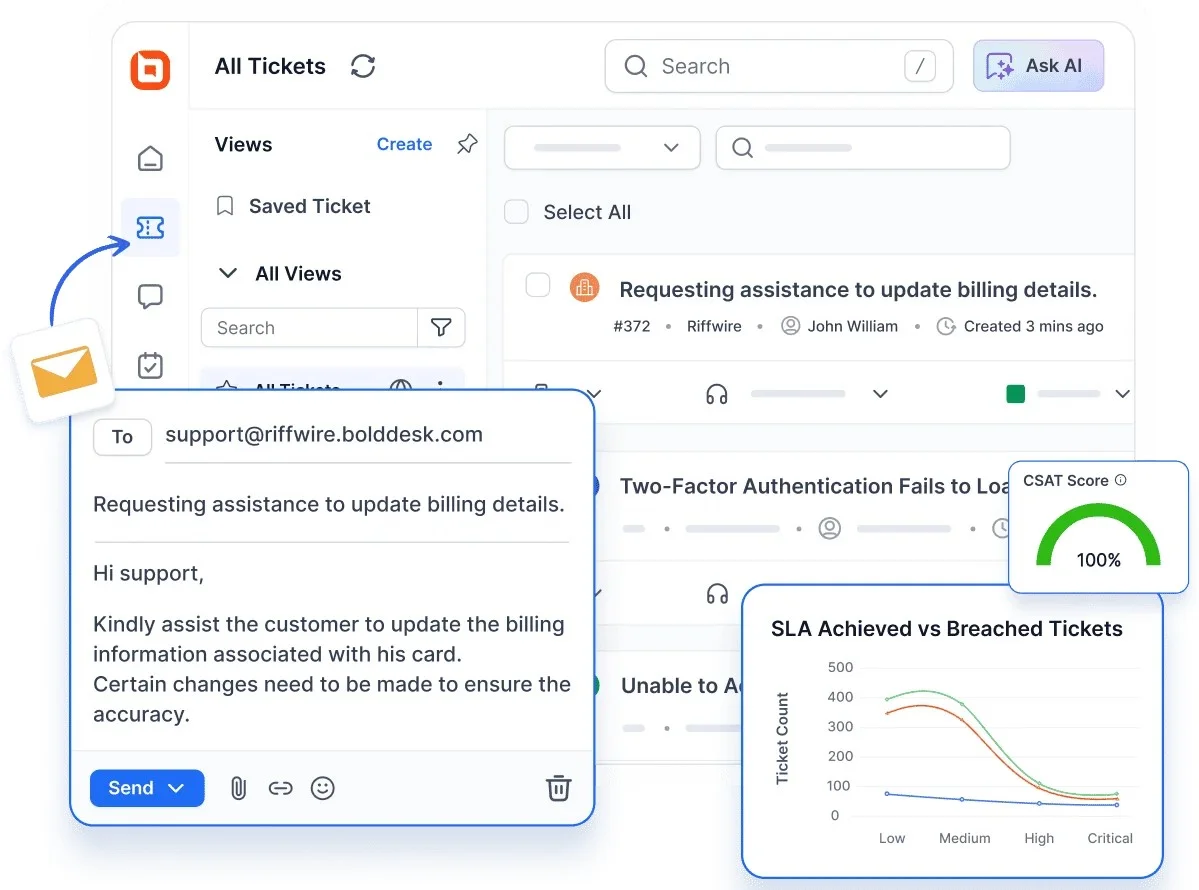
Unlike Intercom’s usage-based pricing model, BoldDesk offers transparent pricing with predictable costs, making it easier to manage budgets as your support operations grow.
BoldDesk’s key features
- Help desk ticketing system: Manages and tracks customer requests efficiently, ensuring no inquiry is missed.
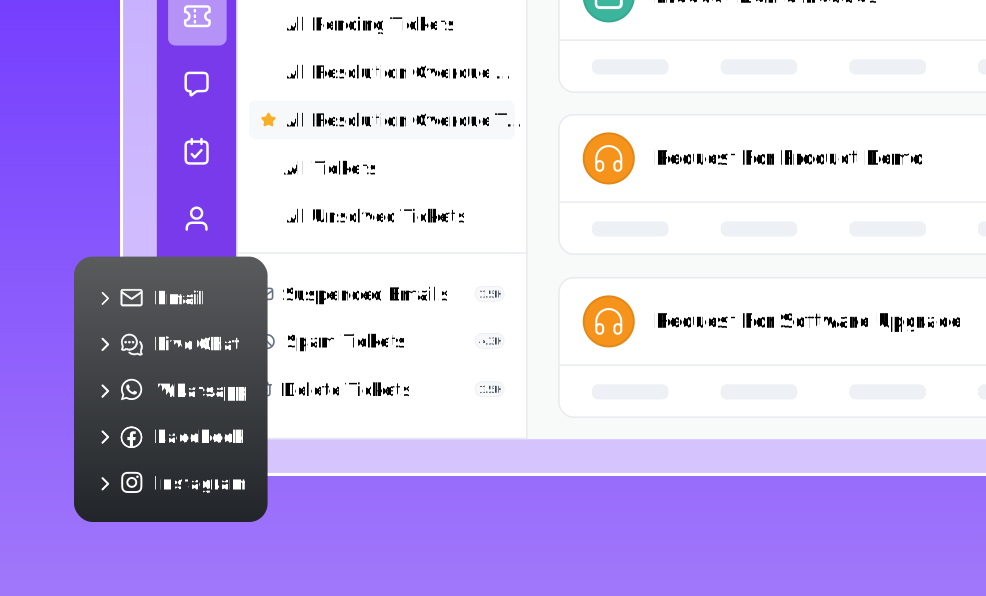
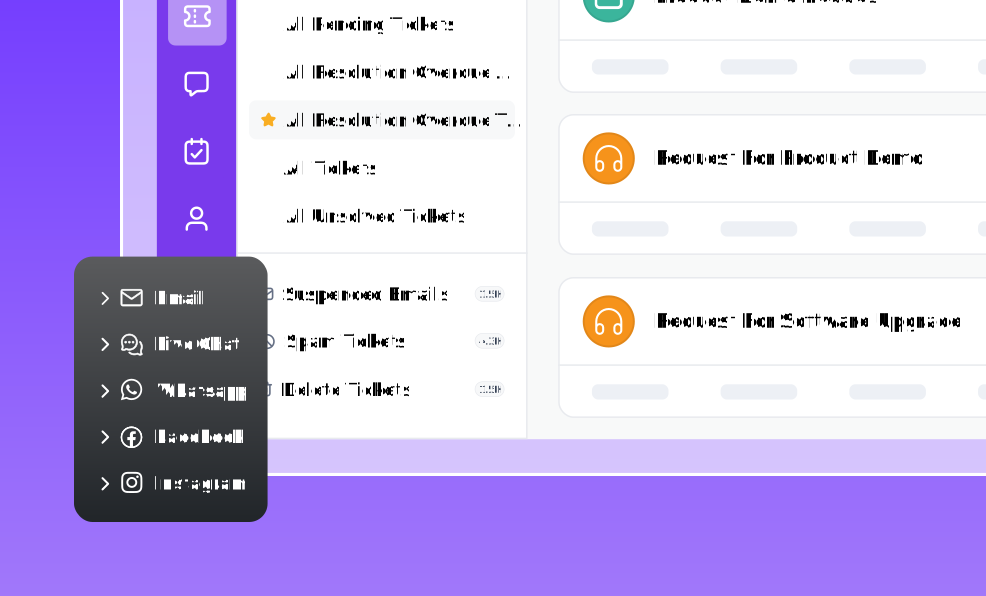
- Omnichannel support: Centralizes conversations across channels, enabling teams to respond without switching between tools.
- AI-powered support: Speeds up responses and reduces manual work with AI-assisted replies and automated answers.
- Shared inbox: Improves team collaboration and response times by managing conversations in one shared workspace.
- Reporting and analytics: Provides real-time insights into support performance, helping teams make data-driven decisions and improve service quality.
- Knowledge base: Enables customers to find answers on their own, reducing support ticket volume and improving the overall experience.
- Integrations: Connects with existing tools to streamline workflows.
Why choose BoldDesk over Intercom?
BoldDesk stands out as a cost-effective Intercom alternative because of the following key benefits:
- Transparent, predictable pricing without hidden add-on costs.
- Faster onboarding with an intuitive, user-friendly interface.
- Strong ticketing and omnichannel support workflows built for customer service teams.
- AI-powered support tools that improve response speed and accuracy.
- Flexible integrations that streamline workflows across teams.
Pricing
BoldDesk stands out as a leading Intercom alternative with transparent pricing and access to all core features across every plan, helping businesses avoid costly upgrades or feature-based paywalls as support operations scale.
| No. of agents | Monthly price (USD) | Free AI credits/month |
| 5 | $99 | 500 |
| 10 | $199 | 1,000 |
| 25 | $349 | 1,500 |
| 50 | $499 | 2,000 |
| 75 | $749 | 2,500 |
| 100 | $999 | 3,000 |
For a complete breakdown of pricing tiers, including features and AI add-ons, explore the full BoldDesk pricing details.
BoldDesk offers AI add-ons, including AI Agent at $20 for 1,000 AI credits to automate customer conversations across channels and scale support with usage-based pricing.
Additionally, you can supercharge your human agents with the AI Copilot available for just $20 per agent/month.
Start a free 15-day trial to explore BoldDesk in action.
Scaling your support operations? Contact our team to help you choose the right plan.
BoldDesk vs Intercom: Key comparison
When comparing BoldDesk and Intercom, the differences often come down to pricing transparency, ease of use, support experience, and long-term scalability.
Here’s how BoldDesk stands out for expanding support operations:
- Pricing: BoldDesk offers predictable pricing, while Intercom’s pricing often increases with add-ons and usage.
- Ease of use: BoldDesk provides a streamlined interface for faster adoption, whereas Intercom may require more setup.
- Support experience: Unlike Intercom, BoldDesk focuses on responsive, customer-first support for scaling organizations.
- Communication: Both platforms support live chat, but BoldDesk combines it with strong ticketing and omnichannel workflows.
- Self-service: BoldDesk’s built-in knowledge base enables faster resolution without complex configuration.
2. HelpCrunch
Best for businesses that need to manage multiple support channels in one place.
HelpCrunch is one of the Intercom alternatives that provides a multichannel chat-first support model at a lower starting cost than Intercom.
Key features
- Multichannel support
- Live chat
- Shared inbox
- Knowledge base
- Integrations
Pros
- Engages instantly with website visitors to boost conversions and resolve queries on the spot.
- Creates and sends personalized email campaigns to nurture leads and retain customers.
Cons
- Businesses handling large volumes of support requests might find it less scalable compared to enterprise-grade solutions.
Pricing
Starts at $12/agent/month
Free trial duration: 14 days
Top differences between HelpCrunch and Intercom
- HelpCrunch’s multichannel messaging also supports Telegram and Viber.
- HelpCrunch’s pricing starts at a lower price point than Intercom and does not charge extra for in-product chat messages.
3. Drift
Best for conversational and sales-driven support to qualify leads in real time.
Drift is a conversation-based customer relationship management platform that uses chatbots to address the concerns of customers and leads.
Key features
- Conversational AI chatbots
- Mobile app
- Analytics and reporting
- Integrations
Pros
- Engages website visitors with personalized messaging and captures qualified leads directly through chat.
- Allows prospects to book meetings instantly via the chat interface, streamlining the sales funnel.
Cons
- The platform can be expensive for small businesses, especially those looking for basic Intercom competitors over advanced sales tools.
Pricing
Contact Drift
Free trial duration: Contact Drift
The top difference between Drift and Intercom
Drift is primarily designed for conversational sales and lead qualification, while Intercom serves broader customer communication and support use cases.
4. Tidio
Best for teams that want an easy-to-set-up support solution with chatbots and live chat.
Tidio, another alternative to Intercom, provides a flexible customer support solution that ensures better interactions with website visitors and increased conversions.
It offers a simple setup process and integration with tools such as Shopify, WordPress, and Instagram.
Key features
- Conversational AI
- Mobile app
- Visitor tracking
- Live chat
Pros
- Provides hands-on support through real-time chat and ticketing tools, all in one platform.
- Tidio’s support team is known for being helpful and quick to respond, ensuring users get the most out of the platform.
Cons
- Access to a dedicated customer success manager is only available with the highest-tier plan, which may be out of reach for smaller businesses.
Pricing
Starts at $24.17/agent/month (100 billable conversations)
Free trial duration: 7 days
Top differences between Tidio and Intercom
- Tidio offers budget-friendly pricing plans that make it more accessible for small- to medium-sized businesses. However, its pricing is based on conversations, not agents. This poses a unique challenge in budgeting for support.
- Tidio provides a more user-friendly interface and efficient setup process, according to G2 reviews.
5. Help Scout
Best for teams focused on email-based support and shared inbox collaboration.
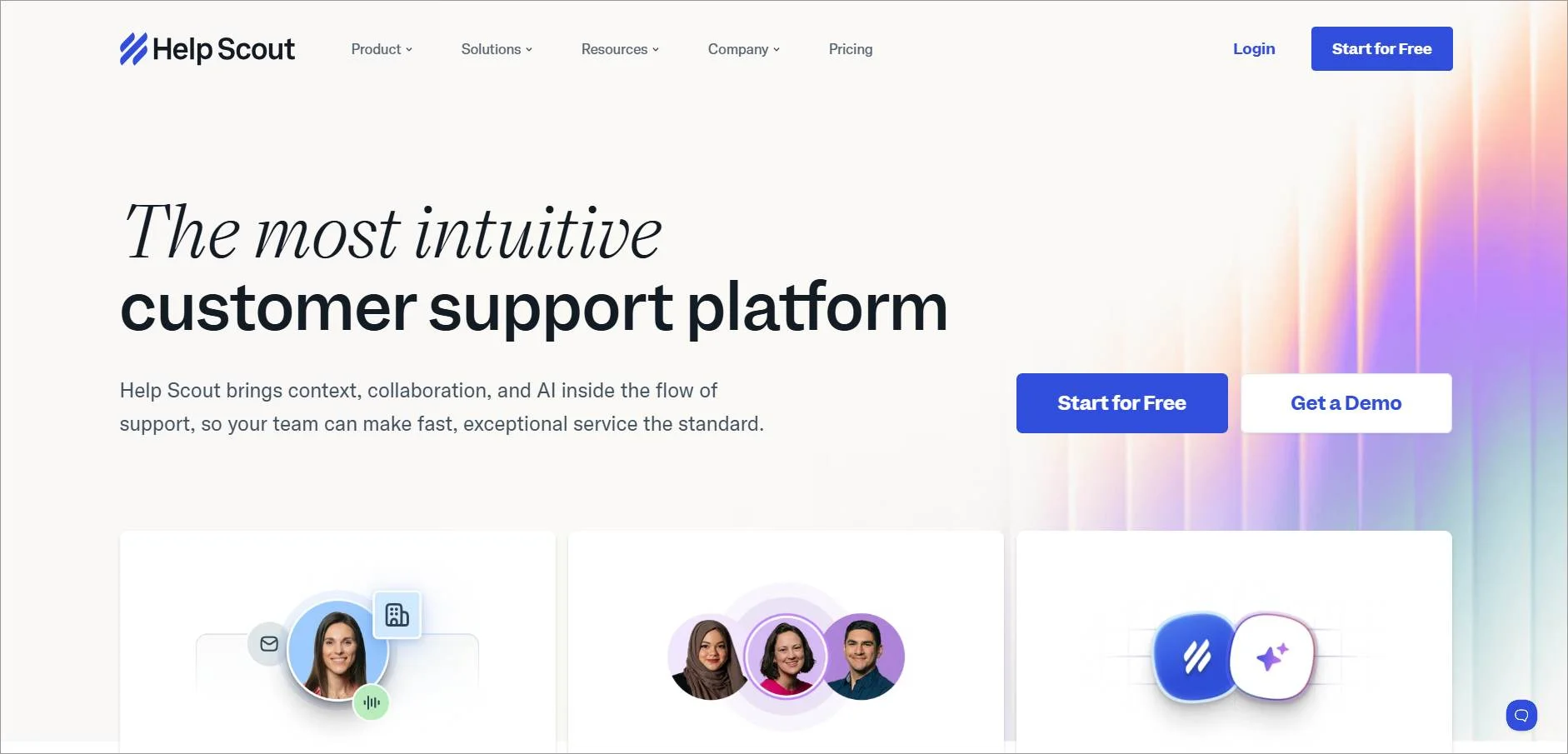
Help Scout is a popular customer service platform that helps businesses manage their customer communications efficiently.
Key features
- Shared inbox
- Collaboration features
- 90+ integrations
- Knowledge base tools
Pros
- Manages customer service emails efficiently with shared inboxes that enhance team collaboration and visibility.
- Accesses detailed customer data to deliver personalized and context-aware support.
Cons
- Integration with third-party tools can be limited, which may affect teams using a diverse tech stack.
Pricing
Starts at $25/agent/month
Free trial duration: 15 days
The top difference between Help Scout and Intercom
Intercom combines customer messaging, support, and engagement workflows, while Help Scout focuses primarily on support operations.
6. Zendesk
Best for large businesses and enterprises that require advanced ticketing, automation, and reporting.
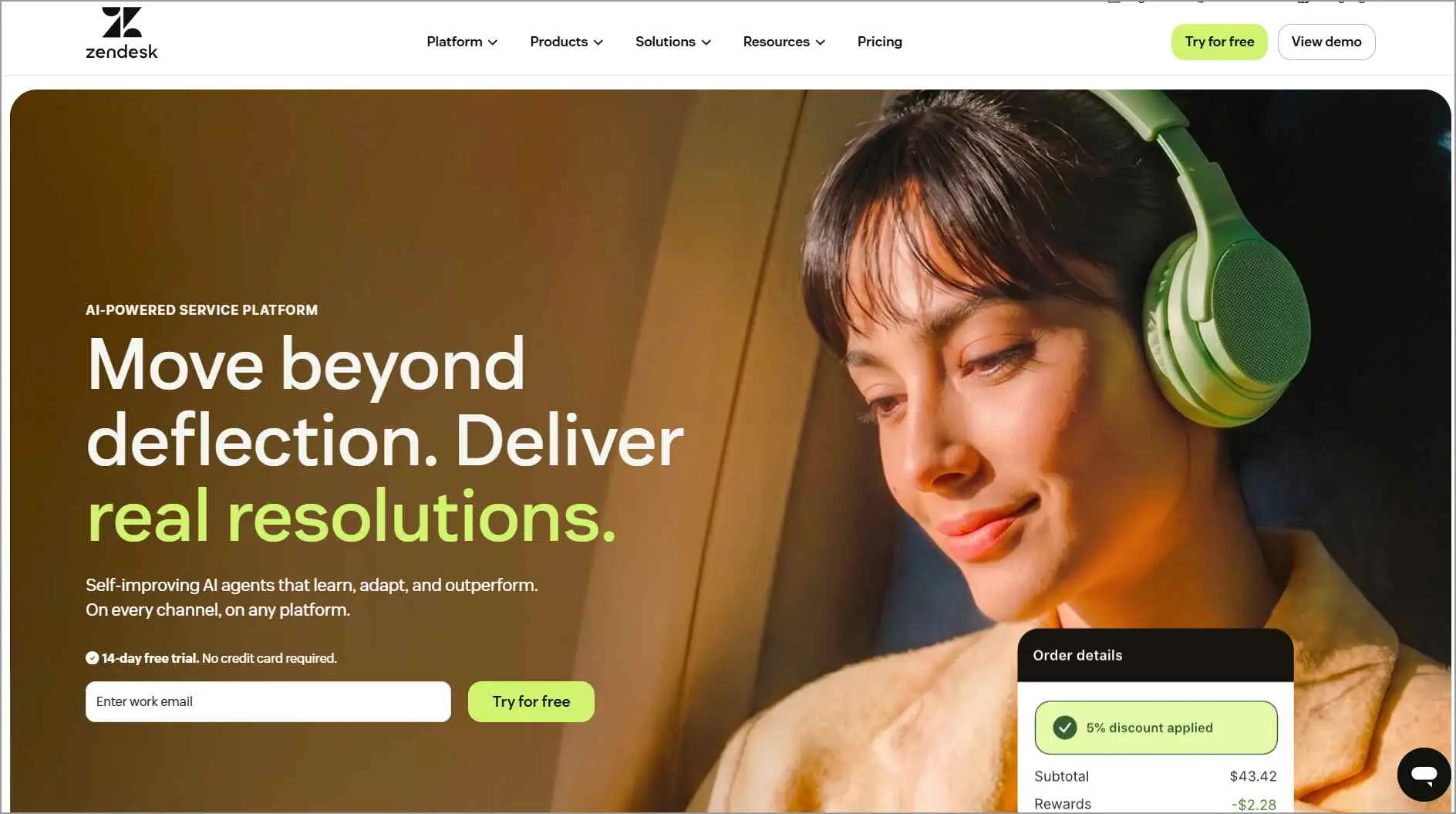
Zendesk offers a suite of customer service tools, including a ticketing system, analytics, and automation. Users can tailor their Zendesk setup according to their needs and requirements.
Key features
- Multilingual support
- Knowledge base
- Integrations
- Omnichannel support
Pros
- Manages customer interactions across email, chat, social media, and more from a unified interface.
- Automates responses and provides instant support to reduce agent workload and improve response times.
Cons
- Zendesk’s plans and add-ons can be expensive for startups or small businesses, making it less accessible for budget-conscious teams.
Pricing
Starts at $19/agent/month
Free trial duration: 14 days
Top differences between Zendesk and Intercom
- Zendesk focuses on ticketing and customer support, while Intercom is a customer messaging platform that emphasizes real-time communication and engagement.
- Zendesk has a larger ecosystem of integrations with third-party apps than Intercom.
7. Olark
Best for businesses that prioritize simple live chat support to handle conversations in real time.
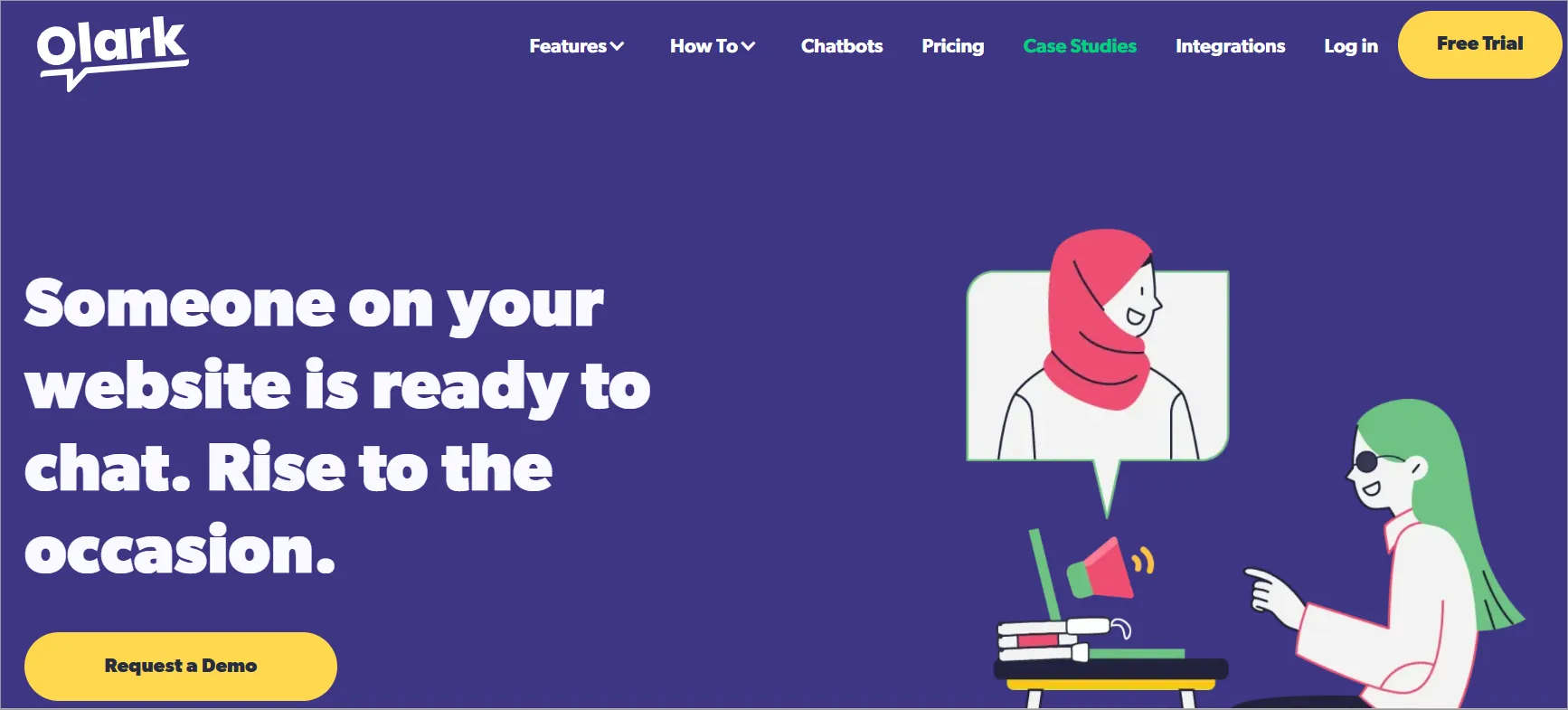
Olark is a live chat system that empowers companies to interact in real-time with website users, offer customer support, and facilitate sales.
This user-friendly chat app also offers archiving for easy retrieval of past interactions.
Key features
- AI tools
- Extensive customization
- Automation
- Reporting
Pros
- Gets started quickly with minimal configuration, making it ideal for small teams or non-technical users.
- Monitors website visitors and proactively initiates conversations to boost engagement.
Cons
- May lack the depth and flexibility offered by more robust help desk platforms or other alternatives to Intercom.
Pricing
Starts at $29/agent/month
Free trial duration: 14 days
Top differences between Olark and Intercom
- Olark has a simple and intuitive interface because it is primarily a chat app, while Intercom offers more advanced features.
- Intercom’s pricing structure is more complex due to its advanced offerings.
8. HubSpot
Best for teams looking for free and entry-level customer support tools, combining basic ticketing, live chat, and CRM features.
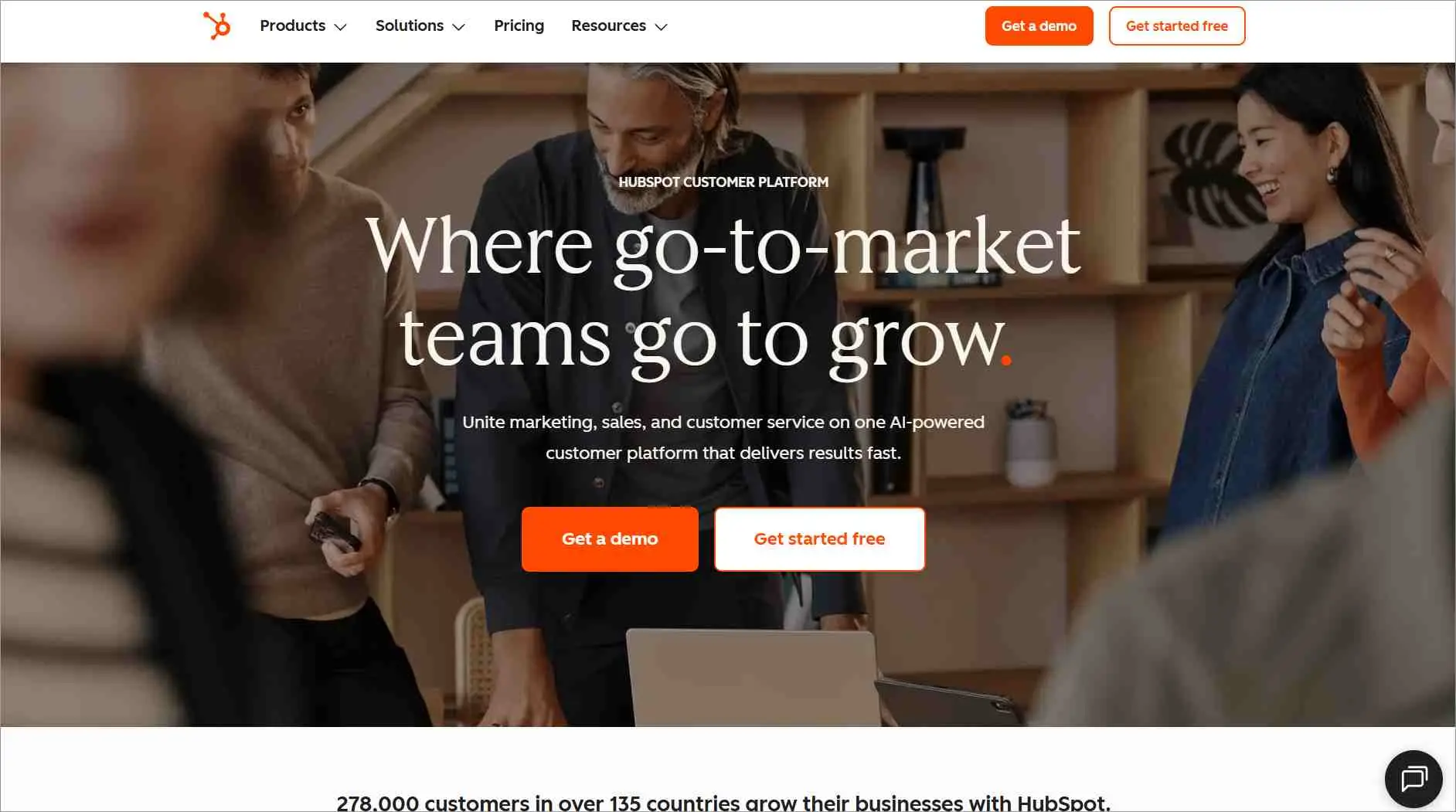
HubSpot Service Hub is a customer service platform known for its communication features, shared inboxes, omnichannel messaging, and knowledge base tools that help companies attract and delight customers.
Key features
- Customer relationship management tools
- Shared inbox
- Automation
- Knowledge base
Pros
- Efficiently manages, assigns, and tracks customer support tickets to ensure timely resolution.
- Collect and analyze customer insights through surveys to continuously improve service quality.
Cons
- Many support features are tightly coupled with HubSpot CRM, reducing flexibility for users seeking a more independent help desk software.
Pricing
Starts at $20/agent/month
The top difference between HubSpot Service Hub and Intercom
HubSpot Service Hub is one part of the larger HubSpot ecosystem, which includes platforms for marketing, sales, operations, and more. HubSpot aims to be a full business solution.
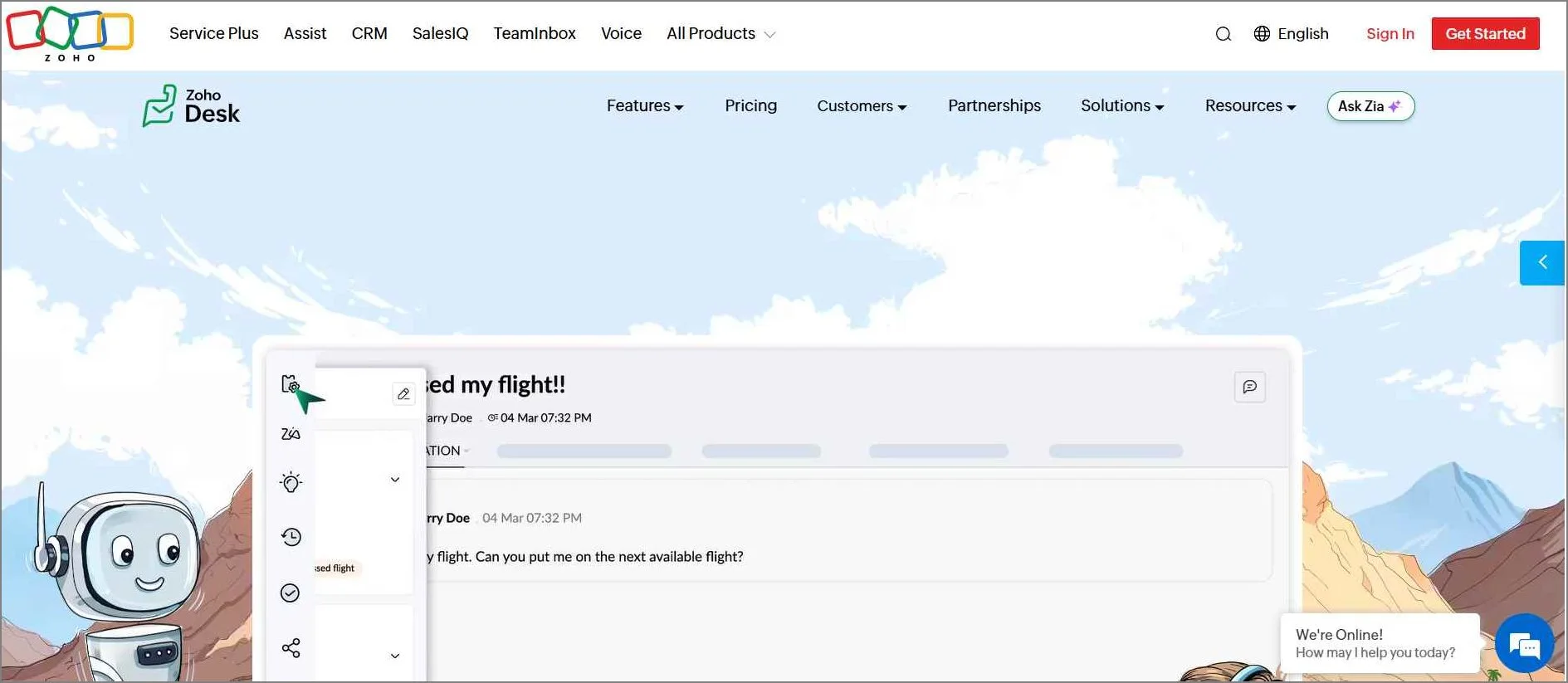
9. Zoho Desk
Best for businesses that need structured ticketing and automation within an integrated ecosystem.
Zoho Desk is a cloud-based customer service platform that helps companies streamline and manage their customer support operations.
It supports various third-party apps, including native mobile apps, to ensure an excellent client experience.
Key features
- Ticket management
- Collaboration tools
- Customization tools
- Self-service
Pros
- Tailors your help center to match your brand’s look and feel, enhancing customer trust and experience.
- Integrates forums directly into your website to promote in-app support and self-service.
Cons
- Real-time chat support is only available in the highest-tier plan, which may restrict access for smaller teams.
Pricing
Starts at $4.87/agent/month
Free trial duration: 15 days
The top difference between Zoho Desk and Intercom
Zoho Desk focuses on ticket management and support automation, while Intercom emphasizes customer engagement and messaging automation.
10. Freshdesk
Best for teams that need strong ticketing and call center support, offering automation and built-in phone support capabilities.
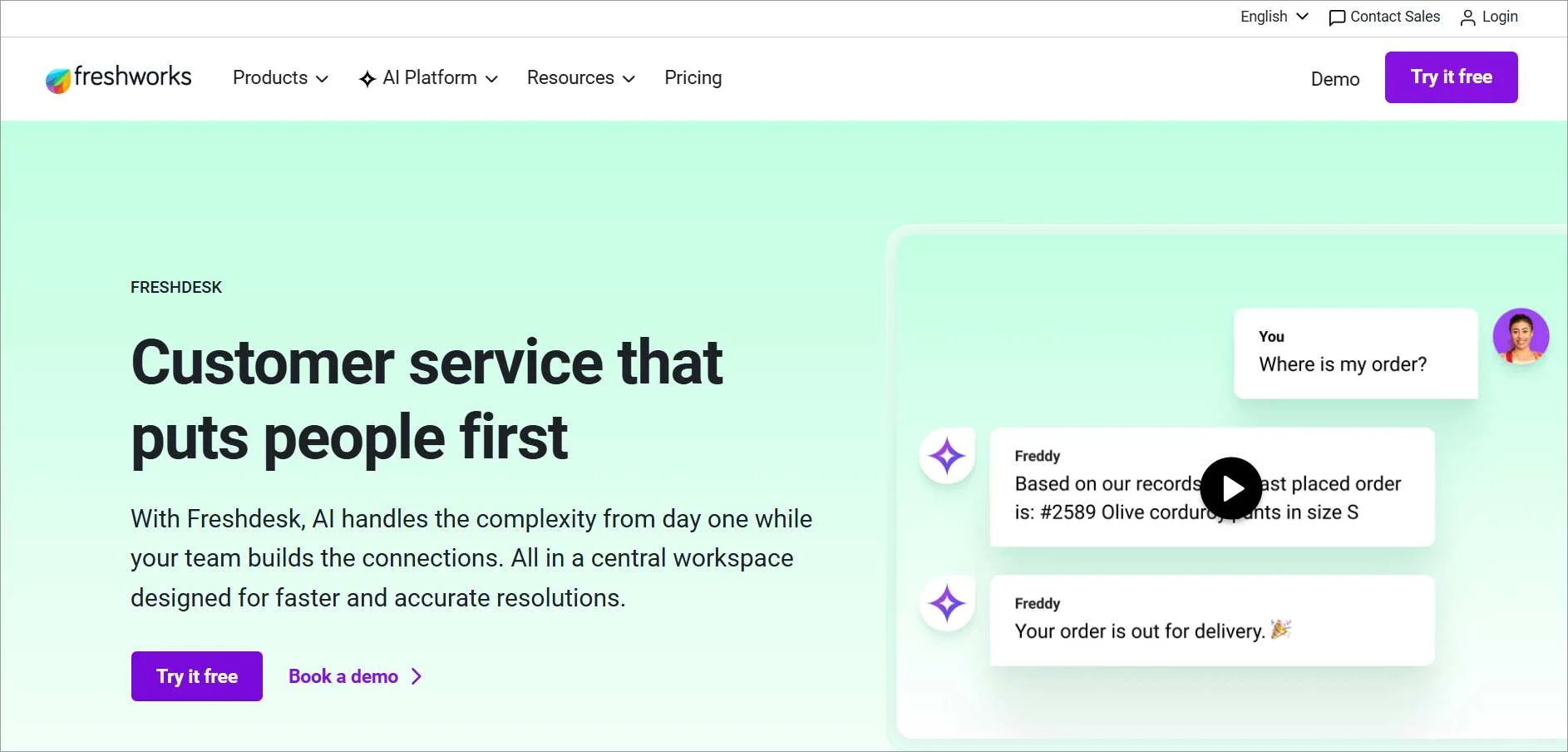
Freshdesk is a cloud-based customer support solution that empowers companies to better serve their customers through a robust ticketing system, automation tools, a huge selection of integrations, and live chat.
Key features
- Ticketing system
- Mobile app
- Collaboration tools
- SLA management
Pros
- Streamlines support operations with intelligent ticket routing, prioritization, and workflow automation.
- Fosters user engagement and self-service by enabling customers to ask questions and share solutions.
Cons
- The platform has extensive features that can be overwhelming for new users or small teams.
Pricing
Starts at $19/agent/month
Free trial duration: 14 days
Top differences between Freshdesk and Intercom
- Freshdesk focuses on organized support management, while Intercom emphasizes dynamic and personalized interactions.
- Freshdesk offers a free version with limited features for up to 10 users. Intercom does not offer a free version.
11. LiveAgent
Best for businesses seeking affordable omnichannel support, combining chat, email, voice, and ticketing features.
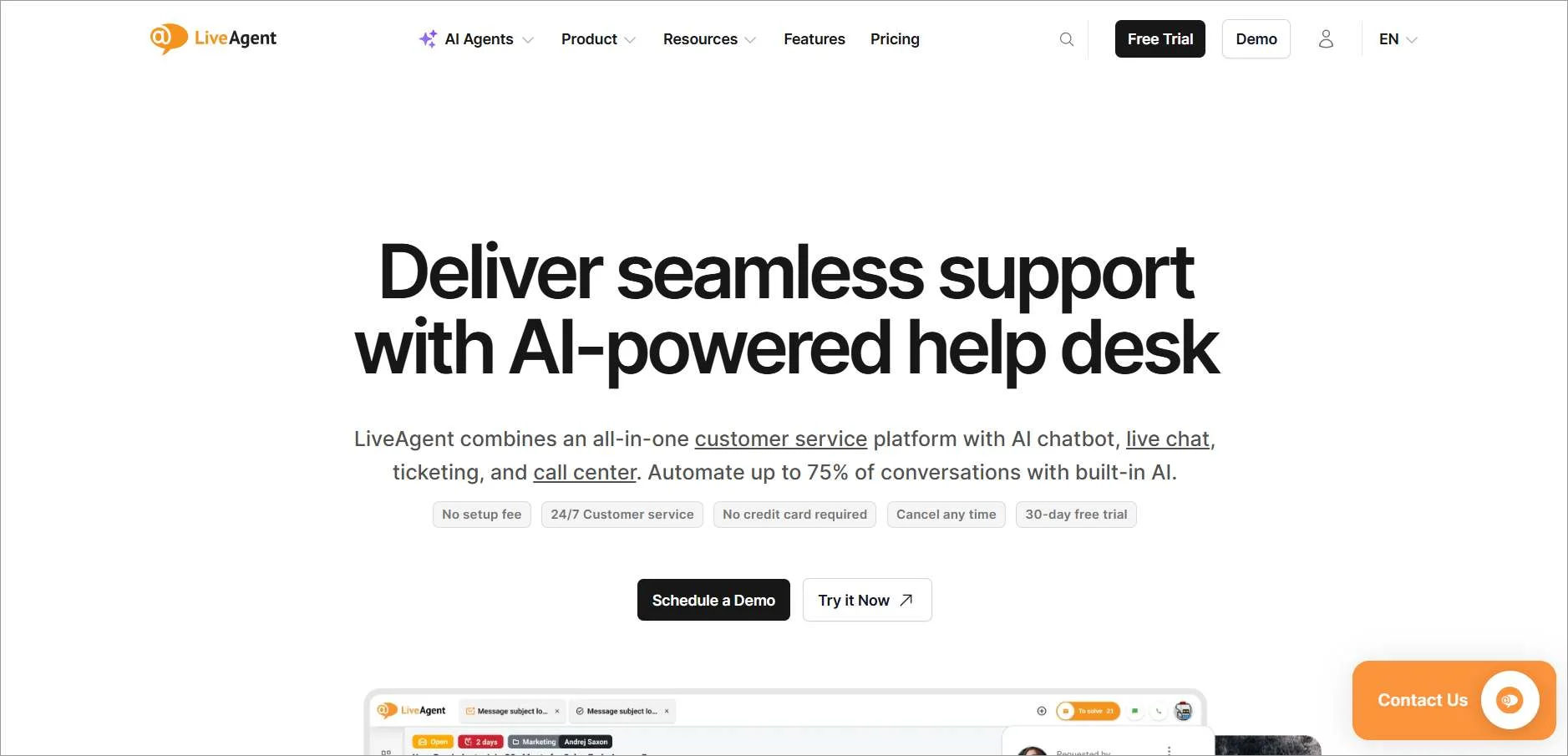
LiveAgent is customer service software that businesses use to engage with their website visitors in real-time.
The platform is designed to streamline question-answering through any communication channel customers use, making it an Intercom alternative.
Key features
- Live chat
- Omnichannel messaging
- Ticketing system
- Chat routing
Pros
- Easy to navigate and customize, making it ideal for teams of all sizes.
- LiveAgent enhances real-time interactions with features like canned responses, proactive chat invitations, and a real-time typing view.
Cons
- It may not offer extensive integration options with external tools, which can be a drawback for businesses relying on a diverse software ecosystem.
Pricing
Starts at $15/agent/month
Free trial duration: 30 days
Top differences between LiveAgent and Intercom
- LiveAgent’s pricing plans start much lower than Intercom’s.
- LiveAgent’s AI feature availability varies.
Choose the right Intercom alternative to scale your customer support
Selecting the best Intercom alternative requires evaluating key factors such as ticketing capabilities, AI pricing models, integrations, and scalability to ensure it aligns with your team’s needs and long-term growth plans.
While Intercom is a widely used customer support platform, many businesses switch to alternatives that offer more transparent pricing, flexible customization, and stronger chat-to-ticket workflows.
Solutions like BoldDesk provide a balanced combination of predictable pricing, AI-powered support, and robust ticketing, making it well-suited for fast-growing companies that need a reliable and scalable support system.
Use this guide to choose the best Intercom alternative for your business and deliver faster, more efficient, and more consistent support.
We hope that this article has provided you with some great options for the best Intercom alternative for your company!
Please feel free to share your thoughts or comments in the space provided below.
Related articles
- 16 Best Zendesk Alternatives for Businesses in 2026
- 10 Best Freshdesk Alternatives for Businesses in 2026
Frequently Asked Questions
The best Intercom alternative for scaling businesses depends on team size, budget, and support requirements.
Platforms like BoldDesk, Freshdesk, Zendesk, and Help Scout are popular because they combine live chat, ticketing, automation, and predictable pricing, making them easier to scale than Intercom.
The biggest reason companies switch from Intercom is unpredictable and rising costs, especially due to usage-based pricing, add-ons, and AI-related fees that make budgeting difficult as support scales.
Many teams also move to alternatives that offer stronger ticketing workflows, clearer pricing, and more flexible support systems better suited for structured customer support operations.
Yes, several Intercom alternatives offer AI agents with more predictable pricing models, such as flat-rate plans or usage-based AI credits instead of per-resolution fees.
Platforms like BoldDesk use AI credit-based pricing, helping businesses control costs more effectively while scaling AI-powered support without unexpected charges.
Yes, most Intercom alternatives support data migration, allowing businesses to securely transfer chat history, tickets, conversation records, and customer data without significant loss.
Platforms like BoldDesk provide assisted migration services to ensure a smooth transition by helping teams validate, map, and import data accurately while minimizing downtime.
Most modern help desk software and Intercom alternatives integrate with WhatsApp and Instagram to enable omnichannel support.
Popular options include platforms like BoldDesk, Freshdesk, Zendesk, and Tidio.
These integrations allow businesses to manage social messaging alongside email and chat in one dashboard, improving response times and customer experience.
Startups and SaaS companies typically choose Intercom replacements that provide ticket-based workflows, live chat, shared inboxes, and automation at an affordable price.
Tools like BoldDesk are designed to support small teams with simple setup, scalable features, and transparent pricing as they grow.