


- Blogs Explore Blogs Blogs
Webinar Recap: How to Automate Customer Support with AI
-
by Susan Wairimu Mwangi
- Updated on: November 25, 2026
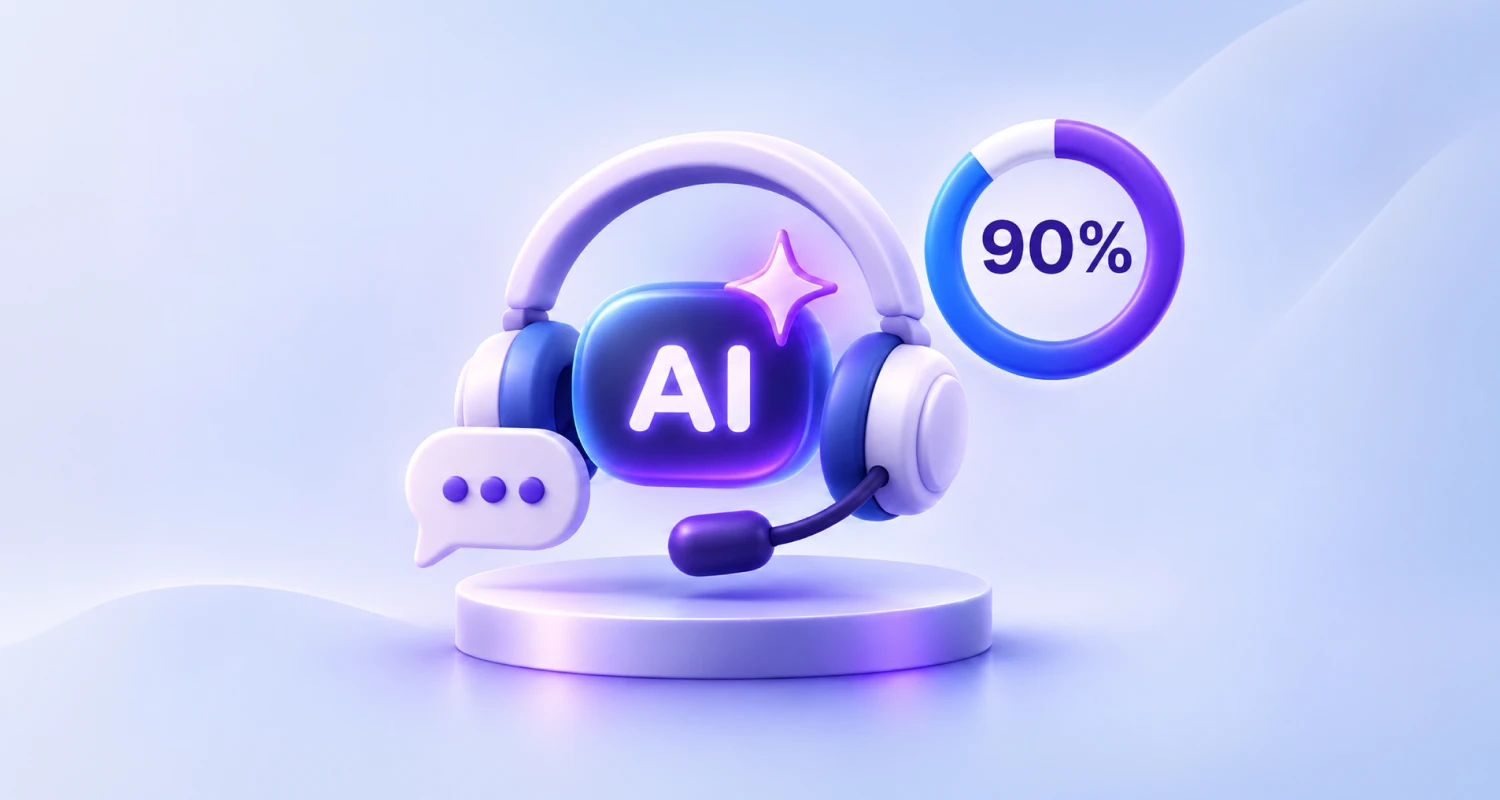
TL;DR: Watch this webinar recording to learn how to automate customer support with AI and resolve up to 90% of customer queries. Discover how AI-native support systems use autonomous resolution, AI agents, and customer support automation to understand requests, execute actions, and involve humans when necessary.
As ticket volumes grow, manual processes become harder to scale. Organizations are looking for ways to automate customer support with AI while maintaining accuracy, control, and customer satisfaction.
In this webinar, Dickson Akello, Product Specialist at BoldDesk, demonstrated how AI-native support autonomously understands requests, executes actions, and escalates complex cases.
The session provided a practical roadmap for building autonomous resolution workflows that improve efficiency without sacrificing human oversight.
Watch the webinar
Watch the recording to learn how modern organizations use AI-native support systems to automate customer service workflows, resolve issues faster, and deliver consistent customer experiences.
Who should watch this webinar?
This webinar is ideal for:
- Customer support leaders looking to improve efficiency and reduce operational costs.
- Customer experience teams evaluating AI customer service initiatives.
- IT leaders responsible for support technology and integrations.
- Operations managers seeking scalable support models.
- Business leaders exploring autonomous resolution and customer support automation.
The new era of customer support
For years, customer support has evolved through distinct stages.
Organizations started with fully human-powered support, then adopted AI tools to help agents work more efficiently. Workflow automation followed, reducing repetitive tasks and streamlining operations.
Today, we're entering the era of AI-native support, where AI doesn't simply suggest answers but can independently resolve customer issues from start to finish.
The key difference is simple: AI assistants help agents find answers, while autonomous AI agents resolve issues and deliver outcomes.
Live demo: What autonomous resolution looks like
The webinar demonstrated how an AI agent handled an order cancellation request from start to finish.
The process followed these steps:
- The customer submitted a ticket requesting an order cancellation and the order ID.
- The AI agent identified the intent, gathered the relevant order details, and shared them with the customer, who confirmed the request.
- Because the action needed approval, the AI agent sent the ticket to a human approver.
- Once approved, the AI agent canceled the order.
- The AI agent sent the customer a confirmation message.
From the customer's perspective, the experience felt effortless. Behind the scenes, the AI completed tasks that traditionally required human involvement.
The result was faster resolution, lower operational effort, and more consistent service delivery.
The presenter also noted that the same autonomous workflow can support live chat interactions, not only support tickets.
What happens when AI cannot resolve a request?
Not every issue can be resolved autonomously. Some situations require human judgment, approvals, or exception handling.
The webinar emphasized the importance of good AI-to-human handoffs.
When AI reaches the limits of its authority, confidence, or capability, it should transfer cases with conversation history, gathered context, findings, and completed actions.
This approach allows support teams to maintain continuity while ensuring customers do not repeat information.
The capabilities behind AI-native support
Autonomous resolution doesn't happen because of one AI model. It requires several capabilities working together.
An AI-native support system must be able to:
- Understand customer intent
- Gather contextual information
- Apply knowledge and reasoning
- Make decisions
- Execute actions through connected systems
- Verify outcomes
- Escalate to humans when appropriate
These capabilities allow AI to move beyond answering questions and begin handling complete customer journeys.
What powers autonomous resolution?
The webinar also covered the three building blocks that make autonomous resolution possible.
AI instructions and guardrails
Instructions define AI behavior, required policies, and situations that need human involvement. Clear AI agent guardrails help ensure responsible decision-making.
Knowledge sources
AI needs access to accurate information before making decisions. Knowledge sources may include knowledge base articles, web pages, Q&A pairs, business policies, product documentation, and PDF or Word files.
The quality of AI decisions depends heavily on the quality of available information.
Integrations
The webinar showed how integrations enable AI to retrieve records, validate transactions, update information, and execute tasks.
Integrations also allow AI to communicate outcomes and resolve customer requests. These connections can be configured through AI actions and MCP integrations.
Without integrations, AI can answer questions but cannot complete actions.
Key takeaways from the webinar
The webinar concluded with several important recommendations for organizations pursuing autonomous customer support.
- Focus on autonomous resolution: The path to 90% automation is autonomous resolution rather than traditional AI assistance.
- Move beyond answering questions: AI should understand, decide, act, and verify outcomes.
- Build strong foundations: Knowledge, integrations, and permissions matter more than model quality when building autonomous support systems.
- Redefine agent responsibilities: Human agents focus on complex interactions and exceptions, while AI handles routine requests without replacing agents.
- Scale efficiently: Organizations designed around AI can grow support capacity without proportionally increasing headcount.
From AI assistance to autonomous customer support
Customer support is moving beyond AI tools that simply assist agents. The goal is no longer to help agents respond faster. Instead, it is to resolve customer issues efficiently through autonomous resolution and intelligent workflows.
BoldDesk Support Agent helps organizations deliver autonomous customer support through AI-powered resolution, knowledge management, workflow automation, integrations, and human approval controls.
Ready to automate customer support with AI? Start a free trial or book a personalized demo to see BoldDesk in action.
Related articles
- Webinar Recap: Can You Trust AI with Your Customers?
- Future of Customer Service Webinar Recap: From Emails to Conversations
- Webinar Recap: Build Scalable Customer Support Without Agent Overload
FAQs
What is autonomous customer support?
Autonomous customer support uses AI systems that can understand requests, make decisions, execute actions, verify outcomes, and escalate cases when necessary.
How is autonomous resolution different from AI assistance?
AI assistance helps agents work more efficiently. Autonomous resolution enables AI to handle complete customer journeys and deliver outcomes directly.
ABOUT THE AUTHOR

Susan Wairimu Mwangi 
Susan is a creative content strategist at Syncfusion, crafting engaging stories that connect brands with audiences. She blends insight, clarity, and creativity to bring ideas to life while elevating content that enhances customer support and overall customer experience.
Read more articles by this author Be the first to get updates