







TL;DR: Building a well-structured customer support team is essential for delivering fast, consistent service at scale. This guide covers how to create and manage a high-performing team, the qualities that define great support agents, and the key KPIs every customer service team should track.
Customers today demand more than answers; they expect fast, consistent, and personalized support whenever they reach out for help.
When responses are slow or interactions feel impersonal, customer frustration increases, and trust erodes.
In fact, a recent study by Desk365.io shows that 90% of consumers expect immediate responses to support inquiries, and 76% become frustrated when interactions aren’t personalized.
Delivering speed and consistency doesn’t happen by chance. It starts with a well-structured customer support team equipped with the right help desk software, automated processes, and clearly defined KPIs.
In this blog, we’ll explore what a customer support team is, outline the qualities of a high-performing customer service team, and share practical tips for building a support team that drives customer satisfaction and business growth.
What is a customer support team?
A customer support team is a dedicated group of professionals responsible for assisting customers by answering questions, troubleshooting issues, and providing technical guidance.
Beyond resolving problems, they ensure interactions are smooth, helpful, and consistent with the company’s customer service standards.
They also contribute to improving internal processes, maintaining accurate client records, and supporting an empathetic approach to enhance customer experience management.
Why is organizing your support team important?
When roles and responsibilities are clearly defined, your team operates with precision and confidence, leading to better outcomes for both customers and the business. The benefits include:
- Improves efficiency: An organized team can manage inquiries faster and more effectively, reducing wait times and ensuring smooth workflows.
- Boosts customer satisfaction: A well-structured team delivers consistent and accurate support, ensuring customers receive reliable solutions every time, creating a positive experience that strengthens loyalty and encourages repeat business.
- Minimizes errors: Clear processes reduce mistakes and prevent overlooked details, reducing misunderstandings and improving overall service quality.
- Increases productivity: When tasks are prioritized effectively, agents spend less time on uncertainty and more time resolving issues.
- Enhances collaboration: A structured customer service team fosters teamwork as agents know exactly who to contact for specific issues, enabling seamless information sharing and quicker problem-solving.
Steps to build and organize a customer support team
Setting up a support team requires more than hiring agents; it demands a clear strategy and thoughtful execution.
Every decision shapes how effectively your team can deliver fast, personalized customer service and build lasting customer relationships.
Here are essential tips on how to build a customer support team for long-term success.
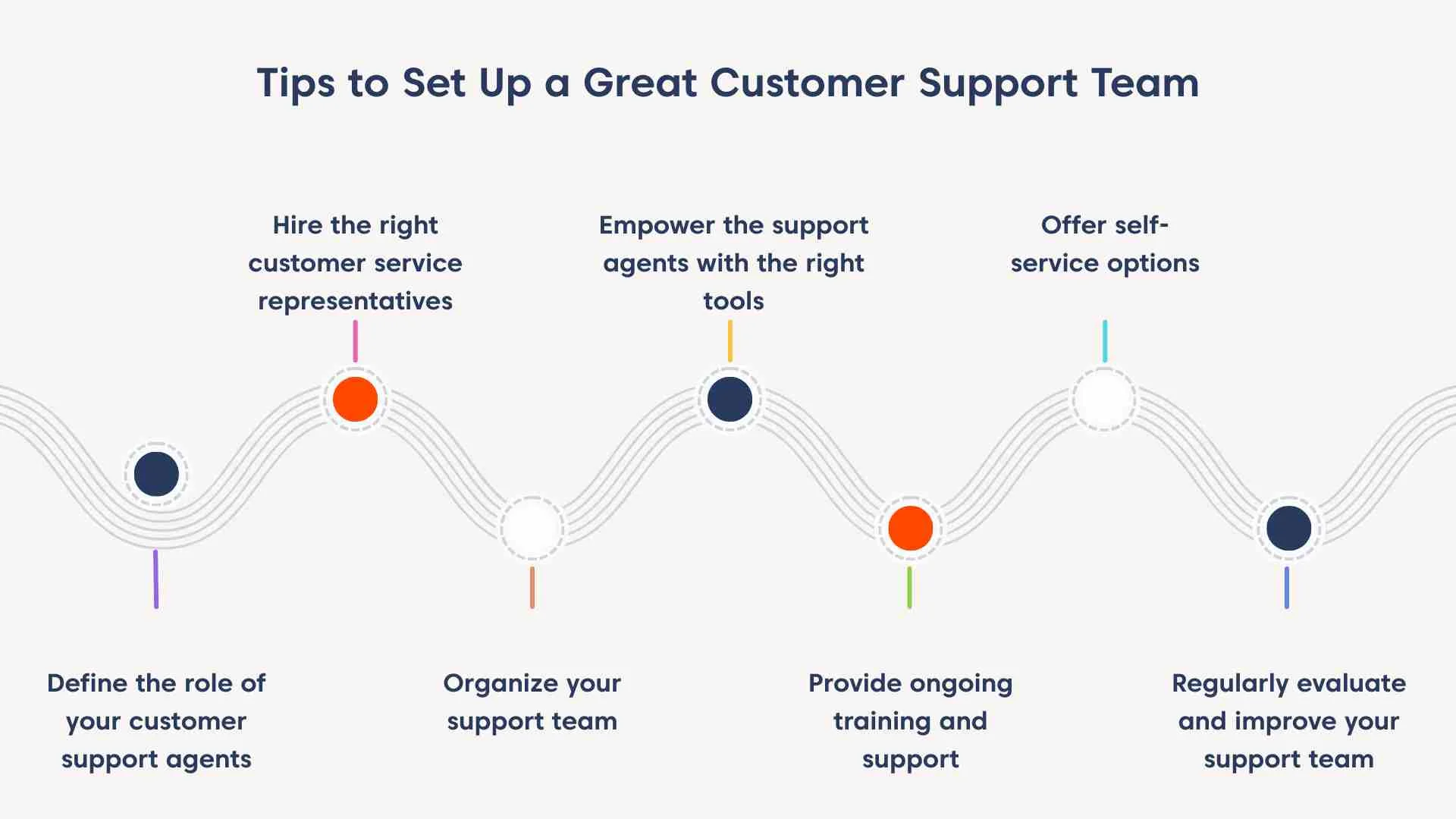
1. Define the role of your customer support agents
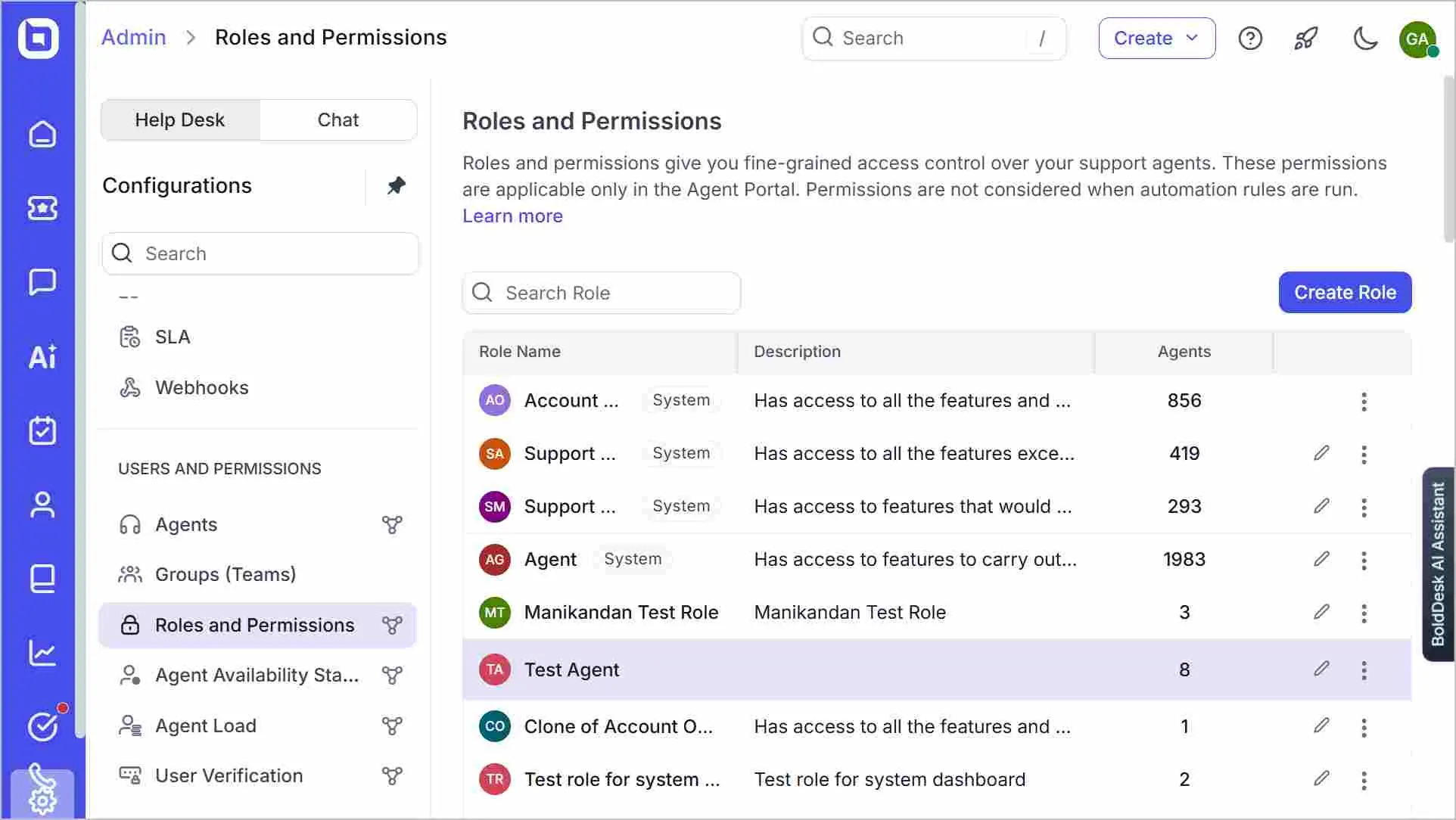
Start by clearly defining what each agent is responsible for. Some agents may handle general inquiries, while others focus on technical issues or escalations.
Will they handle general inquiries, resolve technical issues, or manage both? Should they address complaints directly or escalate them to specialized departments?
Establishing clear roles ensures accountability, streamlines workflows, and helps you craft accurate job descriptions. It also makes it easier to identify the skills and qualifications required for each position, setting your team up for efficiency and success from day one.
2. Hire the right customer service representatives
Once you’ve defined the roles within your support team, the next step is finding the right people to fill them.
Look for candidates with:
- Strong communication skills
- Problem-solving abilities
- A positive, customer-first mindset
- Ability to work well under pressure in a fast-paced environment
3. Structure your support team for efficiency
A clear structure is the backbone of a high-performing support team. Instead of a one-size-fits-all approach, divide agents into specialized groups based on customer needs.
For instance,
- The general inquiries team for common questions
- Technical support team for troubleshooting
- Escalation team for complex issues
This specialization ensures customers reach the right expert faster, reducing resolution times and improving satisfaction.
4. Empower the support agents with the right tools
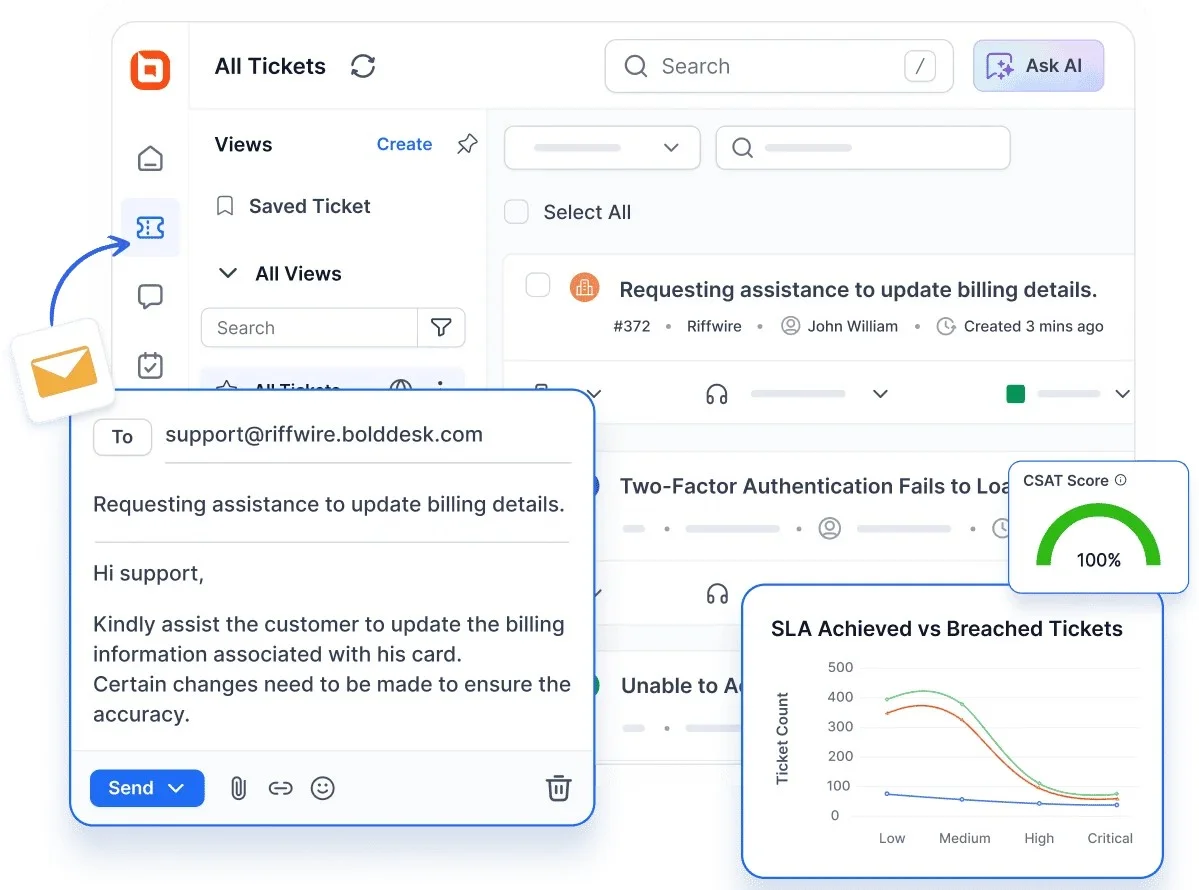
The right tools for customer support teams can facilitate effective communication, streamline workflow management, enhance knowledge sharing, and optimize performance tracking.
Investing in robust customer service software enables efficient management of customer inquiries from multiple channels and allows you to track the performance of your agents.
To choose the right customer service platform, look for omnichannel support, contact management, automation, knowledge base, collaboration, and reporting and analytics.
5. Provide ongoing training and support
Initial training is essential, but continuous learning keeps your support team effective and adaptable.
Regular sessions should cover new products and services, updated policies, and best practices for handling different types of customer complaints and inquiries.
Ongoing support can also include coaching, role-playing scenarios, and access to internal knowledge resources to help agents stay confident and consistent in delivering exceptional service.
A culture of learning ensures your team evolves with customer expectations and business needs.
6. Offer self-service options
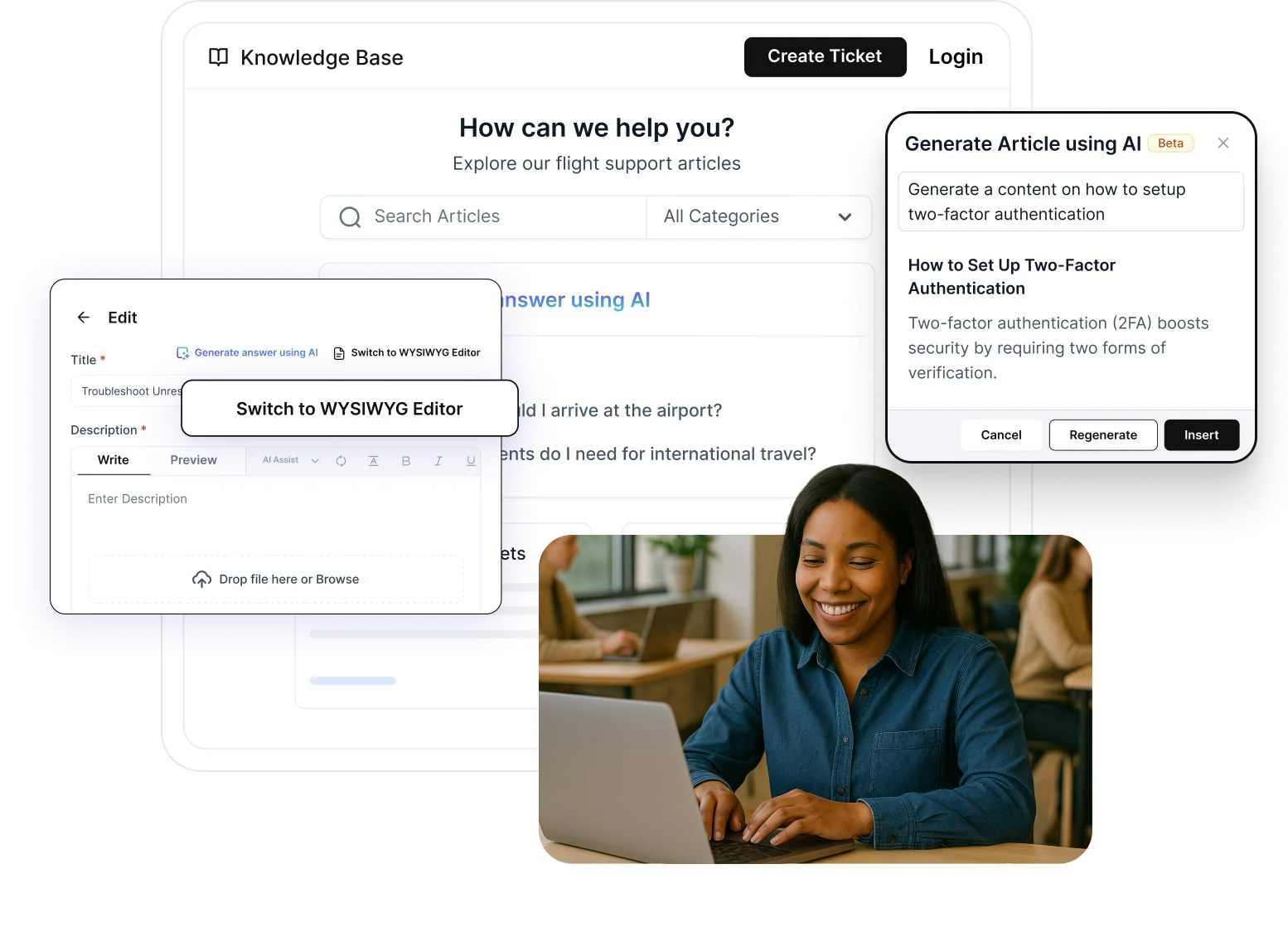
Customer self-service isn’t just convenient; it’s a game-changer for efficiency. By enabling customers to resolve common issues on their own, you reduce ticket volume and free your team to focus on complex cases.
A Gartner survey of 321 customer service leaders found that self-service success ranks among their top priorities for 2026, alongside customer satisfaction and operational efficiency.
Customers appreciate the ability to resolve problems independently without waiting for a support agent. By providing resources such as comprehensive knowledge base software, detailed FAQs, and AI Agents, you empower customers to find quick answers anytime.
7. Regularly evaluate and improve your support team
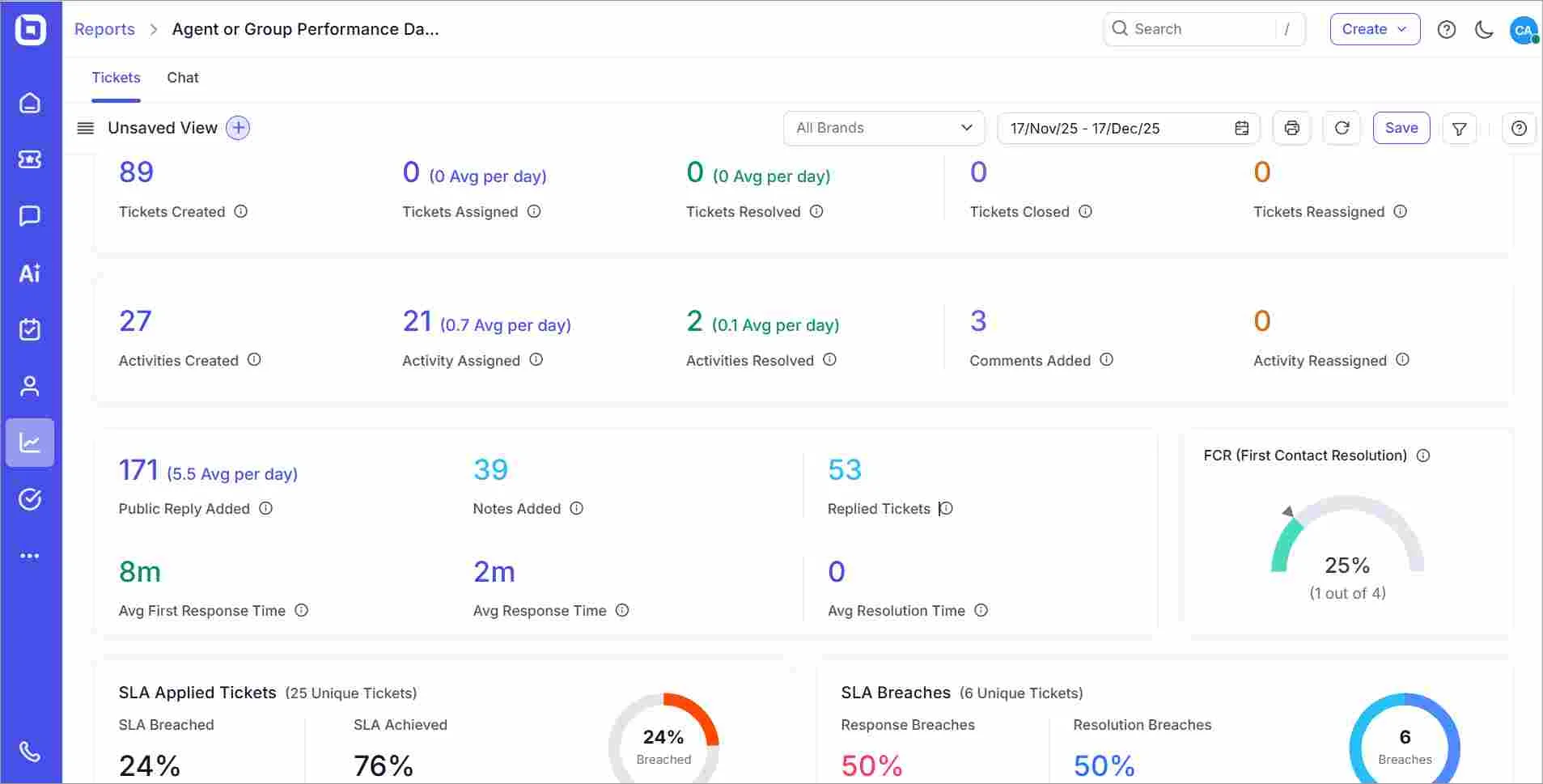
Once your support team is operational, conduct regular performance reviews, set measurable goals, and analyze key customer service metrics such as first response times, average handle times, and customer satisfaction scores to maintain high performance.
As the team becomes familiar with workflows and technology, look for opportunities to refine processes, eliminate bottlenecks, and enhance the overall customer experience.
Use insights from analytics and customer feedback to implement improvements that keep your team agile and aligned with evolving customer needs.
What are the key qualities of a great customer service team?
Hiring the right specialists is the foundation of building a high-performing customer service team.
Beyond technical know-how, the best agents possess exceptional customer service skills that enable them to deliver outstanding experiences and foster customer loyalty.
The following are some of the qualities to look for.
Strong communication skills
Clear communication can turn complex issues into clear resolutions and transform potential frustrations into positive experiences.
Great customer service representatives do more than provide answers; they must listen actively and respond in a way that makes customers feel understood.
This includes interpreting verbal and non-verbal cues, managing expectations, and explaining solutions in simple, reassuring language.
Customer empathy
Empathy in customer service is what makes service personal. It’s the ability to understand a customer’s emotions and perspective, and address their concerns effectively and with genuine care.
Support agents must practice empathy so customers can feel valued and heard, building trust and loyalty.
Empathetic interactions might turn dissatisfied customers into advocates because they sense the brand genuinely cares about their experience.
Problem-solving
Since customer issues aren’t always straightforward, effective problem‑solving requires creativity and alternative approaches when standard solutions don’t fit.
Skilled problem-solvers can quickly assess situations, identify root causes, and deliver helpful solutions.
This ability reduces resolution time, restores confidence, and ensures customers leave with a sense of relief, building customer trust.
Time management
Support teams often receive a high volume of inquiries and must juggle multiple requests across various channels.
Customer service agents with strong time management skills can prioritize effectively, meet service level agreements (SLAs), and minimize wait times, positively impacting operational productivity.
This ensures urgent issues are resolved promptly while maintaining consistency across all interactions.
Teamwork
Customer service is rarely a solo effort. Support agents must collaborate, share knowledge, and coordinate with peers to deliver seamless support.
Team players contribute to a positive work environment, foster cross-functional team collaboration, and leverage collective expertise to solve complex problems faster.
Adaptability and continuous learning
Customer expectations, products, and technologies are constantly evolving. A commitment to continuous learning ensures your team remains agile and capable of delivering top-tier service in a dynamic environment.
Customer representatives should be able to adapt to change, learn new tools, and stay current with best practices, enabling them to handle unexpected challenges, such as complicated interactions or technical glitches, with composure and flexibility.
Key performance indicators to track for customer service teams
Measuring customer service KPIs is about understanding how well your support team delivers outstanding customer experiences.
Support team KPIs help you identify inefficiencies, optimize workflows, and maintain customer satisfaction.
Here are some of the most impactful customer experience metrics every support team should track:
First contact resolution (FCR)
First contact resolution (FCR) tracks the percentage of customer issues resolved during the initial interaction, regardless of the channel (phone, email, live chat, etc.).
Higher FCR leads to fewer repeat contacts, lower costs, and happier customers.
Even a 1% improvement in FCR can significantly reduce operational expenses while boosting satisfaction.
Average handle time (AHT)
Average handle time (AHT) measures the total time an agent spends resolving a single interaction, from the moment they pick up the ticket to completing any follow-up tasks.
High AHT may indicate complex processes or insufficient training. On the other hand, low AHT isn’t always good; it could mean agents are rushing and leaving issues unresolved.
Always strive for balance and efficiency without compromising quality.
Customer satisfaction score (CSAT)
The customer satisfaction score (CSAT) captures immediate feedback after an interaction, usually via a brief survey that asks, “How satisfied are you?” on a 1–5 scale.
CSAT helps you fix short-term issues fast.
Net promoter score (NPS)
Net promoter score (NPS) measures long-term loyalty by asking, “How likely are you to recommend us?” on a 0–10 scale.
- Promoters: 9–10
- Passives: 7–8
- Detractors: 0–6
NPS reveals the overall brand perception and growth potential. Instead of calculating manually, free tools like an NPS calculator can simplify the process and ensure accuracy, saving time for your support team.
Customer retention rate
The customer retention rate measures the percentage of customers who continue to do business with you over a specific period.
It answers the question: “How well are we keeping the customers we worked so hard to acquire?”
Common challenges in managing a customer support team
Even the most experienced leaders face hurdles that can slow response times, strain resources, and impact customer satisfaction.
The following are the most frequent obstacles support teams encounter, and how to overcome them.
High ticket volume
As your business grows, so does the number of support requests. This can overwhelm support agents, leading to customer service burnout and slower response times.
How to overcome it
- Use tools that auto-assign tickets, set priorities, and trigger canned responses for FAQs.
- Empower customers to self-serve for common issues.
- Track ticket backlog and redistribute tasks before bottlenecks occur.
Maintaining consistent quality across channels
Customers expect the same level of service whether they contact you via email, chat, social media, or phone. Inconsistent responses damage trust.
How to overcome it
- Adopt an omnichannel platform that consolidates interactions into one shared inbox.
- Create standard operating procedures (SOPs) to document tone, escalation paths, and resolution steps.
- Use email templates and canned responses to ensure consistency in tone, messaging, and accuracy across channels.
Agent burnout
Support roles can be stressful, especially during peak seasons, which can result in high turnover and poor customer experiences.
According to Web2chat, agent turnover in support roles often averages between 25% and 40%, with burnout a leading cause.
How to overcome it
- Use round-robin rules to distribute tasks evenly to reduce support agent burnout.
- Celebrate wins, like high CSAT scores or quick resolutions.
- Provide growth paths for career advancement to keep agents motivated.
Balancing AI with human touch
As you scale, it’s easy to rely too heavily on automation. This can make interactions feel robotic and impersonal.
How to overcome it
- Use AI agents for simple queries and route complex issues to skilled human agents.
- Leverage the contact management system to tailor responses and recommendations.
- Track CSAT and resolution times for AI-assisted tickets to ensure automation enhances, not harms, the customer experience strategy.
Unlock success with an efficient customer support team
A strong customer support team helps businesses resolve issues efficiently, deliver consistent experiences across all channels, and build long-term customer trust.
With the right combination of people, processes, and tools, support teams can scale operations without sacrificing service quality.
BoldDesk can give you the solution to make it happen. We bring together AI‑powered automation, omnichannel support, internal notes, and canned responses, among other tools, to streamline workflows and scale effortlessly.
Contact our support team to schedule a live demo, start a 15-day free trial, or explore our product tour and documentation to see how BoldDesk fits your customer service team.
Do you have any suggestions you’d like us to consider? We invite you to share your thoughts in the comment section below.
Related articles
- Customer Support Operations Guide: Scale, Streamline, Succeed
- 10 Most Popular Essential Customer Service Skills
- 12 Actionable Strategies for Scaling Customer Support in 2026