





TL;DR: Integrating BoldDesk with Firmao via Zapier helps businesses automate customer support and CRM workflows. This guide explains how to connect the two platforms, available triggers and actions, setup steps, and practical use cases to improve productivity and customer experience.
In today’s business landscape, the seamless integrations of diverse tools and applications has become a pivotal element in the success of many companies. This integration streamlines processes, enhances productivity, and enables a more efficient workflow.
One of the instrumental solutions facilitating this integration is Zapier, a platform that connects various apps to automate tasks and boost operational efficiency effortlessly.
In this article, we’ll delve into the integration of two significant business tools, BoldDesk and Firmao, made possible through Zapier.
Integrating BoldDesk with Zapier helps businesses automate workflows across multiple applications, improving collaboration, efficiency, and data synchronization.
What is BoldDesk?
BoldDesk is customer service software that helps businesses handle support operations by converting support emails into tickets, automating repetitive tasks, and streamlining the workflow.
Its automated help desk ticketing tools enable the management of customer service tasks through an online, centralized platform, helping businesses achieve their customer service objectives more effectively.
Businesses can also use BoldDesk’s contact management capabilities to organize customer information and interactions within their support environment.
What is Firmao?
Firmao is online CRM software designed to monitor and oversee customer-related information. By establishing a customer database, it streamlines the customer acquisition process, enhances conversion rates throughout the sales journey, and enables effective and thorough service for customers.
Firmao plays a crucial role in managing sales departments and functions.
Why Integrate BoldDesk with Firmao?
Integration between BoldDesk and Firmao, facilitated by Zapier, establishes a bridge between these two platforms, letting them communicate and share information seamlessly.
This means that data generated or modified in one application can be automatically transferred to the other, eliminating the need for manual input and reducing the risk of errors.
By leveraging automation, businesses can eliminate repetitive tasks, reduce manual data entry, and keep customer information synchronized across both platforms.
How to set up the BoldDesk–Firmao integration using Zapier
Zapier connects BoldDesk and Firmao, enabling data to move automatically between customer support and CRM workflows.
When an event occurs in BoldDesk, such as the creation of a new ticket, Zapier can trigger an action in Firmao, such as creating a customer record, task, or sales opportunity.
Follow the steps below to set up the integration and automate your workflows.
Step 1: Create a Zap
The first step is to create a Zap, which is Zapier’s term for an automated workflow that connects two or more applications.
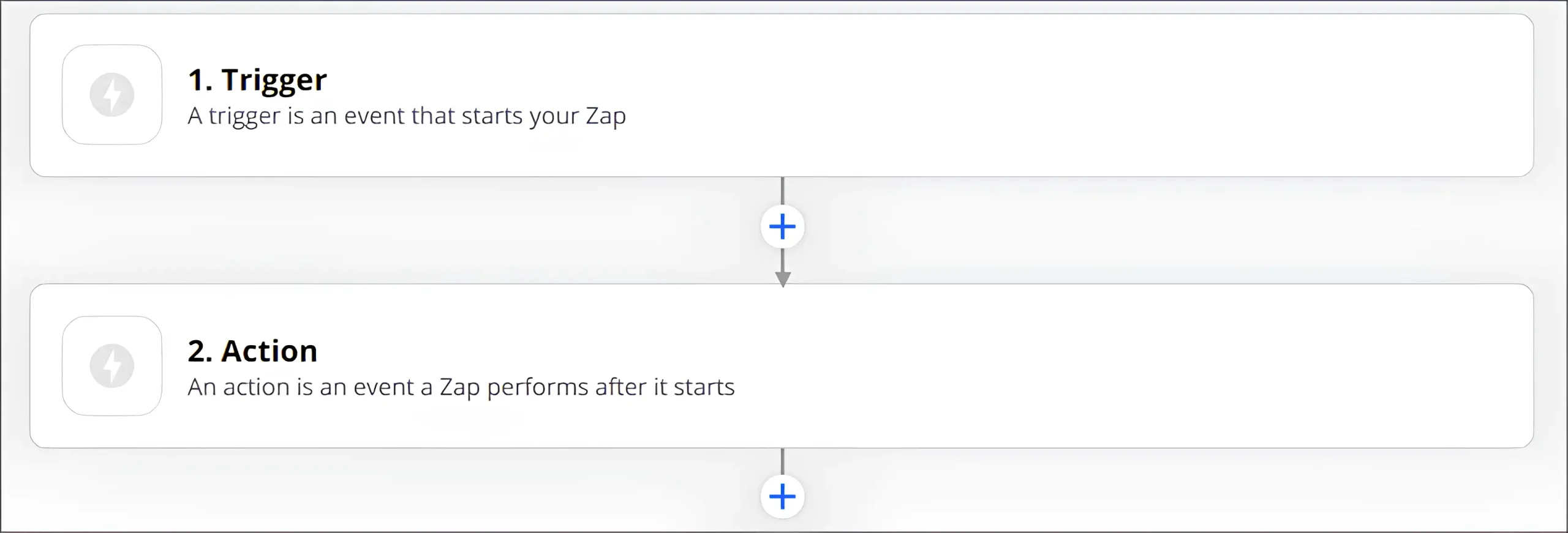
- Log in to your Zapier account.
- From the Zapier dashboard, click Create Zap.
- Search for and select BoldDesk as the trigger application.
- Choose the event that will start the automation. Depending on your workflow requirements, you can select triggers such as:
- Create Ticket
- Update Ticket
- Create Contact
- Create Ticket Reply
- Click Continue to proceed to the next step.
For example, if you want every new support request to create a record in Firmao, select Create Ticket as the trigger event.
Step 2: Connect Your BoldDesk Account
After choosing a trigger, you’ll need to connect your BoldDesk account to Zapier.
- Click Sign in to BoldDesk.
- Enter the required authentication details and authorize Zapier to access your BoldDesk account.
- Select the appropriate BoldDesk portal if you manage multiple portals.
- Once connected, click Test Trigger.
Zapier will retrieve sample data from BoldDesk to verify that the connection is working correctly. Successful testing ensures that customer and ticket information can be used in the next steps of the workflow.
Step 3: Select Firmao as the Action App
Once the trigger is configured, you can define what should happen in Firmao whenever the selected BoldDesk event occurs.
- Search for and select Firmao as the action application.
- Choose the action you want Zapier to perform automatically.
- Common actions include:
- Create Customer – Creates a new customer record in Firmao.
- Create Task – Generates a task for a sales or support representative.
- Create Sales Opportunity – Creates a new opportunity in the sales pipeline.
- Update Customer Information – Updates existing customer records with new information from BoldDesk.
- Connect your Firmao account and authorize access.
At this stage, Zapier establishes the connection between the support activity occurring in BoldDesk and the CRM action performed in Firmao.
Step 4: Map Data Between BoldDesk and Firmao
Field mapping determines how information is transferred between both systems.
Zapier will display fields from BoldDesk and allow you to match them with corresponding fields in Firmao. This ensures that customer and ticket information appears in the correct location within your CRM.
Example field mappings include:
| BoldDesk Field | Firmao Field |
| Contact Name | Customer Name |
| Contact Email | Customer Email |
| Ticket Subject | Opportunity Name |
| Ticket Priority | Opportunity Priority |
| Ticket Description | Notes |
| Company Name | Customer Company |
Carefully review each field and ensure the data is being mapped correctly. Proper field mapping helps prevent duplicate records and ensures accurate customer information.
Step 5: Test and Enable the Zap
Before activating the workflow, perform a final test.
- Click Test Action to send sample data from BoldDesk to Firmao.
- Review the record created in Firmao and confirm that all information has been transferred accurately.
- Verify that customer details, ticket information, and any associated notes appear in the correct fields.
- Once everything looks correct, click Publish or Turn On Zap.
The automation is now active and will run automatically whenever the selected trigger occurs in BoldDesk.
Real-life examples of using BoldDesk and Firmao together
A B2B software company uses Firmao to manage customer accounts and sales opportunities, while the support team handles customer issues in BoldDesk.
When a customer submits a high-priority support ticket in BoldDesk, Zapier automatically creates a follow-up task in Firmao for the account manager. The sales team is immediately notified of the issue and can proactively reach out to the customer, preventing miscommunication and improving customer retention.
Result: Sales and support teams stay aligned, respond faster to customer concerns, and deliver a more consistent customer experience.
Available triggers and actions for BoldDesk and Firmao
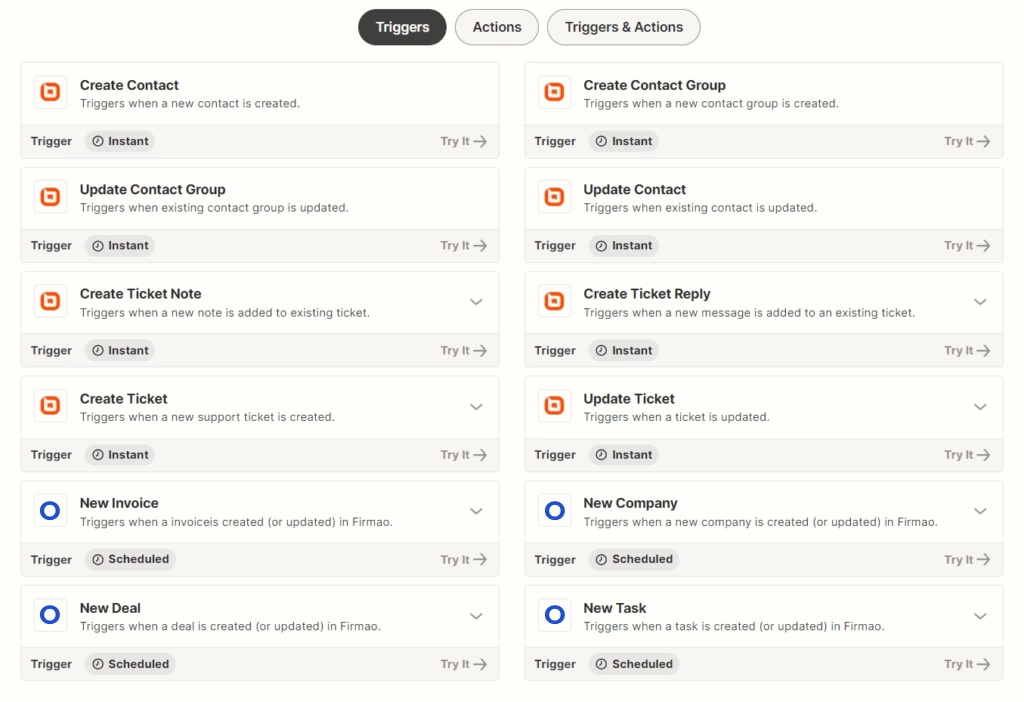
The BoldDesk–Firmao integration supports several triggers and actions that help automate customer support and CRM workflows, enabling businesses to deliver more efficient automated customer service experiences.
The following events can be used to create Zaps that keep customer data, sales activities, and support interactions synchronized across both platforms.
BoldDesk
| Trigger | Description |
| Create Contact | Triggers when a new contact is created. |
| Update Contact | Triggers when an existing contact is updated. |
| Create Contact Group | Triggers when a new contact group is created. |
| Update Contact Group | Triggers when an existing contact group is updated. |
| Create Ticket | Triggers when a new support ticket is created. |
| Create Ticket Note | Triggers when a new support note is added to an existing ticket. |
| Update Ticket | Triggers when an existing ticket is updated. |
| Create Ticket Reply | Triggers when a new message is added to an existing ticket. |
Firmao
| New transaction | Triggers when a transaction is created or updated. |
| New customer | Triggers when a new customer is created or updated. |
| New sales opportunity | Triggers when a sales opportunity is created or updated. |
| New task | Triggers when a task is created or updated. |
| New Company | Triggers when a company is created or updated. |
| New Deal | Triggers when a deal is created or updated. |
| New Invoice | Triggers when an invoice is created or updated. |
| New Product | Triggers when a product is created or modified. |
Benefits resulting from Integrating BoldDesk with Firmao
Firmao provides:
- Data centralization: Customer information and communications are consolidated in a single location, facilitating convenient access for employees and enhancing the efficiency of customer service.
- Time savings: Quickly generate documents like invoices, quotes, and orders.
- Automation: Automate simple, repetitive tasks such as sending emails or creating quotes, or more complex activities such as qualifying leads or tracking sales progress.
BoldDesk provides:
- Improved customer service: With a centralized system for managing customer inquiries, support teams can provide timely and consistent assistance, enhancing overall customer satisfaction.
- Enhanced collaboration: Promotes collaboration among support team members by providing access to the latest information across departments, allowing for better coordination and faster issue resolution.
- Efficient issue resolution: BoldDesk streamlines the process of logging, tracking, and resolving customer issues, leading to quicker problem resolution.
- Scalability: As organizations grow, BoldDesk can scale to accommodate increased support needs and a growing customer base.
Maximizing business productivity by integrating BoldDesk with Firmao
The integration of BoldDesk with Firmao through Zapier represents a strategic move for companies seeking to optimize their operations.
By embracing such integrations, businesses can harness the power of automation to drive efficiency, reduce errors, and ultimately enhance overall productivity.
It also helps organizations deliver a more connected customer experience by aligning customer support and CRM activities throughout the customer journey.
Related articles
- Help Desk vs CRM: Choosing the Best Workflow Fit for Your Support Team
- How Shopify and BoldDesk Integration Boosts Support Efficiency
- Beyond Customer Support: Creative Ways to Utilize WhatsApp Integration with Your Ticketing System
Frequently asked questions
Yes. Small businesses can use the integration to reduce manual administrative work, keep customer and sales data organized, and ensure teams spend more time assisting customers instead of updating records across multiple platforms.
No. The integration is powered by Zapier’s no-code platform, allowing users to create automated workflows through a visual interface without writing code.
The integration helps both teams access relevant customer information from connected systems. This improves visibility into customer interactions and enables faster collaboration when handling customer requests and business opportunities.
Yes. Organizations that manage customer support, account management, sales, or customer success operations can use the integration to maintain a more connected workflow across departments
Before building a workflow, it’s important to identify the business process being automated, determine which data should be synced, and establish clear rules for when actions should be triggered to ensure the automation meets operational requirements.