Modern industries are innovating by leveraging technological advancements like AI to predict customer needs and deliver tailored solutions. Manufacturers have recognized the growing importance of customer service in their operations, given that customers expect good customer service alongside quality products.
To meet this expectation, manufacturing firms should provide top-tier support to customers both before and after a sale.
Here, we’ll discuss the need for customer service in manufacturing, highlight best practices, and identify service software to suit your needs.
Quality products are often not enough to retain customers today. The services you offer alongside your products—free delivery, warranties, technical support, and an easy refund policy—are what give you a competitive edge.
According to a Salesforce study, 79% of customers believe that the experience a business offers is just as important as the products it sells.
Good customer service can impact your manufacturing business in many ways. Here are just a few:
Manufacturing firms work primarily through performance-based contracts with other organizations that are outsourcing their production. Good customer service can help you create a positive customer experience that encourages contract renewal.
For example, when you provide personalized customer support in combination with effective communication, you can forge deeper connections with your customers. You’ll be able to understand what they really need. This information can help you offer products that meet their standards and build solid relationships with them for future sources of work.
An information silo means knowledge is confined within a specific team, making it difficult for other teams to access, share, or use it.
Breaking information silos down facilitates cross-team collaboration, which enables your firm to create a product that meets every aspect of the customer’s requirements.
Your sales and production teams should be aligned to gain a wider view of your customers’ needs. Equip your customer service team with the right technology, and they can help the sales team optimize marketing campaigns to generate more revenue. The production team can then actively predict and tailor production pipelines, reducing waste and cutting overhead costs.
Manufacturing companies often offer similar products at the same price in the market, and customer service can be the key differentiator between them. Customers expect to be valued and heard when engaging with a brand, and they prefer companies that meet that expectation.
Prioritizing customer needs throughout the supply chain can help you build strong relationships, enhance brand loyalty, and outperform your competitors.
Customers prefer companies that respond to their complaints promptly in addition to providing quality products that match their preferences. Excellent customer service means more satisfied customers, who are more likely to endorse your product to their friends and family. They frequently serve as an impromptu marketing tool.
A good brand reputation allows you to obtain new customers without costly advertisements and promotional campaigns.
A Khoros study shows that 43% of customers are more likely to purchase a product from a brand after a great customer service experience.
Quality customer service increases your overall sales since you’ll be able to upsell and cross-sell products. This significantly increases customer lifetime value.
Your manufacturing business can retain valuable customers and recurring revenue by addressing customer concerns and exceeding expectations.
Happy customers are often more willing to give feedback on product design, quality, and functionality. Getting customer feedback can help you come up with new products that meet customer needs.
By collecting customer satisfaction surveys, you can find out what you’re doing well and where you’re falling short when it comes to customer expectations for your products. Client reviews can even provide ideas to improve your products.
In the past, manufacturing companies focused more on improving products than customer service. Today, customer service is a necessity, and you should implement a more service-oriented approach to be able to thrive.
To provide top-notch customer service in your manufacturing business, you can adopt the following best practices:
Customers can often leave comments on their experience after an interaction with your team. Dive deep into this feedback on your customers’ preferences and expectations to better understand them.
When you collect feedback, you can learn whether your product meets customer expectations or if your production chain needs improvement. Additionally, this feedback can help you understand customers’ pain points.
Use this data to provide personalized customer service by tailoring products to customer needs and responding promptly to any issues that might come up.
You can streamline customer interactions and provide more personalized support with effective omnichannel communication. Customers expect you to be available both online and in person to provide support, guidance, and expert tips on your products.
You can implement an omnichannel inbox to ensure consistent support across different platforms like email, live chat, and social media.
Salesforce’s State of the Connected Customer survey shows that 61% of customers prefer businesses that offer self-service options that let them handle issues independently.
Set up self-service options with the following tips:
Technology is a universal influence in manufacturing, especially when it comes to reducing costs, innovating products, and improving efficiency. Here are a few examples:
These tools can help you improve your customer service processes and boost customer satisfaction.
Manufacturers can adopt sophisticated technologies like VR and AR to:
Manufacturing businesses need to be aware of current technology if they want to keep up with competitors and produce unique, complex products.
Manufacturers need to embrace a culture of unity across all teams, including technical and frontline workers and sales teams. Each of your teams should be focused on prioritizing customer service to ensure the success of the company.
You can invest in customer service training to instill a customer-centric attitude among staff, regardless of their department.
Customer service should be a focus for all teams, not just the ones that interact with clients directly. It should be an objective for your entire company.
Customers expect sustainable products that are friendly to the environment, especially when looking for a manufacturer.
According to a study by Capterra, consumers’ willingness to pay for sustainable products increased by an average of 8% from 2021 to 2022.
You can practice sustainability by:
You should also put measures in place to care for your consumers’ well-being. Publicizing allergen information, for example, can keep your customers informed about your products. This transparency demonstrates to customers that you care.
Regularly define and track customer service KPIs through CSAT surveys and net promoter scores. This will help you identify how satisfied your customers are with their overall experience. With the resulting data, you can analyze your team’s performance and identify areas for improvement.
Research by Salesforce shows that 74% of manufacturing managers believe a data-driven customer service approach will be their main revenue source in 10 years.
Customer service teams should adopt advanced data analysis strategies to get insight into customer preferences and behavior.
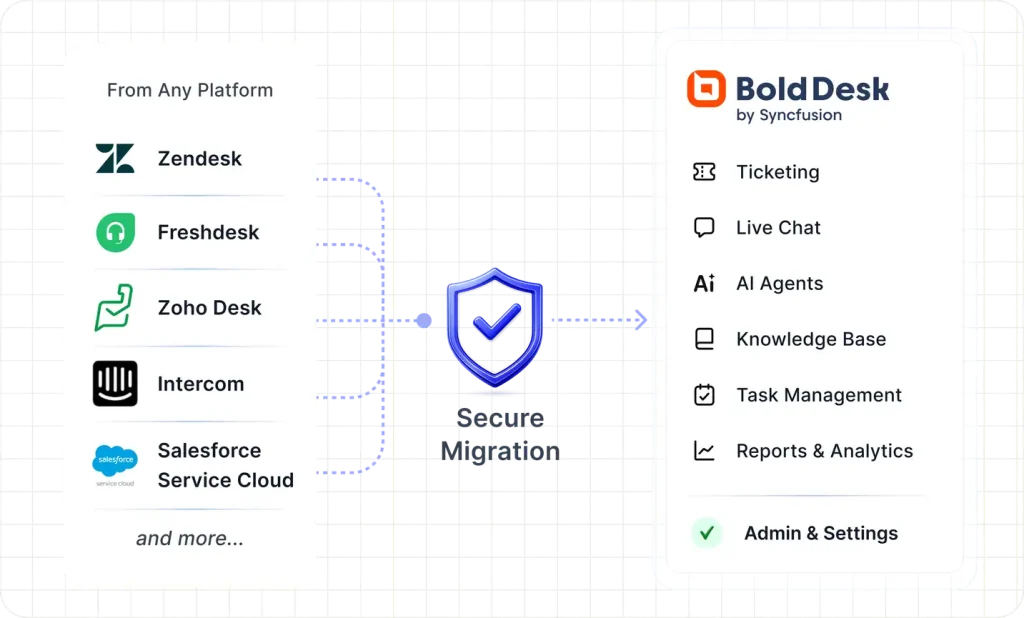
BoldDesk® is comprehensive AI-powered customer service software that streamlines your support operations, allowing you to resolve customer requests promptly with minimal effort.
Its features can help your manufacturing company manage customer requests, automate tasks, and collaborate seamlessly with a single user-friendly platform.
Pricing is scalable and flexible for you to give remarkable customer service to your clients at a cost that works for you.
Key features:
Providing exceptional customer service in the manufacturing industry is a strategic move in a competitive marketplace.
Adopting the best practices we’ve outlined here is only half the battle. You’ll also need to invest in robust customer service software to monitor customer journeys, build connections, and enhance your brand’s reputation.
Are there any future trends or best practices that we didn’t mention? Share your thoughts in the comment section below.
Get in touch with our support team to schedule a live demo and discover how BoldDesk can help you scale the heights of manufacturing customer service. You can also sign up for a 15-day free trial today!
Related articles
Increase agent productivity by 3x
Increase customer satisfaction level to 92%
Decrease response times by 30 minutes